Composite Decking vs Pressure-Treated Wood: Real Cost Compared
Composite decking costs $3,000-$7,500 more upfront than pressure-treated wood for a typical 300-square-foot deck, but pressure-treated lumber needs restaining every 2-3 years at $900-$1,500 a session. Skip that upkeep and pressure-treated boards warp, splinter, and gray years sooner. This guide compares real cost-per-square-foot numbers, verified lifespans, fire ratings, and maintenance data for both materials — plus which one actually pays off over 20 years.
Quick Answer
Composite decking is the better choice for most homeowners who want minimal upkeep: it runs $15-$36 per square foot, needs no staining, and carries 25- to 50-year warranties. Pressure-treated wood wins on upfront budget at $15-$25 per square foot, but needs restaining every 2-3 years and lasts 15-25 years.
Composite Decking vs Pressure-Treated Wood: Cost Per Square Foot
Best Deck Fastener Pick
Trex Hideaway Universal Hidden Deck Fastener Clip (500 SQFT Bucket) – $240.87
The fastener Trex engineers around its own grooved boards — this is the concealed-clip system that gives composite decking the screw-free look this guide covers above.
- Best for: Trex-brand composite boards, or anyone who wants the OEM-matched fastener
- Why we picked it: Highest rating and largest review base of any hidden fastener on Amazon (4.7 stars, 700+ ratings)
- Main drawback: The priciest option here, and several reviewers report the stainless screws stripping if driven with too much drill torque
Compare more hidden deck fastener options
 Option 1 ManCoda Hidden Deck Fasteners, 900-Pack (500 SQ.FT.) – $233.60
|
 Option 2 Yeipower 1000-Piece Hidden Deck Fastener T-Clips – $99.99
|
 Option 3 ZONEGRACE 1000-Piece Hidden Fastener Kit (Tools Included) – $139.99
|
As an Amazon Associate we earn from qualifying purchases.
Pressure-treated lumber runs $15 to $25 per square foot in materials, while composite decking runs $15 to $36 per square foot — a 300-square-foot deck typically costs $3,000 to $7,500 more upfront in composite. That gap narrows fast once you factor in upkeep: composite needs no staining or sealing at all, while pressure-treated wood needs professional staining every 2 to 3 years at $900 to $1,500 per session, according to TimberTech’s 2026 deck material comparison. Over a full 20-year deck lifespan, several staining cycles on pressure-treated wood can eat most or all of composite’s higher sticker price.
| Cost Factor | Pressure-Treated Wood | Composite Decking |
|---|---|---|
| Material cost per sq ft | $15-$25 | $15-$36 |
| 300 sq ft deck, materials only | $4,500-$7,500 | $4,500-$10,800 |
| Recurring maintenance | $900-$1,500 every 2-3 years | None required |
| Manufacturer warranty | Typically none | 25-50 years on capped lines |
📊 A 300-square-foot composite deck costs roughly $3,000 to $7,500 more upfront than the same deck in pressure-treated wood — Source: TimberTech Deck Material Options Guide, 2026
Budget for hidden fastener clips too if you’re going composite: installers use a concealed clip system instead of face-screwing boards, which is where composite’s clean, screw-free surface actually comes from. A 500-square-foot box typically runs $100 to $240 depending on the brand.
Durability and Lifespan: How Long Each Material Actually Lasts
Composite decking lasts 25 to 30 years on average, and many capped composite lines carry 25- to 50-year manufacturer warranties depending on the collection. Pressure-treated wood lasts 15 to 25 years with consistent staining and sealing — skip that maintenance and it can fail on the low end of that range. Composite resists rot, mold, and insect damage by design; pressure-treated wood resists the same threats only as long as its chemical treatment and surface coating stay intact.
📊 Top-tier composite decking lines carry 25- to 50-year limited warranties, while pressure-treated lumber carries none — Source: Trex, 2026
Maintenance and Upkeep
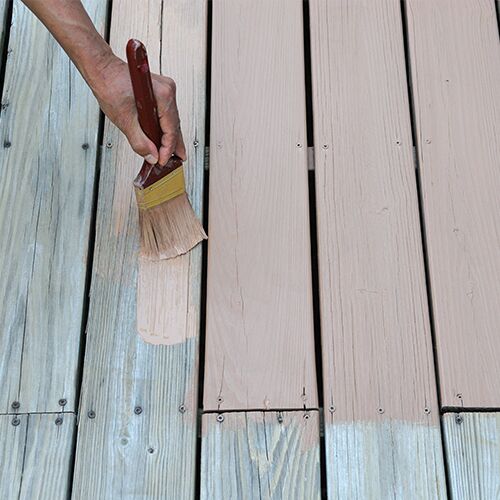
Composite decking needs an occasional wash with mild soap and water, plus a yearly check for mold or debris buildup between boards — that’s essentially the whole routine. Pressure-treated wood needs a real maintenance schedule: clean with a wood cleaner, apply a water-repellent sealant, and restain every 2 to 3 years to keep rot, decay, and insect damage from taking hold. Miss a cycle and you’re not just delaying cosmetic upkeep — you’re shortening the board’s structural life.
Fire Resistance and Building Codes
Fire rating is one factor most decking comparisons skip entirely, and it matters if you’re in a wildfire-prone region where local codes may require a specific ignition-resistance class. Composite decking is generally more fire-resistant than solid wood because it’s a wood-plastic blend rather than pure cellulose, but fire performance varies a lot by brand and product line — some composites are specifically engineered to slow flame spread, others are not. Trex’s own fire-resistant decking guidance confirms this isn’t a blanket composite advantage; check the specific product’s Class A/B fire rating, not just the material category. Pressure-treated lumber can also be special-ordered with fire-retardant chemical treatment, which raises cost and maintenance needs further.
Heat, Comfort, and Aesthetic Appeal
Composite decking offers more color and finish consistency than pressure-treated wood, which varies board to board with knots and grain. The tradeoff: composite boards run noticeably hotter underfoot in direct sun than wood, especially in dark colors. Manufacturers now sell heat-mitigating composite lines built to run meaningfully cooler to the touch than standard composite — worth asking about if your deck gets full afternoon sun. Pressure-treated wood stays cooler in the sun but shows its natural grain and knots, which some homeowners prefer and others consider inconsistent.

Environmental Impact
Composite decking is typically made from a mix of recycled wood fibers and recycled plastic, which reduces both new lumber demand and landfill plastic. It also needs no chemical sealants or stains over its lifespan. Pressure-treated lumber is chemically treated to resist rot and insects, and those preservative chemicals can leach into surrounding soil over time, particularly at cut ends and fastener holes. Composite decking is generally the more sustainable option; pressure-treated wood is a renewable raw material but carries the chemical-treatment tradeoff.
Installation and DIY Potential
Composite boards install with pre-made lengths and a concealed clip system (see the fastener options above), giving a clean surface with no visible screws or nails. Pressure-treated wood installs by drilling and face-screwing each board directly into the joists — more straightforward tool-wise, but slower per board and it leaves visible fastener heads unless you counterbore and plug them. Both materials still need pressure-treated or steel framing underneath; composite decking is a surface material, not a structural one.
“I’ve framed decks in both materials, and the difference shows up years later, not on day one. Composite still looks like it did on install day long after a pressure-treated board next to it has grayed, cupped, and started throwing splinters.”
Common Issues and Solutions
Composite decking’s main failure points come from thermal movement: boards expand and contract with temperature swings, which can cause splitting, delamination, or peeling on lower-quality products, and heavy-traffic areas can wear down over time. Buying a capped composite line with a longer warranty largely avoids these issues.
- Inspect for splitting, delamination, or peeling once a year, especially at butt joints
- Choose a capped composite product for high-UV or high-traffic decks
- Leave the manufacturer’s recommended gap between boards for expansion
Pressure-treated wood’s failure points are moisture-driven: without regular sealing, boards decay, warp, and splinter, and exposed fastener heads can rust and stain the surface.
- Inspect yearly for decay, warping, or splitting
- Reseal or restain every 2-3 years, sooner in wet climates
- Set popped or protruding fasteners before they become a safety hazard
- Pressure-wash carefully — too much pressure damages the wood surface
Resale Value and ROI
Composite decking’s low maintenance and long warranty tend to appeal to buyers who don’t want to inherit a restaining schedule, which can support a stronger resale premium. Pressure-treated wood costs less to install, which helps ROI if you’re not staying in the home long enough to recoup composite’s higher upfront cost. Installation price, deck size, and your local market all matter more to actual resale value than material choice alone — treat this as one factor among several, not the deciding one.
Which Should You Choose?
Choose pressure-treated wood if minimizing upfront cost matters most and you don’t mind restaining every 2-3 years. Choose composite decking if you want to spend once on materials and skip the maintenance schedule entirely — especially if you plan to stay in the home long enough for the 25-50 year warranty to matter. If you’re deciding between composite and a fully sealed wood alternative, also see our breakdown of how waterproof composite wood actually is before you commit.
Frequently Asked Questions
Is composite decking better than pressure-treated wood?
For most homeowners, yes: composite decking needs no staining, resists rot and insects by design, and lasts 25-30 years versus 15-25 for pressure-treated wood. Pressure-treated wood wins only on upfront material cost.
What is the main downside of composite decking?
Cost and heat. Composite runs $3,000-$7,500 more upfront on a typical deck, and it gets noticeably hotter underfoot in direct sun than wood, especially in dark colors. Lower-quality composite can also split, delaminate, or peel with temperature swings.
How long does composite decking last compared to pressure-treated wood?
Composite decking lasts 25-30 years on average, with some capped lines warrantied up to 50 years. Pressure-treated wood lasts 15-25 years with consistent maintenance, less if staining is skipped.
Is composite decking fire-resistant?
Composite decking is generally more fire-resistant than solid wood, but fire performance varies by brand and product line — some composites are engineered specifically to slow flame spread and carry a Class A/B fire rating, others are not. Check the specific product, not just the material category, especially in wildfire-prone areas with fire-rating code requirements.
Does composite decking get hot in the sun?
Yes, more than pressure-treated wood. Dark-colored composite boards can get uncomfortably hot underfoot in direct summer sun. Manufacturers now sell heat-mitigating composite lines built to stay cooler to the touch, and lighter colors also help.
Do composite deck boards splinter like wood?
No. Composite decking does not splinter as it weathers, which matters for bare feet, pet paws, and kids. Pressure-treated wood does splinter as it ages and dries out, particularly once its surface sealant has worn away.
Conclusion
Composite decking and pressure-treated wood both build a solid deck — the real decision is whether you’d rather pay more upfront and skip maintenance, or pay less upfront and commit to restaining every 2-3 years. Run the 20-year numbers for your own deck size before deciding; for most homeowners planning to stay put, composite’s higher sticker price is offset within a decade by the maintenance costs it eliminates.
Sponsored / affiliate links. As an Amazon Associate I earn from qualifying purchases. I may earn additional commission from eligible campaigns.