Price for Laying Hardwood Flooring: $8-$15/Sq Ft Installed, By Method
Solid hardwood flooring typically runs $8 to $15 per square foot installed, and engineered hardwood runs $6 to $12 per square foot — the gap between those ranges and a specific job’s actual price comes down mostly to installation method, subfloor condition, and whether old flooring needs to be removed first. Here is what actually drives that number up or down, and the one prep step that prevents the most common (and expensive) callback.
Installation Method Changes the Price More Than the Wood Does
Check Before You Install
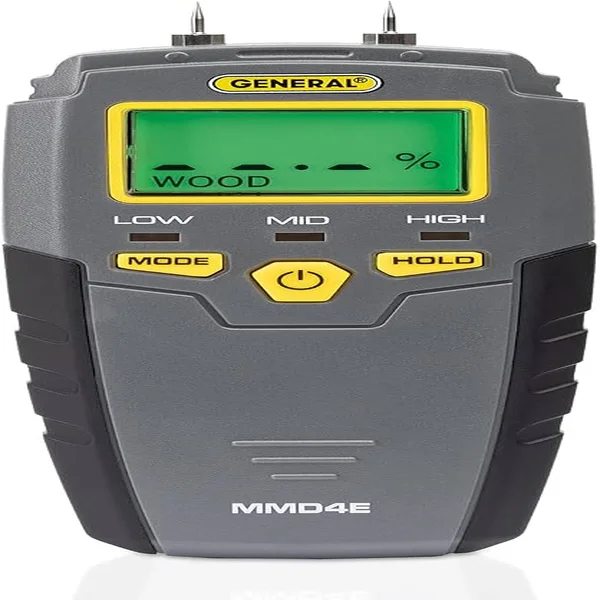 |
General Tools MMD4E Moisture Meter – $34.99 Installing over a subfloor that’s too wet is the single most common cause of buckled hardwood floors — this checks both the subfloor and the flooring itself before you nail or glue anything down.
|
| Method | Typical Labor Cost/Sq Ft | Used With |
|---|---|---|
| Nail-down | $3 – $6 | Solid hardwood over a wood subfloor |
| Glue-down | $4 – $8 | Engineered hardwood over concrete slabs |
| Floating (click-lock) | $2 – $4 | Engineered hardwood, fastest labor |
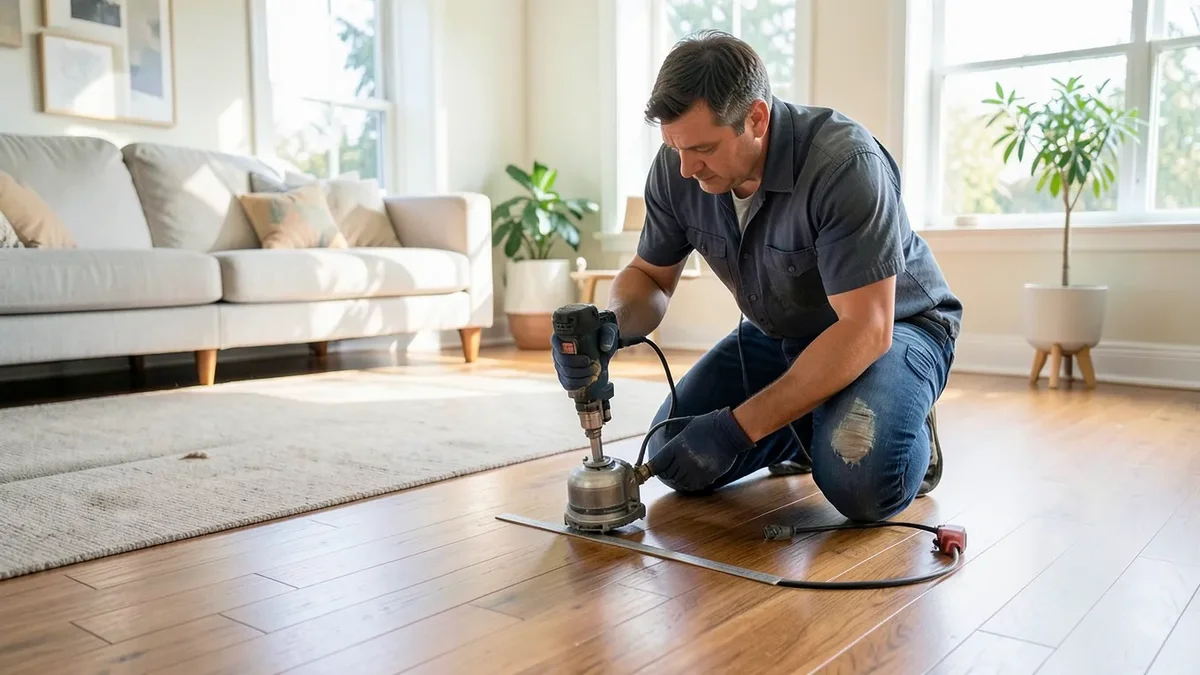
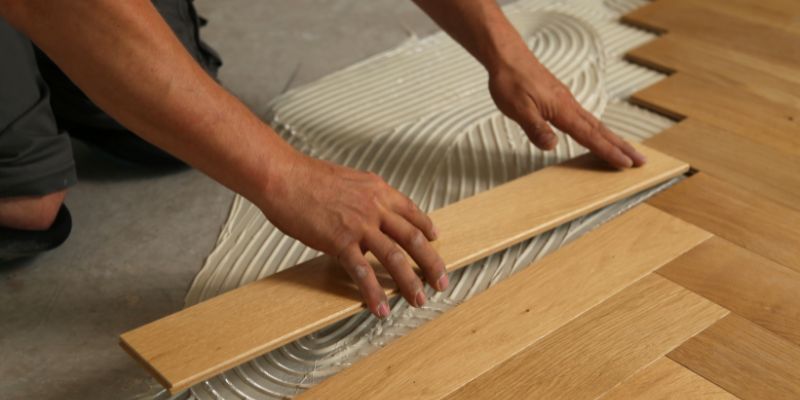
Nail-down is the traditional method for solid hardwood and requires a wood subfloor to nail into — it cannot be done directly over concrete. Glue-down works over concrete slabs (common in basements and slab-on-grade homes) but takes longer and requires precise adhesive spreading. Floating floors click together without fasteners or adhesive to the subfloor, which is why labor for floating installations runs noticeably cheaper — there is simply less skilled labor time per square foot.
What Drives the Price Up
- Old flooring removal: Pulling up carpet, tile, or vinyl before installation typically adds $1 to $2 per square foot, more if there’s mastic or tile that needs to be chiseled up.
- Subfloor leveling: A subfloor with dips or high spots beyond about 3/16 inch over 10 feet needs leveling compound or sanding before flooring goes down — add $2 to $5 per square foot for significant leveling work.
- Room complexity: Closets, stairs, transitions between rooms, and irregular room shapes all add labor time that a simple rectangular room doesn’t require.
- Wood species and grade: Standard red or white oak sits at the lower end of material cost; exotic species (Brazilian cherry, hickory in wide plank) and higher grades with fewer visible knots and color variation cost more per square foot of material.
- Plank width: Wide-plank flooring (5 inches or more) typically costs more per square foot than standard 2 1/4-inch strip flooring, both in material and in installation time.
Hardwood flooring needs to acclimate to the room’s humidity for a period (commonly 3 to 7 days, sometimes longer for solid hardwood in a dry or humid climate) before installation, and the subfloor’s moisture content needs to be within a few points of the flooring’s own moisture content before nailing or gluing it down. Skipping acclimation, or installing over a subfloor that tests wetter than the flooring, is the leading cause of gaps opening up months later (wood shrinking as it dries further) or boards buckling (wood swelling if the subfloor was too damp to begin with). A moisture meter reading before installation catches this before it becomes an expensive tear-out and redo.
DIY vs. Hiring It Out
A floating engineered floor is realistically DIY-able for someone comfortable with basic tools — no nailer, no adhesive spreading, and mistakes are easier to correct by unclicking and redoing a section. Nail-down solid hardwood is a harder DIY case: it requires a pneumatic flooring nailer (commonly a $50 to $75 daily rental if you don’t own one), physical stamina to kneel and nail an entire room, and more risk of a costly mistake (a split board, a misaligned row that throws off the whole pattern) with less room to easily undo it. DIY installation on a floating floor can reasonably save the full labor cost; DIY on nail-down solid hardwood saves less in practice once tool rental, extra material for mistakes, and the time investment are factored in.
Frequently Asked Questions
How Much Does It Cost to Lay Hardwood Flooring?
Solid hardwood typically runs $8 to $15 per square foot installed; engineered hardwood runs $6 to $12 per square foot. Installation method, subfloor prep, and old-flooring removal move the final price more than wood species alone.
Is Solid Hardwood More Expensive Than Engineered?
Usually, yes, both in material and often in labor since solid hardwood is more commonly nail-down (more labor-intensive) while engineered is often glued or floated. Engineered can also go over concrete, which solid nail-down hardwood cannot.
Can I Save Money by Installing Hardwood Myself?
A floating engineered floor is a realistic DIY project that can save most of the labor cost. Nail-down solid hardwood is harder to DIY well and saves less in practice once tool rental and mistake risk are factored in.
Why Does Hardwood Need to Acclimate Before Installation?
Wood continues to absorb or release moisture to match its environment. Installing it before it acclimates to the room’s humidity, or over a subfloor with mismatched moisture content, is the leading cause of gaps or buckling after installation.
Bottom Line
Budget $8 to $15 per square foot for solid hardwood installed, less for engineered, and expect the final number to move based on installation method and subfloor condition more than the wood you pick. Use our flooring cost calculator to run the numbers for your own room dimensions. Check moisture content and acclimate the flooring before installation — it’s the cheapest insurance against the most expensive kind of callback.
Sponsored / affiliate links. As an Amazon Associate I earn from qualifying purchases. I may earn additional commission from eligible campaigns.