Refinish Wood Floors Yourself: The Real Steps, Costs, and When Not To
Refinishing wood floors yourself is realistic for a room or two of solid hardwood that hasn’t been sanded more than 2-3 times before, and it typically costs $1.50-$3 per square foot in materials and rental equipment versus $3-$8 per square foot for a professional crew. The tradeoff is time (a weekend minimum, often two) and the real risk of sanding mistakes that a pro’s experience avoids.
Here’s what the job actually involves, where DIYers most often go wrong, and the point at which hiring it out is the smarter call.
Do You Have Enough Wood Left to Sand?
Pro-Grade Finish for DIY Refinishing
 |
Bona Traffic HD Satin Floor Finish (128 oz) – $164 This is the same waterborne finish flooring contractors use – it dries faster and harder than most consumer-grade polyurethanes sold in home centers.
|
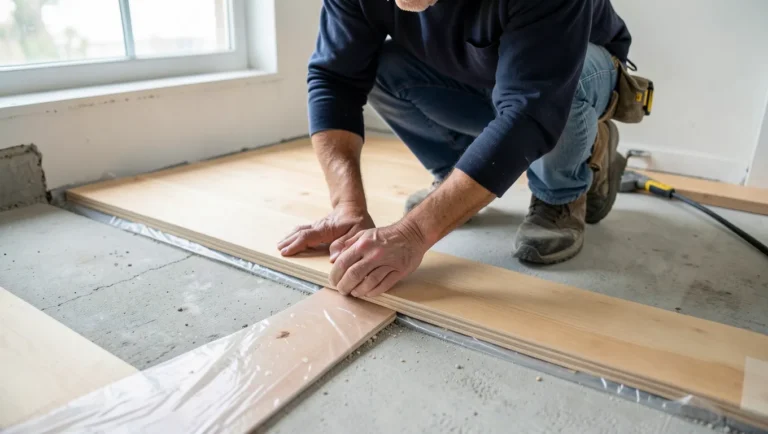
Before renting anything, check how much wear layer is left. Pull up a floor vent cover or lift a threshold and look at the board edge in cross-section – solid hardwood typically has 3/4″ of total thickness with 1/4″-3/8″ of that above the tongue-and-groove joint, which is what can be sanded. Each full refinish removes roughly 1/16″-3/32″. If a floor has already been sanded 3-4 times, another pass can expose nail heads or sand through to the groove, and at that point you’re looking at replacement, not refinishing.
Engineered hardwood has a much thinner wear layer (often 1/16″-3/16″ of real hardwood over plywood) – check the manufacturer spec before sanding at all, since some engineered floors can only handle one light refinish in their entire lifespan, if any.
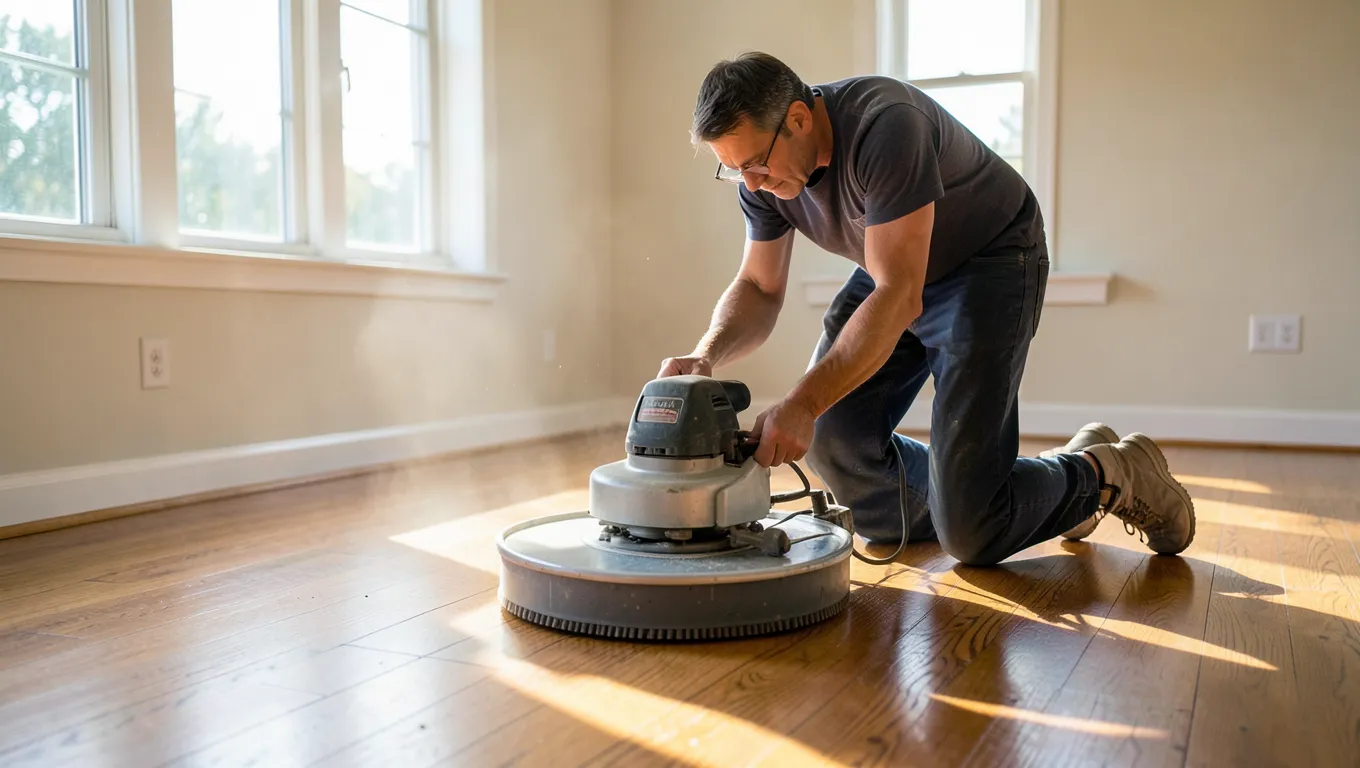
The Sanding Sequence That Actually Prevents Swirl Marks
Rent a drum sander for the main floor field and an edge sander (orbital disc) for the perimeter and corners the drum can’t reach – both are available at most tool rental counters for $60-90/day combined. Run three grits in sequence, never skipping one:
- 36-40 grit – removes the old finish and levels boards. This is the pass that does the real work and where most sanding mistakes happen.
- 60 grit – removes the scratch pattern left by the coarse grit
- 80-100 grit – final smoothing pass before stain or finish
A drum sander that sits still for even a couple of seconds will dig a visible trough into the floor – keep it moving with the grain at a steady walking pace, and practice the start/stop motion (tilting the drum up before stopping) on a closet floor or inconspicuous area before doing the main room. This single technique is the difference between a floor that looks professionally done and one with visible gouges.
Repairs, Staining, and Applying the Finish
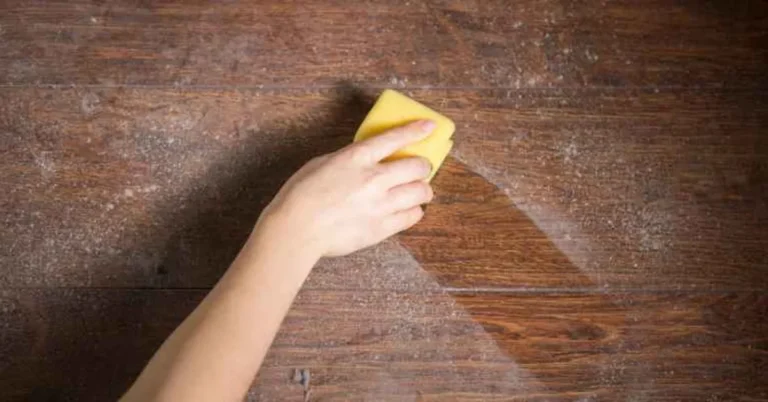
After sanding, vacuum thoroughly and tack-cloth the floor before doing anything else – dust left behind gets sealed under the finish and shows up as a gritty texture. Fix any loose boards, squeaks, or gouges now; wood filler tinted to match the stain handles small gaps, but deep gouges may need a board replacement.
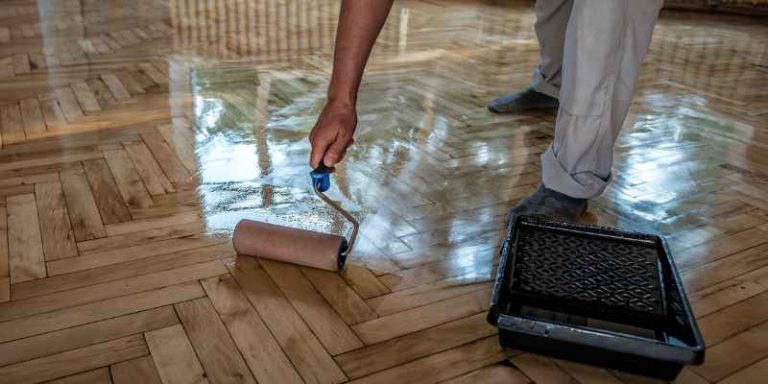
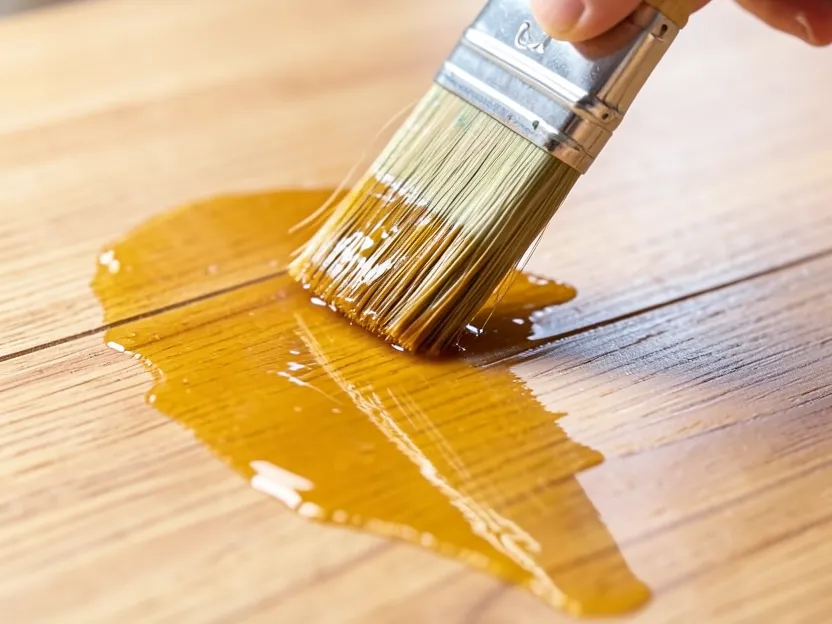
If staining, apply with a rag or brush, wipe off excess within 5-15 minutes per the can’s directions (longer dwell time = darker color), and let it dry fully – usually 24 hours – before finish coats. For the finish itself, waterborne polyurethanes dry faster (recoat in 2-3 hours, walkable in 24 hours) but show less amber warmth than oil-based, which takes 24 hours between coats and a stronger odor during application. Apply 2-3 thin coats with a lambswool applicator, lightly screening (sanding with a fine abrasive pad) between coats for adhesion.
Real Cost Comparison: DIY vs. Hiring a Pro
- DIY materials + rental: roughly $1.50-$3/sq ft – sander rental ($60-90/day), sandpaper ($30-50 for a full job), stain and finish ($100-200 for a 300 sq ft room)
- Professional refinishing: roughly $3-$8/sq ft depending on region and finish type, but includes equipment, dust containment, and the experience to avoid sand-through and uneven coats
The math favors DIY on straightforward jobs, but a botched sand-through on solid hardwood that’s already been refinished several times can turn a $200 materials job into a $2,000+ board replacement problem. Factor in your own time too – a single room realistically takes a full weekend once you include dry time between coats.
When to Skip DIY and Hire a Pro
- The floor has visible waviness or has clearly been sanded down close to the tongue-and-groove already
- You’re refinishing a large, continuous area (whole-house) where dust containment and consistent technique matter more
- The floor has water damage, extensive cupping, or structural issues beneath the finish
- You want a dust-free sanding system – most rental drum sanders are not dustless, and professional crews often run HEPA-filtered equipment that keeps the rest of the house livable during the job
Frequently Asked Questions
How do I start refinishing wood floors?
Check how much wear layer remains on the boards, clear the room completely, and rent a drum sander and edge sander. Sand through 36-40, 60, and 80-100 grit in sequence, always moving with the grain, then vacuum thoroughly before applying stain and finish.
What tools do I need to refinish wood floors?
A rented drum sander for the main floor area, an edge/orbital sander for perimeters and corners, sandpaper in 36-40/60/80-100 grit, a shop vacuum, tack cloths, and applicators (rag or brush for stain, lambswool applicator for polyurethane finish).
How long does it take to refinish wood floors?
A single room typically takes a full weekend: one day for sanding and cleanup, and a second day (or more) for stain and 2-3 finish coats, since each coat needs 2-24 hours to dry depending on whether you use waterborne or oil-based polyurethane.
Can I refinish wood floors without sanding?
Yes, if the existing finish is only lightly worn and not deeply scratched or discolored – a chemical “screen and recoat” using a buffer and a fresh finish coat can renew the surface without removing wood. This only works on finish-level damage, not on floors with deep gouges, water stains, or wood discoloration, which require actual sanding.
Conclusion
DIY refinishing saves real money on a floor that still has wear layer to spare and isn’t showing structural problems. Respect the sanding sequence, keep the drum moving, and don’t rush dry times on stain or finish, and a rented sander plus a weekend gets most rooms to a result that’s hard to distinguish from professional work.
Sponsored / affiliate links. As an Amazon Associate I earn from qualifying purchases. I may earn additional commission from eligible campaigns.