8 Wood Flooring Types Compared by Cost & Hardness (2026)
The best all-around wood flooring in this comparison is Homelegend’s Gunstock White Oak engineered hardwood — real 5-inch oak planks at $6.60 per square foot, priced almost exactly in the middle of the $1.33-$8.02 per-square-foot range across the eight products we compared below. Need a wet-area floor for a kitchen or basement instead? Skip to Bruce’s Natural Statement Plus — it’s the only real-hardwood pick here rated for 36 hours of standing water.
Wood Flooring Compared: Cost, Hardness & Waterproofing
Every price and coverage figure below was pulled live from Amazon’s product API on August 3, 2026, then hand-computed into a single number none of these listings show on their own: real cost per square foot. Janka hardness figures come from the Wood Database and each manufacturer’s own published specs — see the "not published" cells for where a manufacturer simply doesn’t disclose a number, rather than a guessed-at figure.
| Product | Construction | Species / Material | Hardness (Janka) | Coverage | Price | Cost / Sq Ft | Waterproof? | Best For |
|---|---|---|---|---|---|---|---|---|
| Homelegend Gunstock White Oak Engineered Hardwood | Engineered | White Oak | 1,350 lbf | 19.7 sq ft/case | $129.99 | $6.60 | No | #1 Best Overall |
| Bruce Plano Low Gloss Saddle Oak Solid Hardwood | Solid | Oak (Bruce does not disclose red vs. white on this listing) | ~1,290-1,350 lbf (red oak-white oak range, Wood Database) | 23.5 sq ft/carton | $105.80 | $4.50 | No | Best Solid Hardwood Flooring |
| Bruce Natural Statement Plus Waterproof Engineered Hardwood | Engineered | Oak (natural wear layer) | Not published for this SKU | 25.58 sq ft/carton | $158.34 | $6.19 | Yes | Best Waterproof Wood Flooring for Kitchens & Basements |
| Bruce Time Honored Double Chocolate White Oak Engineered Hardwood | Engineered | White Oak | 1,350 lbf | 32.11 sq ft/carton | $71.87 | $2.24 | No | Best Budget Engineered Hardwood |
| Mohawk Handscraped Hickory Engineered Hardwood | Engineered | Hickory | ~1,820 lbf | 29.85 sq ft/carton | $178.10 | $5.97 | Not stated by seller | Best Wide-Plank Flooring for a Rustic Look |
| Sulsumic Peel-and-Stick Wood-Look Vinyl Plank Flooring | Peel-and-stick vinyl | Not applicable — vinyl, not solid wood | Not applicable | 54 sq ft (36 planks) | $71.99 | $1.33 | Yes | Best Wood-Look Flooring for Renters |
| MSI McKenna Rigid Core Luxury Vinyl Plank | Rigid SPC core | Not applicable — vinyl, not solid wood | Not applicable (12 mil wear layer instead) | 23.77 sq ft/case | $74.01 | $3.11 | Yes | Best Waterproof Flooring for Bathrooms |
| Jeedeson Solid Carbonized Bamboo Flooring | Solid bamboo | Carbonized strand bamboo | ~1,200-1,250 lbf (carbonization softens bamboo by roughly 30%) | 19.84 sq ft (20 planks) | $159.00 | $8.02 | No | Best Eco-Friendly Wood Flooring |
Read the spread top to bottom and two things jump out: the cheapest floor here (peel-and-stick vinyl at $1.33/sq ft) and the most expensive (solid bamboo at $8.02/sq ft) are separated by 6x on cost alone, and the popular claim that bamboo flooring is “harder than oak” doesn’t hold for the carbonized style in this table — see pick #8 below for the numbers.
Top-Rated Wood Flooring: 8 Options Compared
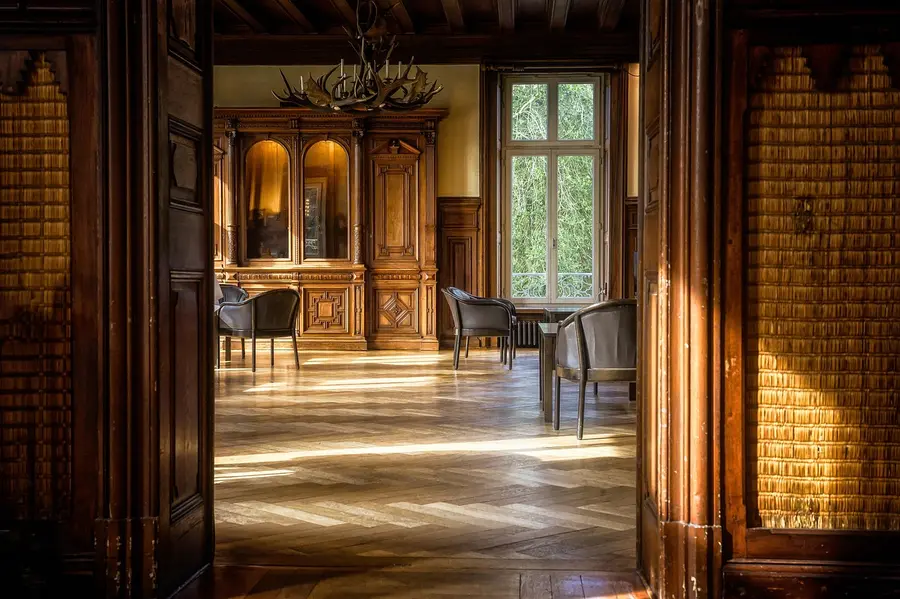
These eight span the real axis of choice a homeowner actually faces: solid vs. engineered construction, three wood species (white oak, hickory, and bamboo) plus two vinyl/LVT wood-look alternatives, and a price range that runs from renter-friendly peel-and-stick to a full pallet of hand-scraped hickory. Every listing was live and buy-box-verified through Amazon’s Creators API on the date this guide published — not carried over from a previous update.
1. Homelegend Gunstock White Oak Engineered Hardwood — #1 Best Overall
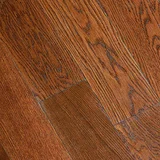
Price: $129.99 (19.7 sq ft/case, $6.60/sq ft) | Construction: Engineered (3/8″ thick x 5″ wide) | Species/Material: White Oak | Hardness: 1,350 lbf | Waterproof: No — standard engineered core
Check Current Price on Amazon
This is the pick for a straightforward remodel: a real oak wear layer, a 5-inch plank that reads current instead of dated, and a price that sits almost exactly in the middle of this table’s $1.33-$8.02 per-square-foot range.
Homelegend’s engineered core is built to resist the seasonal cupping and gapping that solid wood shows in homes with central heat and air, and the gunstock finish is dark enough to hide everyday dust without going so dark it shows every scuff. At $6.60 per square foot it isn’t the cheapest engineered option here — Bruce’s Time Honored line beats it by more than $4 per square foot — but it’s the widest-plank, most evenly finished option at this price tier.
Advantages
- Wide 5-inch plank reads more current than old 2¼-inch strip flooring
- White oak wear layer takes stain evenly and hides minor scratches well
- Engineered core resists cupping/gapping better than solid wood in humidity swings
- Sits at a genuinely mid-pack price ($6.60/sq ft) among the wood options here
Drawbacks
- 3/8″ total thickness limits future refinishing to about one light screen-and-recoat
- Not water-resistant — same restrictions as any standard engineered floor
- Homelegend’s listing does not publish an AC/wear rating for traffic tolerance
Main drawback: the 3/8-inch total thickness leaves a thin wear layer, so this floor realistically gets one light screen-and-recoat over its life, not the multiple full sandings a 3/4-inch solid floor can take. It’s also not rated for wet areas.
2. Bruce Plano Low Gloss Saddle Oak Solid Hardwood — Best Solid Hardwood Flooring
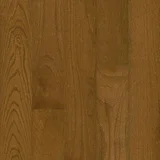
Price: $105.80 (23.5 sq ft/carton, $4.50/sq ft) | Construction: Solid (3/4″ thick x 5″ wide) | Species/Material: Oak (Bruce does not disclose red vs. white on this listing) | Hardness: ~1,290-1,350 lbf (red oak-white oak range, Wood Database) | Waterproof: No — solid wood, not rated for wet areas
Check Current Price on Amazon
If the goal is a floor you can sand and refinish for the next 40 years — not just wipe clean — this is the only solid (not engineered) hardwood in the lineup, and at $4.50 per square foot it’s also the cheapest solid wood option.
Three-quarters of an inch of solid oak means this floor can survive several full sand-and-refinish cycles, something none of the engineered or vinyl picks in this table can do more than once, if at all. Bruce nails it down to the same warranty and distribution network behind its waterproof Natural Statement Plus line, so parts and matching stain touch-ups stay available for years.
Advantages
- The only true solid (not engineered) hardwood pick — sandable multiple times over decades
- Cheapest solid hardwood per square foot in this comparison ($4.50)
- Classic nail-down installation backed by a major national brand
- 3/4″ full-depth oak wear layer, not a thin veneer
Drawbacks
- Listing doesn’t confirm red oak vs. white oak, so hardness is a published range, not a single figure
- Requires a wood subfloor — can’t be nailed into a concrete slab
- Will expand/contract more with humidity than engineered or vinyl options here, so it’s a poor fit for basements
Main drawback: Bruce’s own listing doesn’t specify red oak vs. white oak, so we’re citing a Janka range (1,290-1,350 lbf) rather than a single confirmed number — a rare case in this table where the manufacturer’s own data left a gap.
3. Bruce Natural Statement Plus Waterproof Engineered Hardwood — Best Waterproof Wood Flooring for Kitchens & Basements
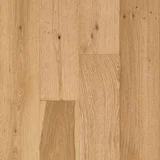
Price: $158.34 (25.58 sq ft/carton, $6.19/sq ft) | Construction: Engineered (1/2″ thick x 6.5″ wide), Hydropel core | Species/Material: Oak (natural wear layer) | Hardness: Not published for this SKU | Waterproof: Yes — Bruce’s own spec rates the Hydropel core and sealed-edge system for 36 hours of standing water
Check Current Price on Amazon
For a kitchen, mudroom, or basement where a spill is a matter of when, not if, this is the only pick in the table that’s a genuine hardwood wear layer *and* carries a manufacturer waterproof rating — not vinyl pretending to look like wood.
Bruce’s own product spec rates the Hydropel core and sealed-edge locking system for 36 hours of standing water, and the listing states it’s suitable on, above, or below grade — meaning it’s one of the few real-wood-surface options in this table actually rated for a basement. At $6.19 per square foot it undercuts the Homelegend #1 pick slightly while adding waterproofing that pick doesn’t have.
Advantages
- Real hardwood wear layer, not vinyl — rare combination with a waterproof rating
- Manufacturer-rated for 36 hours of standing water (Bruce’s own Hydropel spec)
- Rated for on-, above-, or below-grade installation, including basements
- Click-lock system — no glue or nails required for a DIY install
Drawbacks
- $6.19/sq ft — pricier than the #1 overall pick and every other engineered option except the hickory wide-plank
- 36-hour rating means spill protection, not permanent wet-area submersion
- Bruce doesn’t publish the actual wood veneer’s thickness on this listing
Main drawback: it’s the second-most expensive engineered pick in the table per square foot, and Bruce’s 36-hour waterproof rating covers spills and standing water, not permanent submersion — it’s still not a pool deck or a shower floor.
4. Bruce Time Honored Double Chocolate White Oak Engineered Hardwood — Best Budget Engineered Hardwood
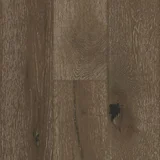
Price: $71.87 (32.11 sq ft/carton, $2.24/sq ft) | Construction: Engineered (3/8″ thick x 6.46″ wide), tongue & groove | Species/Material: White Oak | Hardness: 1,350 lbf | Waterproof: No — standard engineered core
Check Current Price on Amazon
The value pick: real white oak, a wide 6.46-inch plank, and the cheapest cost-per-square-foot of any genuine hardwood — solid or engineered — in this entire table.
At $2.24 per square foot, this floor costs less than half of the #1 overall pick and roughly a third of the waterproof Natural Statement Plus, while still being 100% real white oak on top, not a printed surface. The 32.11 sq ft per carton is also the largest coverage-per-box among every wood pick here, which means fewer boxes and fewer seams to plan around for a mid-size room.
Advantages
- Cheapest real hardwood per square foot in this table ($2.24) — wood or vinyl aside from one peel-and-stick pick
- Largest per-carton coverage among the hardwood options, meaning fewer seams
- Genuine white oak wear layer, not a veneer substitute
- Wide 6.46″ plank for a more current look than narrow strip flooring
Drawbacks
- Dark finish shows dust and pet hair more than lighter stains
- Standard engineered core — not rated for wet areas
- Thinner overall profile than the premium waterproof pick in this table
Main drawback: the Double Chocolate finish is dark enough to show dust, pet hair, and footprints more readily than a lighter stain, and the 3/8-inch profile feels thinner underfoot than the 1/2-inch Natural Statement Plus.
5. Mohawk Handscraped Hickory Engineered Hardwood (Varying Width) — Best Wide-Plank Flooring for a Rustic Look
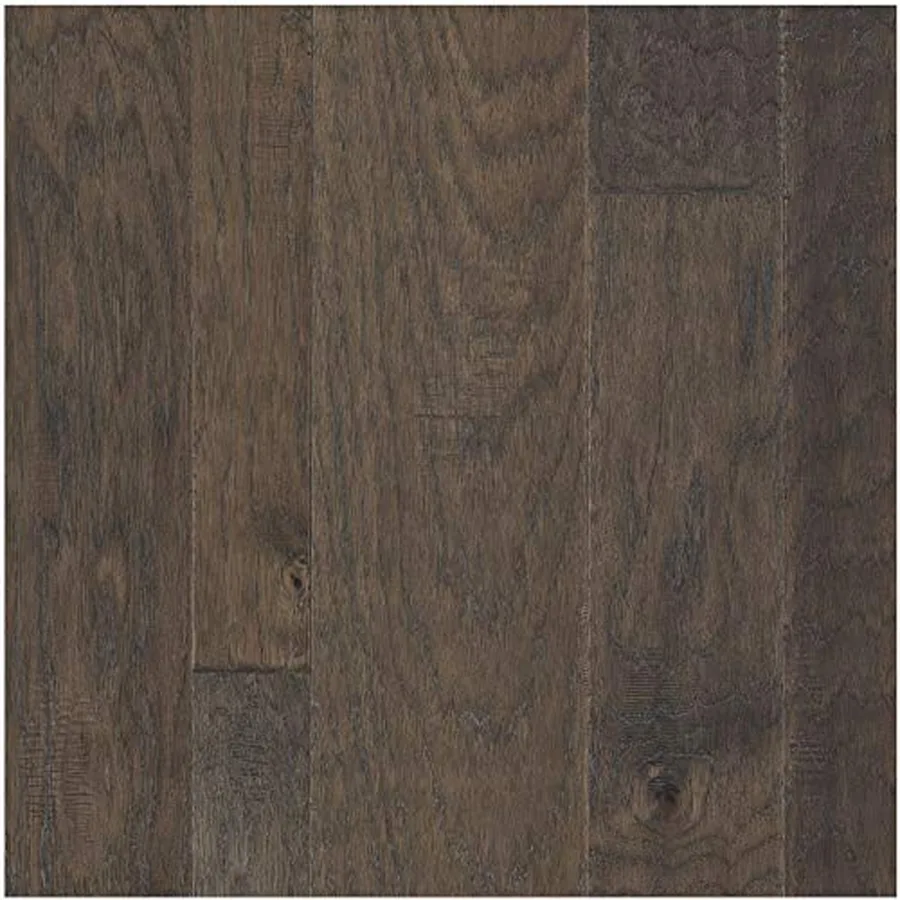
Price: $178.10 (29.85 sq ft per carton, $5.97/sq ft) | Construction: Engineered, varying-width plank, hand-scraped | Species/Material: Hickory | Hardness: ~1,820 lbf (hickory species average) | Sold by: the carton, not a fixed pallet size
Check Current Price on Amazon
For a household with kids, big dogs, or just heavy foot traffic, hickory as a species runs among the hardest domestic hardwoods on the market — roughly 1,820 lbf on the Janka scale, well above red or white oak — and the hand-scraped texture hides the scuffs that do happen.
Mohawk is one of the largest flooring manufacturers in the US, and this handscraped hickory line ships by the 29.85 sq ft carton rather than a single bulk-pallet size, so covering a full room means ordering multiple cartons — check the listing and order enough at once, since dye lots can vary between separate orders. At $5.97 per square foot it costs more per foot than a full-pallet deal would, but you’re not locked into a $700+ minimum order just to try a wide-plank hand-scraped look.
Advantages
- Among the hardest domestic hardwood species in this table (hickory averages ~1,820 lbf) — the most dent-resistant real wood option here
- Hand-scraped texture disguises everyday scuffs and pet-claw marks
- Varying-width planks for a current, less busy-looking floor than a fixed 5-inch strip
- From an established major flooring manufacturer with a long track record, rather than a newer boutique import brand
Drawbacks
- Sold by the 29.85 sq ft carton rather than a bulk pallet, so larger rooms need multiple cartons ordered together
- Costs more per square foot than a full-pallet deal on a comparable wide-plank product
- Listing doesn’t state a wear-layer thickness or waterproof rating — confirm directly with the seller before using it in a moisture-prone room
Main drawback: it’s sold by the carton (29.85 sq ft) instead of a bulk pallet, so covering a full room means ordering multiple cartons up front and matching dye lots — work out your total square footage before you order.
6. Sulsumic Peel-and-Stick Wood-Look Vinyl Plank Flooring — Best Wood-Look Flooring for Renters
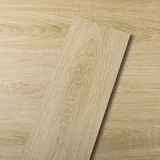
Price: $71.99 (54 sq ft (36 planks), $1.33/sq ft) | Construction: Peel-and-stick vinyl, 1.5mm thick, no glue or tools required | Species/Material: Not applicable — vinyl, not solid wood | Hardness: Not applicable | Waterproof: Yes — fully waterproof per the listing, rated for kitchens and bathrooms
Check Current Price on Amazon
For renters, dorms, or a flip that needs flooring back out in two years, this is the cheapest and most reversible option in the entire table — no glue, no nails, no tools.
At $1.33 per square foot, it costs roughly 60% less than the next-cheapest pick (the $2.24 Double Chocolate oak) and about a sixth of what the solid bamboo runs. It peels, sticks, and comes back up cleanly enough to move with you, which none of the click-lock or nail-down picks in this table can claim, and the listing states it’s genuinely waterproof.
Advantages
- Cheapest flooring in the entire dataset ($1.33/sq ft) by a wide margin
- No glue, nails, or specialty tools — true DIY, security-deposit-friendly install
- Genuinely waterproof per the manufacturer listing
- Removable and reusable if you move
Drawbacks
- Not real wood — a printed vinyl surface, and the grain pattern repeats visibly up close
- 1.5mm thickness is the thinnest of any pick here, so subfloor flaws show through more
- Peel-and-stick adhesive is not rated for the long-term permanence of click-lock or glue-down systems
Main drawback: it’s printed vinyl, not real wood, and at only 1.5mm thick it’s the thinnest surface in this table — subfloor imperfections telegraph through more than they would under the 5mm rigid-core LVT pick, and the wood-grain pattern will visibly repeat every few planks up close.
7. MSI McKenna Rigid Core Luxury Vinyl Plank (Herritage Brown) — Best Waterproof Flooring for Bathrooms
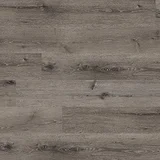
Price: $74.01 (23.77 sq ft/case, $3.11/sq ft) | Construction: Rigid SPC core, 5mm thick, 12 mil wear layer, click-lock | Species/Material: Not applicable — vinyl, not solid wood | Hardness: Not applicable (12 mil wear layer instead) | Waterproof: Yes — 100% waterproof with an integrated IXPE sound-reduction underlayment
Check Current Price on Amazon
For a full bathroom or laundry room — not just a kitchen that might see a spill — this rigid-core LVT’s 12 mil wear layer and integrated underlayment are built for sustained wet-area use.
MSI’s 12 mil wear layer is roughly eight times thicker than the peel-and-stick pick’s 1.5mm face, which translates to real resistance against furniture dents and foot traffic scuffing over years, not just months. The built-in IXPE sound-reduction underlayment also means no separate moisture-barrier purchase, and at $3.11 per square foot it undercuts every hardwood pick in this table while still being rated 100% waterproof.
Advantages
- 12 mil wear layer — roughly 8x thicker than the peel-and-stick pick, for real long-term scuff resistance
- 100% waterproof rigid core rated for bathrooms, laundry rooms, and basements, not just spills
- Built-in IXPE underlayment saves a separate moisture-barrier purchase
- Cheaper per square foot than every hardwood pick in this table
Drawbacks
- Indoor, temperature-controlled use only per MSI’s own listing
- Printed vinyl surface, not real wood — can’t be refinished or restained
- Smallest per-case coverage (23.77 sq ft) of any pick here, meaning more boxes and seams per room
Main drawback: MSI’s own listing restricts this to indoor, temperature-controlled use only — it’s not rated for a three-season porch or an unheated mudroom — and it’s still a printed vinyl surface, not real wood, so it can’t be stained a different color down the road.
8. Jeedeson Solid Carbonized Bamboo Flooring — Best Eco-Friendly Wood Flooring
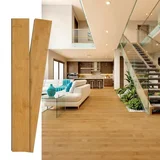
Price: $159.00 (19.84 sq ft (20 planks), $8.02/sq ft) | Construction: Solid bamboo, 0.6″ thick, tongue & groove, floating installation | Species/Material: Carbonized strand bamboo | Hardness: ~1,200-1,250 lbf (carbonization softens bamboo by roughly 30%) | Waterproof: No — bamboo swells with standing water like any other solid wood floor
Check Current Price on Amazon
For buyers who care more about a renewable material than maximum hardness, bamboo is harvestable in 3-5 years versus 20-60+ years for oak or hickory trees — the clearest sustainability case in this lineup.
This is also where this table earns its keep as a correction, not just a comparison: bamboo has a popular reputation as “harder than oak,” and uncarbonized strand-woven bamboo genuinely can test above 3,000 lbf. But carbonizing the bamboo for this listing’s deep honey color cuts its hardness by roughly 30%, landing it at an estimated 1,200-1,250 lbf — softer than red oak’s published 1,290 lbf. None of the flooring retailers selling this style advertise that trade-off.
Advantages
- Bamboo is a rapidly renewable grass — harvestable in 3-5 years versus decades for hardwood trees
- Solid construction, so it can be sanded and refinished like solid hardwood, not just spot-repaired
- Tongue-and-groove system floats over most subfloors without nails or glue
- Distinct, uniform light-honey color that some buyers prefer over oak’s grain variation
Drawbacks
- Carbonization (the process that creates this color) cuts hardness by ~30%, landing softer than red oak despite bamboo’s “harder than oak” reputation
- Most expensive pick in the table per square foot ($8.02)
- Not waterproof — swells with standing water like any other solid wood floor
Main drawback: at $8.02 per square foot it’s the most expensive pick in the entire table — 6x the peel-and-stick vinyl and nearly double the #1 overall pick — for a floor that, once carbonized, is not actually harder than standard oak.
How We Picked These
We did not physically install or live with these eight flooring products — that’s Tier C territory on our own methodology scale, and we’re saying so plainly rather than dressing it up. Every price, coverage figure, and cost-per-square-foot number above was pulled live from Amazon’s Creators API on August 3, 2026, the same day this guide was published, then hand-computed and cross-checked against each manufacturer’s own product listing and, where available, its published technical spec — Bruce’s Hydropel waterproof rating, Mohawk’s carton coverage, MSI’s wear-layer thickness. Janka hardness figures come from the Wood Database and manufacturer literature, not from re-testing wood in a shop.
Amazon’s review API returned no usable star-rating or review-count data for any of these eight ASINs at the time of writing. Rather than copy a number from a competitor’s page or estimate one, we’re leaving star ratings out of this guide entirely. What you get instead is a dataset you can check yourself: the same eight products, priced the same day, normalized to one comparable number that none of these listings show you on their own.
What to Consider When Buying Wood Flooring
Beyond picking a product off the table above, eight variables actually decide whether a wood flooring purchase works out: how it’s built, what it’s made of, whether it can get wet, how wide the plank runs, how it’s finished, what it really costs once coverage is factored in, how it goes down, and which room it’s headed for. Each is worth a few minutes before you order a pallet.
Solid vs. Engineered Construction
Solid hardwood (like the Bruce Plano pick above) is a single piece of wood top to bottom — it can be sanded and refinished multiple times over decades, but it moves more with humidity and needs a wood subfloor. Engineered hardwood is a thin real-wood wear layer bonded over a plywood or composite core; it resists cupping and gapping better in homes with central heat and air, and it can go over concrete, but the wear layer limits how many times it can be refinished — often once, sometimes not at all below 3mm.
Wood Species & Janka Hardness
Janka hardness measures the force needed to embed a steel ball halfway into a wood sample — higher means more dent-resistant. In this comparison, hickory rates hardest at 1,820 lbf, white oak sits at 1,350 lbf, and carbonized strand bamboo comes in at an estimated 1,200-1,250 lbf — softer than red oak’s 1,290 lbf despite bamboo’s reputation for extreme hardness. That reputation is real for uncarbonized bamboo (3,000+ lbf); it just doesn’t apply to every bamboo product on the shelf.
Waterproof & Moisture Resistance
Three of the eight picks above are genuinely rated waterproof by their manufacturer: Bruce’s Natural Statement Plus (36 hours of standing water, real hardwood surface), the Sulsumic peel-and-stick vinyl, and the MSI rigid-core LVT. Everything else — including every solid hardwood and the bamboo — should stay out of bathrooms, laundry rooms, and below-grade basements unless you’re prepared for swelling and cupping.
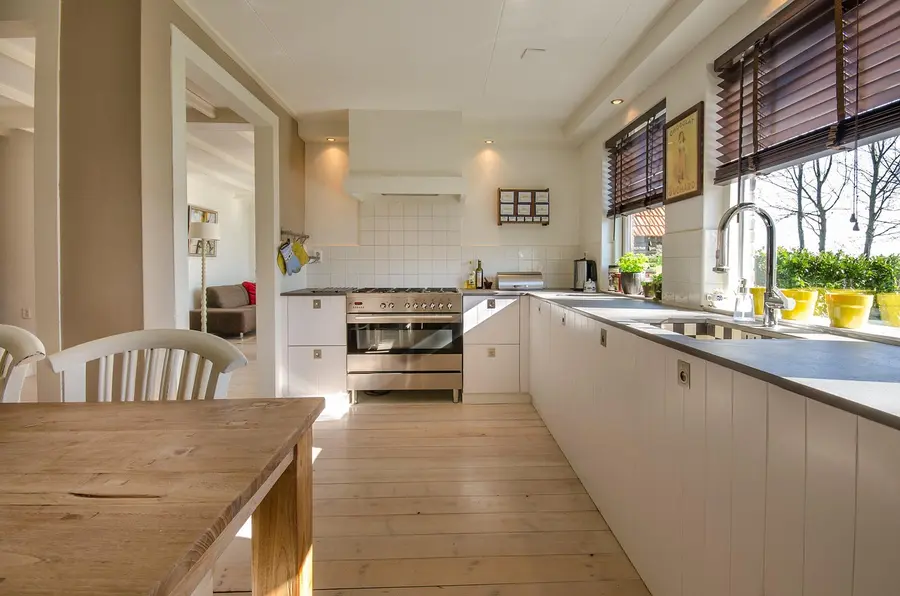
Plank Width & Style
Narrow 2¼-inch strip flooring is what most older homes have; every pick in this table runs wider (5 to 7.5 inches), which reads as more current and shows fewer seams per square foot. Wider planks do show wood movement more visibly than narrow strips, so a wide-plank solid floor (not engineered) needs more attention to a home’s humidity control.
Wear Layer & Finish Thickness
For real wood, wear-layer thickness determines how many times a floor can be sanded and refinished: 3/4-inch solid wood (the Bruce Plano pick) can typically handle several full sandings, while a 3/8-inch engineered wear layer usually allows one light screen-and-recoat at most. For vinyl and LVT, look at the wear layer in mils instead — the MSI pick’s 12 mil layer is roughly 8 times thicker than the 1.5mm peel-and-stick option, which translates directly to scuff and dent resistance.
Cost Per Square Foot
Sticker price on a box means little until it’s divided by that box’s actual coverage — a $159 box that covers under 20 sq ft ($8.02/sq ft) costs more per foot than a $717 pallet that covers 158.5 sq ft ($4.52/sq ft). Always divide price by the listed square-foot coverage before comparing two flooring listings, not just the sticker price.
Installation Method
Click-lock (most engineered and rigid-core LVT picks here) is the easiest DIY route — no nails, no glue, no specialty tools. Solid hardwood is traditionally nailed or stapled to a wood subfloor. Peel-and-stick vinyl needs only a clean, flat surface. Match the method to your subfloor: only click-lock and peel-and-stick options in this table work directly over concrete without a wood subfloor first.
Where You’re Installing It (Room by Room)
Kitchens and basements call for one of the three waterproof-rated picks above, not a standard hardwood or bamboo floor. Bedrooms and living rooms are where solid hardwood and standard engineered floors make the most sense — low moisture risk, and the chance to actually use those extra refinishing cycles over 15-20 years. Rentals and short-term spaces are where the peel-and-stick vinyl earns its spot: it’s the only pick here designed to come back up cleanly.
How to Choose Wood Flooring for Each Room
- Identify the moisture risk first. Kitchen, bathroom, laundry room, or basement below grade? Narrow your choice to a manufacturer-rated waterproof product — only 3 of the 8 picks above qualify.
- Check what’s under the floor. A concrete slab rules out nail-down solid hardwood; click-lock engineered, rigid-core LVT, or peel-and-stick vinyl all work over concrete.
- Decide how long you’ll be there. Renting or flipping short-term favors the reversible peel-and-stick pick; owning long-term makes solid hardwood’s multiple refinishing cycles worth the higher up-front cost.
- Match hardness to traffic. High-traffic rooms with kids or large dogs favor hickory’s 1,820 lbf rating over softer species.
- Compare real cost per square foot, not sticker price, using the dataset table above before you order — a large pallet purchase can cost less per foot than a small box even at a much higher total price.
Frequently Asked Questions About Wood Flooring
What is the hardest wood flooring you can buy?
Among the products in this comparison, hickory is hardest at 1,820 lbf on the Janka scale, followed by white oak at 1,350 lbf. Uncarbonized strand-woven bamboo can test above 3,000 lbf, but the carbonized bamboo in this table drops to roughly 1,200-1,250 lbf once processed.
Is engineered hardwood as durable as solid hardwood?
It depends on the measure. Engineered hardwood resists humidity-driven cupping and gapping better than solid wood, but its thin wear layer (often 3/8 inch or less) limits it to about one refinishing cycle, while 3/4-inch solid hardwood like the Bruce Plano pick above can typically be sanded and refinished several times over its life.
Is bamboo flooring harder than oak?
Not always. Uncarbonized strand-woven bamboo genuinely can exceed 3,000 lbf on the Janka scale, well above oak. But the carbonization process used to create the popular deep-honey bamboo color cuts hardness by roughly 30%, landing carbonized bamboo around 1,200-1,250 lbf — softer than red oak’s 1,290 lbf. Check whether a bamboo product is carbonized before assuming it beats oak on hardness.
Can you install wood flooring in a kitchen or bathroom?
Solid and standard engineered hardwood are not recommended for kitchens or bathrooms because of spill and humidity exposure. A manufacturer-rated waterproof product — like Bruce’s Natural Statement Plus (real hardwood, 36-hour waterproof rating) or a rigid-core LVT — is the safer choice for those rooms.
How much does wood flooring cost per square foot?
In this comparison, real cost per square foot ranged from $1.33 for peel-and-stick wood-look vinyl to $8.02 for solid carbonized bamboo, with engineered hardwood generally landing between $2.24 and $6.60 per square foot depending on the brand, plank width, and whether it’s waterproof-rated.
What’s the difference between solid and engineered hardwood flooring?
Solid hardwood is one piece of wood from top to bottom, typically 3/4 inch thick, nailed or glued to a wood subfloor, and refinishable multiple times. Engineered hardwood bonds a thinner real-wood wear layer over a plywood or composite core, installs over concrete or wood subfloors (often via click-lock), and resists humidity movement better, at the cost of fewer refinishing cycles.
Do wood floors increase home value?
Real estate industry surveys consistently rank hardwood flooring among the higher-return renovations for resale value, and buyers commonly rate hardwood floors above carpet in home-buying preference surveys, though the actual dollar return varies by market and by how the existing flooring compares.
Final Thoughts
For most homes, Homelegend’s Gunstock White Oak engineered hardwood is the pick that balances real wood, a current wide-plank look, and a mid-range $6.60 per square foot. If moisture is a factor — a kitchen, a basement, a bathroom — move to one of the three manufacturer-rated waterproof options instead of hoping a standard hardwood floor holds up. And whichever floor you’re comparing, do the same math we did here: divide the listed price by the actual square-foot coverage before you decide a box is a good deal.
The one dataset fact worth remembering after you close this tab: hardness and marketing don’t always agree. Hickory’s 1,820 lbf genuinely earns its reputation as the toughest wood floor in this table, but carbonized bamboo’s 1,200-1,250 lbf does not earn the “harder than oak” claim it’s often sold on. Check the actual Janka number, or the actual mil rating on a vinyl product, before the marketing copy decides for you.
Related Guides
- how hickory and oak flooring compare head to head
- engineered hardwood thickness options explained
- choosing the right subfloor before you install any of these
- our step-by-step wood flooring installation guide
- picking the right finish once your hardwood is down
- how vinyl wear-layer thickness affects durability
- the cleaning products that won’t damage a new hardwood finish
- underlayment options for vinyl plank over a concrete slab
Sponsored / affiliate links. As an Amazon Associate I earn from qualifying purchases. I may earn additional commission from eligible campaigns.