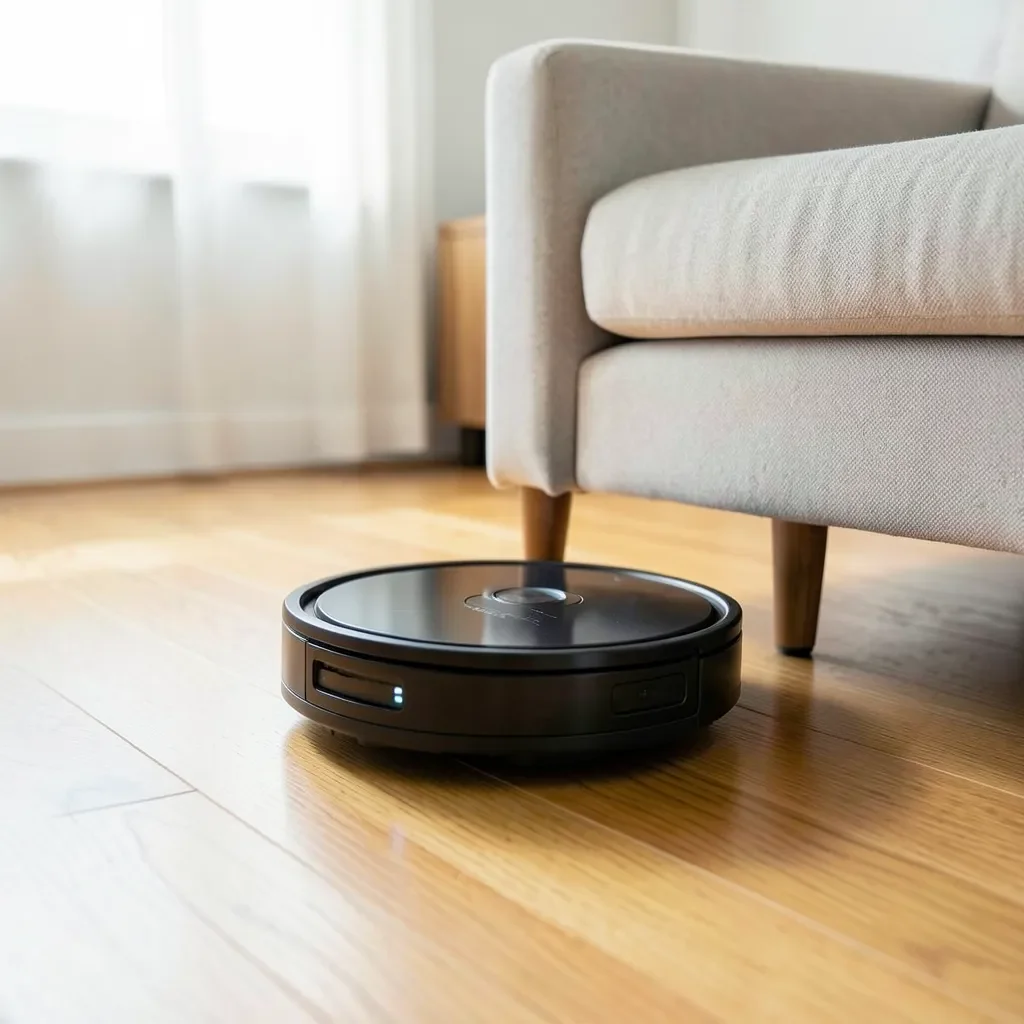
Automatic Wood Floor Cleaner: Is It Safe for Hardwood Floors?
A robot vacuum-mop combo is safe for sealed hardwood floors, but the robot itself isn’t the risk – the water is. Any combo unit that soaks its mop pad instead of dampening it can push moisture into the seams between boards over hundreds of passes, the same swelling and dark staining you’d get from mopping with a dripping string mop.
The features that actually decide whether one of these is safe come down to how it manages water, not how smart its navigation is. This guide covers what to check before buying, the setup that keeps a combo unit safe long-term, and one budget pick that gets the moisture control right.
What an Automatic Wood Floor Cleaner Actually Is
“Automatic wood floor cleaner” almost always means a robot vacuum-mop combo – a single robot that vacuums dry debris with brushes and suction, then switches to a damp microfiber pad to wet-mop the same floor, all without you pushing anything. That’s a different product from a manual automatic spray mop like a Swiffer WetJet, which still needs you to walk it across the floor – the trigger just automates the spray, not the cleaning pass itself. If dry dust pickup with zero water is all you’re after, a vacuum-only robot is the safer starting point; our robot hardwood floor cleaner safety guide covers wheel and brush-roll checks for that dry-only category in more depth than this page does.
Best Moisture-Controlled Pick
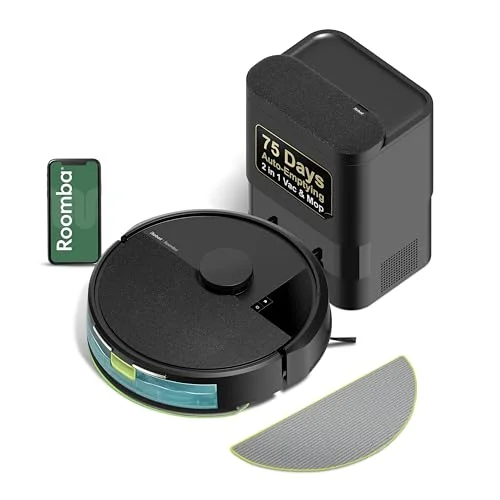 |
iRobot Roomba 105 Combo Robot Vacuum & Mop – $299 A micro-pump controls exactly how much water reaches the mop pad, and the robot lifts the pad automatically the moment it senses carpet or rugs – the two features this guide says actually matter for hardwood.
|
The Real Risk Is Moisture, Not the Robot
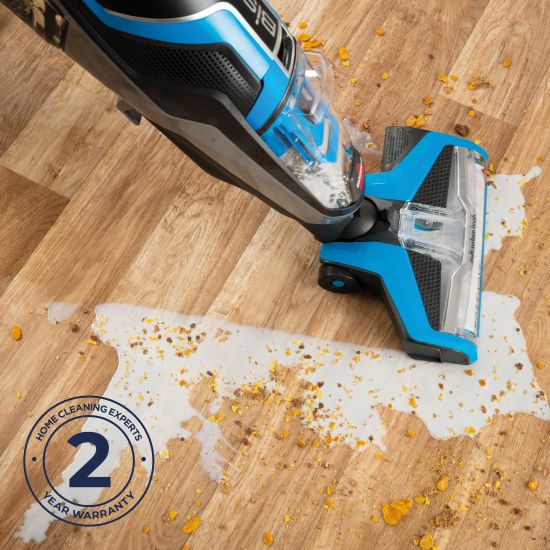
Wood swells when it absorbs water and shrinks back unevenly as it dries, which is what creates cupped boards, dark seam lines, and a cloudy finish over time. A robot vacuum’s wheels and brush roll pose the same low scratch risk as any other robot cleaner – the mopping side is what’s different, because it’s the only automatic wood floor cleaner category that puts liquid directly on the floor with no person there to notice a pad has gone from damp to soaked.
Three design details separate a combo unit that manages this well from one that doesn’t. A micro-pump or metered water dial controls exactly how much liquid reaches the pad per pass, instead of a passive gravity-fed reservoir that just keeps dripping. A carpet or rug sensor automatically lifts the mop pad on contact, so a rug never ends up soaked the way it would under a robot with no lift mechanism. And a self-wringing or self-cleaning dock keeps the pad from sitting wet in the bin between runs, which matters more than people expect – a pad left damp for days grows mildew and then spreads that smell across the next mopping pass.
Robot Vacuum-Mop Combo vs. Automatic Spray Mop: Which One Do You Actually Need
Choose a robot vacuum-mop combo if you want the floor cleaned with zero hands-on time and you’re willing to manage water settings and rug placement. Choose a manual automatic spray mop instead if you want direct control over exactly where and how much liquid lands – useful on a floor with a lot of area rugs or furniture legs a robot has to route around, since a person can lift the mop over a rug edge that would otherwise catch a robot’s pad. Our Swiffer dry-Sweeper vs. WetJet comparison breaks down that manual side in more detail, including which finish types the WetJet’s cleaning solution can affect.
Features That Actually Matter for Hardwood Safety
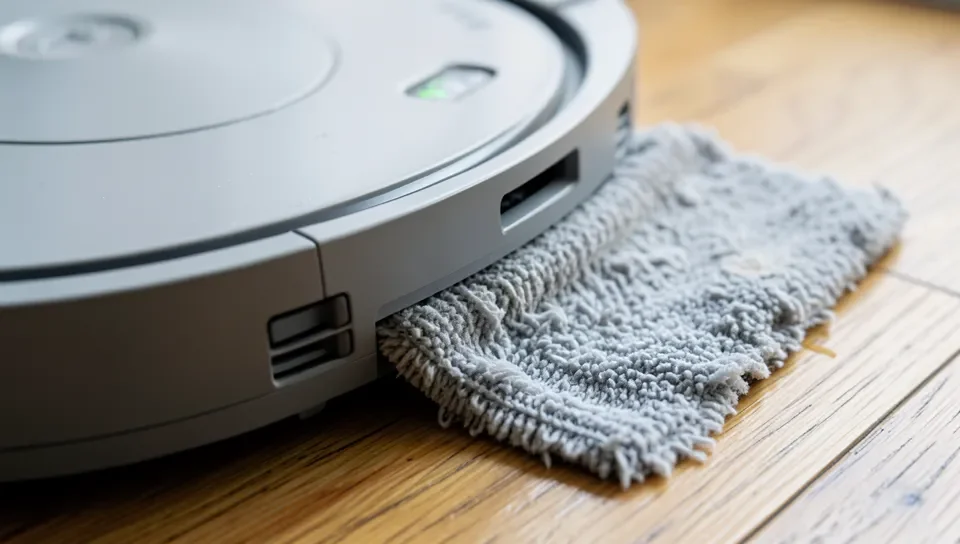
Adjustable water flow. Look for a named low or “eco” mopping mode, not just a single fixed setting – that’s the control that keeps a pad damp instead of saturated.
Automatic mop-lift on carpet. The robot should detect a rug and either raise the pad or stop mopping before it crosses onto fabric, since a mop pad dragged over carpet also drags carpet moisture back onto the next stretch of hardwood.
Soft microfiber pads, not stiff scrub pads. Microfiber picks up grime without the abrasive texture of a scrubbing pad, which matters most on floors with a worn or thin finish.
A dock that dries or at least airs out the pad. Even a basic dock that keeps the pad elevated off the base plate between runs beats one that leaves it balled up wet in a bin.
How to Set One Up Safely on Hardwood Floors
Confirm the floor is sealed hardwood, not raw or unfinished wood, before running any wet mode – unsealed wood has no barrier against water and a robot mop will find every open seam. Start on the lowest water setting for the first two or three runs and check a low-traffic corner immediately after: the pad should come back damp enough to leave a faint sheen that dries within a couple of minutes, not a wet patch that’s still visible ten minutes later.
Clear area rugs and loose mats out of the room for early runs until you’ve confirmed the robot’s carpet sensor reliably lifts the pad – a false negative on an inexpensive unit’s sensor is the most common way a rug ends up soaked. Once you trust the mop-lift behavior, rugs can stay down. Empty and rinse the clean-water tank after each session rather than letting standing water sit in the reservoir, and pull the pad off the dock to air-dry if the unit doesn’t do that step on its own.
Frequently Asked Questions
Is an Automatic Wood Floor Cleaner Safe for Hardwood Floors?
Yes, as long as it controls moisture. A robot vacuum-mop combo is safe for sealed hardwood when it uses a micro-pump or adjustable dial to limit how much water reaches the pad and automatically lifts that pad on carpet or rugs. The finish, not the robot’s brushes, is what actually gets damaged by a pad left dripping wet on wood.
What’s the Difference Between an Automatic Wood Floor Cleaner and a Robot Vacuum?
An automatic wood floor cleaner usually means a robot vacuum-mop combo – one unit that both vacuums dry debris and wet-mops in the same run. A plain robot vacuum only handles dry dust and dirt with brushes and suction and never adds water, so it carries none of the moisture risk a combo unit does.
Can I Use an Automatic Wood Floor Cleaner on Unsealed Hardwood?
No. Unsealed or heavily worn hardwood has no protective finish to keep water from soaking into the grain, so even a robot with a low water setting can cause swelling or dark staining along the seams. Stick to dry vacuuming only until the floor is refinished and sealed.
How Do I Stop a Robot Mop From Leaving Water Marks on Hardwood?
Run it on the lowest water-flow or ‘eco’ setting first and check a low-traffic corner after one pass. If the pad comes back soaked rather than just damp, lower the setting further or switch to vacuum-only mode and mop that section by hand instead.
How Often Should I Run an Automatic Wood Floor Cleaner on Hardwood?
Vacuum-only mode is fine daily since it’s just dry debris pickup. Save the mopping pass for two to three times a week – hardwood doesn’t need daily wet cleaning, and less frequent moisture exposure means less cumulative risk to the finish.
Conclusion
An automatic wood floor cleaner is safe for hardwood when its design treats water as the variable to control, not an afterthought – a metered pump, a reliable carpet sensor, and a pad that isn’t left soaking between runs matter more than suction power or smart mapping. Start on the lowest wet setting, watch the first few runs, and the moisture risk that actually causes hardwood damage stays manageable.
Sponsored / affiliate links. As an Amazon Associate I earn from qualifying purchases. I may earn additional commission from eligible campaigns.