Aura vs. Regal Select: Best Benjamin Moore Paint for Wood Trim
Benjamin Moore Aura and Regal Select are both excellent interior paints, but they are not interchangeable. Aura is the thicker, richer, more scuff-resistant premium line built for color depth and hard wear; Regal Select is the washable, stain-release mid-tier line that costs less per gallon and still holds up well in normal household use. For wood trim, doors, and cabinets specifically, the right choice depends less on which paint “wins” in general and more on how much handling that particular piece of wood takes every day.
Aura vs. Regal Select at a Glance
Both are top-of-line Benjamin Moore products, sold through authorized Benjamin Moore dealers rather than big-box stores. Aura uses a higher-solids, full-spectrum pigment formula that covers dark colors in fewer coats and resists scuffing, which is why Benjamin Moore recommends it for high-traffic rooms. Regal Select uses stain-release technology to stay washable and wipes clean without heavy scrubbing, at a noticeably lower price per gallon. Before you pick either one for a trim or cabinet project, it’s worth having the right applicator on hand, since a cheap brush will undercut either paint’s finish quality.
Best Brush for Painting Wood Trim
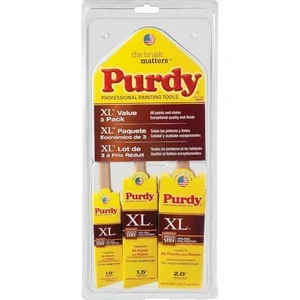 |
Purdy XL Brush 3-Pack – $21.98 Whichever Benjamin Moore paint you choose, a dedicated trim brush set keeps both Aura and Regal Select from pooling or leaving marks on narrow wood profiles.
|
What Makes Aura Different
Aura is Benjamin Moore’s flagship interior line, and the formula backs that up. It’s noticeably thicker in the can than Regal Select, which lets it lay down richer color and hide the wall or surface underneath in fewer coats, often just one on a color change of similar value. Aura’s Color Lock technology keeps colors from fading or shifting under different lighting, and the paint dries to a surface that resists scuffs and scratches better than Regal Select. That combination is why Benjamin Moore positions Aura for high-traffic areas: entryways, hallways, kids’ rooms, kitchens. The tradeoff is price. Aura typically runs meaningfully more per gallon than Regal Select, and for a room that doesn’t see much wear, that premium doesn’t always pay for itself.
What Makes Regal Select Different
Regal Select is still a genuinely high-quality paint, not a budget compromise. Its stain-release technology means everyday marks, fingerprints, and light grease wipe off without dulling the sheen, which matters on anything people touch regularly. It comes in five interior sheens (flat, matte, eggshell, pearl, and semi-gloss), giving you more finish options than Aura for matching a specific look. Application is forgiving, it self-levels well and brushes out smoothly, so it’s an easier paint for a DIY painter to get a clean result with on a first attempt. For walls, ceilings, and lower-handling surfaces, Regal Select covers the same low-VOC, mildew-resistant bases as Aura at a lower cost.
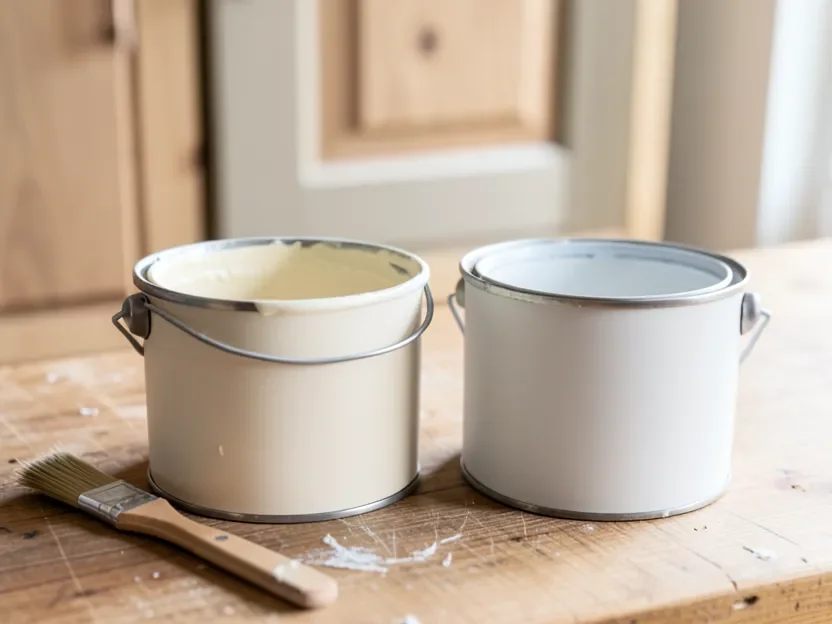
Why Wood Trim Needs a Different Answer Than Walls
Most Aura-vs-Regal-Select comparisons are written for walls, but baseboards, door casings, window trim, and cabinet doors live a harder life than a wall ever does. Trim gets kicked by vacuum cleaners, bumped by furniture, and touched constantly around doorknobs and drawer pulls. Cabinet doors near a stove or sink take grease, water, and repeated hand contact every single day. That’s a fundamentally different durability problem than a wall that mostly just needs to look good.
On bare or previously painted wood, adhesion also matters more than it does on drywall. Wood moves with humidity, and any glossy existing finish needs to be scuffed or de-glossed before repainting or the new coat can peel. A stain-blocking primer is worth the extra step on wood trim, especially over knots or old oil-based paint, regardless of which Benjamin Moore line you use on top. Skipping primer is a common reason a perfectly good paint looks like it “failed” within a year.
Given that, Aura’s scuff resistance is a real advantage on high-handling trim, like a mudroom baseboard or a hallway doorframe kids run past all day. Regal Select’s washability is enough for trim in a guest room or formal living room that rarely gets touched. The wall-paint answer and the trim-paint answer for the same house are often two different products.
The applicator matters here too. Trim work is almost entirely cutting in straight lines along a narrow profile, and a wide wall roller or a cheap brush that sheds bristles will fight you the whole way. A dedicated angled sash brush, sized for the width of the trim you’re working on, keeps both Aura and Regal Select from pooling in corners or leaving visible brush marks once the paint dries.
The Line Most Comparisons Skip: Benjamin Moore Advance
Here’s the gap in almost every Aura-vs-Regal-Select article: neither paint is actually the Benjamin Moore product built specifically for trim, cabinets, and doors. That’s Advance, a waterborne alkyd that cures to a hard, furniture-quality finish closer to old-school oil paint than either Aura or Regal Select. It comes only in satin, semi-gloss, and high-gloss (no flat or matte, because it’s not meant for walls), self-levels well enough to hide brush marks, and cleans up with soap and water instead of solvents.
The catch is dry time: Advance needs about 16 hours before a second coat, far longer than Aura or Regal Select, because that slow cure is exactly what lets it level out so smoothly. For a cabinet door refinish or a trim repaint where the finish quality matters more than the schedule, Advance is worth asking your Benjamin Moore dealer about alongside Aura and Regal Select, not just picking between the two more commonly discussed lines. If you are weighing Regal Select against Benjamin Moore’s contractor-grade options too, see our Ultra Spec vs. Regal comparison.
Which Sheen to Use Where
Sheen matters as much as which paint line you pick. Flat and matte finishes hide surface imperfections but scuff and mark more easily, so they belong on walls and ceilings, not trim. Eggshell is a reasonable middle ground for lower-traffic walls. For wood trim, doors, and cabinets, pearl or semi-gloss is the usual recommendation because those finishes wipe clean and hold up to repeated contact, and semi-gloss also visually separates the trim from a flatter wall color, which is why it’s the traditional trim sheen. High-gloss shows brush strokes and surface flaws more, so it’s better reserved for smaller detail work or furniture where you can control the application closely. Not sure whether to step down a sheen level on a repaint? See our guide on painting flat over semi-gloss.
Cost Comparison
Regal Select is the more budget-friendly of the two. Depending on your dealer and region, it typically runs around $70-75 per gallon. Aura sits well above that, commonly $70-125 per gallon depending on finish and color, and often averages closer to $90-95. That gap adds up fast on a whole-house trim package across a dozen doors and multiple rooms of baseboard.
Aura’s higher coverage per coat can offset part of that premium on a dramatic color change, since a high-solids formula sometimes means one fewer coat to fully hide a dark or bold color underneath. That’s a real labor savings, not just a marketing claim, since fewer coats means less time and fewer brush-and-roller cleanups. Still, on a straightforward color match or a lighter-to-lighter repaint, Regal Select’s lower price per gallon usually wins on pure cost.
A practical way to split the budget: use Regal Select on the bulk of low-handling trim and walls, and reserve Aura for the specific surfaces that take the most abuse, a kitchen doorframe, a mudroom baseboard, a front entry door casing. You get Aura’s durability exactly where it earns its price, without paying the premium across every linear foot of trim in the house.
Frequently Asked Questions
Is Aura or Regal Select better for kitchen cabinets?
Aura’s scuff resistance suits cabinets that get heavy daily handling, but for a true cabinet-grade finish, Benjamin Moore Advance is purpose-built for that job and worth comparing against both before you commit.
Can I use Regal Select on wood trim instead of a dedicated trim paint?
Yes, Regal Select in pearl or semi-gloss holds up fine on trim with normal handling. It’s mainly on high-contact trim, like a mudroom or a hallway with heavy foot traffic, where Aura’s added scuff resistance starts to show a real difference.
Do Aura and Regal Select need a primer on bare wood?
Yes. Bare or previously glossy wood should get a stain-blocking primer first. Skipping primer is one of the most common reasons a paint job on trim looks like it failed within a year, regardless of which paint line went on top.
Final Verdict
For walls and lower-traffic surfaces, Regal Select delivers most of what most homeowners need at a friendlier price. For high-handling wood trim, cabinet fronts, and entry doors, Aura’s scuff resistance earns its premium. And if the project is specifically a cabinet or trim refinish where a hard, furniture-quality finish matters more than speed, it’s worth asking your dealer about Benjamin Moore Advance before you commit to either one.
Sponsored / affiliate links. As an Amazon Associate I earn from qualifying purchases. I may earn additional commission from eligible campaigns.