Removing Dog Urine Stains From Hardwood Floors: Proven Fix
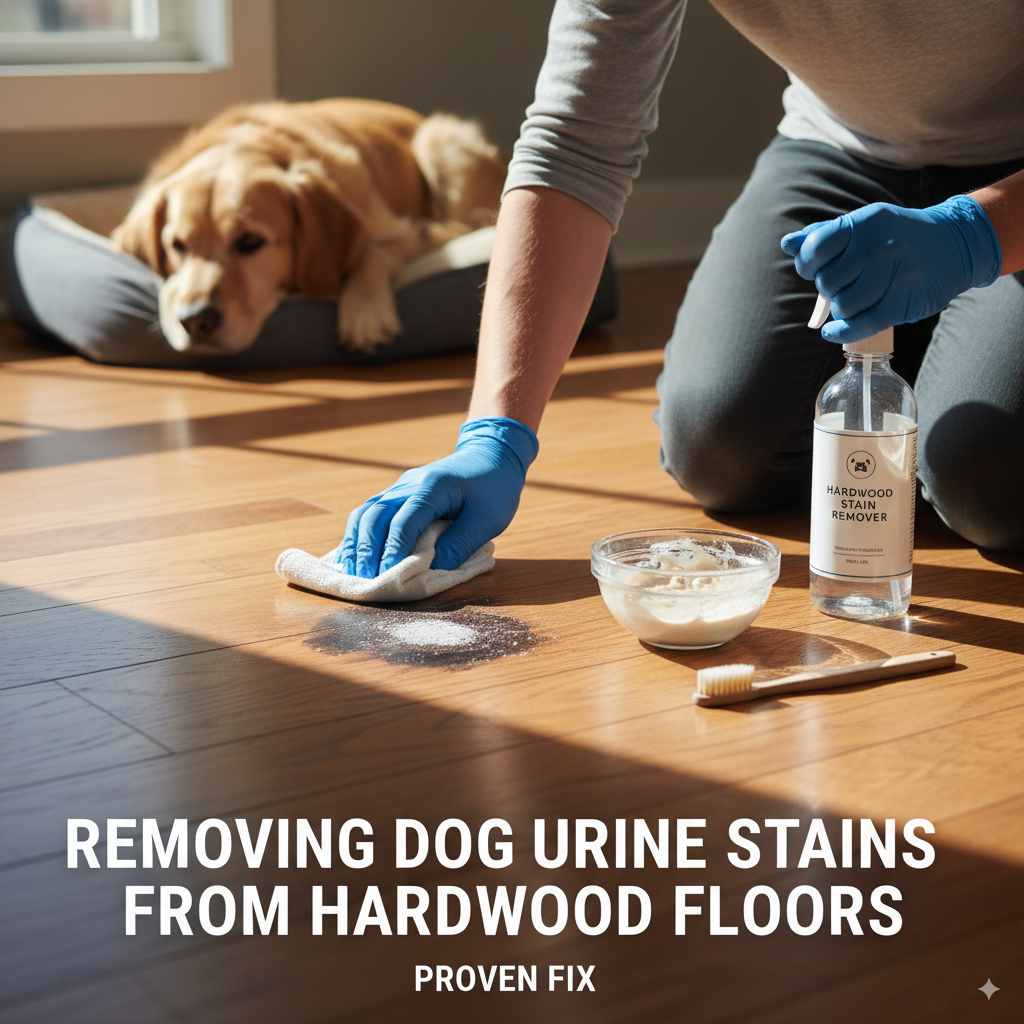
Removing dog urine stains from hardwood floors is achievable with a simple, step-by-step approach. Gentle cleaning solutions, proper blotting, and patience are key to restoring your floors without damage. This guide provides proven methods to tackle these common accidents effectively.
Accidents happen, especially when you have furry friends. Seeing a dark, unsightly stain appear on your beautiful hardwood floors from dog urine can be disheartening. These stains aren’t just an eyesore; they can also lead to lingering odors and even damage the wood if left untreated. But don’t despair! With the right knowledge and a few common household items, you can tackle these unwelcome spots. This guide will walk you through proven methods to effectively remove dog urine stains from hardwood floors, bringing back their natural beauty.
Why Dog Urine Stains Are Tricky on Hardwood
Hardwood floors, with their porous nature, can be especially vulnerable to liquid spills like dog urine. When urine penetrates the wood, it leaves behind pigments and acidic compounds that cause discoloration. The longer the urine sits, the deeper it seeps, making the stain harder to remove. The natural grains of the wood can absorb and hold onto these elements, making them stubborn. Additionally, if not properly cleaned, the uric acid in urine can break down the wood’s finish and even the wood itself over time, leading to permanent damage.
Understanding the Damage
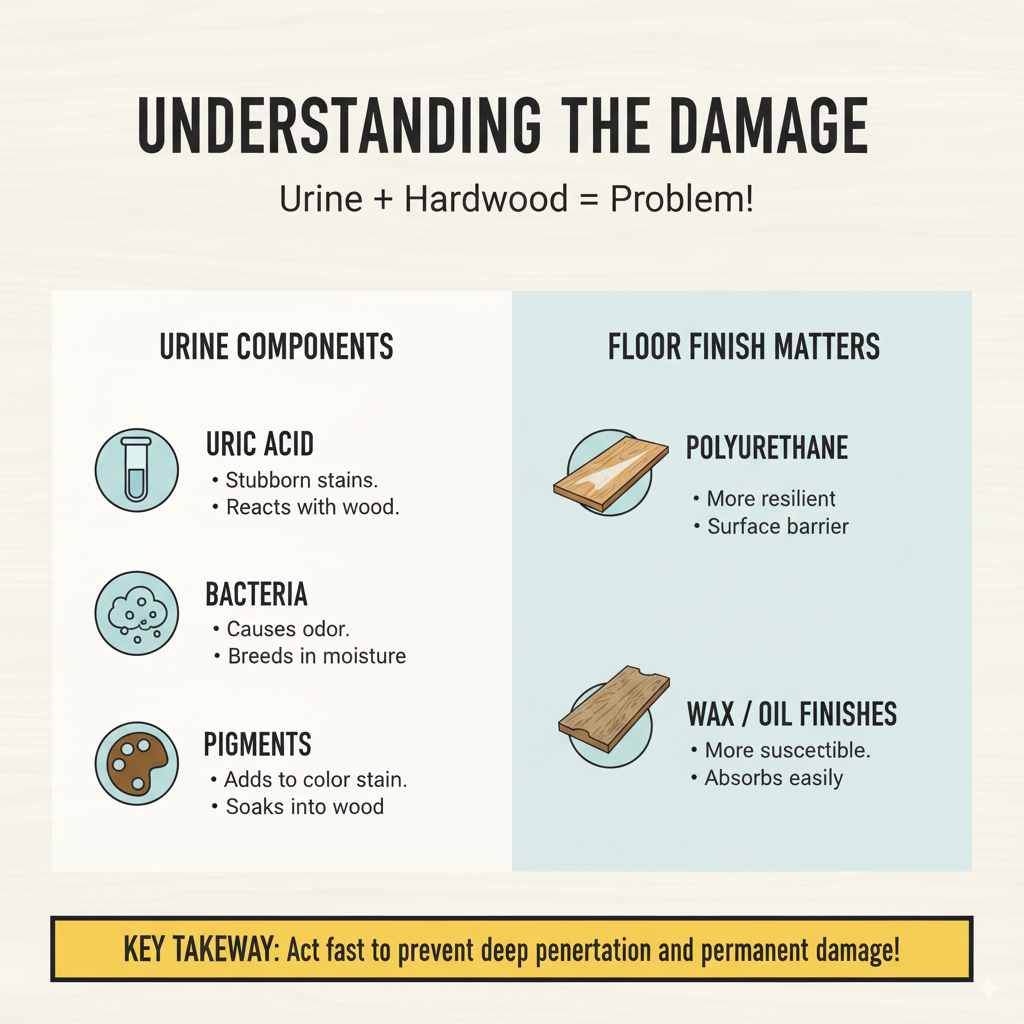
Before we dive into the cleaning process, it’s important to understand what’s happening when your dog urinates on your hardwood. Dog urine contains several components that contribute to staining and odor, including:
- Uric Acid: This is the main culprit behind stubborn stains. It doesn’t dissolve easily in water and can react with the wood’s finish and the wood itself.
- Bacteria: Urine is a breeding ground for bacteria, which cause the unpleasant odor associated with pet accidents.
- Pigments: The natural color of urine can also contribute to staining, especially when it’s allowed to soak into the wood.
The type of finish on your hardwood floor also plays a role. Polyurethane finishes are generally more resilient than older wax or oil finishes, which can be more susceptible to damage from urine. Identifying your floor’s finish can help you choose the most appropriate cleaning method.
Essential Tools and Materials
Gathering your supplies before you start will make the cleaning process smoother. You’ll likely have most of these items already at home.
What You’ll Need:
- Paper towels or clean, absorbent cloths
- Soft-bristle brush or an old toothbrush
- Distilled white vinegar
- Baking soda
- Water
- Mild dish soap (optional, for tougher stains)
- Hydrogen peroxide (3%)
- Cotton balls or pads
- Spray bottle (optional)
- Protective gloves
- Eye protection (especially when using hydrogen peroxide)
- Vacuum cleaner with a soft brush attachment
Step-by-Step Guide to Removing Dog Urine Stains
The key to success is acting quickly and using the right techniques to lift the stain without spreading it or damaging the wood. This method focuses on neutralizing the odor and lifting the stain gently.
Step 1: Immediate Cleanup is Crucial
The moment you discover a fresh accident, grab paper towels or absorbent cloths and blot up as much of the liquid as possible. Don’t rub, as this can push the urine deeper into the wood grain. Press down firmly to absorb the moisture.
Step 2: Neutralize with Vinegar Solution
Once you’ve blotted up the excess, it’s time to neutralize the uric acid and odor. Mix a solution of equal parts distilled white vinegar and water. You can use a spray bottle for this or simply dampen a cloth with the solution.
Gently wipe the affected area with the vinegar-water solution, working from the outside of the stain inward to avoid spreading it. Allow the solution to sit for about 5-10 minutes. Vinegar is a natural disinfectant and deodorizer that breaks down the uric acid crystals, making them easier to remove. For more detailed information on the properties of vinegar as a cleaner, you can refer to resources from university extensions, such as University of New Hampshire Extension.
Step 3: Rinse and Blot
After the vinegar solution has had time to work, dampen a clean cloth with plain water and wipe the area to rinse away the vinegar. Again, blot the area dry with clean paper towels or a dry cloth. Ensure the wood is as dry as possible to prevent moisture damage.
Step 4: Tackle Lingering Stains or Odors with Baking Soda
If a faint stain or odor persists after the vinegar treatment, baking soda can be your next go-to. Baking soda is a fantastic natural absorbent and deodorizer. Lightly sprinkle a generous amount of baking soda over the stained area.
Let it sit for several hours, or even overnight, to absorb any remaining moisture and odor. Once it has had time to work its magic, vacuum up the baking soda thoroughly using a soft brush attachment on your vacuum cleaner to avoid scratching the floor. You can also gently sweep it up.
Step 5: For Stubborn, Set-In Stains: Hydrogen Peroxide (Use with Caution!)
For very old or deep stains that haven’t responded to earlier methods, a mild hydrogen peroxide solution might be necessary. Important: Hydrogen peroxide can lighten wood, so this method should be used with extreme caution and tested in an inconspicuous area first. Always wear gloves and eye protection when handling hydrogen peroxide.
Mix a solution of 1 part 3% hydrogen peroxide with 5 parts water. Dip a cotton ball or pad into the solution, wring out any excess so it’s just damp, not dripping. Gently dab the stained area with the damp cotton ball. You may need to repeat this process several times, allowing the area to dry completely between applications. Once the stain appears to be gone, wipe the area with a clean, damp cloth to remove any peroxide residue, and then blot it dry.
A guide on the safe use of hydrogen peroxide in cleaning can be found from reputable sources like U.S. Environmental Protection Agency (EPA), detailing its disinfecting properties and considerations for use.
Restoring the Finish
After the stain is removed and the wood is completely dry, you might notice that the area looks dull or slightly different from the surrounding flooring. This is because the cleaning process, especially with hydrogen peroxide, can affect the floor’s finish. Depending on the severity, you might need to:
- Buff the area: Sometimes, simply buffing the dry wood with a soft cloth can help restore some of its shine.
- Apply a wood polish: For minor dullness, a bit of wood polish designed for hardwood floors can work wonders.
- Reapply finish: For more significant dulling or marks left by the stain, you might need to lightly sand the affected area and reapply a compatible wood finish or sealant. This is a more advanced step and may require consulting a flooring professional if you’re unsure.
| Cleaning Method | Best For | Pros | Cons |
|---|---|---|---|
| Vinegar & Water Solution | Fresh to moderately old stains, odor neutralization. | Natural, inexpensive, effective for odor and mild stains, safe for most finishes. | May not remove deep, set-in stains affecting the wood itself. |
| Baking Soda | Lingering odors and moisture absorption. | Excellent at absorbing odors and any residual moisture. Safe. | Only addresses surface issues and odor, not deep stains. |
| Hydrogen Peroxide (Diluted) | Stubborn, set-in stains that affect wood color. | Can lift deep discoloration. | Risk of lightening or damaging wood finish; requires patch testing; use with caution. |
Preventing Future Stains
The best approach to dealing with dog urine stains is to prevent them altogether. Here are some tips:
- Frequent Potty Breaks: Ensure your dog has regular opportunities to go outside, especially after waking up, after meals, and before bedtime.
- Positive Reinforcement: Reward your dog enthusiastically when they go to the bathroom in the designated outdoor spot.
- Clean Accidents Immediately: The quicker you clean up, the less likely a stain is to set in.
- Address Behavioral Issues: If your dog is having frequent accidents, try to determine the cause. This could be due to anxiety, a medical issue, inadequate training, or changes in routine. Consult your veterinarian or a professional dog trainer if needed.
- Consider Pet Gates or Enclosures: For puppies or dogs still being housetrained, use gates or create designated safe spaces to confine them when unsupervised.
- Waterproof Mats: Place waterproof mats under food and water bowls to catch spills, and consider one near your dog’s bedding.
- Look into Wood Sealants: For very high-traffic or outdoor-adjacent areas, discuss enhanced sealants with your flooring installer that might offer better protection.
When to Call a Professional
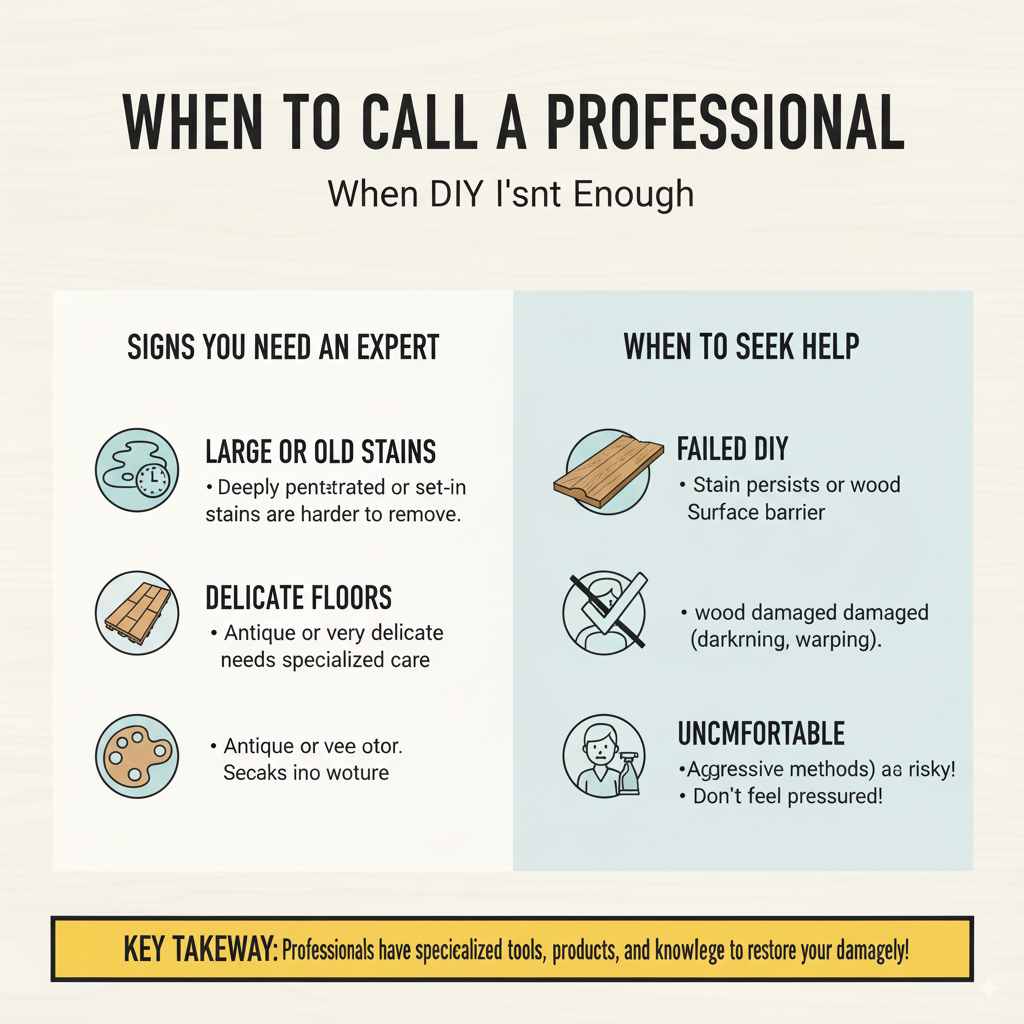
While most dog urine stains can be managed with at-home remedies, there are times when it’s best to call in the experts. If:
- The stain is very large or has been present for a long time.
- You have an antique or very delicate hardwood floor.
- You’ve tried the recommended methods, and the stain persists or the wood appears damaged (darkening, warping, or splintering).
- You are uncomfortable attempting more aggressive cleaning methods like using hydrogen peroxide or refinishing.
A professional flooring specialist or a specialized pet stain and odor removal service will have access to commercial-grade products and equipment, and the expertise to treat the stain without further damaging your floors. For instance, some professional services use enzymatic cleaners specifically designed to break down organic matter from pet accidents. You can find general information on wood floor care and maintenance from organizations like the National Wood Flooring Association (NWFA), which can help you understand when professional intervention might be necessary.
Frequently Asked Questions (FAQ)
What is the fastest way to remove a dog urine stain from hardwood?
The fastest way is to blot up as much liquid as possible immediately, then treat with a 1:1 solution of white vinegar and water, blot dry, and if needed, vacuum up baking soda. Act quickly to prevent staining.
Can I use bleach on dog urine stains on hardwood?
Bleach is generally not recommended for hardwood floors as it can damage the finish and strip the color of the wood, making the problem worse. Stick to milder, pH-neutral cleaners like vinegar or specialized pet stain removers.
How do I remove the smell of dog urine from hardwood floors?
Vinegar and water solution helps neutralize the odor. Baking soda is excellent for absorbing lingering smells. For deep odors, enzymatic cleaners specifically designed for pet stains are the most effective as they break down the odor-causing molecules.
Will hydrogen peroxide damage my hardwood floor?
Hydrogen peroxide can lighten wood and its finish if used incorrectly or too concentrated. Always dilute it and test a small, hidden area first. Use sparingly and only for stubborn stains after other methods have failed.
What if the urine has soaked into the subfloor?
If urine has saturated the subfloor, you might notice a persistent odor even after treating the surface. This often requires more intensive cleaning, potentially involving lifting boards to access and treat the subfloor directly, or even replacing damaged subfloor sections. This is usually a job for a professional flooring contractor.
Can I use a steam cleaner on dog urine stains on hardwood?
It’s generally not recommended to use steam cleaners on hardwood floors, especially for pet stains. The heat and moisture can warp, cup, or damage the wood and its finish, and can potentially set the stain further.
How often should I check my hardwood floors for pet stains?
It’s good practice to do a quick visual check of your hardwood floors daily, especially if you have pets that are prone to accidents or are still being housetrained. Pay attention to areas where your pet spends a lot of time or sleeps.
Conclusion
Dealing with dog urine stains on hardwood floors doesn’t have to be a daunting task. By acting swiftly, employing the right cleaning agents like vinegar and baking soda, and using the gentle blotting and cleaning techniques outlined above, you can effectively remove most common pet accidents. Remember to always test any cleaning solution in an inconspicuous spot first, especially when considering treatments like hydrogen peroxide. Prevention remains the best cure, so focusing on consistent training and regular potty breaks for your dog will save you a lot of potential heartache. With a little patience and the right approach, your hardwood floors can look as good as new, even after an unfortunate accident.