Can You Stain Douglas Fir? (Why It Blotches + How to Fix It)
Yes, Douglas fir takes stain well, but its alternating grain pattern — soft earlywood bands next to dense latewood bands, per The Wood Database — often absorbs pigment unevenly, leaving blotchy or streaky color instead of a clean finish. Skipping a pre-stain conditioner like Varathane’s is the single most common cause of a botched Douglas fir stain job. This guide covers why the blotching happens, which stains resist it, and the exact prep steps for even color.
Why Douglas Fir Blotches When You Stain It
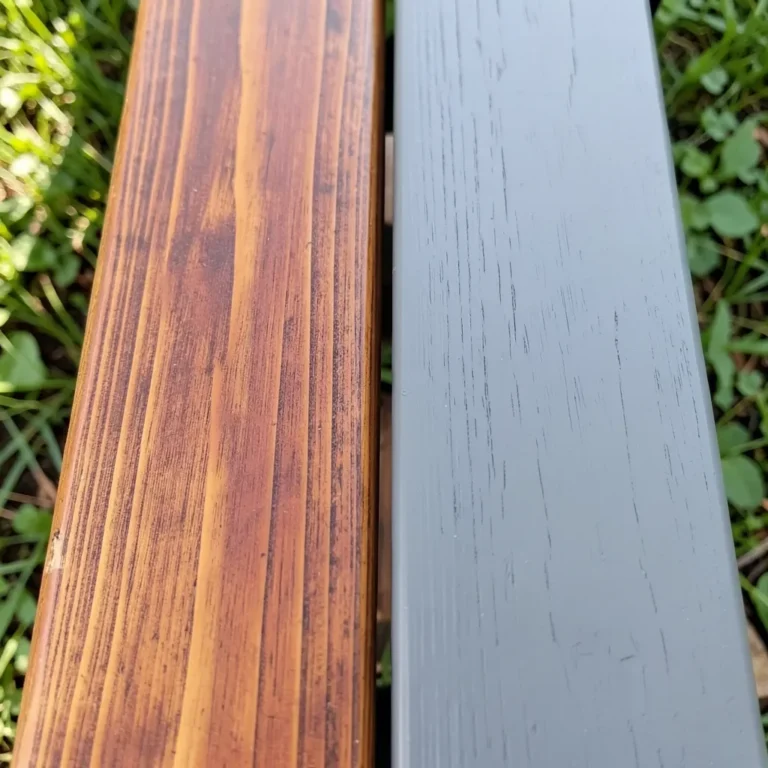
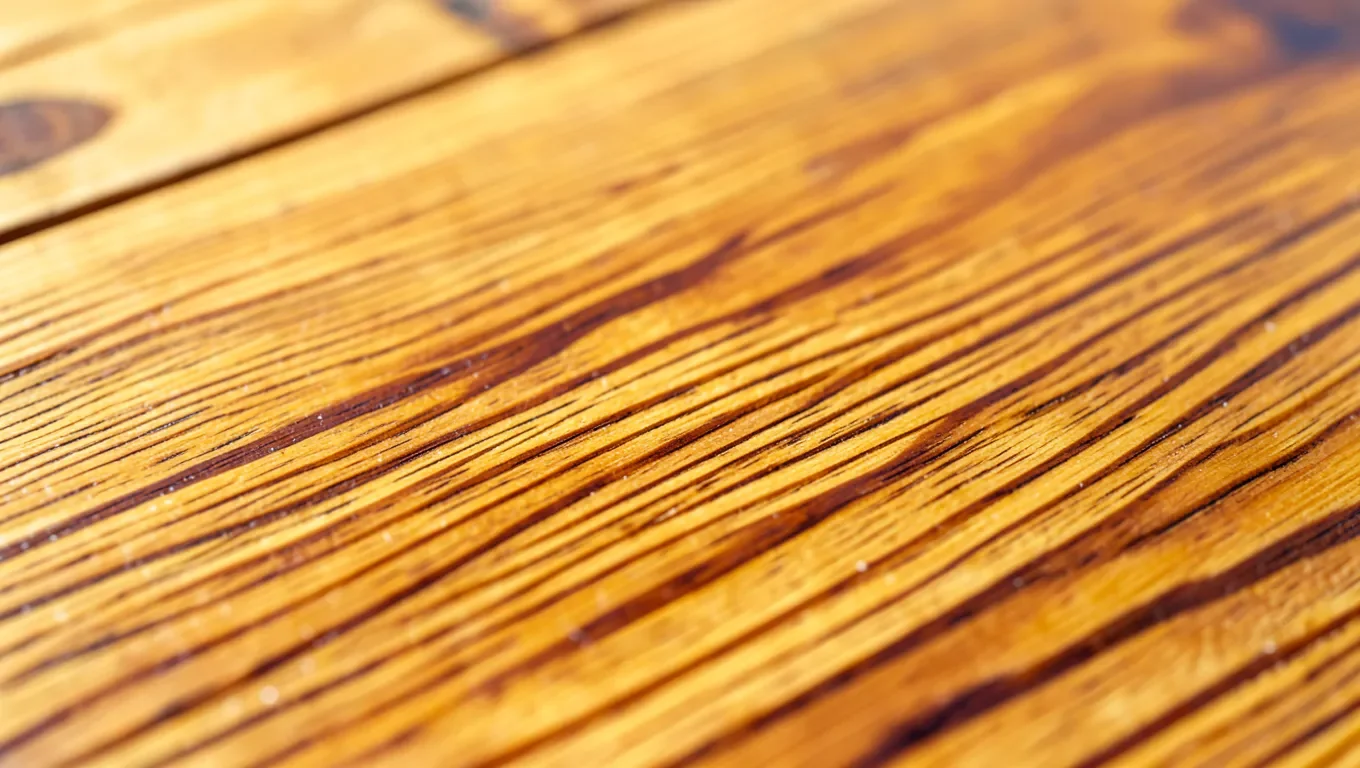
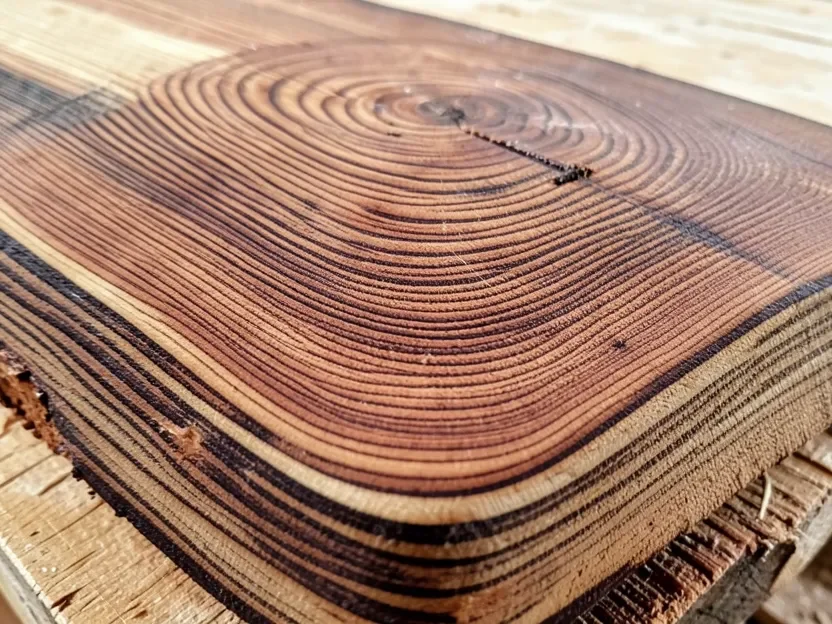
Douglas fir isn’t uniformly dense. Each growth ring alternates between soft, porous earlywood — laid down during the tree’s fast spring growth — and dense, tight-celled latewood formed in summer. That density swing is exactly why the wood is prone to blotching: liquid stain penetrates the open, porous earlywood far faster than it penetrates the dense latewood, so a single coat produces darker color in the soft bands and lighter color in the hard bands, even on a well-sanded board with no visible defects.
📊 Douglas fir’s specific gravity runs 0.45–0.51 with a Janka hardness of 620 lbf — the density gap between its earlywood and latewood growth rings is what drives uneven stain absorption. Source: The Wood Database, Douglas Fir species profile
This is the same mechanism behind blotching on birch, which we cover in our guide to staining birch — any species with a sharp density swing between growth rings will absorb stain unevenly unless you prep it first. Pine has a similar reputation for the same reason. Douglas fir’s especially bold, contrasty grain pattern just makes the unevenness more visible when it happens.
“The high contrast between the lighter earlywood and the darker and denser latewood can give this a bold grain patterning that isn’t seen on too many other North American softwoods.”
Does Kiln-Dried vs. Air-Dried Lumber Change How It Stains?
Yes, on top of the earlywood/latewood swing, how the lumber was dried matters too. Air-dried Douglas fir is generally less dense than kiln-dried stock, so it tends to absorb more stain overall. Kiln-dried lumber — which is what most big-box stores sell, since it’s more dimensionally stable — typically takes stain slightly lighter and more evenly, because drying at controlled temperature and moisture content produces a more consistent result board to board than air-drying does.
That said, kiln-drying doesn’t cancel out the density-driven blotching this guide covers — it just changes the starting point slightly. If you’re buying dimensional lumber specifically for a stain project, ask whether it’s kiln-dried (KD) or air-dried, and expect either one to still benefit from a pre-stain conditioner or gel stain.
Best Pre-Stain Conditioner Pick for Douglas Fir
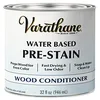 |
Varathane Pre-Stain Wood Conditioner (Quart) – $18.29 A water-based conditioner made to soak into softwoods like Douglas fir before stain goes on, so the porous earlywood bands covered above don’t absorb color faster than the denser latewood right next to them.
|
As an Amazon Associate we earn from qualifying purchases.
3 Ways to Get Even Color on Douglas Fir
There are three practical ways to fight blotching on Douglas fir, and they can be combined. A pre-stain wood conditioner partially seals the porous earlywood so it doesn’t pull in extra color. A gel stain sits on the surface instead of soaking in deeply, which limits how much the density difference can show through — see our gel stain vs. oil stain comparison for how the two behave on different species. A toner or dye stain, built up in thin, controlled coats, colors the surface more uniformly than a penetrating pigment stain; our dye vs. stain guide breaks down when dye makes more sense than traditional stain.
| Method | How It Works | Best For |
|---|---|---|
| Pre-stain wood conditioner | Partially seals porous earlywood before stain is applied | Any oil- or water-based penetrating stain |
| Gel stain | Thick consistency sits on the surface instead of soaking in unevenly | Projects where deep color saturation isn’t required |
| Toner or dye stain | Color is built up in thin, controlled coats over the surface | Fine furniture, projects wanting a consistent, uniform tone |
How to Stain Douglas Fir Step by Step
Gather 120- and 220-grit sandpaper, clean cloths, a pre-stain wood conditioner, your chosen stain, a brush or foam applicator, and protective gloves. Then follow these steps:
- Sand progressively: Sand bare Douglas fir with 120-grit, then 220-grit, always moving with the grain to avoid cross-grain scratches that will trap extra stain.
- Wipe off dust: Wipe the sanded surface with a clean, slightly damp cloth or tack cloth to remove all sanding dust before conditioning.
- Apply a pre-stain wood conditioner: Brush on a water-based pre-stain conditioner and let it set for about 30 minutes (check the can for the exact time) — this partially seals the porous earlywood bands.
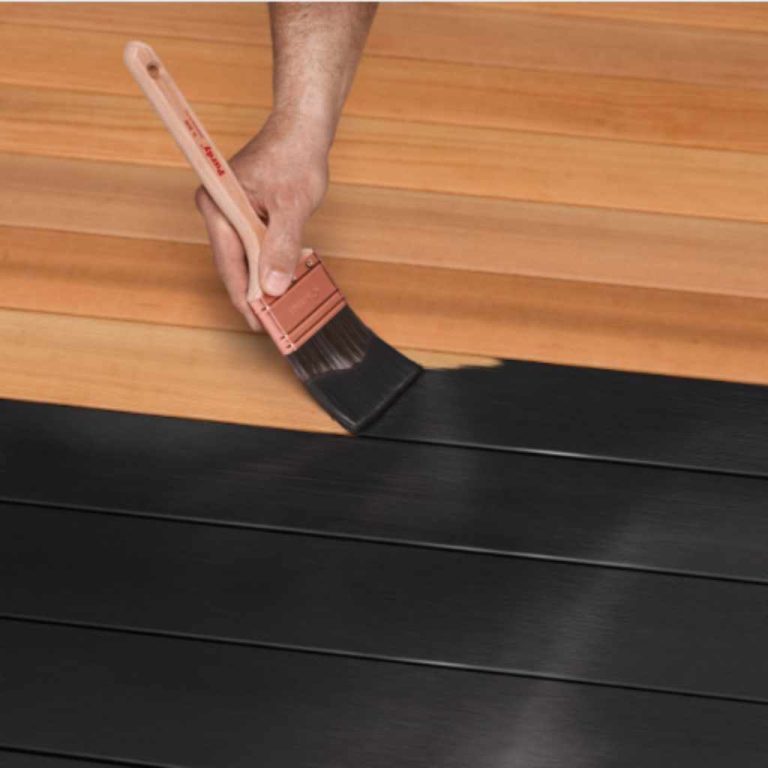
- Apply stain in thin, even coats: Brush or wipe stain on with the grain in a thin, even coat. Avoid flooding the surface, since excess stain pools in the soft earlywood and deepens blotching.
- Wipe off excess: After 5–10 minutes, wipe off excess stain with a clean cloth, working with the grain, so color doesn’t build up unevenly in low spots.
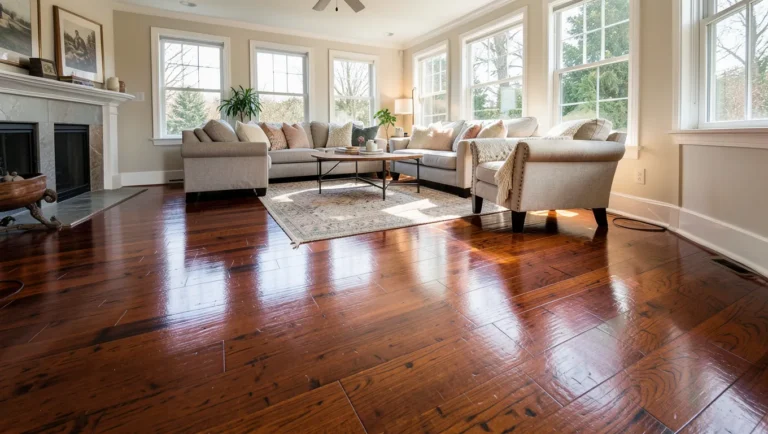
- Let it dry, then seal: Let the stain dry fully per the can’s instructions, then apply a topcoat to protect the color and grain.
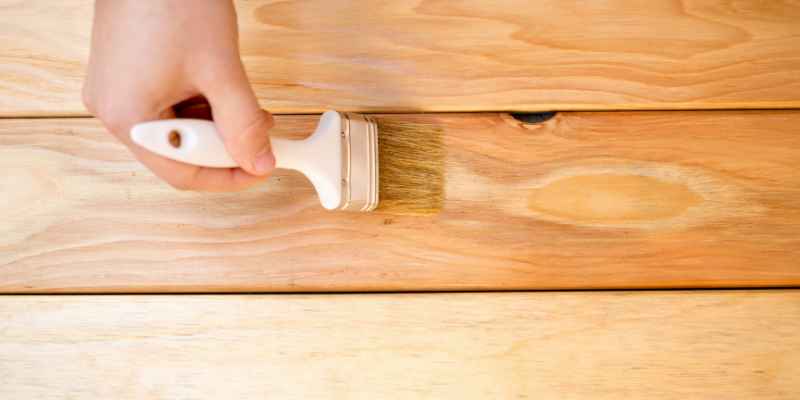
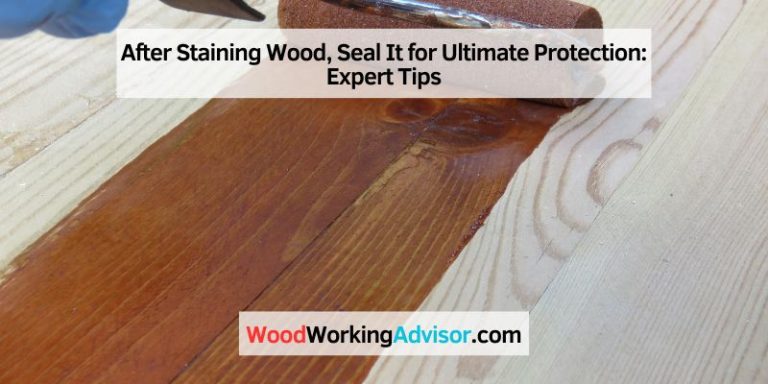
Once the stain has dried fully, seal it with a topcoat — see our guide on how to seal wood after staining for film-forming vs. penetrating sealer options and dry times.
Common Mistakes That Cause Blotching
- Skipping the pre-stain conditioner — the single most common cause of blotchy Douglas fir.
- Over-sanding past 220 grit — a too-smooth surface can seal the wood unevenly and actually worsen absorption differences.
- Flooding the surface with stain — excess stain pools in the soft earlywood bands and deepens the contrast instead of evening it out.
- Skipping the scrap-piece test — every can of stain behaves slightly differently on Douglas fir’s specific grain; a test patch shows the real result before you commit.
- Staining in high humidity or cold temperatures — both slow drying and can cause uneven set-up across the board.
Frequently Asked Questions
Can you stain Douglas Fir wood?
Yes, Douglas fir accepts stain well, but its alternating earlywood and latewood grain bands absorb color at different rates, which can leave blotchy or streaky patches if you skip a pre-stain conditioner. Sand to 220 grit, condition the wood, then apply stain in thin, even coats for the best result.
What stain works best on Douglas Fir?
Gel stain and toner or dye stains work best on Douglas fir because they sit on or near the surface instead of soaking deep into the wood, which limits how much the earlywood-versus-latewood density gap can show through. A penetrating oil stain applied without a wood conditioner is the most likely to blotch.
Do you need a pre-stain conditioner for Douglas Fir?
Yes, for most stain jobs. A pre-stain wood conditioner partially seals the soft, porous earlywood bands so they don’t pull in far more color than the denser latewood next to them. It’s the single most effective, lowest-cost fix for Douglas fir’s blotching tendency.
Why does Douglas Fir stain unevenly?
Douglas fir’s growth rings alternate between soft, porous earlywood (fast spring growth) and dense, tight-celled latewood (slower summer growth). Liquid stain penetrates the porous earlywood much faster than the dense latewood, so the same coat produces darker color in some bands and lighter color in others on the same board.
Can you use water-based stain on Douglas Fir?
Yes, water-based stain works on Douglas fir, and it dries faster and cleans up easier than oil-based stain. It typically shows the grain a little less dramatically than an oil-based stain, and it still needs a pre-stain conditioner or a gel/toner approach to avoid blotching on the same wood.
How long should pre-stain conditioner dry before staining Douglas Fir?
Most water-based pre-stain conditioners, including Varathane’s, are ready for stain in about 30 minutes, though this varies by product and by room temperature and humidity. Check the can’s label for the exact window — applying stain too soon, before the conditioner has set, can undo its blotch-reducing effect.
Does kiln-dried Douglas Fir stain differently than air-dried?
Yes. Air-dried Douglas fir is generally less dense than kiln-dried lumber and tends to absorb more stain overall, while kiln-dried stock (most big-box lumber) takes stain slightly lighter and more evenly. Either way, the earlywood-versus-latewood blotching risk is still there, so the same conditioner-first approach applies to both.
Conclusion
Douglas fir’s alternating earlywood and latewood bands are what cause the blotchy, streaky stain jobs it’s known for — not a flaw in your technique. A pre-stain wood conditioner, a gel stain, or a toner applied in thin coats all fight that unevenness in different ways. Sand progressively, condition the wood, apply stain thinly, and test on scrap first, and Douglas fir’s bold grain pattern becomes an asset instead of a liability.
Sponsored / affiliate links. As an Amazon Associate I earn from qualifying purchases. I may earn additional commission from eligible campaigns.