Ryobi Corded Circular Saw (CSB135L): Real Specs and Who It’s For
Ryobi’s current corded circular saw is the CSB135L: a 14-Amp, 7-1/4″ saw with a built-in ExactLine laser guide and a 0-56° bevel range, priced around $95. The corded design is the actual reason to consider it over Ryobi’s ONE+ battery lineup — full, consistent power for as long as you’re cutting, with no battery to run down mid-sheet on a long ripping job.
What the CSB135L’s Specs Actually Mean for Cutting
The Current Ryobi Corded Model
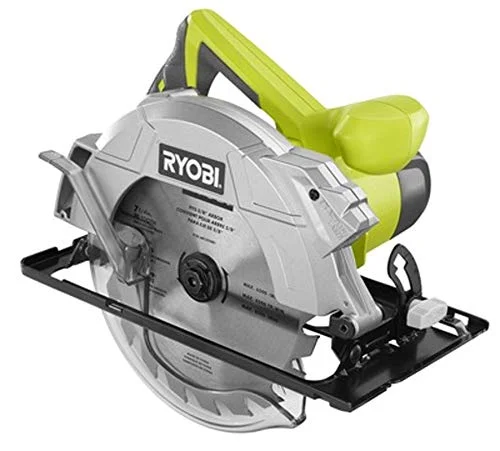 |
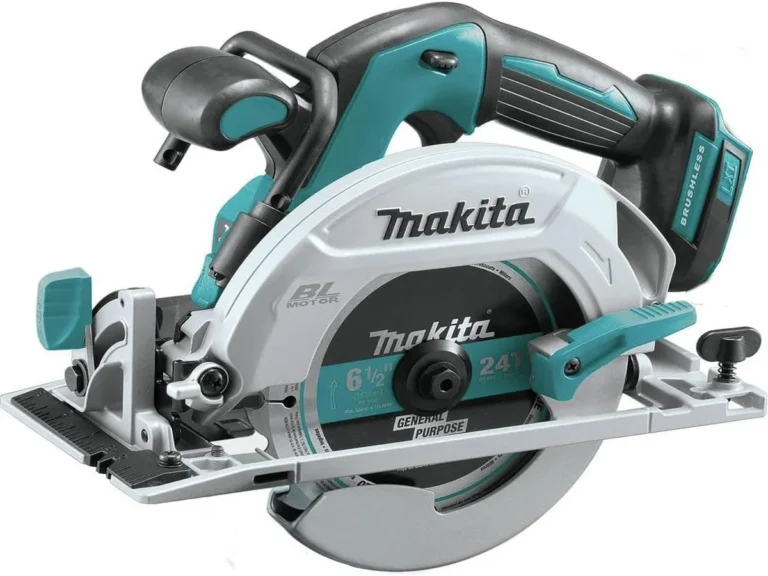
RYOBI CSB135L Corded Circular Saw – $94.95 14-Amp motor, 7-1/4″ carbide blade, built-in ExactLine laser guide, and a 0-56° bevel range — corded, so it’s full power for as long as you’re cutting.
|
14 Amps is a genuinely strong motor for a 7-1/4″ saw — enough to keep blade speed consistent through 2x lumber and engineered sheet goods without bogging down, which is where cheaper 10-12 Amp saws start to struggle. The 7-1/4″ blade size is the standard for this saw class, giving roughly 2-1/2″ of cut depth at 90° and about 1-3/4″ at a full 45° bevel — enough for standard framing lumber but not for cutting all the way through a doubled-up beam in one pass.
Setting Cutting Depth Correctly
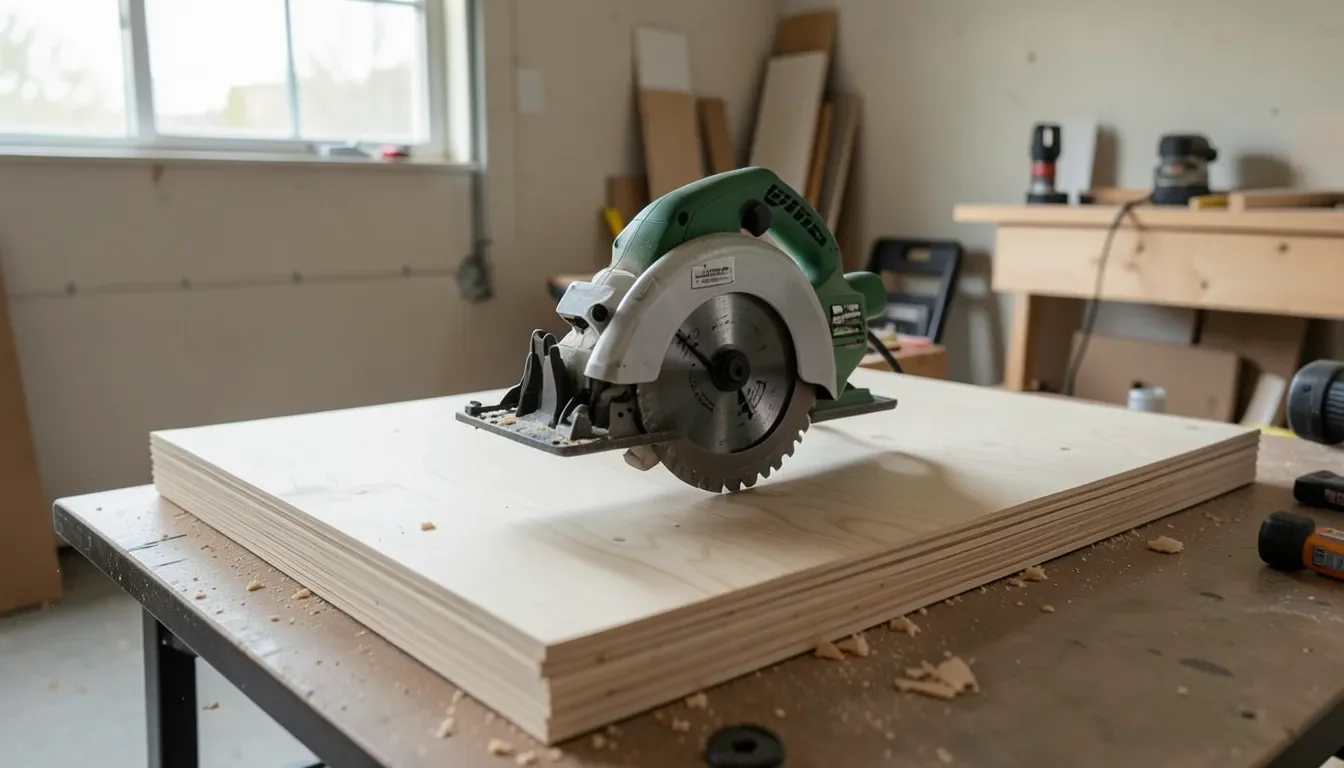
Set the blade depth so it extends about 1/4″ below the material being cut, not all the way through your full 2-1/2″ of available depth. A blade set unnecessarily deep exposes more spinning blade below the workpiece, which increases kickback risk and tear-out on the underside without any cutting benefit — the extra depth does nothing for cut quality once you’re through the material. Adjust depth with the saw unplugged, and recheck it after switching between different material thicknesses rather than leaving it at a “one depth fits everything” setting.
The ExactLine Laser: What It Helps With (and What It Doesn’t)
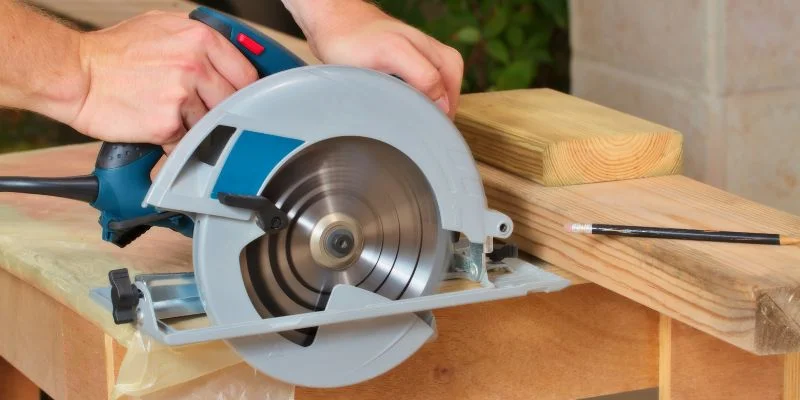
The built-in laser projects a line ahead of the blade to help track a freehand cut, which genuinely helps on long rip cuts where your eye alone tends to drift. It’s not a substitute for a guide rail or a clamped straightedge on a cut that actually needs to be precise — treat it as a visual aid for staying close to your pencil line, not a guarantee of a perfectly straight edge. Like any laser guide, it needs occasional realignment if the saw takes a hard bump, so check it against a known-straight line before trusting it on an important cut.
Corded vs. Ryobi’s ONE+ Cordless Circular Saws
Ryobi also sells 18V ONE+ cordless circular saws that share batteries with the rest of their ONE+ tool lineup — a real convenience if you already own ONE+ batteries. The trade-off is runtime and sustained power: a cordless saw’s battery drains faster under continuous heavy cuts and needs recharging, while the CSB135L keeps full torque as long as it’s plugged in. For a job with a lot of continuous ripping — sheet goods, deck boards, extended framing runs — corded avoids the battery-management interruption entirely. For quick trim cuts around a job site where mobility matters more than sustained power, cordless is the more convenient choice.
Kickback: What Causes It and How to Avoid It
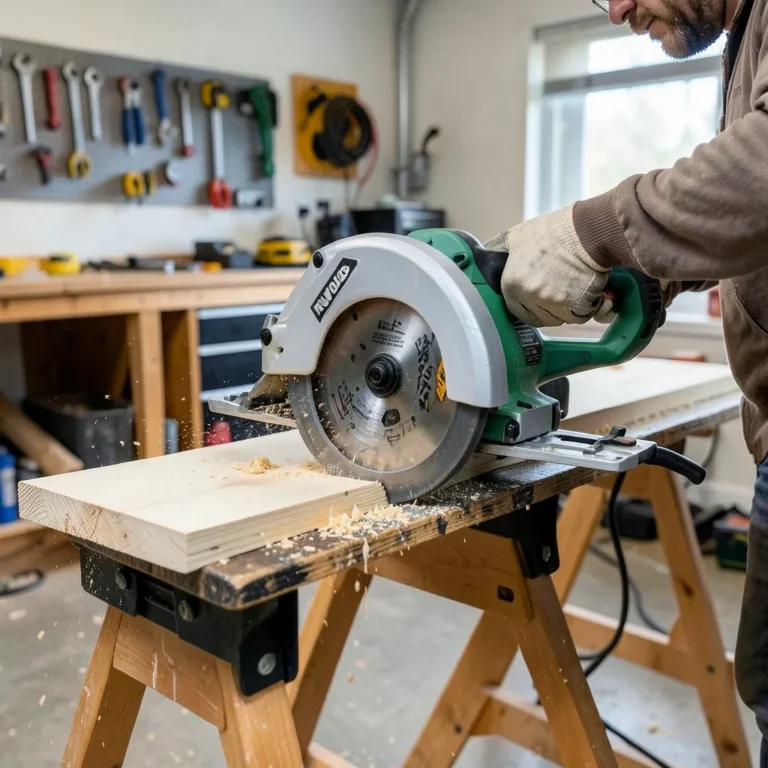
Kickback happens when the blade binds in the cut and the saw is thrown back toward you — it’s the single most common serious circular saw injury, and it’s almost always caused by the workpiece pinching the blade rather than a tool defect. Support your material so the offcut can’t sag and close the kerf onto the blade as you finish a cut; on a sheet of plywood, that usually means supporting both sides of the cut line, not just one. Keep the base plate flat against the material through the entire cut — tipping the saw partway through is a common way to introduce a bind partway along the blade.
Never force the saw through a cut faster than the motor wants to go; if you feel it bogging down or hear the pitch drop under load, ease back on feed speed rather than pushing harder. A dull or wrong-tooth-count blade for the material also increases bind risk, since it has to work harder to clear the same amount of material per rotation.
Blade Changes and Basic Maintenance
- Always unplug the saw before touching the blade or arbor — a corded saw has no “off” switch protection against an accidental trigger pull
- The stock carbide blade handles general framing and sheet goods; swap to a finer-tooth blade for cleaner cuts in plywood or trim material
- Clear sawdust from the blade guard’s pivot point periodically — a sticking retractable guard is one of the most common circular saw complaints, and it’s almost always dust buildup, not a mechanical fault
- Check the bevel and depth adjustment levers are fully locked before every cut; a loose bevel lever is a common cause of an unexpectedly angled cut partway through a board
Getting Straight Rip Cuts Without a Track Saw
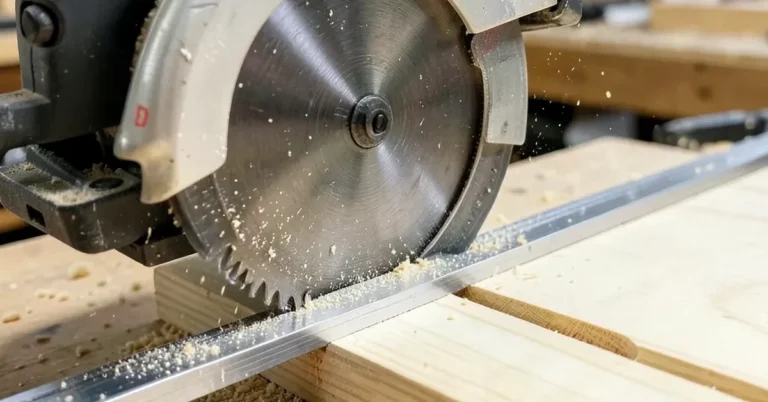
A circular saw’s laser and factory edge guide are fine for rough cuts, but a clamped straightedge is what actually delivers a consistent, straight rip cut over any real length. Measure from the blade to the base plate’s edge (not the housing) to know your offset, then clamp a straight board or a dedicated cutting guide that distance away from your marked line. Run the base plate against the guide the whole way through the cut instead of trying to follow a pencil line freehand — freehand ripping drifts more than most people expect over 4+ feet, even with a laser guide helping.
For crosscuts, a speed square hooked against the material’s edge serves the same purpose over a shorter distance — run the saw’s base plate against the square instead of trying to track a single pencil mark by eye. Both techniques take an extra minute of setup but produce noticeably straighter results than freehanding, especially on cuts that will be visible in the finished piece.
Choosing the Right Blade for the Job
Tooth count is the main variable that matters. A 24-tooth carbide blade (roughly what ships stock on most 7-1/4″ saws) is built for fast, rough rip cuts in framing lumber where cut speed matters more than a clean edge. A 40-tooth combination blade splits the difference for general framing and sheet goods where you want a reasonably clean cut without sacrificing much speed. A 60-tooth or higher fine-finish blade is worth swapping in specifically for plywood, veneered panels, or any cut where visible tear-out on the top surface would matter — it cuts slower but leaves a noticeably cleaner edge.
For most framing and general DIY work, the stock blade that comes with a saw like the CSB135L covers the majority of cuts without needing a swap — reach for a fine-finish blade specifically when the cut’s appearance will actually be visible in the finished project.
Frequently Asked Questions
What is Ryobi’s current corded circular saw model?
The RYOBI CSB135L: a 14-Amp, 7-1/4″ corded circular saw with a built-in ExactLine laser guide and a 0-56° bevel range, priced around $95.
Is a corded or cordless Ryobi circular saw better?
Corded gives sustained full power for continuous cutting with no battery to manage, which suits heavy ripping and sheet goods. Cordless (Ryobi’s 18V ONE+ line) trades some sustained power for mobility and shared batteries with other ONE+ tools, which suits quick trim cuts around a job site.
How deep can a 7-1/4 inch circular saw cut?
A standard 7-1/4″ blade cuts roughly 2-1/2″ deep at a 90° angle and about 1-3/4″ deep at a full 45° bevel — enough for standard dimensional framing lumber but not a doubled-up beam in a single pass.
Why is my circular saw’s blade guard sticking?
Sawdust buildup around the retractable guard’s pivot point is the most common cause. Clear it out periodically rather than assuming it’s a mechanical defect.
How deep should I set a circular saw’s cutting depth?
About 1/4″ deeper than the material’s thickness. Setting the blade deeper than needed increases kickback risk and underside tear-out without improving cut quality.
What blade tooth count should I use for plywood?
A 60-tooth or higher fine-finish blade minimizes tear-out on plywood and veneered panels. The stock 24-40 tooth blade most saws ship with is fine when appearance doesn’t matter as much as cutting speed.
Conclusion
The CSB135L is a straightforward, capable 7-1/4″ corded saw — the 14-Amp motor and laser guide earn their keep on continuous cutting jobs where a cordless saw’s battery would become the limiting factor. If your work is mostly quick trim cuts and you already have Ryobi ONE+ batteries, their cordless line is the more convenient pick instead.
Sponsored / affiliate links. As an Amazon Associate I earn from qualifying purchases. I may earn additional commission from eligible campaigns.
 3000W Heavy Duty Corded Circular Saw, 6.3 Inch 110V Concrete Cut Off Saws with Water Pump and 16.4ft Hose, 7000 RPM Electric Circular Saw Concrete Cutter Wall Groove Cutting Machine for Stone, Tile
 7 Inch Circular Saw Edge Guide Positioner, 85cm Adjustable Wood Cutting Guide Rail, Stainless Steel Large Cutting Range Positioning Frame Tool for Woodworking