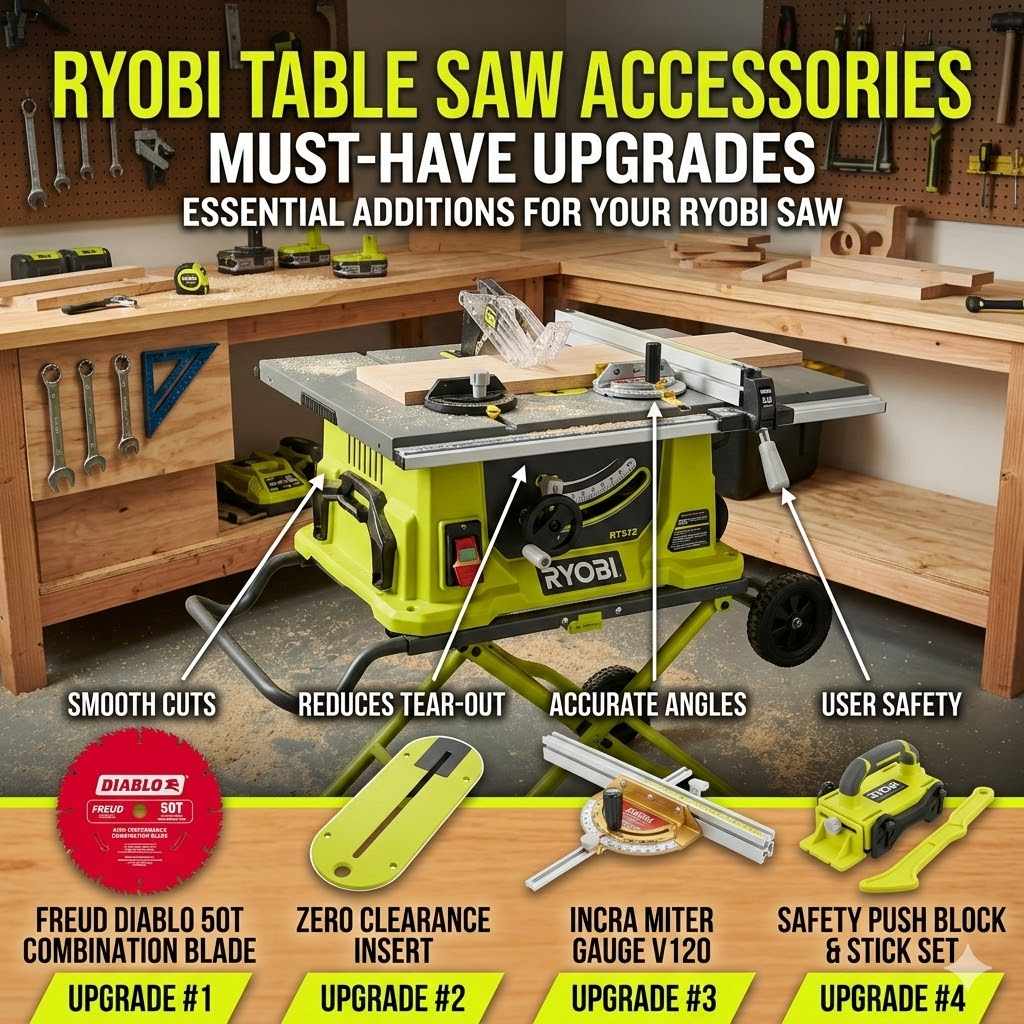
Ryobi Table Saw Accessories: Must-Have Upgrades
Figuring out which extras to get for your Ryobi table saw can feel like a puzzle, especially when you’re just starting out. There are so many choices! It’s easy to get lost.
But don’t worry, it’s simpler than it looks. We’re here to guide you with clear steps. Let’s explore the Ryobi Table Saw Accessories: Must-Have Upgrades and make your woodworking easier and safer.
You’ll learn what really matters.
Ryobi Table Saw Accessories Enhance Performance
Adding the right accessories to your Ryobi table saw can really boost what you can do with it. These extras aren’t just for show; they help you make cleaner cuts, work faster, and stay safer. For beginners, thinking about upgrades can be overwhelming because you want to get the most bang for your buck.
This section will show you how specific Ryobi table saw accessories can improve your projects, from simple rip cuts to more complex joinery. We’ll cover why these upgrades are essential for better woodworking results and how they make your tool more versatile.
Dust Collection Improvements
Dust is a big problem when you’re cutting wood. Fine sawdust can make it hard to see your cut line and is bad for your health. Good dust collection helps keep your workspace clean and safe.
It also makes your saw run better by not letting dust build up inside.
- Dust Collection Ports
A dedicated dust collection port on your table saw is crucial. It allows you to attach a shop vacuum or a dust collector. This port captures sawdust right at the source, as it’s created by the blade. Without this, sawdust can fly everywhere, creating a messy and unhealthy environment. Proper dust collection is vital for keeping your saw’s internal mechanisms clean, which can prevent overheating and prolong the life of the motor. The image of a workshop is often associated with piles of sawdust, but effective dust collection changes that entirely, making your work area much more pleasant and your lungs happier. - Shop Vacuums and Dust Collectors
A shop vacuum is a good starting point for dust collection, especially for smaller workshops. It’s versatile and can be used for other cleanup tasks too. For more serious woodworking, a dedicated dust collector offers stronger suction and better filtration. This means more sawdust is captured, and finer particles are filtered out before being released back into the air. The difference in air quality and cleanliness is significant. Many woodworkers find that investing in a good dust collection system dramatically improves their working experience and the overall quality of their projects by reducing airborne particles that can settle on surfaces. - Blade Guards with Dust Extraction
Many modern blade guards have integrated dust extraction points. These work in conjunction with your vacuum or dust collector to pull dust away from the blade and out of the immediate cutting area. This is incredibly effective because it captures dust as it leaves the kerf of the wood. A well-designed guard not only collects dust but also provides a safety barrier, preventing accidental contact with the spinning blade. The combination of safety and dust management makes these guards a top-tier accessory for any table saw owner looking to improve their setup.
Real-Life Example Dust Collection
Sarah started woodworking as a hobby. Her first table saw had no good way to collect dust. She would spend hours cleaning up after every project.
Wood dust was everywhere, coating her tools and furniture. She invested in a Ryobi table saw with a better dust port and a good shop vacuum. Now, after a cut, most of the sawdust goes straight into the vacuum.
Her workshop stays much cleaner, she breathes easier, and she can focus more on her projects instead of cleanup. This change made her hobby much more enjoyable and sustainable.

Improving Saw Fence and Measurement Accuracy
Getting accurate cuts is key to good woodworking. The fence on your table saw guides the wood. If it’s not straight or easy to use, your cuts won’t be either.
Upgraded fences and measurement tools make a big difference in precision.
- Aftermarket Table Saw Fences
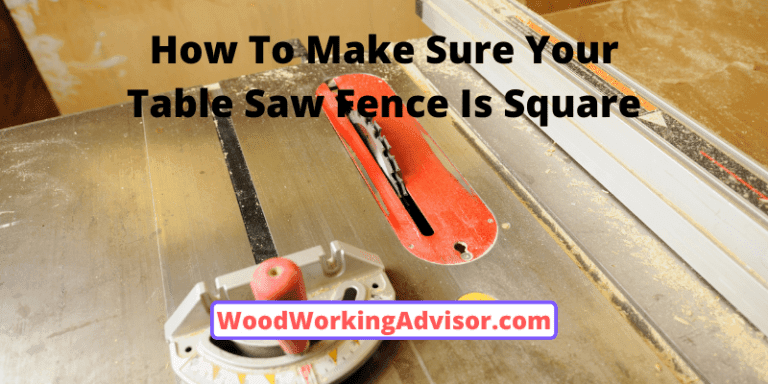
Some Ryobi table saw models come with basic fences. Upgrading to a high-quality aftermarket fence can offer superior alignment, a sturdier build, and smoother operation. These fences often feature a T-square design, meaning the fence slides parallel to the blade along a track. This ensures that as you move the fence in or out, it remains perfectly parallel to the blade’s cutting line, resulting in consistently accurate rips. Many advanced fences also have larger scales or digital readouts for extremely precise adjustments, which is a huge step up from guesswork. - Digital Readouts for Fences
For ultimate precision, consider adding a digital readout (DRO) to your fence. These systems use magnetic scales and a digital display to show the exact distance between the blade and the fence. This eliminates the need to read a tape measure or scale, which can be prone to parallax errors. With a DRO, you can set up your cuts to within a thousandth of an inch, which is critical for joinery and detailed work. It simplifies the process of making identical cuts repeatedly, saving time and reducing frustration for the woodworker. - Crosscut Sleds and Miter Gauges
While fences are for ripping, crosscut sleds and upgraded miter gauges are essential for making accurate crosscuts. A crosscut sled is a jig that holds your wood securely and slides in the miter slots. This ensures that your cut is perfectly square to the edge of the workpiece. A good miter gauge, especially an aftermarket one with adjustable fences and stops, offers more stability and precision than the one that might come with your saw. These accessories are indispensable for cutting pieces to precise lengths and ensuring that angles are accurate every time.
Scenario for Accurate Cuts
Imagine you need to build a small cabinet. The shelves need to be exactly the same width.
- Set your Ryobi table saw fence using a measuring tape and scale. You make the first shelf.
- You then try to measure and set the fence again for the next shelf. It’s slightly off.
- The second shelf is a tiny bit wider than the first. When you assemble the cabinet, one shelf is not flush, and the whole unit looks a bit wonky.
- With an upgraded fence and a digital readout, you set the fence once. Then, you simply repeat the measurement for all your shelves. Each shelf is identical. The cabinet goes together perfectly, looking professional and clean. This accuracy saves you from having to redo work and ensures a much better final product.
Safety Enhancements for Ryobi Table Saws
Safety is the most important aspect of woodworking. Table saws can be dangerous if not used correctly. Adding safety accessories can help prevent accidents and give you peace of mind while you work.
- Riving Knives and Splitters
A riving knife is a crucial safety device that follows the blade down into the wood. Unlike a splitter, which is fixed and can sometimes bind the wood, a riving knife moves with the blade. Its primary function is to prevent the wood from pinching the back of the blade, which can cause dangerous kickback. It also helps keep the kerf open after the cut, preventing the wood from binding. Many modern table saws come with a riving knife, but if yours doesn’t, upgrading is highly recommended for enhanced safety, especially when cutting thicker or harder woods. - Blade Guards and Dust Collection
As mentioned earlier, blade guards are a key safety feature. They shield you from the spinning blade. Good guards are designed to allow you to see the cut line while providing protection. Many also integrate dust collection, which, beyond cleanliness, reduces the amount of airborne debris that could obscure your vision or cause irritation. A guard that offers good visibility and effective dust removal is a win-win for safety and a cleaner workspace. It’s a fundamental piece of safety equipment for any table saw user. - Push Sticks and Push Blocks
These simple tools are invaluable for keeping your hands away from the blade. Push sticks are used to guide smaller pieces of wood past the blade, especially when they become too short to hold safely. Push blocks provide downward pressure and forward momentum for larger pieces, ensuring they stay flat on the table and move through the blade smoothly. Using these consistently is a simple habit that dramatically reduces the risk of hand injuries. They are inexpensive but incredibly effective safety accessories. - Featherboards
Featherboards are tensioned pieces of wood or plastic that press the workpiece against the table saw’s fence. They help prevent the wood from rising off the table or moving away from the fence during a cut. This is important for both accuracy and safety. By keeping the wood stable, featherboards reduce the chance of the wood binding against the blade or the blade snagging the wood, which can lead to kickback. They are particularly useful when ripping long, thin pieces of material or when making cuts that require a lot of control.
Case Study on Kickback Prevention
John was cutting a large sheet of plywood for a project. He wasn’t using a riving knife and the blade started to bind as the plywood exited the saw. The wood suddenly shot back towards him with tremendous force – a classic kickback.
Luckily, he instinctively flinched and only suffered minor scrapes. He realized then how critical safety features like riving knives and featherboards are. He immediately invested in a riving knife and featherboards for his Ryobi table saw.
Since then, he feels much more confident and secure during his cuts, knowing these safety devices are actively working to prevent such dangerous events from happening again.
Table Saw Insert Plates and Zero Clearance
The insert plate on your table saw is the ring around the blade. A standard insert can have large gaps, which lets dust fall through and doesn’t support the wood well. Upgrading this can significantly improve cuts and dust collection.
- Standard vs. Zero Clearance Inserts
A standard insert plate often has a gap around the blade that is larger than necessary. This gap can allow small offcuts to fall into the cabinet, or worse, get caught and cause issues. A zero-clearance insert is designed to have a very small gap, often made by cutting it with the blade installed in the saw. This means the insert fits snugly around the blade. The main benefit is that it provides much better support for the wood directly next to the blade, especially for thin pieces or veneers, preventing tear-out. - Benefits of Zero Clearance
Zero clearance are fewer escape routes. This leads to cleaner cuts and a cleaner workshop. - Types of Insert Plates
You can find various types of insert plates. Some are made of plastic, while others are made of phenolic resin or aluminum for greater durability. Many aftermarket inserts are designed to be modular, allowing you to swap out sections for different types of blades (like dado blades) or for use with jigs. For those who want the absolute best support, some premium inserts offer adjustable throat plates that can be precisely matched to the blade’s position. This level of customization ensures optimal support for any cut.
Ryobi Table Saw Accessories: Must-Have Upgrades for Better Cuts
For woodworkers aiming for professional results, upgrading the table saw finish quality is paramount.
Enhancing Mobility and Storage
Not all of us have huge workshops. Sometimes, you need to move your table saw or store accessories. Upgrades for mobility and storage can make a big difference if you have limited space.
- Mobile Bases for Table Saws
If your Ryobi table saw is on a stand that doesn’t have wheels, a mobile base is a game-changer. These bases are designed to attach to the saw and lift it slightly off the ground using casters. This allows you to easily move the saw around your workshop, freeing up valuable floor space when it’s not in use. You can roll it into a corner, out of the way, or position it for different tasks. Many mobile bases are adjustable to fit different saw footprints and can support a significant amount of weight, making them a practical solution for compact workshops. - Storage Solutions for Accessories
Table saw accessories, like blades, dado sets, push sticks, and wrenches, can quickly clutter up a workspace. Investing in organized storage solutions is key. This can include wall-mounted shelves, tool chests, or even custom-built cabinets. Some people create dedicated drawers or compartments within their workbench or outfeed table specifically for table saw items. Keeping accessories organized and within easy reach not only prevents them from getting lost but also makes your workflow much more efficient. You spend less time searching and more time cutting. - Outfeed Tables and Work Supports
An outfeed table is a table that attaches to the back of your table saw. It extends the surface area behind the blade, providing support for long workpieces as they exit the saw. This is crucial for preventing the wood from tipping or binding. Some outfeed tables can be designed with built-in storage for accessories or even a router. Work supports, like folding legs or adjustable stands, can also be used to provide extra support for larger panels or when cutting long pieces by yourself. These add stability and safety to your operations.
Practical Scenario with Mobility
Maria has a small garage that she uses for woodworking. Her Ryobi table saw takes up a lot of space.
- She used to struggle to move the saw when she needed to work on other car projects or get her car in. It was heavy and awkward.
- She purchased a universal mobile base designed for stationary tools.
- Now, she can easily unlock the wheels and roll the table saw out of the way in seconds.
- This simple upgrade transformed her garage. She has more space for other tasks and can bring the saw closer to her workbench when needed. It made her limited space far more usable.

Frequently Asked Questions
Question: What is the most important accessory for a Ryobi table saw beginner
Answer: For beginners, a good set of push sticks and push blocks is paramount. They help keep your hands safe and away from the blade, significantly reducing the risk of injury while you learn the basics of operating the saw.
Question: Can I use accessories from other brands on my Ryobi table saw
Answer: In many cases, yes. Accessories like push sticks, featherboards, and some mobile bases are universal. However, for items like fence systems or insert plates, it’s best to check compatibility for your specific Ryobi table saw model to ensure a proper fit and optimal performance.
Question: How often should I replace my table saw blade
Answer: A good quality table saw blade can last for many cuts, but it will dull over time. You’ll notice increased effort to cut, more tear-out, and slower progress. For most hobbyist use, replacing a blade every few months or when performance degrades is a good practice.
Professionals might replace them more frequently.
Question: What is kickback and how can I prevent it
Answer: Kickback is when the wood is thrown back towards the operator violently. It happens when the wood pinches the blade or binds. You can prevent it by using a riving knife or splitter, ensuring the wood is always against the fence and flat on the table, using push sticks and blocks, and making sure your blade is sharp and set to the correct height.
Question: Is a zero clearance insert worth the investment
Answer: For many woodworkers, a zero clearance insert is a highly recommended upgrade. It significantly reduces tear-out, especially on plywood and veneers, leading to cleaner cuts. It also helps with dust collection.
If you value finish quality and cleaner cuts, it’s a worthwhile investment.
Summary
Upgrading your Ryobi table saw with the right accessories makes a big difference. Better dust collection, more accurate fences, and enhanced safety features like riving knives are key. Zero-clearance inserts improve cut quality, while mobile bases and smart storage help with space.
These improvements boost efficiency and make woodworking more enjoyable and safer for everyone.