Fix Your Ryobi Table Saw with Ease
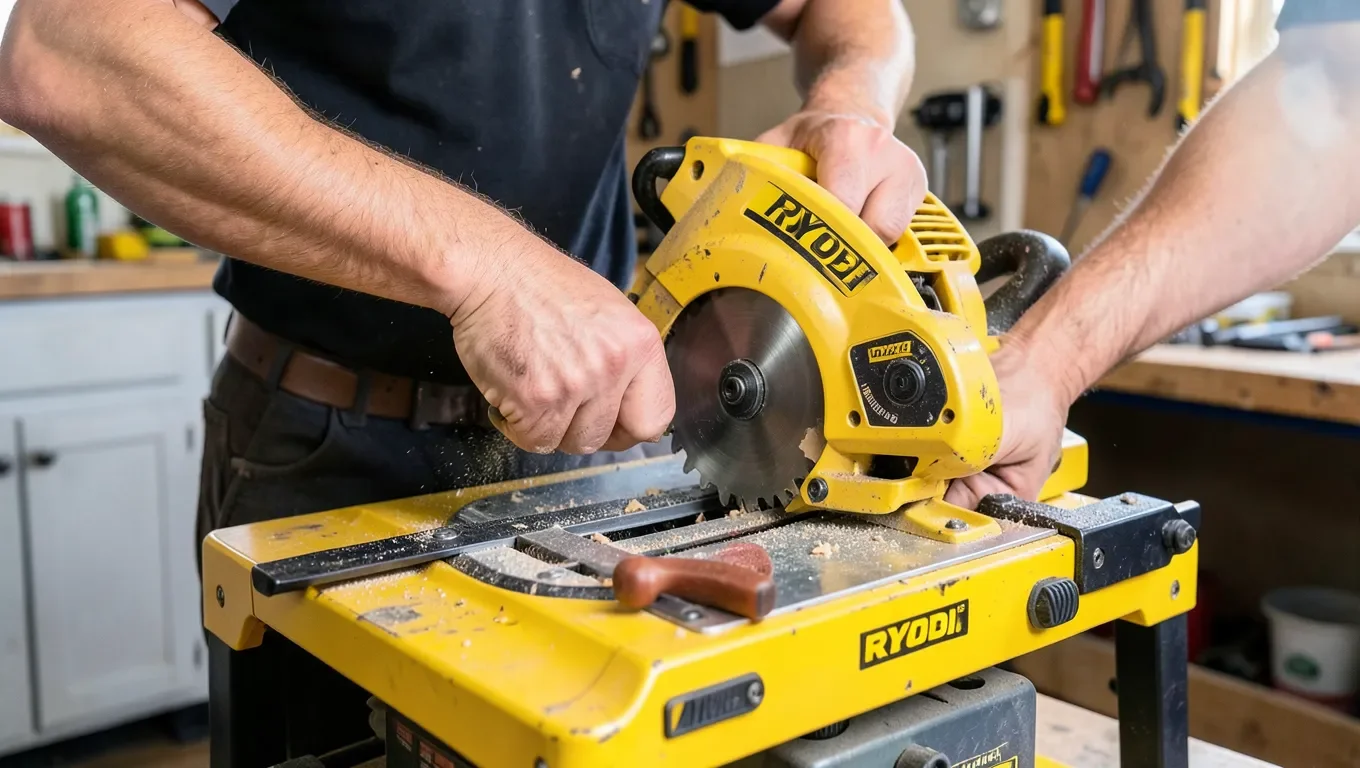
The parts that fail most often on a Ryobi table saw are the blade, the throat plate, the blade guard, and the fence – all straightforward to replace yourself with a screwdriver and the arbor wrench that came with the saw. Match the exact part to your saw’s model number (printed on a sticker on the saw itself) before ordering, since parts are not interchangeable across different Ryobi table saw models.
Signs You Need A Replacement Part
Best For A Cracked Or Worn Throat Plate
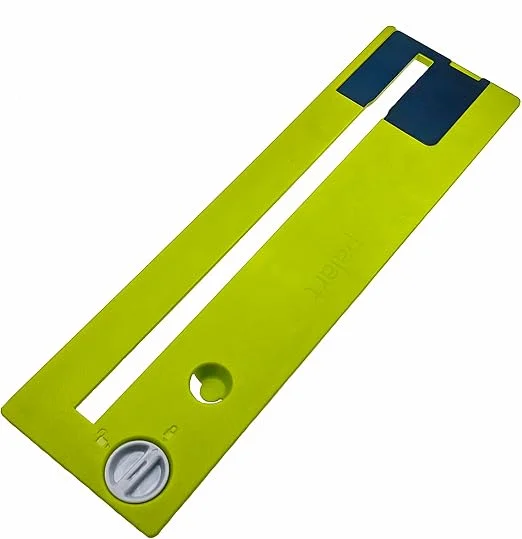 |
Replacement Throat Plate for Ryobi RTS12/RTS23 – $15.82 A cracked or overly-worn throat plate widens the gap around the blade, which increases tear-out and kickback risk – a direct drop-in fit for these two common models.
|
- Blade: Cuts get rough, burn the wood, or require noticeably more force to push through – the blade is dull or damaged.
- Throat plate: Visible cracks, chips, or a gap around the blade wider than it should be.
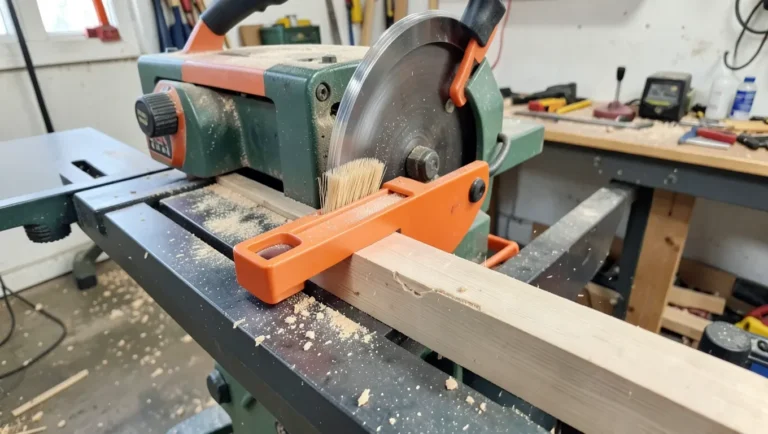
- Blade guard: Cracked plastic, or it no longer sits flush and protective over the blade.
- Fence: Cuts drift out of parallel, or the fence doesn’t lock down firmly against the rail.
- Switch: The saw doesn’t power on reliably, or the switch feels loose or sticky.
Finding The Right Part For Your Model
Find your exact model number on the sticker on the saw itself (common examples include the RTS10, RTS12, RTS23, BT3000, and BT3100) before searching for parts – Ryobi table saw parts are not universal, and a part that fits one model often won’t fit another even within the same product line. Ryobi’s own parts site and Home Depot (Ryobi’s retail parent company) both carry OEM parts searchable by model number. Third-party marketplaces carry both OEM and aftermarket parts at a range of prices; always double-check the listed compatible model numbers against your saw’s actual sticker before ordering.
If you want a full breakdown of exactly which part number matches which Ryobi model, see our complete Ryobi table saw parts list by model. For a side-by-side price and fit comparison across the most commonly needed parts, see our Ryobi table saw parts comparison.
Replacing A Blade, Step By Step
- Unplug the saw. Never work on the blade or guard with the saw connected to power.
- Raise the blade fully using the height-adjustment wheel, for full access underneath.
- Remove the blade guard per your model’s release mechanism – usually a lever or a couple of screws.
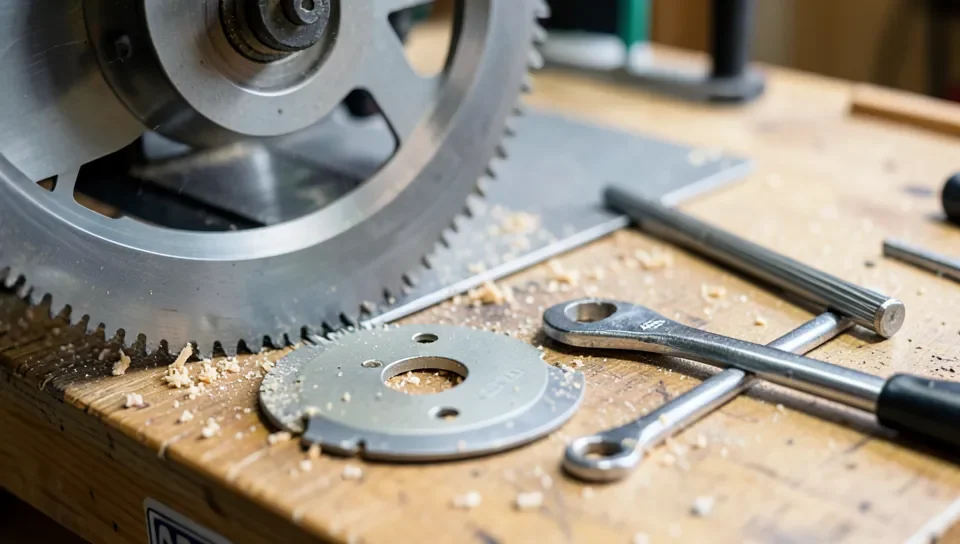
- Loosen the arbor nut with the wrench that came with the saw, holding the arbor with the second wrench or the spindle lock if your model has one.
- Swap the blade, noting the rotation direction arrow printed on the old blade before removing it.
- Tighten the arbor nut securely, then reinstall the blade guard.
- Test with a scrap cut before starting a real project, checking that the blade guard sits correctly and the cut is clean.
Tools You’ll Need
| Tool | Purpose |
|---|---|
| Arbor wrench (included with saw) | Loosens/tightens the blade’s arbor nut |
| Screwdriver | Removes screws on guards, fences, and switches |
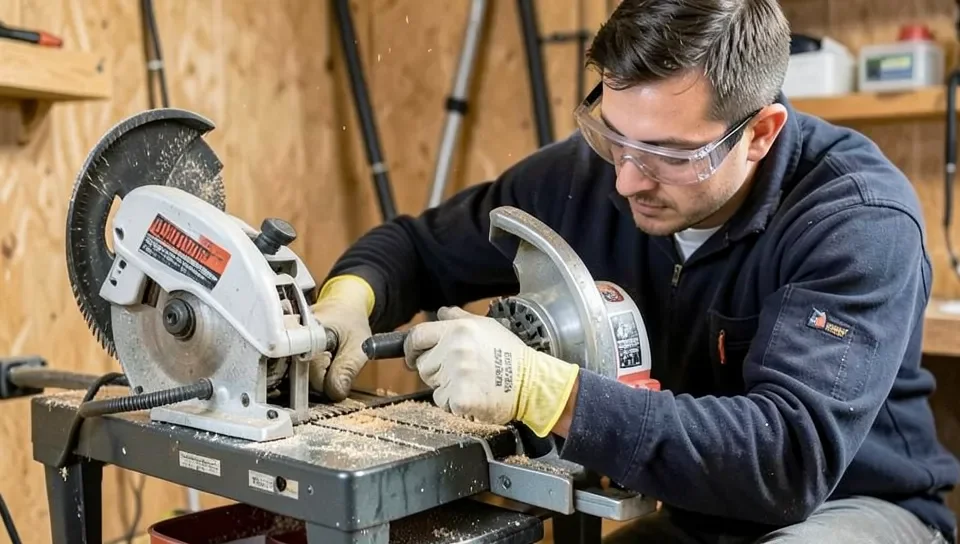
| Work gloves | Protects hands when handling the blade |
| Safety glasses | Standard protection for any saw maintenance |
OEM vs. Aftermarket Parts
OEM (Ryobi-made) parts cost more but are guaranteed to fit and are made to the saw’s original tolerances. Aftermarket parts are cheaper and often fine for non-safety-critical components like a fence, miter gauge, or knob – but fit quality varies a lot between third-party sellers. For anything that affects how the blade is guarded or supported (blade guard, riving knife, throat plate), the tighter tolerance of an OEM part is worth the extra cost, since a poor fit there is exactly where a cheap part causes real problems.
| Feature | OEM Parts | Aftermarket Parts |
|---|---|---|
| Fit | Guaranteed for your model | Varies by seller – verify model compatibility |
| Typical cost | $15-$50 | $5-$30 |
| Best for | Safety-related parts (guard, throat plate) | Non-safety parts (fence, knobs, miter gauge) |
| Where to buy | Ryobi’s site, Home Depot | Amazon, eBay – check reviews and compatibility |
Safety While Working On Your Saw
- Unplug the saw before removing any guard, part, or fastener.
- Wear gloves when handling the blade itself.
- Keep kids and pets out of the workspace while parts are off.
- Reinstall the blade guard before making any test cuts – never run the saw with it removed.
When To Repair vs. Replace The Saw
A worn blade, throat plate, or fence is almost always worth replacing rather than replacing the whole saw – parts typically run $10-$50 versus $150+ for a new benchtop saw. Parts availability is the real limiting factor for older, discontinued models (the BT3000 and BT3100 in particular are harder to source parts for than current models); if you can’t find a part for an older saw after checking Ryobi’s site, Home Depot, and a couple of third-party sellers, that’s when replacing the saw itself becomes the more practical option. A motor or wiring problem is also a sign to weigh repair cost against a new saw rather than assume it’s a simple part swap.
Frequently Asked Questions
What Are The Most Common Ryobi Table Saw Parts To Replace?
Blades, throat plates, blade guards, and fences wear out or get damaged most often. Blades dull with use, throat plates chip or crack from kickback, blade guards crack from impacts, and fences loosen or bend out of alignment over time.
Where Can I Find Ryobi Table Saw Replacement Parts?
Ryobi’s own parts site and Home Depot (Ryobi’s retail parent) carry OEM parts by model number. Third-party sellers on Amazon and eBay carry both OEM and aftermarket options – always match the exact model number before ordering, since Ryobi table saw parts are not universal across models.
Are Aftermarket Parts Safe For A Ryobi Table Saw?
For non-safety-critical parts like a fence or miter gauge, a well-reviewed aftermarket part is usually fine. For anything involving the blade guard, riving knife, or arbor assembly, OEM parts are the safer bet, since a poor fit on a safety component is exactly where a cheap aftermarket part is most likely to cause a real problem.
Can I Replace Parts Myself, Or Should I Call A Professional?
Most common replacements – blade, throat plate, blade guard, fence – are within reach of a basic screwdriver and the included arbor wrench, and don’t require special training. Call a professional (or Ryobi’s own service line) if the problem involves the motor, the switch wiring, or anything electrical beyond a simple external switch swap.
Conclusion
Most Ryobi table saw repairs come down to the blade, throat plate, blade guard, or fence – all replaceable with basic tools once you’ve confirmed your exact model number. Save OEM parts for anything blade-guard or throat-plate related, and a well-reviewed aftermarket part is fine for the rest.
Sponsored / affiliate links. As an Amazon Associate I earn from qualifying purchases. I may earn additional commission from eligible campaigns.