Sam Maloof Signature: Reading the Marks That Prove It’s Real
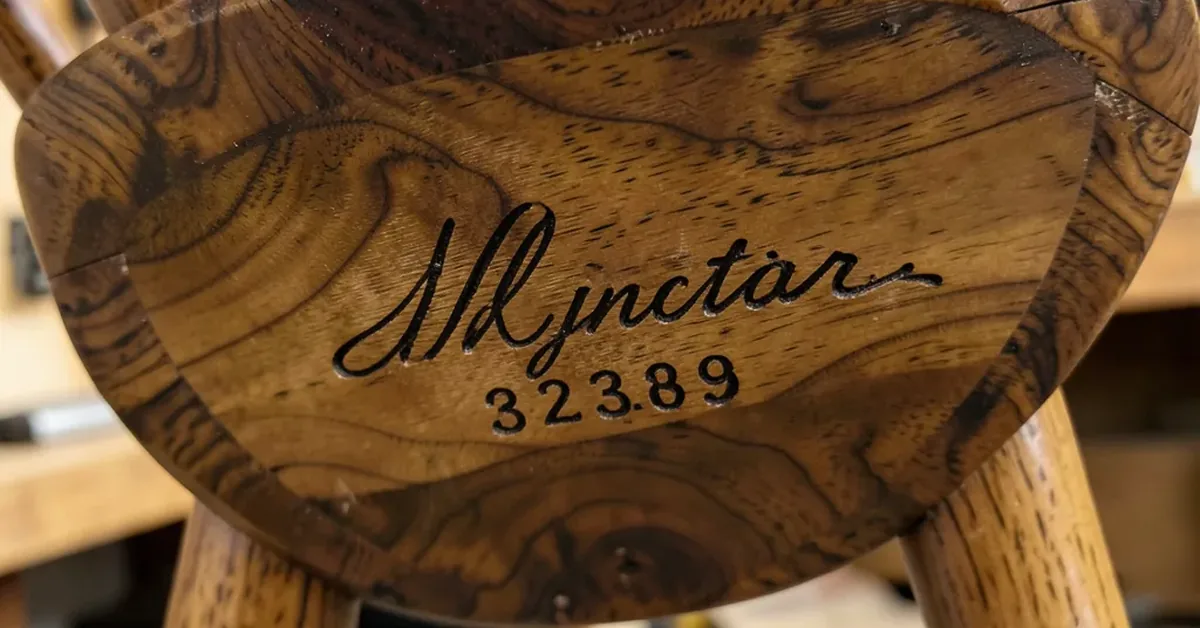
A genuine Sam Maloof piece carries an incised or impressed mark on the underside — typically a number, a date, and his signature, sometimes followed by initials like “F.A.C.C.” (Fellow of the American Craft Council) or a copyright symbol. No mark at all is one of the strongest signs you’re looking at a “Maloof-style” reproduction rather than a piece Maloof made himself. This guide focuses specifically on that mark — the formats it took over the decades, what each part means, and how to check it against auction records. For his full life story and the joinery that makes his chairs work, see our Sam Maloof chair history and craftsmanship guide.
What the Mark Actually Looks Like
Best Authentication Reference Pick
 |
Sam Maloof, Woodworker (Maloof & Fairbanks) – $43.06 Written by Maloof himself with an introduction by Jonathan Fairbanks, this is the primary photographic reference for how his signature, numbering, and joinery actually looked across different decades of his career.
|
As an Amazon Associate we earn from qualifying purchases.
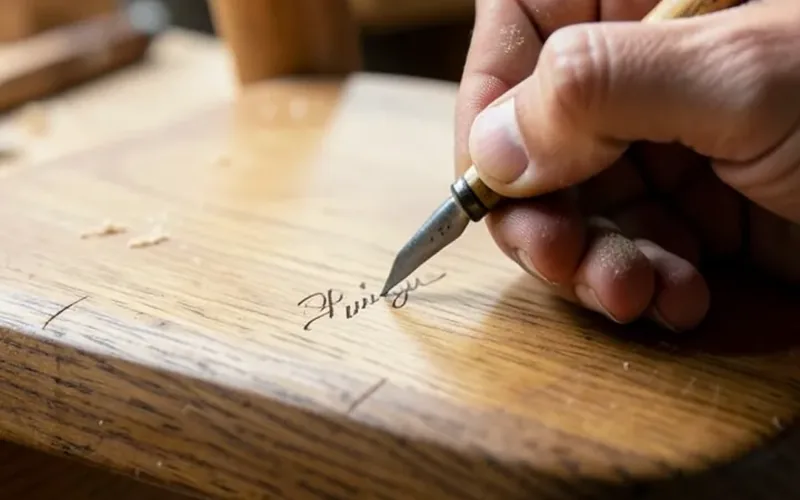
Maloof carved or impressed his mark into the underside of the seat, never on a visible surface — part of why so many reproductions get sold as originals to buyers who never turn the piece over. Recorded formats from real auction pieces include “No. 25 1979 Sam Maloof” alongside a gallery insignia, and later pieces like “No. 47 1991 Sam Maloof F.A.C.C. ©”. Some pieces show an impressed rather than hand-carved mark, but the number-date-name sequence is consistent across decades.
Reading the Three Parts of the Mark
- The number: Maloof numbered pieces sequentially within his own production, not by year — a low number doesn’t necessarily mean an early piece.
- The date: the year the piece was completed, carved as a plain four-digit year.
- The signature and suffix: “Sam Maloof” carved in his own hand, sometimes followed by “F.A.C.C.” after he became a Fellow of the American Craft Council, or a small copyright mark on later pieces.
Signature Elements That Should Match the Mark
A real mark should line up with real construction details, not just be carved onto any chair. Check that the piece also shows the exposed, sculpted joint where the rockers meet the legs — the detail covered in depth in our chair history and joinery guide — and a hand-rubbed oil finish rather than a sprayed lacquer sheen. A carved number on a piece with machine-cut joints or a glossy factory finish is a red flag regardless of what the mark says.
Cross-Checking a Mark Against Real Records
Auction houses that have sold documented Maloof pieces — Rago Auctions, Los Angeles Modern Auctions (LAMA), and Wright — publish lot photos that include close-ups of the underside mark. Comparing your piece’s number format, lettering style, and any gallery insignia against several of these real, catalogued examples is the single most useful free verification step before paying for a formal appraisal.
The Sam Maloof Foundation’s discovery museum (his actual home and workshop) is another way to see documented, in-context examples of his marked work in person, and our Maloof woodworking techniques guide covers the joinery methods referenced above in more depth.
What If There’s No Mark at All?
No mark on the underside is one of the clearest signs the piece is what dealers call “Maloof-inspired” — a chair built in his style by another maker, not something Maloof made himself. It can still be a well-built piece of furniture, but it should never be priced or sold as an original.
“If a seller can’t show you the underside, or the mark looks stamped from a machine template instead of hand-carved with natural variation, that’s worth more suspicion than the price tag alone.” — a caution echoed across appraisal Q&A threads and consistent with how real catalogued Maloof marks are described by the major auction houses above.
Frequently Asked Questions
Where Is the Sam Maloof Signature Located?
The signature is carved or impressed into the underside of the seat, never on a visible surface. It’s typically accompanied by a production number and the year the piece was completed.
What Does the Number on a Maloof Piece Mean?
It reflects where the piece fell in his own sequential production numbering, not the year it was made. The year is carved separately, right next to the number.
Does No Signature Mean a Piece Is Fake?
Not necessarily fake, but it should not be sold or valued as an authentic Maloof. Dealers typically call an unmarked, similarly styled piece “Maloof-inspired” rather than a forgery, since it may be an honest reproduction rather than a piece intended to deceive.
Can I Verify a Mark Myself Before Paying for an Appraisal?
Yes, as a first step. Compare your piece’s mark format, lettering, and any gallery insignia against catalogued lot photos from major auction houses that have sold documented Maloof pieces. A formal appraisal is still worth it before a high-value sale.
Conclusion
The mark on the underside is the fastest real check for authenticity — a number, a date, and Maloof’s own signature, sometimes with an F.A.C.C. suffix or copyright mark on later work. No mark, machine-perfect lettering, or a mismatch with the joinery and finish are all reasons to slow down before treating a piece as genuine.
Sponsored / affiliate links. As an Amazon Associate I earn from qualifying purchases. I may earn additional commission from eligible campaigns.