Post Base Bracket vs Concrete-Set Post: Which Lasts Longer?
A properly detailed Post Base Bracket usually lasts longer than a Concrete-Set Post because it keeps wood out of standing moisture; it only wins if the fasteners, coating, and post species match the exposure. Ignore that detail and you invite rot, split posts, loose connections, and expensive rebuilds. This guide compares service life, failure modes, and the load and moisture conditions that decide which support lasts longer.
| Decision factor | Post Base Bracket | Concrete-Set Post | Winner |
|---|---|---|---|
| Soil contact | Wood stays above soil and away from splash-back when a post base bracket is installed on cured concrete. | Wood is buried or encased near soil, where moisture can stay against the base. | Post Base Bracket |
| Moisture trapping | Better when the bracket leaves a drainage gap and the post end is sealed and dry. | Higher risk of trapped moisture around the embedded section, especially in wet or clay soil. | Post Base Bracket |
| Rot risk | Lower at the base if the post is kept above the concrete and the cut end is protected. | Higher at the buried section because the decay zone stays damp for long periods. | Post Base Bracket |
| Corrosion risk | Depends on bracket finish, anchor bolts, and exposure; coastal and snow-ice areas need better corrosion resistance. | No metal bracket at the post base, but embedded hardware or connectors still face moisture and corrosion risk. | Post Base Bracket |
| Uplift resistance | Strong when the bracket, anchors, and concrete are matched to the load and installed per the manufacturer. | Can resist uplift well in some builds because the concrete mass surrounds the post. | Tie |
| Repairability | Usually easier to inspect and replace the post or bracket, though framing above can limit access. | Harder to service because the post and concrete often have to be broken out together. | Post Base Bracket |
| Alignment | Fine-tuning is easier during install with a level before final tightening. | Alignment is set while the concrete is curing and is less forgiving after the fact. | Post Base Bracket |
| Replacement cost | Often lower over time because the post base can be serviced without full demolition. | Often higher over time because replacement can involve concrete removal and rebuild work. | Post Base Bracket |
Post base bracket vs concrete-set post: which lasts longer?

The Post Base Bracket usually lasts longer in outdoor use because it cuts off the biggest decay path: wood touching wet soil or sitting in trapped water. A Concrete-Set Post can still last a long time, but its base lives in the wettest part of the assembly, so rot and movement are more likely over time.
The exception is a build where the bracket system is underspecified. If the bracket finish, concrete anchor bolts, or post species do not suit the exposure, the hardware can fail before the wood would otherwise have. In that case, the lifespan advantage shrinks fast.
Why raised post bases usually win on decay resistance
Post base brackets are used to secure wood posts to concrete bases or surfaces, and they keep the wood above ground. That matters because the base of a post is where standing water, splash, and soil contact do the most damage. If the wood is separated from those conditions, rot risk drops sharply.
Say your fence post sits beside a downspout that dumps onto the soil line. A bracket-mounted post can still get wet, but the end grain is less likely to stay soaked all day. That small change often matters more than marketing claims about strength.
When a concrete-set post can still make sense
A Concrete-Set Post can be the better choice when budget matters most, the structure is simple, or the post is treated as a sacrificial part that may be replaced later. It also has a place where a buried embedment is part of the structural concept and the local code or design calls for it.
Suppose a small utility fence in a low-exposure yard needs the least expensive support possible. If replacement is acceptable and the post is already planned as a wear item, the concrete-set option can still be practical. The trade-off is higher long-term service effort.
Post base
This comparison is about failure modes, not sales claims. The longer-lasting option is the one that best limits rot, corrosion, and ground movement while still meeting the load path your project needs.
Soil contact and moisture exposure
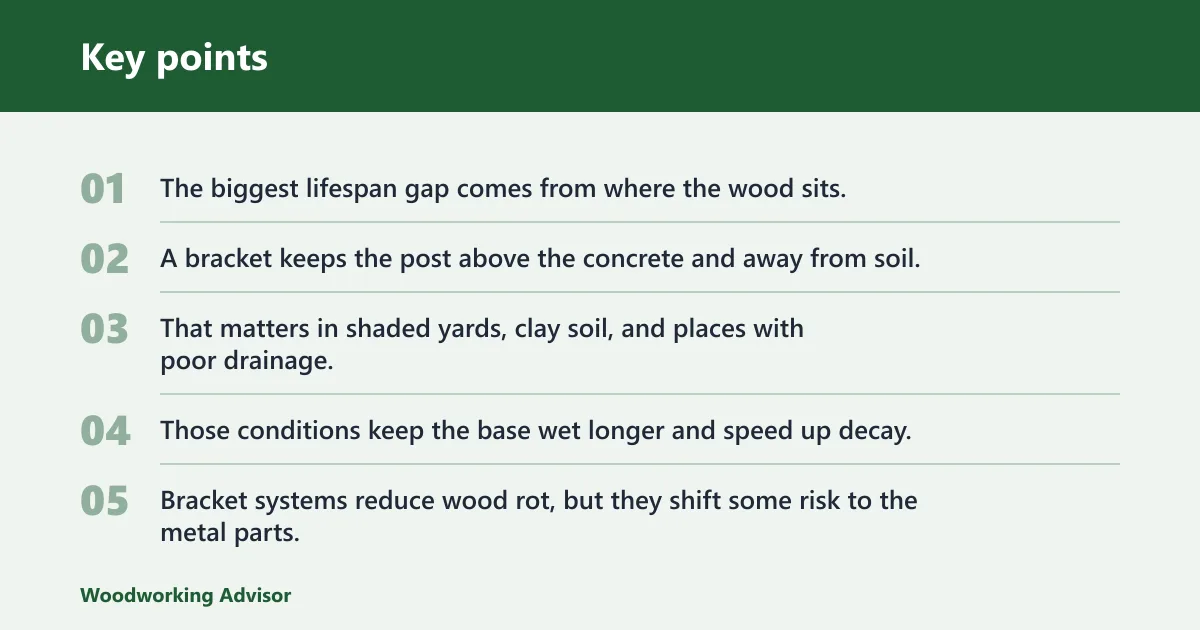
The biggest lifespan gap comes from where the wood sits. A bracket keeps the post above the concrete and away from soil, while a concrete-set post leaves the lower section in the dampest zone of the assembly.
That matters in shaded yards, clay soil, and places with poor drainage. Those conditions keep the base wet longer and speed up decay.
Rot, corrosion, and uplift resistance
Bracket systems reduce wood rot, but they shift some risk to the metal parts. The bracket, concrete anchor bolts, and any fasteners must resist corrosion in the actual environment, especially near salt air, snow-melt spray, or constant wetting.
Concrete-set posts reduce visible metal hardware at the base, but they do not remove decay risk. They can still lose capacity as the embedded wood softens, cracks, or loosens around the concrete.
Repairability, alignment, and replacement cost
Bracket-mounted posts are usually easier to adjust because the level check happens before the final tightening. They are also easier to replace when the post is the part that wears out, though the framing above can still make service awkward.
Concrete-set posts are less forgiving. If the post is out of plumb or the base fails, repair often means breaking out concrete, not just swapping hardware.
Which lasts longer in real outdoor use?
In real outdoor use, the Post Base Bracket usually lasts longer because it removes the post from direct soil and standing moisture. That advantage is strongest in wet climates, shaded locations, and sites where drainage is poor. It weakens if the bracket, anchors, or wood treatment are mismatched to the exposure.
The concrete-set option can still survive a long time in dry soil and low-risk builds, but it asks the buried section of the post to endure the harshest conditions. Over years, that often shortens service life even when the top of the post still looks fine.
What failure modes matter most?
The main life-limiters are trapped moisture, corrosion, and movement. A post does not usually fail because one part looked bad; it fails because water, load, and soil movement keep attacking the same base point.
Trapped moisture at the post base
Trapped moisture is the main reason a concrete-set post loses life. Once water sits around the buried section, the wood stays wet long enough for decay to start and spread.
A bracket helps by exposing the lower end to air. That does not make the post waterproof, but it gives moisture a better path out.
Corrosion at the bracket, fasteners, or anchor bolts
Bracket systems live or die by the metal finish. A corrosion-resistant metal finish matters more in wet, coastal, or snow-ice exposure because the hardware is still part of the load path and still visible to the weather.
If the coating is wrong for the environment, the bracket can rust even while the wood remains sound. That shifts failure from rot to hardware loss.
Ground movement, heave, and service-life loss
Frozen or expansive soil can push on anything near grade. A concrete-set post often feels that movement directly at the buried section, while a surface-mounted bracket can still be affected through the concrete base and anchors.
The difference is that a bracket system is usually easier to inspect after movement. A concrete-set post often hides the damage until the lean becomes obvious.
How do installation details change lifespan?
Installation details decide whether a bracket system lasts longer than a concrete-set post. The bracket, the concrete base or surface, the anchor hardware, and the wood all need to match the load and the exposure. A good product choice can fail with poor installation.
Tools and setup
For a bracket install on concrete, the basic tools are a drill, a masonry bit, a level, and a wrench or socket set. A hammer and tape measure are also commonly listed. The concrete base should be cured before the final post attachment.
Use a masonry bit that matches the anchor bolt diameter and the manufacturer’s depth requirement. Do not guess at spacing or embedment. Follow the bracket maker’s listing for your model.
Anchoring to cured concrete with the right fasteners
Concrete anchor bolts secure the bracket to the concrete, and the manufacturer’s installation details should govern hole depth, embedment, spacing, and tightening. The bolts need to fit the drilled hole and the hardware stack that the bracket calls for.
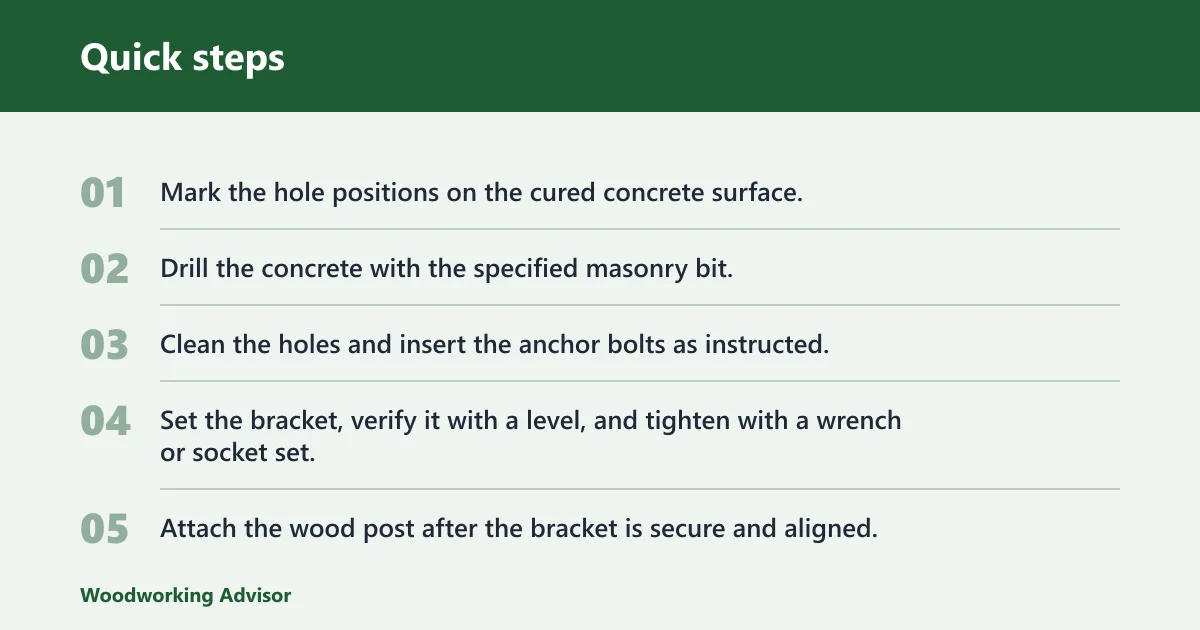
- Mark the hole positions on the cured concrete surface.
- Drill the concrete with the specified masonry bit.
- Clean the holes and insert the anchor bolts as instructed.
- Set the bracket, verify it with a level, and tighten with a wrench or socket set.
- Attach the wood post after the bracket is secure and aligned.
Do not overtighten. The supplied guidance warns that overtightening can damage the concrete surface, which can weaken the hold or crack the edge around the anchor.
Why finish choice matters in wet or coastal exposure
Material and finish affect both longevity and appearance outdoors. In damp or salty air, a better corrosion-resistant finish can extend hardware life and keep the bracket from staining or flaking early.
That matters because hardware failure can shorten the whole assembly’s life even when the wood is still acceptable. A durable finish is not a cosmetic extra; it is part of the lifespan decision.
Can post base brackets work for decks, pergolas, and fences?
Yes, but only when the bracket type matches the structure. A Post Base Bracket can work well for fences and many pergola posts, and it can also fit some deck details where the post-to-base connection is approved for the load. The key is not the category name; it is the actual rating and code detail.
For deck posts, structural and code requirements are more demanding than for a decorative fence or light pergola. A bracket that is fine for one project may not be suitable for another, even if the post size looks the same.
When a bracket is a good fit
Use a bracket when you want the post above grade, easier inspection, and better moisture control. That makes sense for fence lines in wet soil, pergolas with visible posts, and decks where the approved connector detail is part of the structure.
It is also a strong choice when replacement access matters. A bolted-on base is usually easier to service than a post buried in concrete.
When structural or code requirements call for a different detail
Some deck and pergola loads call for a specific connector, hold-down, or footing detail that is not interchangeable with decorative hardware. In those cases, the code-approved assembly comes first.
Follow the manufacturer’s listing and the local code requirements for the project. If the post supports people, not just a screen or fence rail, do not treat all brackets as equal.
Choose Post Base Bracket if… / Choose Concrete-Set Post if…
Choose Post Base Bracket if your main goal is longer service life, better moisture separation, and easier future replacement. It is the better pick for wet sites, poor drainage, coastal exposure, and projects where alignment and inspection matter.
Choose Concrete-Set Post if the build is budget-first, simple, or intentionally sacrificial, and the post is not expected to be easy to replace. It can also fit situations where the design or code calls for that buried support detail.


Frequently asked questions
Does a post base bracket last longer than a concrete-set post?
Usually yes, because the bracket keeps wood above soil and standing moisture. That lowers rot risk at the post base. The advantage disappears if the bracket is poorly anchored, the finish is wrong for the environment, or the post itself is left untreated at the cut end.
Which is stronger: a post base bracket or setting the post in concrete?
Neither is automatically stronger in every situation. Strength depends on the bracket rating, anchor bolts, concrete quality, and the load path. A concrete-set post can resist movement well, but a properly specified bracket can be very strong and durable when installed per the manufacturer.
Can a post base bracket prevent wood rot at the post base?
It can reduce rot risk a lot, but it cannot eliminate it by itself. The bracket lifts the post away from soil and standing water. You still need the right post species, protected cut ends, and hardware suited to the exposure.
What tools do I need to install a post base bracket into concrete?
The common tool list includes a drill, masonry bit, level, wrench or socket set, hammer, and tape measure. The masonry bit must match the anchor bolt diameter and the manufacturer’s depth requirement. Use the level before the final tightening.
Do post base brackets work for decks and pergolas as well as fences?
Yes, but only when the bracket is approved for that use and load. Fences and pergolas often accept a wider range of brackets than decks. For deck posts, check the connector’s listing and the local code requirements before you buy.
Does the bracket material affect corrosion resistance outdoors?
Yes. The finish matters in wet, coastal, and snow-ice conditions because the bracket and anchor hardware remain exposed. A more corrosion-resistant metal finish can extend service life and improve appearance, especially where water lingers around the base.
How do I install a post base bracket correctly on concrete?
Drill the cured concrete with the right masonry bit, insert the anchor bolts per the manufacturer’s instructions, set the bracket, and verify the post with a level before tightening. Do not overtighten the wrench or socket set, since that can damage the concrete surface.
What maintenance advantages do bracket-mounted posts have over below-ground posts?
They are easier to inspect because the base stays visible. You can spot rust, loose hardware, and wood movement sooner. The post is also usually easier to replace, though the framing above can limit access and the connector type can affect serviceability.
Sponsored / affiliate links. As an Amazon Associate I earn from qualifying purchases. I may earn additional commission from eligible campaigns.
 4.21" x 3.94"U Shape Fence Post Holder,1 Pack Concrete Post Base Anchor Bracket,Heavy Duty Wood Post Support for Deck Railing,Fence,Pergola,Mailbox,Ground Mount Pole Construction (1, 4.21" x 3.94")
 4.21" x 3.94U Shape Fence Post Holder,4 Pack Concrete Post Base Anchor Bracket,Heavy Duty Wood Post Support for Deck Railing,Fence,Pergola,Mailbox,Ground Mount Pole Construction (4, 4.21" x 3.94")