Sam Maloof Chair: History, Craftsmanship & Auction Prices
The Sam Maloof chair is the sculpted, hand-shaped rocking chair created by self-taught California woodworker Sam Maloof (1916-2009) – no two are exactly alike, since he never worked from a fixed pattern. A genuine Maloof rocker has sold at auction for as much as $80,500, and reproductions marketed under his name are common. This guide covers his real history, the joinery that makes the design work, and how to tell an authentic piece from a look-alike.
The Legacy of Sam Maloof
Recommended Reading Pick

Sam Maloof, Woodworker (Sam Maloof, Jonathan Fairbanks) – $42.58
Maloof’s own book, covering the self-taught, no-blueprint process described above in his own words and photos, straight from the workshop where he trained his apprentices.
- Best for: Woodworkers and collectors who want the history and design philosophy straight from Maloof himself
- Why we picked it: Written and photographed with Maloof’s direct involvement, not a third-party retrospective
- Main drawback: Long out of print in earlier editions, so used copies vary in condition
As an Amazon Associate we earn from qualifying purchases.
Sam Maloof was born in 1916 in Chino, California, to Lebanese immigrant parents. His father sold fruit and vegetables from a cart; his mother made lace and embroidery – Maloof later said it was watching her handwork that first gave him an eye for fine craftsmanship. He was entirely self-taught as a woodworker.
Maloof actually started out as a graphic artist. In the late 1940s, short on money for furniture, he built pieces for his own home from scrap oak. His wife, Alfreda “Freda” Ward Maloof, saw how much he loved the work and pushed him to make woodworking his full-time profession – he did, and never went back to graphic design.
Unlike most furniture makers, Maloof rarely sketched a design in advance. On chairs, he said he worked “from the legs up,” shaping each part by eye and adjusting the next joint to what came before. That intuitive, no-blueprint method is a large part of why no two Maloof chairs are truly identical, even within the same model.
Signature Style of Maloof Chairs
The Sam Maloof chair is known for its low seat height (often around 15-16 inches, lower than a typical dining chair) and a reclined back angle built for long sitting. The curved, sculpted arms and headrest are shaped to the body rather than left as flat boards, which is what makes the chair read as comfortable even before anyone sits in it.
The chair’s most copied detail is its distinctive joinery. Maloof developed a signature free-form, sculpted joint where the seat, legs, and stretchers flow into each other without a visible right angle anywhere – closer to a hand-carved connection than a standard mortise-and-tenon joint, though that joinery family is the structural basis for it. Each piece is hand-shaped individually, which is why authentic Maloof joints look slightly different chair to chair.
Materials and Tools in Maloof’s Workshop
Walnut was Maloof’s signature wood, though he also worked in cherry and other hardwoods depending on the commission. Walnut’s tight grain holds a crisp edge on curved cuts and darkens attractively with age and oil finish, which is part of why it became so associated with his work.
Hand tools did most of the shaping work in Maloof’s shop: rasps, spokeshaves, and scrapers for the sculpted curves that a router or sander can’t reach cleanly. Bandsaws and a table saw handled the rough cuts before hand-shaping took over. That hand-finishing step is why an authentic Maloof piece, or an accurate reproduction, takes many more hours than a comparable factory chair.
The Process of Crafting a Maloof Chair
Building a Maloof-style chair starts with rough-cutting the seat, back spindles, legs, and rockers from the chosen hardwood – no full drawing, just working proportions out on the wood itself.
Shaping and joining come next. The seat is carved with a scooped contour, the back slats are steam-bent or shaped to follow the sitter’s spine, and the joints are hand-fitted rather than cut to a fixed jig. This stage is the slowest part of the build and the one most often rushed in cheap reproductions.
Sanding and an oil-and-wax finish bring out the grain last. A properly finished Maloof-style chair is typically refreshed with fresh oil every year or two, which is also what keeps the joints from drying out and loosening over decades of rocking.
Maloof’s Influence on Modern Woodworking
Sam Maloof, along with George Nakashima and Wendell Castle, is considered one of the founding figures of the American Studio Furniture movement – a postwar shift toward handmade, artist-designed furniture and away from mass production. His recognition wasn’t just craft-community praise: he was the first woodworker elected a Fellow of the American Craft Council, the first woodworker to receive a Louis Comfort Tiffany Foundation grant, and in 1985 he won a MacArthur Foundation “genius grant,” an honor rarely given to furniture makers.
Maloof also trained apprentices directly at his home workshop in Alta Loma/Rancho Cucamonga, California, rather than through a formal school. That property is preserved today as the Sam Maloof Foundation historic site, where his tools, workshop, and finished pieces are on public display. For the joint and finishing techniques behind his work, see our breakdown of his original design techniques.
Owning a Maloof: Value and Authenticity
Owning a genuine Maloof chair is as much an investment as a furniture purchase. Prices have climbed steadily at auction – a walnut-and-ebony Maloof rocking chair set a world auction record at $80,500 at a Bonhams Los Angeles sale, well above its $30,000-$50,000 estimate.
| Feature | What to Verify |
|---|---|
| Provenance | Bill of sale, gallery invoice, or documented chain of ownership back to Maloof or his studio |
| Joinery detail | Hand-shaped, individually sculpted joints – not identical repeated CNC-cut copies |
| Material | Solid walnut or cherry, not veneer over a composite frame |
| Signature | Many authentic pieces are signed and dated on the underside of the seat — see our guide to reading the signature and number format for exactly what to look for |
“Maloof-style” or “Maloof-inspired” chairs made by other makers are legitimate and far more affordable, but they are not the same as an authenticated Maloof original – the price gap between the two is the clearest sign something is being misrepresented.
Exploring Variations of Maloof Chairs
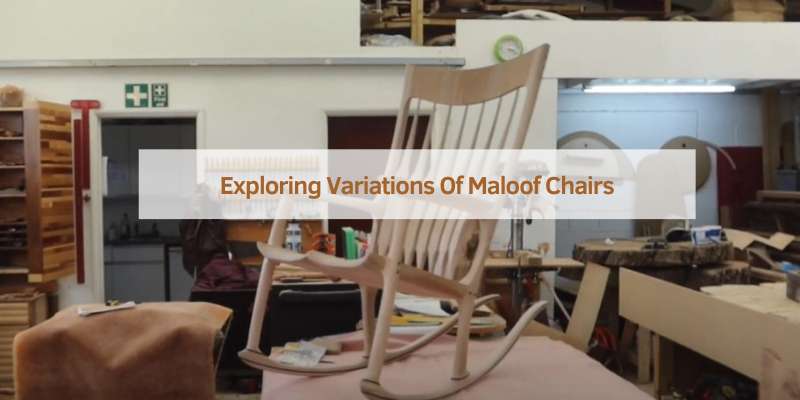
Maloof’s rocking chair is the most famous model, but he also produced dining chairs, settees, and low-back variants over his career. The low-back rocker trades some of the tall headrest support for a more open, lighter-looking silhouette.
Dining chairs built with the same joinery bring the signature style to a full table setting, and they’re sturdy enough to last decades of daily use rather than occasional rocking.
For woodworkers who want the look without the auction-house price, Maloof-style rocking chair plans and reproductions built by independent makers follow the same proportions and joinery principles at a fraction of the cost – just don’t expect them to be sold or appraised as originals.
Frequently Asked Questions
What Is A Sam Maloof Chair?
A Sam Maloof chair is a handcrafted piece of furniture designed by American woodworker Sam Maloof (1916-2009), known for its sculpted, hand-shaped joints and ergonomic curves. Maloof worked without formal sketches, shaping each chair by eye, which is why authentic pieces vary slightly from one another even within the same design.
Why Is The Sam Maloof Chair Famous?
The Sam Maloof chair is famous because Maloof was a founding figure of the American Studio Furniture movement and the first woodworker to win a MacArthur Foundation “genius grant” (1985). His self-taught, no-blueprint approach to joinery and sculptural form influenced generations of furniture makers who followed him.
How Much Does A Sam Maloof Chair Cost?
Authenticated Sam Maloof chairs sell in the tens of thousands of dollars at auction; a walnut-and-ebony rocking chair set a world record at $80,500 at a Bonhams sale. Maloof-style reproductions built by independent makers, which are not authenticated originals, typically run from a few hundred to a few thousand dollars.
How Can You Tell If A Maloof Chair Is Authentic?
Check for documented provenance (a bill of sale or gallery invoice), a signature and date on the underside of the seat, solid walnut or cherry construction, and hand-shaped joints that aren’t identical repeated copies. Any dealer selling an “original” without provenance documentation should be treated with caution.
Conclusion
The Sam Maloof chair stands as a testament to self-taught craftsmanship and a design philosophy that never relied on a fixed blueprint. Whether you’re chasing an authenticated original, a documented reproduction, or simply want to understand what made his work distinct, the joinery and hand-shaping described here are what to look for and what to protect if you own one.
Sponsored / affiliate links. As an Amazon Associate I earn from qualifying purchases. I may earn additional commission from eligible campaigns.