Starting a Fire in a Wood Stove the Right Way
Many folks find Starting a Fire in a Wood Stove the Right Way a bit tricky at first. It’s easy to get frustrated with smoky rooms or fires that just won’t catch. But don’t worry, it doesn’t have to be hard.
We’ll walk you through it step by step. You’ll be enjoying a cozy fire in no time. Get ready to learn the simple secrets to a great fire.
Safely Starting a Fire in a Wood Stove
Learning how to get a fire going in your wood stove the correct way is important. It’s not just about warmth; it’s about safety and making your stove work its best. When you start a fire wrong, you can end up with a lot of smoke in your house, which isn’t pleasant.
You might also not get as much heat as you could, and it can be harder on your stove and chimney over time. This part will show you the basics to get a good fire going from the start. We will cover the essential items you need and the first steps to take.
Gathering Your Firewood Supplies
Before you even think about lighting a match, you need the right things ready. Think of it like preparing ingredients before cooking a meal. Having everything in one place makes the whole process much smoother.
- Seasoned Firewood
This is wood that has been cut and dried for at least six to twelve months. When wood dries, it loses a lot of its water. Wet or green wood burns poorly. It creates more smoke and less heat. Seasoned wood snaps cleanly when broken, and the ends often show cracks. It should feel lighter than unseasoned wood. Using properly seasoned wood is the most critical step for starting a good fire easily. - Kindling
Kindling refers to small, dry pieces of wood. These pieces are thin enough to catch fire from a match or lighter. They are essential for getting the main fuel wood to ignite. Good kindling includes small twigs, split wood chips, or even commercially made fire starters. You need a good handful of these, varying in size from pencil-lead thin to about pencil thickness. - Tinder
Tinder is the material that catches fire very easily from a spark or a small flame. It burns long enough to light the kindling. Common tinder materials include dry leaves, birch bark shavings, pine needles, or cotton balls soaked in petroleum jelly. It needs to be completely dry and fluffy. A small pile, about the size of your fist, is usually enough. - Fire Starter
This is what you use to ignite your tinder. A long match or a lighter is ideal. For safety, it’s good to have something that keeps your hands away from the initial flames. Some people use a fireplace lighter or even a butane torch for a quick start.
Preparing the Wood Stove
Getting your stove ready is just as important as having your fuel. A clean stove works better and is safer.
- Clean Out Ashes
Make sure the ash pan is not too full. Too many ashes can block airflow. This airflow is needed for the fire to burn well. You can safely remove ashes when the stove is completely cool. Put them in a metal container kept outside. - Check the Damper
The damper controls airflow to the chimney. It needs to be open when you start a fire. An open damper lets smoke escape up the chimney. It also helps pull air into the stove, which feeds the fire. Most dampers have a handle you can move. Make sure it’s set to the fully open position.

Building the Fire Layer By Layer
Now that your supplies are ready and the stove is prepped, it’s time to build the fire. This is where you put all the pieces together. We’ll use a method that ensures good airflow from the start, which is key to a clean burn.
This layered approach helps the fire grow steadily.
The Base Layer Tinder and Kindling
This is where the magic begins. You need to create a small, easy-to-light nest.
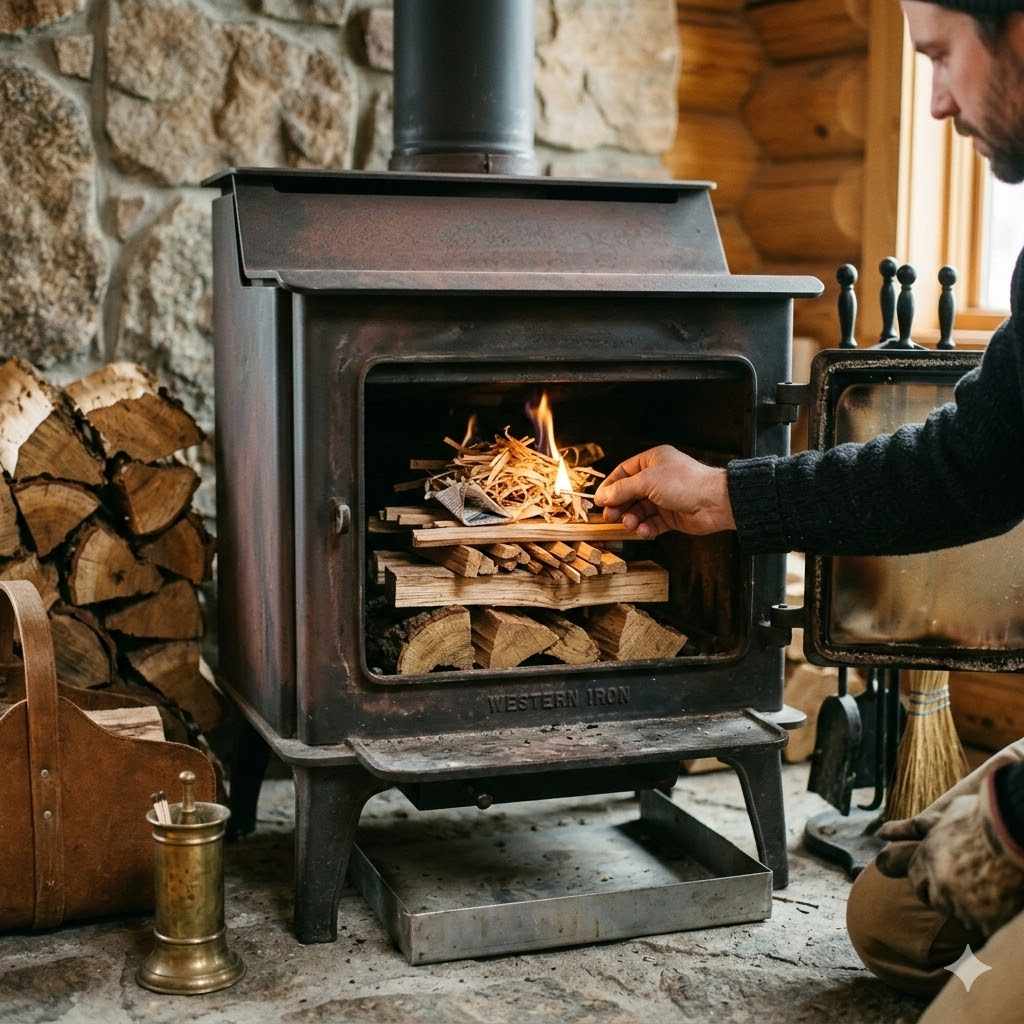
- Place a generous amount of tinder in the center of the firebox. Make it loose and airy so that air can get to it easily. Think of it as building a small bird’s nest.
- On top of and around the tinder, arrange your smallest pieces of kindling. Lean them against each other in a way that allows air to circulate freely. You want to create a small teepee or log cabin structure. Make sure there are gaps for air.
This initial setup needs to be easy for a flame to reach and spread. The tinder catches the flame, and the small kindling then catches fire from the tinder. If the kindling is too tightly packed, it will smother the flames.
If it’s too loosely packed, the heat might not transfer well.
Adding Larger Fuel Wood
Once the kindling is burning well, it’s time to add the main event: your seasoned firewood. This is where you transition from a small flame to a strong, lasting fire.
- Place two or three of your smallest seasoned logs on top of the burning kindling. Position them so they don’t smother the flames but are close enough to catch fire. You can lean them over the burning kindling, creating more structure.
- As these logs start to catch fire, you can gradually add slightly larger logs. Continue to leave space for air to move. A good fire needs to breathe. If you pack the stove too full, the fire will struggle.
The goal is to build a fire that is self-sustaining. This means that the heat from the burning logs ignites the next set of logs. It’s a chain reaction that keeps the fire going strong.
Controlling Airflow for an Efficient Burn
Airflow is like food for your fire. Too little air, and it smolders and smokes. Too much air, and it burns too fast and hot, wasting wood.
Modern stoves have adjustable air vents. Learning to use them is key to efficiency.
- Initial Burn
When you first start the fire, you want plenty of air. Open the stove’s air vents fully. This helps the kindling and smaller logs ignite quickly and burn brightly. You should see a strong, lively flame. - Maintaining the Burn
Once the main logs are burning well, you can start to reduce the airflow. Close the air vents slightly. You’ll know you’ve found a good setting when the fire burns steadily without producing excessive smoke from the chimney. The flames should be active but not roaring. This controlled burn extracts the most heat from your wood. - Adjusting as Needed
Pay attention to your fire. If it starts to die down, you may need to open the vents a bit more. If it seems to be burning too fast, you can close them down a little further. It’s a balancing act.
Maintaining Your Wood Stove Fire
Starting a fire is only half the battle. Keeping it going efficiently and safely is just as important. This involves regular checks and adjustments.
Feeding the Fire Properly
Your fire needs fuel to keep burning. How and when you add wood makes a big difference.
- Add Wood Before It Burns Out
Don’t wait until all the previous logs have turned to embers. Add new logs when there are still good flames present. This helps the new wood ignite more easily. It also prevents the fire from dying down too much, which can cause smoking when you open the door. - Don’t Overload the Stove
Putting too many logs in at once can restrict airflow. It can also cause the fire to burn inefficiently or even overheat the stove. Follow your stove manufacturer’s guidelines for how much wood to load. - Arrange Logs for Airflow
When adding new logs, try to place them so air can circulate around them. You can place a new log on top of existing embers or lean them against each other. This ensures they catch fire quickly.
Monitoring Smoke and Emissions
The amount and color of smoke coming from your chimney can tell you a lot about how your fire is burning. This is an important part of safely starting a fire in a wood stove the right way.
- White Smoke
A little bit of white steam when you first start the fire is normal, especially if the wood has a tiny bit of moisture. However, constant white smoke means your wood is too wet. It’s not burning efficiently and is creating a lot of pollution. - Black Smoke
Thick black smoke is a sign that the fire is not getting enough air. This means the wood is not burning completely. You are likely creating creosote, which can be a fire hazard in your chimney. Open the air vents more to fix this. - Clear or Light Gray Smoke
This is ideal. It means your fire is burning hot and efficiently. Most of the wood is converting into heat and energy, not pollution.
A common issue for beginners is seeing a lot of smoke enter the room when they open the stove door to add wood. This often happens when the fire has burned down too much, and the draft isn’t strong enough to pull the smoke up the chimney quickly. To avoid this, always ensure there are glowing embers or active flames before adding new wood.
Regular Stove and Chimney Maintenance
Keeping your stove and chimney in good condition is vital for safety and performance. This is part of the long-term practice of starting a fire in a wood stove the right way.
- Ash Removal
As mentioned before, regularly removing ashes ensures proper airflow. Your stove manufacturer will have recommendations on how often to do this. Don’t let ashes build up too high. - Cleaning the Glass Door
Wood stoves often have glass doors so you can see the fire. Soot can build up on the glass, obscuring your view and reducing light. You can often clean this with a damp paper towel dipped in ash from the stove. Wipe gently. - Chimney Sweeping
Chimneys need to be cleaned regularly, usually once a year. This removes creosote, a flammable substance that builds up inside the chimney from burning wood. A professional chimney sweep can ensure your chimney is safe and clear. This is a critical safety step.
Troubleshooting Common Wood Stove Fire Problems
Even with the best intentions, sometimes fires don’t behave as expected. Knowing how to fix common issues can save a lot of hassle. These are practical tips for anyone learning how to start a fire in a wood stove the right way.
Fire Won’t Start or Stays Small
This usually comes down to a few key things. The most common culprit is damp wood. If your wood has too much moisture, it won’t ignite easily.
- Check Your Wood
Ensure you are using seasoned wood. If you’re unsure, try splitting a piece open. If it looks wet or feels heavy, it’s likely not dry enough. - Improve Airflow
Make sure the damper is fully open and the ash pan isn’t blocking air intake. Loosen the kindling or tinder if it’s packed too tightly. Add more small, dry kindling. - Use More Tinder and Kindling
Sometimes, you just need a stronger starting flame. Use more tinder and a larger quantity of very small, dry kindling to get a robust initial fire.
Excessive Smoke in the Room
This is not only annoying but also a sign of poor combustion and potentially dangerous conditions.
- Check the Damper
Make sure the damper is fully open. If it’s partially closed, smoke will have trouble escaping. - Warm Up the Chimney
Cold chimneys create a downdraft, pushing smoke back into the room. Try lighting a rolled-up newspaper or a few pieces of kindling directly in the chimney opening for a few minutes to warm it up before lighting the main fire. - Avoid Opening the Door Too Soon
Don’t open the stove door if the fire is low or has just gone out. Wait until there are active flames or glowing embers. - Ensure the Stove Door Seal is Good
A worn-out gasket on the door can let air in and smoke out. Check if it needs replacing.
Fire Burns Too Quickly
This means you’re using up your wood supply faster than you’d like. It’s usually a sign of too much air.
- Reduce Airflow
Close down the air vents on your stove slightly. You want a steady, active flame, not a roaring inferno. - Use Larger Logs
Once the fire is established, use larger, well-seasoned logs. They burn longer and more slowly than small pieces of wood. - Don’t Overload with Kindling
Too much small, fast-burning kindling can cause the entire fire to ignite too rapidly.

Frequently Asked Questions
Question: What is the best type of wood for a wood stove?
Answer: The best wood is seasoned hardwood like oak, maple, or ash. These woods burn longer and hotter than softwoods. It’s crucial that the wood is seasoned, meaning it has dried for at least six months to a year.
Wet wood creates more smoke and less heat.
Question: How much kindling do I need to start a fire?
Answer: You’ll need a good handful of kindling, varying in size. Start with very small, thin pieces and have some slightly larger pieces, about pencil-thick. This graduated size helps the fire build up gradually from the tinder.
Question: Can I use paper to start a fire in my wood stove?
Answer: While paper can be used as tinder, it burns very quickly and doesn’t produce a lot of heat. It’s better to use dry leaves, birch bark shavings, or commercially made fire starters. If you do use paper, use it sparingly and have plenty of kindling ready to catch the flame.
Question: How often should I clean my wood stove?
Answer: You should remove ashes whenever the ash pan is more than half full. This helps maintain good airflow. The glass door should be cleaned as needed to maintain visibility.
The stove and chimney system, however, require professional inspection and cleaning annually.
Question: What does it mean if my fire is smoldering?
Answer: A smoldering fire means it’s not getting enough oxygen. You need to open the air vents on your stove more. Also, check that your kindling and main logs aren’t packed too tightly, as this can also restrict airflow.
Wrap Up
Mastering starting a fire in a wood stove the right way is simple with practice. Focus on dry wood, good airflow, and layering your fuel. You’ll get a warm, efficient fire every time.
Enjoy your cozy space with confidence.