Stop Furniture from Sliding on Wood Floors: What Actually Works
The fastest fix for furniture sliding on wood floors is a self-adhesive rubber or silicone gripper pad under each leg — but the “best” pad depends on the furniture’s weight and how often it moves. Rugs with a proper rug pad work well for larger zones like a whole seating area, wall spacers and stop blocks work for furniture that never needs to move, and felt (the pad most people reach for first) is actually the wrong choice for hardwood specifically in a few common cases below.
Compare Your Options at a Glance
Best All-Purpose Gripper Pad
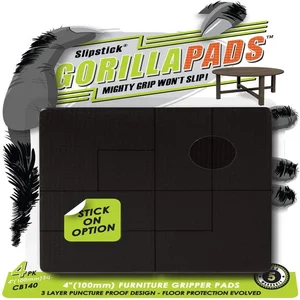 |
Slipstick GorillaPads Non-Slip Furniture Gripper Pads – $9.99 Pre-scored so you cut one large pad down to fit small chair legs or wide sofa feet, instead of buying a different size for every piece of furniture.
|
| Option | Grip strength | Best for | Watch out for |
|---|---|---|---|
| Rubber/silicone gripper pads | High | Chairs, sofas, anything that gets sat on | Can leave a faint ring on some finishes if left in one spot for years |
| Felt pads | Low-Medium | Furniture that’s rarely moved, on softer floors | Traps grit against hardwood and can scratch the finish it’s meant to protect |
| Rug + rug pad | Medium-High | Whole seating areas, dining sets | Needs a grip-rated pad underneath, not just any rug backing |
| Wall spacers / stop blocks | High (for that spot only) | Bookcases, beds, furniture that should never move | Does nothing if you rearrange the room |
| Furniture straps/brackets | Highest | Tall, tip-prone furniture (bookcases, dressers) | This is an anti-tip safety fix, not a floor-protection one — use alongside a gripper pad, not instead of it |
The Mistake That Actually Damages Floors: Felt on the Wrong Furniture
Felt pads are the default recommendation almost everywhere, but they’re not automatically the safest choice for hardwood. Felt is soft enough to trap grit and sand between the pad and the floor, and that grit acts like sandpaper every time the furniture shifts even slightly — the opposite of what the pad is supposed to prevent. Felt also compresses and hardens over months of weight, which both reduces its grip and turns it into the same grit-holding problem. For furniture that gets sat in daily (dining chairs, recliners), a rubber or silicone gripper pad that actually grips the floor — rather than just cushioning against it — does more to stop the sliding that causes scratches in the first place. Save felt for lighter pieces that almost never move, like a side table or bookcase, and even then, check under it every few months for trapped debris.
If You’d Rather Use a Rug
A rug over the area where furniture sits is the most visually seamless fix, but the rug itself has to be anchored or you’ve just moved the sliding problem down one layer. Use a rug pad rated for hardwood specifically — look for “grip” rather than just “cushion” on the packaging, since some rug pads are purely padding with no non-slip backing. Avoid PVC or rubber-backed rugs and pads that aren’t labeled floor-safe; some can react with certain hardwood finishes over long contact and leave a discolored patch.
Free DIY Fixes
If you don’t want to buy anything, a few household options work in a pinch: wrap furniture legs with a strip cut from an old rubber shelf liner or bike inner tube (rubber-side out), or press a small removable dot of clear silicone caulk onto the bottom of each leg and let it cure into a slightly tacky bump. Both approaches trade some furniture-moving convenience for near-zero cost, and both are easy to remove later without residue if you use painter’s tape as a barrier first.
Keep the Floor Itself Part of the Plan
Dust and grit on a hardwood floor reduce the friction any pad relies on, so regular dry mopping or vacuuming (not just under furniture — the areas furniture slides across) keeps whatever grip solution you choose working longer. If your floor already feels unusually slick even when clean, that’s often a finish or wax buildup issue rather than something a furniture pad can fix — see our guide on how to make a wood floor less slippery for that separate problem.
For a deeper look at gripper pad styles by shape and adhesive type, see our guide to furniture grippers for wood floors. If scratches and dents are the bigger concern rather than sliding itself, see our guide to furniture feet protectors for wood floors, and for chair-specific options, best chair leg protectors for hardwood floors compares felt, silicone, and rubber by grip and durability.
Frequently Asked Questions
How do I stop my couch from sliding on hardwood floors?
Use rubber or silicone gripper pads under each leg rather than felt — a couch gets sat on repeatedly, and felt compresses and traps grit under that kind of regular weight. A rug with a grip-rated rug pad underneath the whole couch also works well if you want a softer look.
How do I stop a bed from sliding on a wood floor without buying anything?
Wrap each bed frame leg or caster with a strip of rubber shelf liner, rubber-side facing the floor, and secure it with a zip tie or tape. It’s not as durable as a purpose-made gripper pad, but it works as a free short-term fix.
Are felt pads bad for hardwood floors?
Not inherently, but they’re the wrong choice for furniture that moves often. Felt can trap grit against the floor and compress flat over time, both of which reduce grip and can lead to the scratching the pad was supposed to prevent. Save felt for furniture that’s rarely moved and check underneath it periodically.
How do I stop a recliner from sliding on a wood floor?
Use rubber or silicone gripper pads rather than felt, since a recliner’s legs shift with every recline. Pre-scored cut-to-size pads let you match odd-shaped recliner feet more precisely than a fixed round or square pad.
Match the fix to how often the furniture actually moves: gripper pads for anything sat on or in, a rug-and-pad combo for a whole seating area, and wall spacers or anti-tip straps for furniture that should stay put permanently. Skip felt on pieces that see daily use, and keep the floor itself dusted so whatever pad you choose keeps working.
Sponsored / affiliate links. As an Amazon Associate I earn from qualifying purchases. I may earn additional commission from eligible campaigns.