Furniture Grippers for Wood Floors: Rubber vs. Felt
Furniture grippers for wood floors work by adding friction (usually rubber or silicone) or by cushioning contact (felt) between a furniture leg and the finish – and picking the wrong material for the job is one of the most common ways people accidentally damage the floor they’re trying to protect. Rubber and silicone grip well but can react with certain polyurethane floor finishes over months of contact, while felt is gentle on the finish but collects grit that acts like fine sandpaper if it isn’t cleaned out. Neither material is a universal “safe” choice, which is the part most quick buying guides skip.
Why Furniture Grippers Matter for Hardwood Floors
Best Rubber Gripper Pick for Everyday Furniture
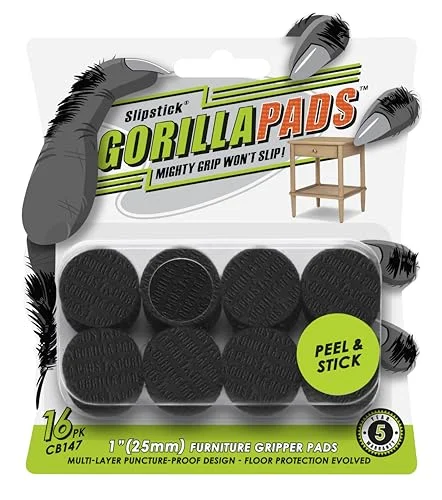 |
Slipstick GorillaPads CB147 – $7.48 A rubber-and-felt hybrid gripper pad sized for everyday chair and table legs, built to stop sliding without the bare-rubber discoloration risk on finished floors.
|
A dining chair that slides three inches every time someone sits down doesn’t look like much of a threat, but that repeated micro-movement is exactly how hairline scratches and dulled spots build up on a hardwood finish over a year or two – not from one dramatic drag, but from thousands of small ones. Furniture grippers address this two ways: by increasing friction between the leg and the floor so the piece doesn’t move as easily, or by adding a soft buffer layer so that when it does move, nothing hard is contacting the finish directly. Which mechanism you actually need depends on the furniture (light chairs that get pushed in and out daily need friction; heavy stationary pieces mostly need cushioning) and that’s the decision most generic “just use felt pads” advice glosses over.
Rubber/Silicone Grippers vs. Felt Pads: The Tradeoff Most Guides Skip
Most articles on this topic present felt and rubber as interchangeable “just pick one” options. They’re not, and the difference matters more the longer the pads stay in place.
Rubber and Silicone: Strong Grip, But a Real Finish-Reaction Risk
Rubber and silicone pads grip far better than felt, which is why they’re the right call for furniture that actually needs to stay put – a bookshelf, a heavy dresser, anything you don’t want creeping across the room. The tradeoff is chemical, not cosmetic: many rubber compounds contain plasticizers and antioxidants (butylated hydroxytoluene, or BHT, is a common one) that can react with polyurethane floor finishes over months of sustained contact, leaving a yellow, dark, or hazy stain that isn’t just surface dirt and often can’t be fully removed without refinishing that section of floor. It’s a documented, predictable chemical interaction between certain rubber additives and certain polyurethane formulations – not a rare manufacturing defect, and not something that happens overnight. It shows up gradually, usually after a rubber pad has sat in one spot, unmoved, for an extended period.
That doesn’t mean avoid rubber entirely – it means test it. Press a pad onto an inconspicuous spot (inside a closet, under a rug’s edge) for a few weeks before committing it to a visible area, and favor pads like the pick above that pair a rubber grip surface with a felt or fabric layer actually touching the floor, rather than bare rubber pressed directly against the finish.
Felt: Gentle on the Finish, But It Collects Grit
Felt pads carry essentially none of that discoloration risk – they’re inert against polyurethane and won’t leave the yellow staining rubber sometimes does. Their weakness is mechanical, not chemical: felt’s soft, fibrous surface is good at grabbing and holding onto dust, grit, and sand tracked in from outside. If that debris isn’t cleaned out of the pad periodically, the felt effectively becomes a piece of fine sandpaper sitting under the furniture leg, and every time the piece shifts, it drags that trapped grit across the finish. This is the opposite failure mode from rubber: instead of one chemical reaction that develops slowly in a fixed spot, it’s ongoing abrasive wear that gets worse the more the furniture actually moves and the less often the pads get checked.
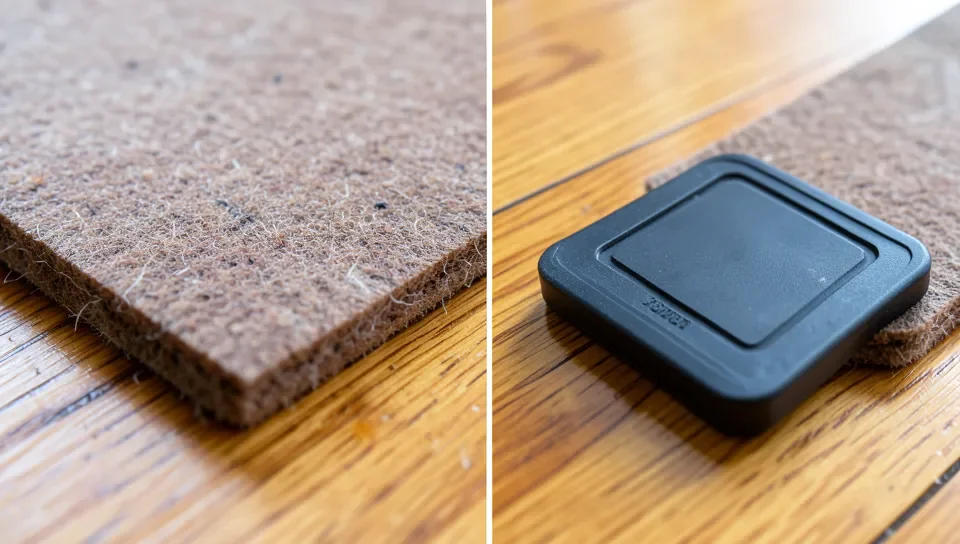
In practice, that means felt needs more upkeep than most people expect: lift the furniture and check the pads every month or two in high-traffic rooms, brushing or vacuuming out any embedded grit, and replace a pad once it feels gritty or stiff rather than soft.
Other Types of Furniture Grippers
Beyond flat rubber and felt pads, a few other formats solve specific furniture problems:
- Slip-on caps (furniture “socks”): Fabric or silicone sleeves that stretch over the bottom of a leg rather than sticking to it. They work well on tapered, round, or oddly shaped legs where flat adhesive pads won’t sit flush, and because they’re not glued on, they’re easy to swap between rooms or take off entirely when the furniture is being moved.
- Caster cups: Shallow rubber or plastic dishes that a wheeled caster sits inside, rather than a pad stuck to a fixed leg. They stop a rolling chair or bed frame from migrating across the room while still letting the caster pivot inside the cup.
- Stop blocks: Small wood or rubber blocks wedged behind a leg against a wall. They only work for furniture already pushed against a wall, but they add zero contact-based finish risk at all since nothing is adhered or pressed against the floor’s finish under load.
If you want a decorative round option instead of a plain adhesive pad – something meant to be seen under a sofa or bed leg rather than hidden – see our guide to furniture coasters for wood floors.
How to Choose the Right Gripper for Your Furniture and Floor
Three factors decide the right pick, and they matter more than brand loyalty to any one product:
- How often the piece moves: Chairs, stools, and anything pulled in and out daily need a grippy rubber or rubber/felt hybrid pad – pure felt flattens and loses grip fast under repeated pressure changes.
- How much it weighs and how long it sits still: Heavy, rarely-moved furniture (dressers, bookshelves, entertainment centers) is exactly where rubber’s discoloration risk has the most time to develop, since the pad never shifts to a fresh spot. Felt, or a rubber pad tested first in a hidden area, is the safer long-term call here.
- The floor’s finish type: Newer aluminum oxide-infused polyurethane finishes (common on factory-finished flooring since the mid-2010s) tend to be more chemically resistant than older shop-applied polyurethane, but “tends to be” isn’t a guarantee – the hidden-spot test still applies regardless of finish age or brand.
Budget-wise, basic rubber or felt multipacks run $6–$12 for enough pads to cover a room’s worth of furniture, while puncture-proof rubber/felt hybrids like the pick above cost a little more per pad but hold their shape and adhesion longer under daily-use furniture. For a broader roundup of pad styles and sizes across different furniture types, see our full guide to non-slip furniture pads for wood floors.
Common Mistakes to Avoid
- Skipping the hidden-spot test on rubber pads. Discoloration from a rubber-finish reaction develops over weeks to months, so a pad that looks fine after a day tells you nothing. Test in a closet or under a rug edge first.
- Using felt on heavy, high-friction furniture. Felt compresses and flattens under sustained weight and loses its grip, which is a mismatch, not a product defect – it was never designed to replace rubber’s friction.
- Never checking pads after installation. Both materials fail in ways that are invisible from a distance – flattened felt or grit buildup underneath, or a faint discoloration ring starting to form under rubber. A quick check every couple of months catches either problem before it becomes permanent.
- Sticking adhesive pads to dirty furniture legs. Dust or oil on the leg weakens the adhesive bond, which is the single biggest reason cheap pads seem to “fall off fast” – wipe the leg with rubbing alcohol before applying any self-stick pad.
FAQs
Do furniture grippers actually work on hardwood floors?
Yes – rubber and silicone grippers increase friction enough to stop most everyday sliding, and felt pads cushion contact so movement doesn’t scratch the finish. The right choice depends on whether the furniture needs to stay still (rubber) or just needs to move without scratching (felt).
Can rubber furniture pads discolor or damage a wood floor?
Yes, in some cases. Certain rubber compounds contain additives that can chemically react with polyurethane floor finishes over months of continuous contact, causing yellowing or dark staining. Testing a pad in a hidden spot first, or choosing a rubber/felt hybrid pad, reduces this risk.
How often should felt furniture pads be cleaned or replaced?
Check felt pads every one to two months in high-traffic rooms. Brush or vacuum out any trapped grit, and replace a pad once it feels gritty, hard, or flattened rather than soft, since trapped debris can scratch the floor the pad is supposed to protect.
Are furniture grippers safe for high-gloss hardwood finishes?
High-gloss finishes show both scratches and any discoloration more visibly than matte or satin finishes, so the hidden-spot test matters even more here. Felt is generally the lower-risk starting point on high-gloss floors; if rubber grip is needed, test it first and check it periodically.
What’s the best furniture gripper for chairs that move every day?
A textured rubber or rubber/felt hybrid pad, sized to the leg, holds up best under daily pushing and pulling – pure felt flattens and loses grip faster under that kind of repeated pressure.
Sponsored / affiliate links. As an Amazon Associate I earn from qualifying purchases. I may earn additional commission from eligible campaigns.