Table Saw and Miter Saw Combo: Do You Need Both (or One Machine)?
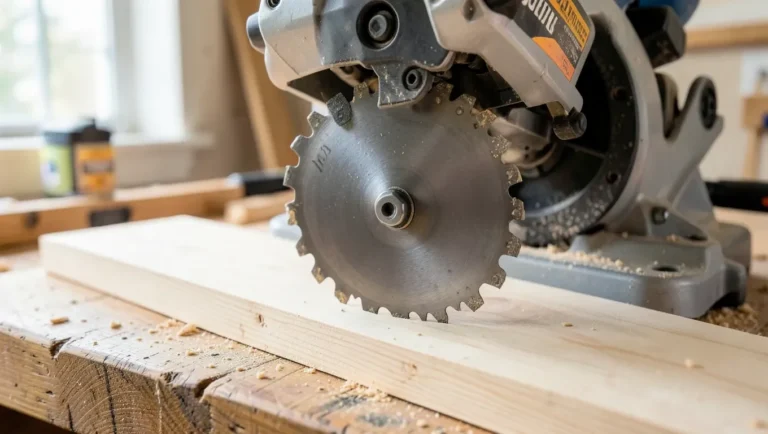
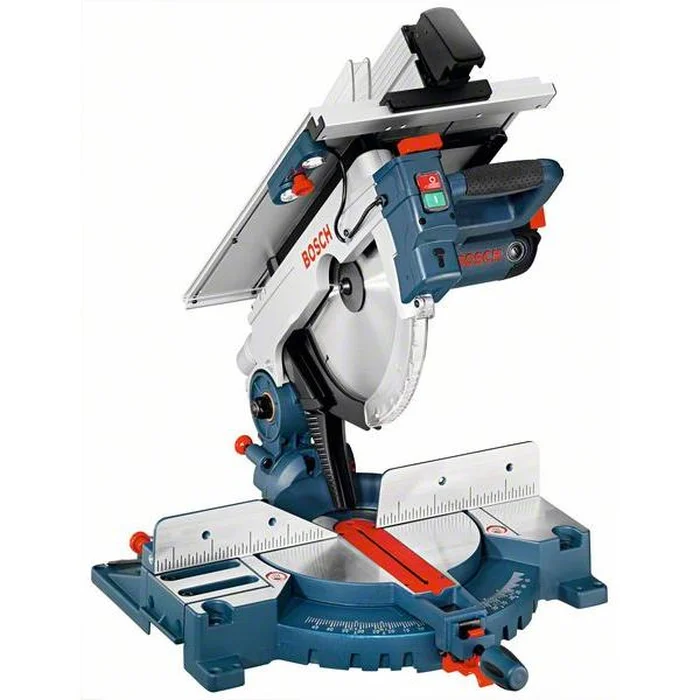
A true table saw and miter saw combo, one machine that does both jobs, does exist. It is a “flip-over saw” that pivots the blade head down onto a table for rip cuts and up into a chop-saw position for crosscuts. But it is a niche category that is far more common on European and UK job sites than in American garages. For most U.S. woodworkers, a practical “combo” means two separate saws working side by side in the same shop.
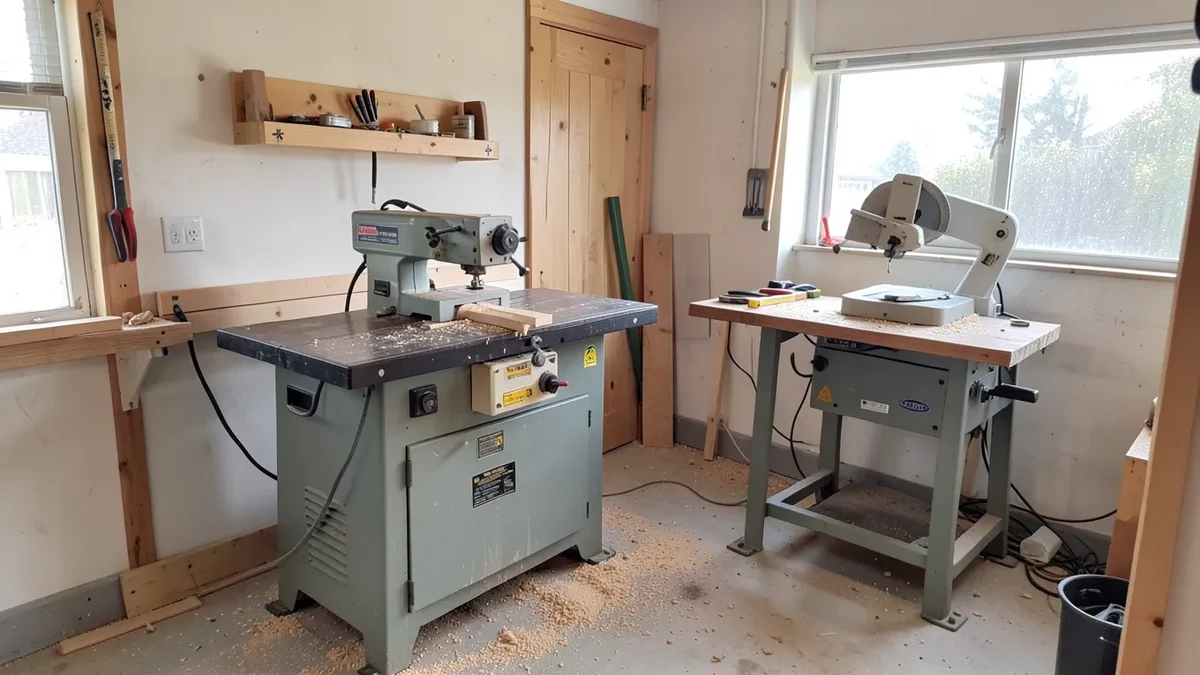
This guide covers both angles: what real flip-over combo saws actually are and why most U.S. buyers skip them, plus the more useful question, which single saw to buy first if you are building a small shop from scratch, and how to actually run a table saw and a miter saw together without the garage turning into an obstacle course.
If you already know you want a miter saw and just need to pick a model, our DWS780 vs. DWS779 comparison and 12-inch miter saw buying guide cover that decision in depth.
Do Real Table Saw and Miter Saw Combo Machines Exist?
Yes. Machines like the Makita LF1000 flip-over saw mount a 10-1/4 inch blade on a pivoting arm: flip it down and it sits flush in a table for ripping sheet goods, flip it up and it locks into a miter-saw head for crosscuts and angles. Bosch and a handful of European brands have made similar flip-over saws for decades, mostly for job sites where truck space is tight and buying two full-size machines is not realistic.
The catch for American buyers is availability. These saws are built around European job-site conventions (many ship 110V-transformer or 230V units aimed at UK/EU sites), and they are sold mainly through European and UK tool distributors rather than mainstream U.S. retailers or Amazon.com listings. You can import one, but you will pay more for shipping and lose easy access to U.S. warranty service and parts. For that reason, very few American workshops actually run a true flip-over combo saw, even though the category is real.
That is why the more useful answer for most readers here is not “which combo machine should I buy,” but “which single saw should I buy first, and how do I make two separate saws work like a combo in a small shop.” The rest of this guide covers that.
Best Table Saw To Pair With A Miter Saw
 |
DEWALT DWE7485 Compact Jobsite Table Saw – $426.58 If you already own a miter saw and need the table saw half of the combo, this is the compact option most small shops land on for ripping plywood without eating up floor space.
|
Which Saw Should You Buy First
If you can only buy one saw right now, let the projects you actually do decide it, not a general rule of thumb.
Buy a table saw first if you build furniture, cabinets, or anything that starts as a full sheet of plywood or MDF. A table saw is the only one of the two that can rip a sheet down to width with a straight, repeatable edge. Without it, you are breaking down sheet goods with a circular saw and a straightedge, which works but is slower and less accurate for cabinet-grade parts.
Buy a miter saw first if your work is mostly trim, molding, framing, or deck boards, where the cuts are crosscuts and angles on boards you already have, not sheet goods you need to rip down. A miter saw is faster to set up, takes less floor space, and for most people is the safer first power saw to learn on because the workpiece stays still and the blade moves, instead of the other way around.
Most woodworkers end up owning both within a year or two anyway. The question is rarely “table saw or miter saw” forever, it is which one earns its keep first for the projects in front of you right now.
Running Both Saws Together in a Small Shop
Once you own both, the real challenge is fitting two machines that each want their own clear space into one garage or shed. A few things actually make a difference:
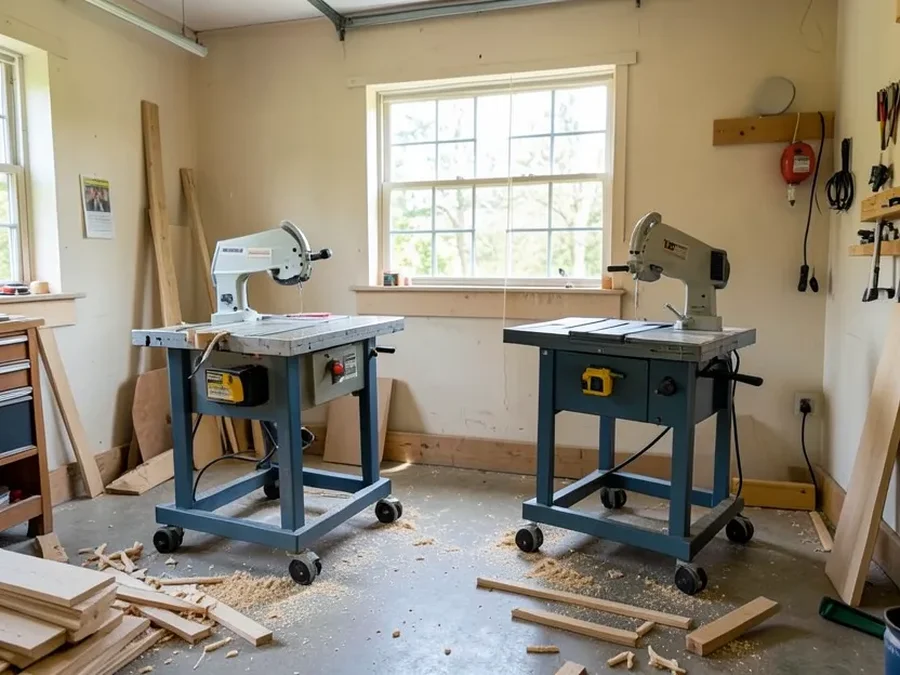
- Put them on separate mobile bases, not a shared table. A rolling stand under each saw lets you push one against the wall while the other is in use, instead of permanently dedicating floor space to both at once.
- Share outfeed support instead of buying two sets. A pair of adjustable roller stands can support long stock coming off either saw if you position them between the two machines.
- Keep them on separate circuits if you can. Both a compact table saw and a miter saw commonly draw close to 15 amps under load. Running both from the same 15-amp circuit, plus a shop vac, is a common way to trip a breaker mid-cut.
- Decide a fixed cut order before you start a project so you are not walking back and forth between two machines for every single piece. Rough-cut long stock to length on the miter saw first, then move to the table saw for ripping to final width, or the reverse if you are starting from sheet goods.
A Real Project Walkthrough: Building a Bookshelf With Both Saws
Here is how the two saws actually divide the work on a simple project, a 3-shelf bookcase built from a 3/4-inch plywood sheet with solid-wood face frame trim:
- Break the 4×8 plywood sheet into rough panels with a circular saw and straightedge first if your table saw’s table is small. Cutting a full sheet down to manageable pieces before it ever touches the table saw is safer and easier to control.
- Rip the rough panels to final width on the table saw. This is where the table saw earns its place: a straight fence gives you a clean, repeatable 11-1/4 inch shelf width across all three shelves and both side panels.
- Move to the miter saw to crosscut the side panels to final height and cut the face-frame trim pieces to length, including 45-degree miters at the corners if the frame is mitered rather than butt-joined.
- Dry-fit everything, then go back to the table saw only if a rip needs trimming for a tight glue-up. The miter saw does not touch the project again after the trim pieces are cut.
Notice the pattern: the table saw handles width, the miter saw handles length and angles. Almost every furniture project splits the same way, which is also why buying “one machine that does both” rarely saves as much time as it sounds like it should, you are still doing two distinct operations either way.
Budget: What a Starter Table Saw and Miter Saw Setup Actually Costs
Realistic starting numbers for a small home shop, buying new:
- Compact benchtop or jobsite table saw: roughly $230 to $430, depending on rip capacity and whether a stand is included.
- Single-bevel 10 or 12-inch miter saw: roughly $150 to $300 for a solid contractor-grade model.
- Dual-bevel 12-inch miter saw: roughly $400 to $600. Worth the jump if you cut a lot of crown molding or compound angles and do not want to flip boards to cut the opposite bevel. Our DWS780 vs. DWS779 breakdown covers exactly where that extra money goes.
- Rolling stand for either saw: roughly $130 to $230, and often skippable at first if you have a sturdy workbench to clamp to.
Budget somewhere around $500 to $900 total for a genuinely usable starter pair, not the absolute cheapest options available but not top-tier professional saws either. If you are still narrowing down which miter saw fits your cut list and budget, our full 12-inch miter saw buying guide walks through the tradeoffs across price tiers.
If you specifically want a miter saw sold as a matched bundle with its own job-site stand rather than buying the two separately, see our DeWalt miter saw and stand combo breakdown for which bundles are worth it.
Safety Tips When You Own Both Saws
Running two saws in the same space raises the odds of a mistake if you are moving fast between them. A few habits matter more once you own both:
- Never leave a blade guard propped open on either saw between cuts, even for “just a second” while you carry a board to the other machine.
- Use a push stick on the table saw for any rip narrower than about 6 inches, and keep it hanging on a hook at the saw, not buried in a drawer, so you actually reach for it.
- Keep the floor path between the two saws clear of offcuts and cords. Most shop injuries involving two machines happen while walking between them, not while actually cutting.
- Unplug whichever saw you are not actively using if you are working alone, especially the table saw, so a bumped switch cannot start a blade spinning while your attention is on the other machine.
Frequently Asked Questions
Is a table saw and miter saw combo machine sold in the U.S.?
Real flip-over combo saws exist, but they are built mainly for the European and UK job-site market and are sold through European tool distributors rather than mainstream U.S. retailers. You can import one, but most American buyers find it simpler and cheaper to buy a separate table saw and miter saw.
Should I buy a table saw or a miter saw first?
Buy a table saw first if your projects start as full sheets of plywood or MDF. Buy a miter saw first if your work is mostly trim, molding, framing, or crosscutting boards you already have. Most woodworkers eventually own both.
Not comfortably. Most rolling stands are built and braced for one saw type’s mounting pattern and weight distribution. It is more practical to put each saw on its own rolling base and share a pair of outfeed roller stands between them instead.
Is it safe to run a table saw and miter saw on the same circuit?
Not at the same time on a standard 15-amp household circuit. Both tools can draw close to the circuit’s full rated load under heavy cuts, and adding a shop vacuum on the same circuit is a common way to trip the breaker. Use separate circuits if your shop has them, or avoid running both saws and dust collection simultaneously.
Bottom Line
A genuine one-machine table saw and miter saw combo exists as a flip-over saw, but it is a niche import for most U.S. shops, not a mainstream option. For nearly everyone reading this, the practical path is two separate saws, bought in the order your actual projects call for, run on their own mobile stands, and kept on separate circuits when you can manage it. That setup does everything a combo machine promises, without the import shipping bill.
Sponsored / affiliate links. As an Amazon Associate I earn from qualifying purchases. I may earn additional commission from eligible campaigns.