What Does Double Bevel Mean On A Miter Saw? (And Do You Need One?)
A double (dual) bevel miter saw tilts its blade both left and right, letting you cut opposing bevel angles without flipping or repositioning the workpiece. A single bevel saw only tilts one direction, so you have to flip the piece over to mirror a cut.
For most flat trim, shelving, and general crosscuts, a single bevel saw is perfectly capable — you just flip the board when you need the opposite angle. Where double bevel actually earns its higher price is repetitive opposing-angle work like crown molding runs, where flipping large or awkward pieces repeatedly slows you down and increases the chance of a measurement error. Dual bevel miter saws have the advantage of tilting in both directions, and single bevel miter saws can only tilt in one, which is the whole tradeoff in one sentence.
What Is A Double Bevel Miter Saw?
Best Double Bevel Saw For Crown Molding Work
 |
DEWALT DWS779 12″ Double Bevel Miter Saw – $393.00 If you’re cutting a lot of crown molding or repeated opposing angles, this is the double bevel saw that removes the need to flip your stock.
|
Mechanically, the difference is in the bevel lock and pivot: a single bevel saw’s head tilts on a pivot that stops at zero and swings one direction only, typically 0-45 or 0-48 degrees depending on the model, while a dual bevel head pivots past center and locks on either side of zero across that same range. That extra pivot hardware is why dual bevel saws typically run $50-$150 more than an equivalent single bevel model and weigh a bit more — you’re paying for a more complex bevel mechanism, not just a marketing label.
Most name-brand 10- and 12-inch miter saws, compound or sliding compound, are available in both configurations from the same manufacturer — the DEWALT DWS779 above and its single-bevel sibling the DWS780 share the same base saw, differing mainly in that pivot mechanism. That’s worth knowing before shopping, since “double bevel” isn’t a separate category of saw so much as an option layered onto a compound or sliding compound saw.
Where the Time Savings Actually Show Up
The flip-the-workpiece workaround sounds trivial in the abstract, but it compounds fast on real jobs. Crown molding for a single room with four inside corners needs opposing bevel angles cut into both ends of most pieces — on a single bevel saw, that means physically flipping each length of molding (often 8-16 feet, awkward for one person to reposition precisely) and re-measuring the stop block position for the mirrored cut. On a dual bevel saw, you set the angle on the other side of zero and cut, with the workpiece never moving.
The real risk isn’t just lost time, it’s measurement drift: every flip-and-reclamp cycle is a chance for the workpiece to shift slightly against the fence, which is how a “close enough” miter joint ends up with a visible gap at the corner. On repetitive opposing-angle work — crown runs, chair rail, picture frame stock cut in batches — that error rate is the practical argument for dual bevel, more than the raw time saved on any single cut.
Types Of Miter Saws
Bevel configuration (single or dual) is an option added to one of a few base miter saw types, not a category of its own — here’s how those base types actually differ in what they can cut.
Sliding Miter Saw
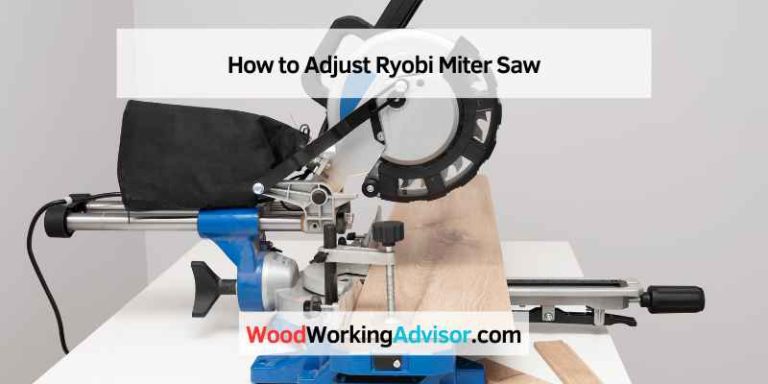
A sliding miter saw‘s head rides on rails, letting it pull forward and push back through the cut rather than just dropping straight down. That extra travel is what lets it crosscut wide stock — a 12-inch sliding saw can typically handle boards 12-16 inches wide, versus roughly 6-8 inches on a fixed-head saw of the same blade size, since a fixed head is limited to whatever the blade alone can reach top to bottom.
Compound Miter Saw
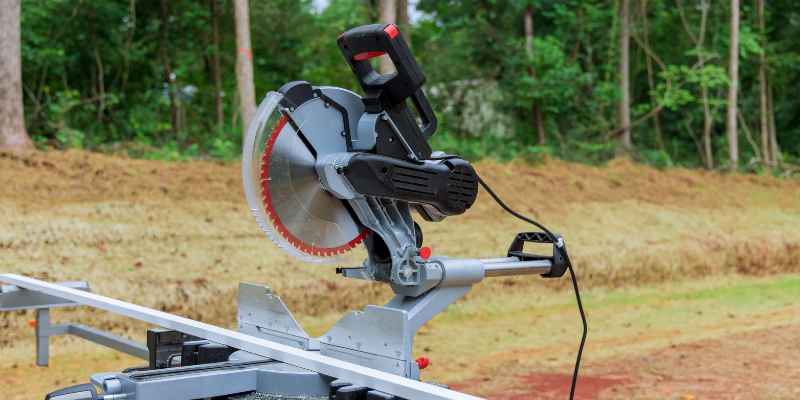
A compound miter saw‘s head both rotates (for the miter angle, along the length of the board) and tilts (for the bevel angle, across the thickness), letting it cut both angles in a single pass instead of needing two separate setups. This is the baseline saw type for most crown molding and trim work, and it’s what “single bevel” or “dual bevel” actually describes — the tilt half of a compound saw’s two-axis movement.
Sliding Compound Miter Saw
Combine the two above — rotation, tilt, and a sliding rail — and you get a sliding compound miter saw, the most capable and most expensive configuration. It handles wide crosscuts the way a sliding saw does while still cutting compound angles the way a compound saw does, which is why it’s the standard choice in a serious trim or framing setup despite the added cost and larger footprint on a workbench.
Bevel Vs Miter Cut
These two terms get used almost interchangeably in casual conversation, but they describe movement on two different axes of the saw, and understanding the distinction is what makes “bevel” and “miter” click as separate settings rather than one confusing blur.
A miter saw is built around exactly this pair of adjustments, which is why the tool takes its name from just one of them. Here’s what separates the two:
Definition of Bevel Cut
A bevel cut tilts the blade across the thickness of the workpiece — think of tilting a board’s edge so it’s no longer a square 90-degree corner. This is the cut used to angle the face of a piece so two boards meet cleanly at an inside or outside corner, like the top edge of crown molding that has to sit flush against both the wall and the ceiling at once.
Definition of Miter Cut
A miter cut rotates the blade across the length of the workpiece, changing the angle of the cut as viewed from above rather than tilting it sideways. This is the cut that makes a picture frame’s corners meet at 45 degrees, or that angles the end of a baseboard run to turn a corner.
Compound Cuts Combine Both
Most real trim work — crown molding especially — needs both a miter angle and a bevel angle cut at the same time, which is exactly what a compound miter saw is built to do in one setup. Crown molding’s compound angles come from the fact that the molding sits at a spring angle (commonly 38 or 45 degrees) against the wall and ceiling rather than lying flat, which is also why crown molding charts exist — the miter and bevel numbers for a given corner angle aren’t intuitive to calculate by eye.
Advantages Of Double Bevel Miter Saw Over Compound Miter Saw
To be precise about terms: a dual bevel saw is still a compound miter saw, just one with the extra pivot range described earlier. The comparison that actually matters is dual bevel versus single bevel within that compound saw category, and it comes down to three connected benefits rather than three separate ones.
Skipping the flip-and-reclamp step saves real time on any job with repeated opposing cuts, but the bigger payoff shows up in accuracy: every reclamp is a chance for the workpiece to shift against the fence by a fraction of a degree, and that fraction compounds visibly once you’re fitting four or more corners in the same room. A dual bevel saw also keeps you working from the same side of the saw for an entire run of molding, which matters more than it sounds like when you’re managing long, awkward stock in a tight room — repositioning yourself around the saw for half the cuts is its own source of both lost time and setup error.
Single Bevel Vs Double Bevel Miter Saw: Which Is More Suitable?
The honest answer depends on what you’re cutting and how often, not on which saw is objectively “better” — a single bevel saw isn’t a lesser tool, it’s a different cost-versus-convenience trade-off.
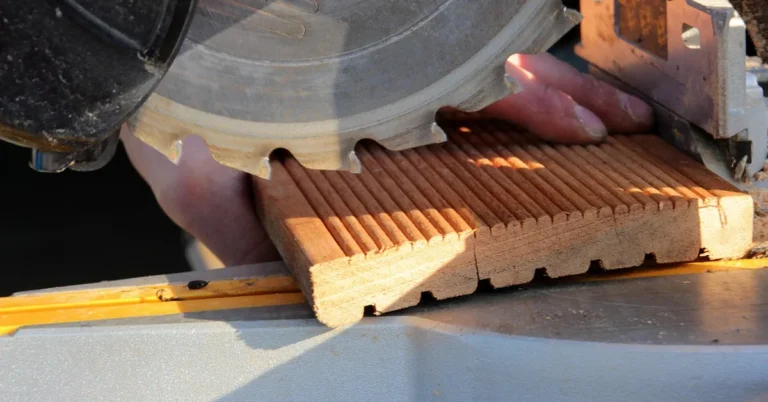
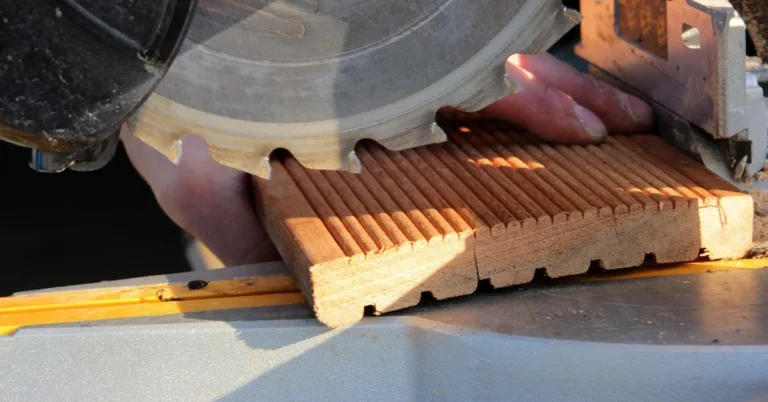
If most of your work is flat trim, shelving, deck boards, or general crosscuts where you rarely need a mirrored angle, a single bevel saw does the same job for less money, and the occasional flip costs you seconds, not real productivity. Where the calculus flips is repetitive, opposing-angle work: a professional trim carpenter running crown molding through multiple rooms a week will make back a dual bevel saw’s price premium in saved time and reduced material waste from mismatched cuts within the first few jobs. A hobbyist building the occasional picture frame or shelf almost never hits that break-even point, which is why a single bevel saw remains a perfectly sound choice for most home workshops.
Factors To Consider Before Buying A Double Bevel Miter Saw
Bevel configuration is one spec among several that actually determine whether a saw fits your work — these are the others worth weighing before you commit to a specific model.
Blade Size
10-inch and 12-inch are the two standard blade sizes. A 12-inch blade gives a taller and wider maximum crosscut than a 10-inch blade on an otherwise similar saw, which matters for base molding, dimensional lumber, and thicker stock; a 10-inch saw is lighter, cheaper, and plenty capable for most trim under about 5 inches tall.
Motor Power
Most quality miter saws run a 15-amp motor, which is the practical ceiling for a saw on a standard 120V/15-amp household circuit and is enough for extended use in hardwoods, not just softwood trim. A lower-amp motor isn’t necessarily underpowered, but it’s worth checking against the density of what you’ll actually be cutting most often.
Dust Collection System
A built-in dust port with a bag or shop-vac hookup makes a real difference in a garage or basement shop where airborne sawdust has nowhere to go — miter saws are notoriously messy compared to a table saw with a cabinet enclosure, since the cut is fully exposed. A saw with a well-designed dust chute captures noticeably more than one that just vents into open air near the blade guard.
Price
Single bevel compound saws start under $150 for a basic 10-inch model; dual bevel sliding compound saws from major brands run $350-$600, and premium models with laser guides or extended slide rails can go higher still. Match the spec list to what you actually build rather than buying the most capable saw available — the dust collection and motor power specs above matter for daily use in a way that an unused bevel-both-ways feature doesn’t, if your projects rarely call for it.
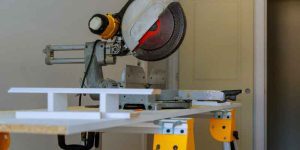
Frequently Asked Questions Of What Does Double Bevel Mean On A Miter Saw
What’s The Difference Between Dual Bevel And Single Bevel Miter Saw?
The bevel pivot: a single bevel saw’s head tilts and locks to one side of zero only, so cutting the mirror-image angle means flipping the workpiece. A dual bevel saw’s head pivots and locks on either side, so you cut both angles from the same setup without moving the wood.
What Is The Advantage Of A Double Bevel Miter Saw?
Mainly speed and accuracy on repeated opposing-angle cuts — crown molding, chair rail, or batch picture-frame work. Skipping the flip-and-reclamp step removes a step where the workpiece can shift against the fence, which is often the real source of a mismatched miter joint, not just the wasted time.
What Are The 3 Types Of Miter Saws?
Sliding, compound, and sliding compound, based on whether the head rides on rails (sliding, for wider crosscuts) and whether it tilts for bevel cuts (compound). Single or dual bevel is then a configuration choice layered on top of a compound or sliding compound saw, not a fourth type on its own.
What Is The Difference Between A Bevel And Miter Cut?
A bevel cut tilts the blade to angle a cut across the workpiece’s thickness (like angling crown molding’s top edge). A miter cut rotates the blade to angle a cut along the workpiece’s length (like a picture frame’s 45-degree corner). Most trim work combines both in a single compound cut.
Conclusion
Double bevel comes down to one mechanical difference — a pivot that locks on both sides of zero instead of one — and one practical payoff: no flipping the workpiece for a mirrored angle. That payoff is worth a real price premium on repetitive opposing-cut work like crown molding, and largely irrelevant for flat trim, shelving, or the occasional angled cut where a quick flip costs you nothing but a few seconds.
Before buying based on the bevel spec alone, weigh it against blade size, motor power, and dust collection — the features you’ll interact with on every single cut, not just the opposing-angle ones. A well-specced single bevel saw will outperform a poorly-specced dual bevel one on the jobs you actually do most often.
Sponsored / affiliate links. As an Amazon Associate I earn from qualifying purchases. I may earn additional commission from eligible campaigns.