Table Saw Sawdust Collector: What Actually Works (Not Just the Bag)
A table saw’s stock dust bag or basic below-blade port typically captures somewhere around 30-50% of the dust the saw actually generates — the rest becomes airborne fine particulate, the kind linked to real respiratory risk, not just shop mess. Getting meaningfully better capture means connecting real suction (a shop vacuum or dedicated dust collector) to the saw’s dust port, not relying on gravity and a cloth bag.
Why the Stock Dust Port Isn’t Enough
The Missing Link Between Saw and Vacuum
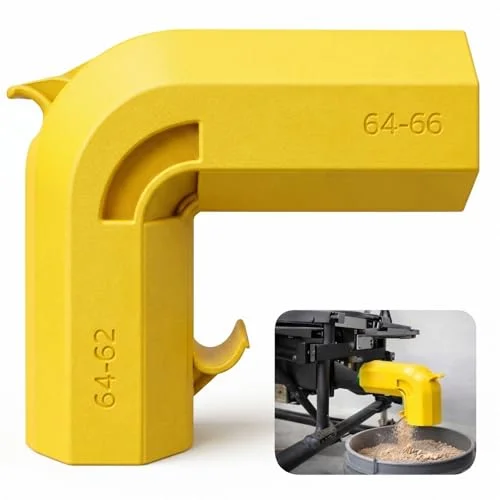 |
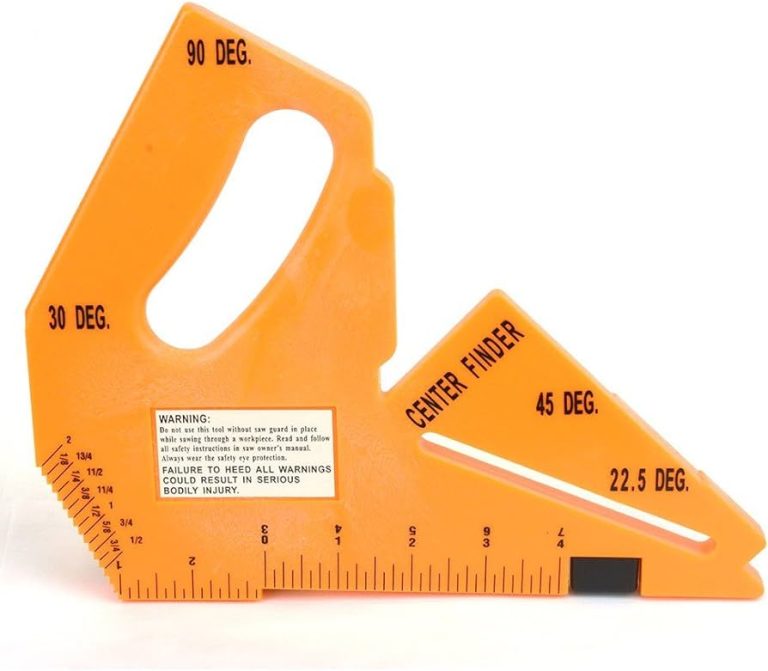
Table Saw Dust Collection Adapter, Dual-Port, 2.5″ – $19.99 Most table saws’ stock dust ports don’t match a standard shop-vac hose — this adapter is what actually bridges the two.
|
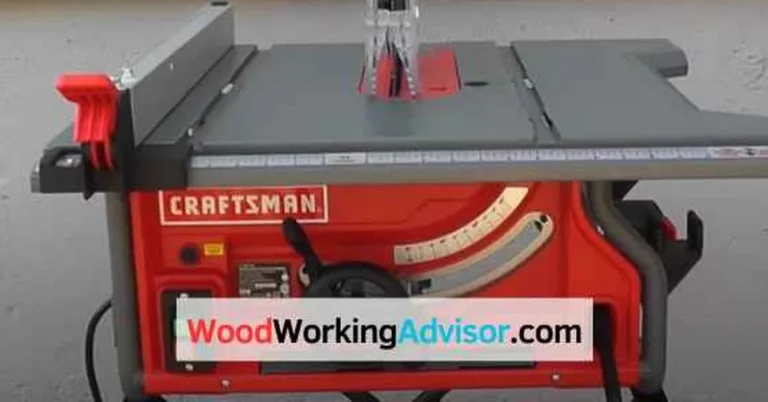
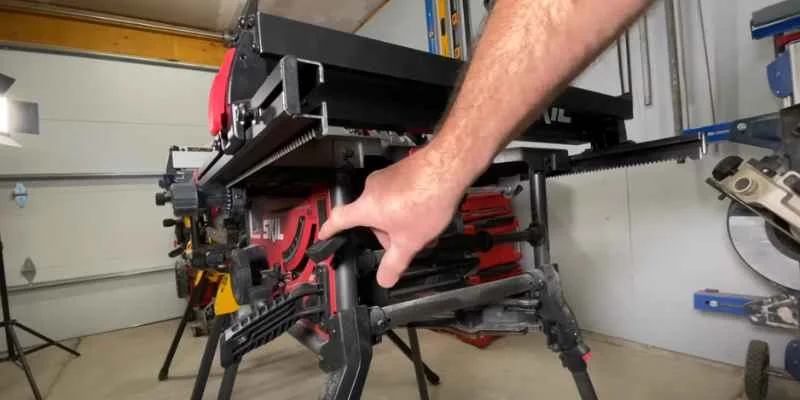
Most contractor and jobsite table saws ship with a small dust port under the blade and rely on gravity plus a loose-fitting bag — there’s no real suction pulling dust away from the blade, so the finest, most airborne particles simply escape upward past the blade guard. Connecting an actual shop vacuum (5+ CFM at the hose, ideally paired with a HEPA-rated filter) or a dedicated dust collector (typically rated 350-1200+ CFM depending on size) to the dust port meaningfully changes this, since real airflow at the point of cutting is what actually captures fine dust before it becomes airborne.
Shop Vacuum vs. Dedicated Dust Collector
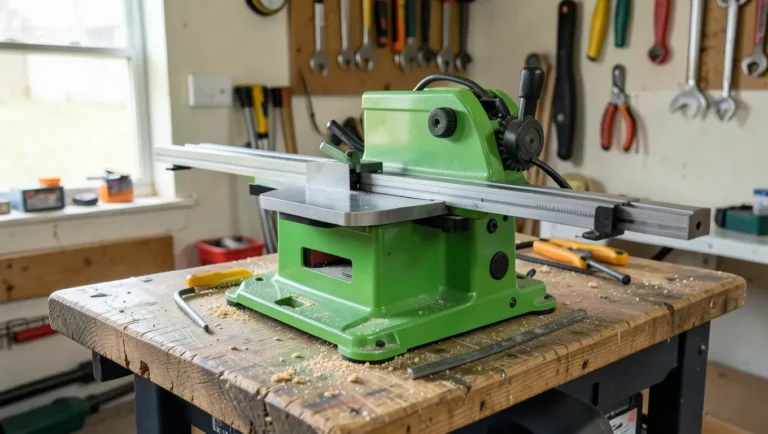
A shop vacuum (typically 100-185 CFM but at high static pressure, meaning strong suction through a narrow hose) works well for a single table saw’s below-blade port and is the practical, affordable choice for most home shops. A dedicated dust collector (higher CFM, lower static pressure, meant for wider ductwork) is better suited to a shop running multiple machines off one system or a table saw with both an overhead blade-guard port and a below-blade port needing simultaneous capture — a shop vac alone usually can’t move enough air to serve two ports at once effectively.
A Cyclone Separator Protects Your Vacuum
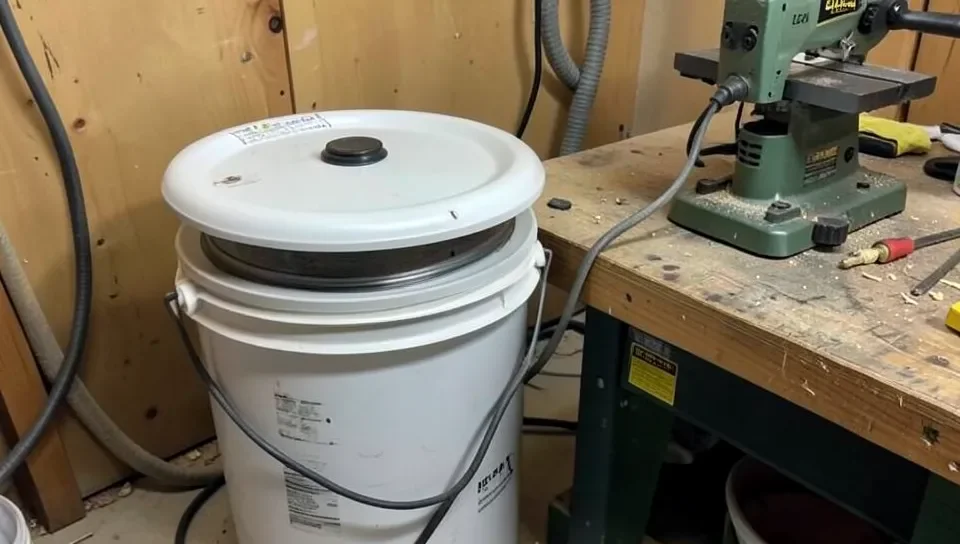
Adding a cyclone separator lid (mounted on a 5-gallon bucket) between the saw and the shop vacuum spins out the bulk of the heavier chips before they ever reach the vacuum’s filter, which meaningfully extends filter life and keeps suction stronger over a work session — a shop vac filter clogged with chips loses real suction fast. This is a genuinely worthwhile $30-50 upgrade for anyone using a shop vac regularly for table saw dust collection, not just a nice-to-have.
The Blade Guard Port Matters Too
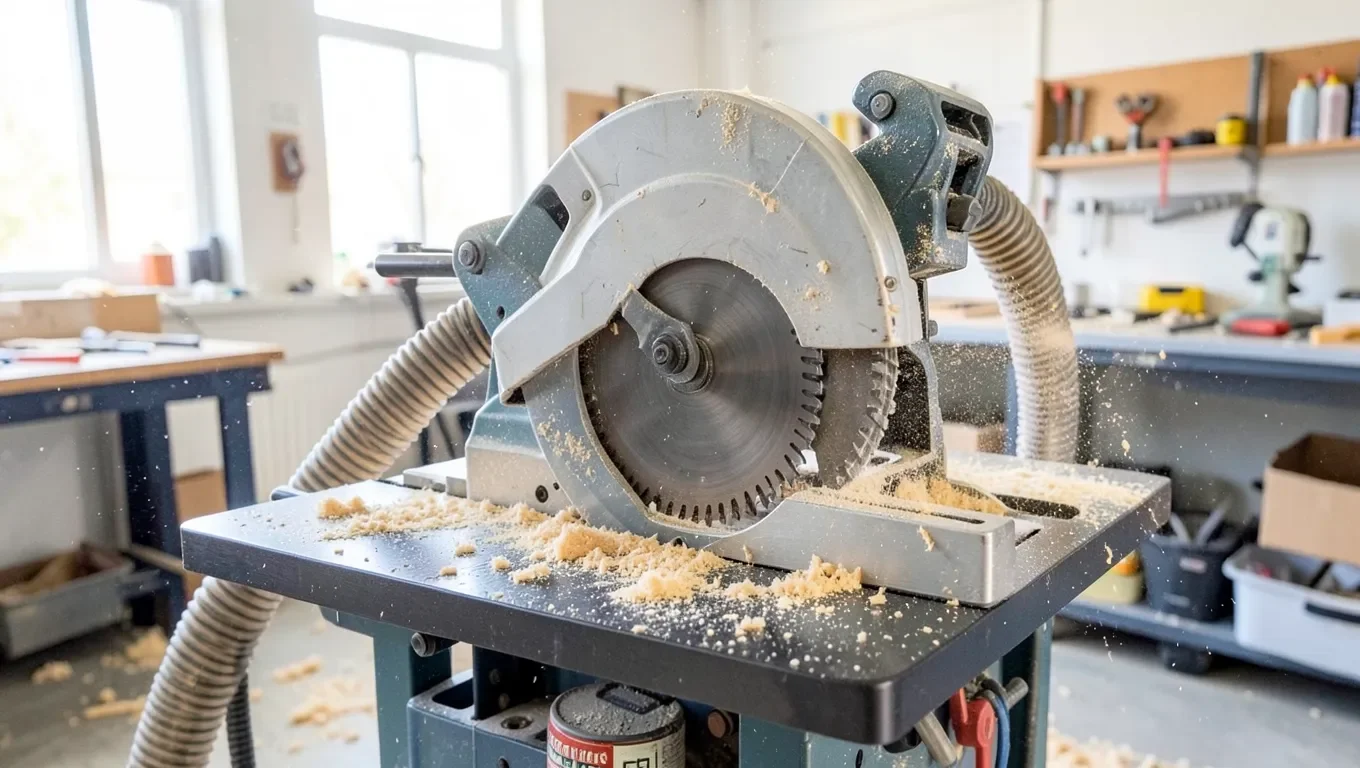
Many table saws with an overhead blade guard also have a second dust port built into the guard itself, capturing the dust that gets thrown upward and over the blade rather than down through the table — this port is easy to overlook since below-blade collection is the default focus, but it captures a real, separate portion of the airborne dust that below-blade collection alone misses entirely. If your saw has this second port and you’re only running one vacuum, a Y-splitter hose fitting lets you pull from both simultaneously, though it does reduce suction at each individual port.
Frequently Asked Questions
How much dust does a table saw’s stock bag actually catch?
Typically around 30-50%. The rest becomes airborne fine particulate unless real suction (a shop vacuum or dust collector) is connected to the dust port.
Should I use a shop vacuum or a dedicated dust collector?
A shop vacuum works well for a single below-blade port in most home shops. A dedicated dust collector suits multiple machines or a saw needing two ports served at once, since a shop vac usually can’t move enough air for both.
Is a cyclone separator worth adding?
Yes, for regular shop vacuum use. It catches most of the heavier chips before they reach the vacuum’s filter, extending filter life and keeping suction stronger over a work session.
Conclusion
Real dust collection on a table saw comes down to connecting actual suction to the dust port, not trusting the stock bag alone — a shop vac with the right adapter handles most home shops, and a cyclone separator ahead of it protects your filter and suction over time. Don’t overlook the blade guard’s overhead port if your saw has one; it captures dust the below-blade port never sees.
Sponsored / affiliate links. As an Amazon Associate I earn from qualifying purchases. I may earn additional commission from eligible campaigns.