Tamper-Resistant Wood Screws: Types, Uses & Buying Guide
A standard Phillips or square-drive screw can be backed out by anyone with a two-dollar screwdriver – which is exactly the problem if that screw is holding a playground slide together, a park bench in place, or an access panel that vandals would love to get behind. Tamper-resistant wood screws solve this with drive heads that a normal bit simply can’t grip, but the category is more nuanced than “special screw, hard to remove.” Some designs are meant to be permanent. Others are meant to keep the public out while still letting a maintenance crew back in – and picking the wrong one creates a real headache down the road.
This guide covers what actually makes a screw tamper-resistant, the three drive types you’ll run into in the real world, where each one belongs, and a practical trade-off most articles on this topic skip entirely: the same feature that locks out a vandal can also lock out you.
What Makes a Wood Screw “Tamper-Resistant”?
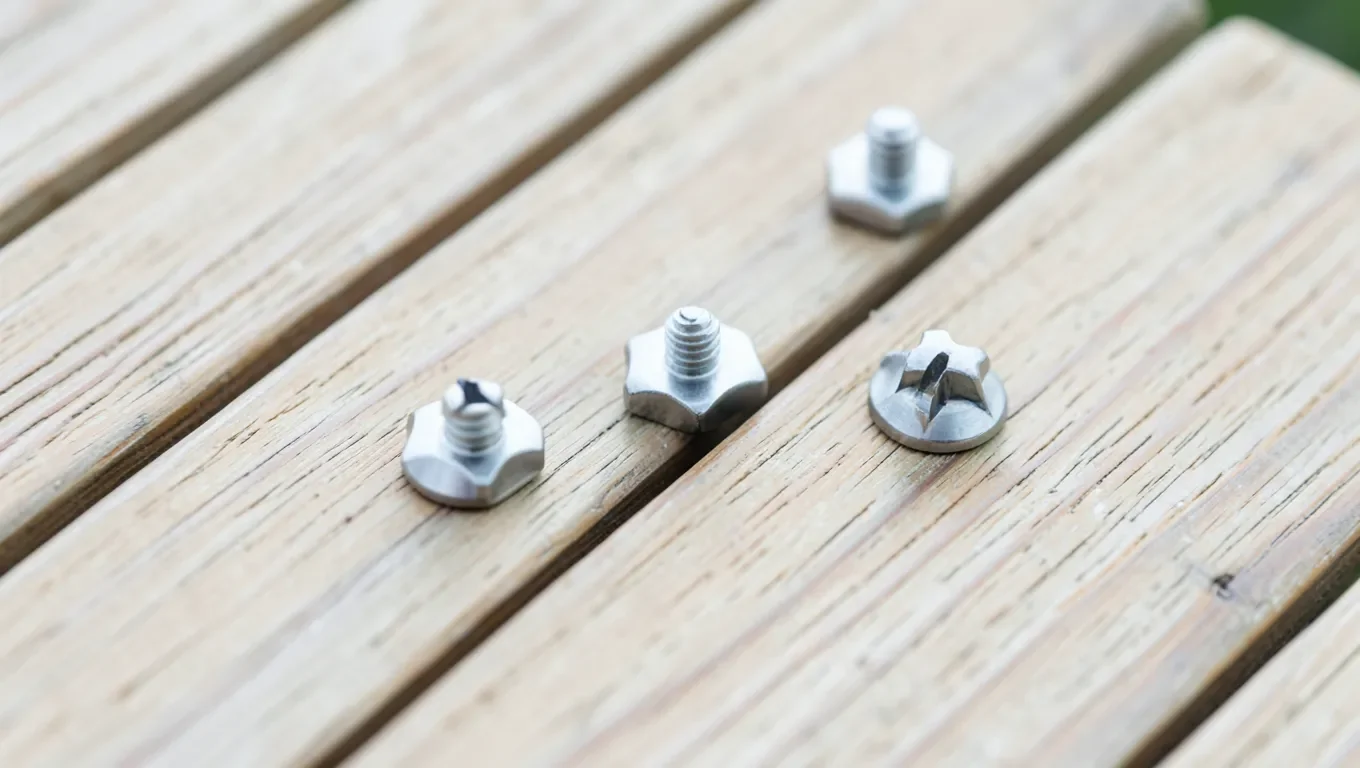
A tamper-resistant screw isn’t made of a different metal or built stronger than a standard fastener – the security comes entirely from the head design. Instead of a Phillips cross, a slot, or a hex socket that any driver in a toolbox can seat into, the head uses a shape that’s either uncommon enough that ordinary bits won’t grip it, or physically blocked so a standard tool can’t sit flush at all. Removing (or in some cases even driving) the screw requires a bit cut to match that specific profile. Since those bits aren’t sold at every hardware store checkout, the screw effectively becomes off-limits to anyone who doesn’t already own the matching driver.
Best Pin-Torx Security Screw Kit
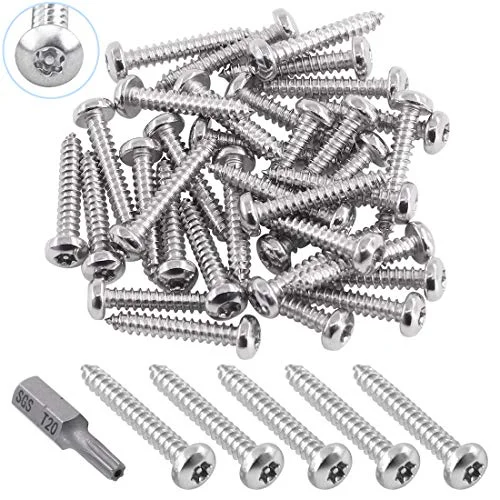 |
Glarks 51-Pc Pin-Torx Security Screws with T25 Bit – $9.99 A real-world example of the pin-in-torx style covered below: 304 stainless screws plus the one matching bit that makes them removable at all.
|
The Three Drive Types You’ll Actually Run Into
Nearly every “tamper-resistant” fastener on the market boils down to one of three head designs. They’re not interchangeable in what they’re good for, so it’s worth knowing which is which before you buy a box of the wrong one.
One-Way Screws
A one-way screw has slanted ramps cut into the slot so a driver can push it in – the ramps let a flat blade cam its way forward – but the same ramps let the blade slip the instant you try to turn it backward. There’s no special bit that reverses a true one-way screw; once it’s seated, it’s seated for good short of drilling it out or cutting a new slot with a rotary tool. That makes it the strongest deterrent of the three, and it’s why you’ll see it on things that are never supposed to come apart again, like license plate fasteners or a permanent access cover.
Pin-In-Torx (Security Torx)
This is a standard six-lobed Torx (star) recess with a small pin standing in the center of the hole. A regular Torx bit has a solid tip, so it can’t seat past that pin – it just hits the obstruction and spins uselessly. The matching security bit has a hole drilled into its own tip to clear the pin, letting it seat fully. Because a genuine security bit does allow the screw to be driven and removed normally, pin-in-torx is the drive of choice anywhere the installer expects to service the fastener again later – it blocks casual tampering without turning routine maintenance into a destructive job.
Spanner (Snake-Eyes)
Instead of a star or a slot, a spanner-head screw has two small round holes punched into the head, spaced opposite each other – the resemblance to a pair of dice showing double ones is where the “snake-eyes” nickname comes from. The matching bit has two pins that drop into those holes. Like pin-in-torx, it’s fully reversible with the correct tool, which is why it shows up constantly on public restroom partitions, elevator panels, and other fixtures that facilities crews need to open on a schedule.
Where These Screws Actually Get Used
In practice, tamper-resistant wood screws show up wherever a fastener is accessible to the public but shouldn’t be adjustable by the public. Playground equipment is the clearest example – slides, climbing structures, and swing frames get bolted together with security fasteners specifically so kids and passersby can’t loosen hardware that’s load-bearing. Park benches and picnic tables get the same treatment; replacing the wood slats on a park bench is a job municipal crews expect to do themselves, not one they want a stranger doing with a pocketknife and a Saturday afternoon.
Deck boards in public or semi-public spaces – boardwalks, apartment complex common areas, restaurant patios – are another common application, since a loose board on a public walking surface is both a liability and an easy target for someone to pry up. Cabinet and access panels, electrical covers, and HVAC enclosures round out the list: anywhere a panel needs to stay closed to the general public but still open for a technician with the right bit.
The Trade-Off Nobody Mentions: You’re Locking Yourself Out Too
Here’s the part most buying guides skip: a genuinely tamper-resistant screw doesn’t know the difference between a vandal and the person who installed it. If you drive pin-in-torx or spanner screws into a project and then lose the matching bit, you’re in exactly the same position as the person you were trying to keep out. This isn’t a hypothetical – security bit sets are small, they get mixed into a general bit collection, and a year later nobody on the maintenance crew remembers which drawer holds the T25 pin-torx bit versus the plain one.
The practical fix is simple but easy to skip in the moment: buy at least two of the matching bit, store one with your general tool kit and keep a spare taped inside the enclosure or filed with the project’s maintenance records, and label the bit clearly with the screw type it drives. For anything installed by a business or a property manager – not a single homeowner – it’s worth documenting the exact drive type and bit source in whatever maintenance log or property file gets handed off if staff changes. A one-way screw is the extreme version of this problem: there’s no “matching bit” to lose because there isn’t a legitimate way to reverse it at all, so use it only where you’re certain the fastener should never come out again.
Choosing Between Permanent and Serviceable Security Screws
The decision comes down to one question: will anyone, ever, need to legitimately remove this screw again? If the answer is no – a permanent sign mount, a cover you never expect to open – a one-way screw gives you the strongest deterrent available, since there’s no bit in existence that reverses it cleanly. If the answer is yes – an access panel, playground hardware that needs periodic inspection, a park bench slat that will eventually need replacing – pin-in-torx or spanner heads are the better call, because they trade a small amount of security for the ability to do routine maintenance without destroying the fastener.
Material matters too. For anything outdoors – decking, benches, playground structures – stick with 304 or 18-8 stainless steel; it resists the rust that would otherwise seize a security screw in place and make it just as hard to remove with the correct bit as without one. Indoor applications like cabinet hardware or electrical covers can use zinc-plated steel without issue.
Installing Tamper-Resistant Wood Screws
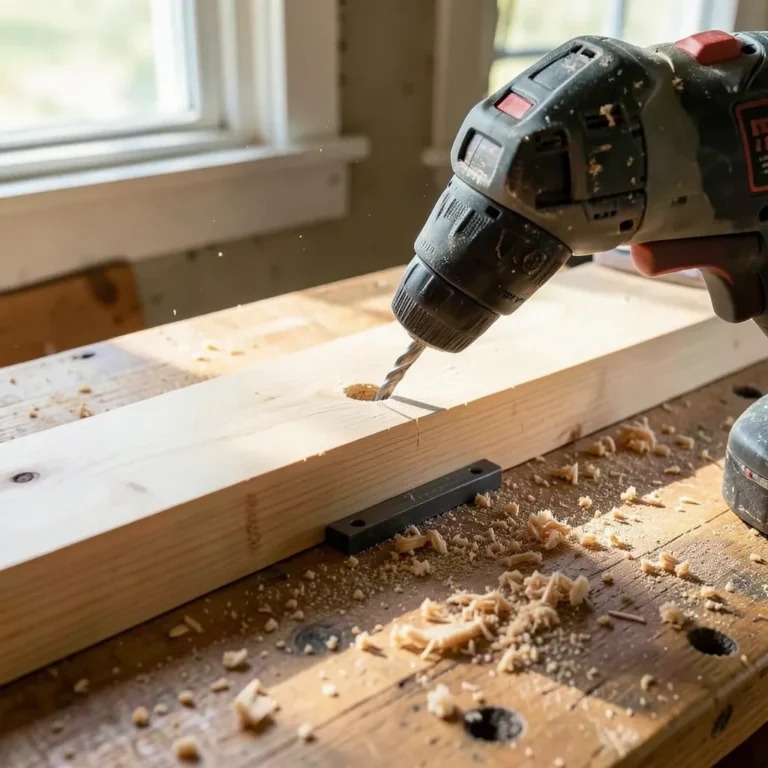
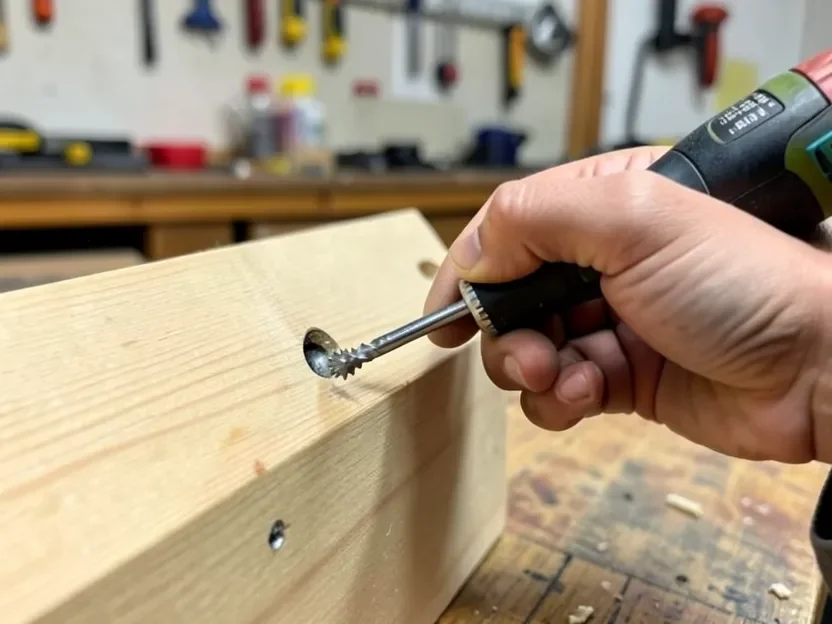
Installation is mechanically the same as any wood screw – the only real difference is confirming you have the correct bit before you start, since a mismatched bit won’t seat and can strip the head on the first try. Mark your fastening point and, for anything larger than a #8 screw or hardwood stock, drill a pilot hole slightly smaller than the screw’s shank to prevent splitting. Seat the security bit fully into the head – for pin-in-torx, make sure the bit’s hollow tip is actually clearing the center pin rather than resting on top of it, which is the most common reason these strip on installation. Drive the screw until the head sits flush, using steady pressure rather than high-speed impact driving, which increases the odds of a slipped bit chewing up the recess.
Frequently Asked Questions
Can tamper-resistant screws be removed at all?
Pin-in-torx and spanner-head screws can be removed normally with the correct matching bit – they’re designed to be serviceable by anyone who has that specific tool. True one-way screws cannot be removed with any legitimate driver; they’re designed to only go in, not out, so they’re reserved for fasteners that should never need to come apart again.
What’s the difference between pin-in-torx and spanner (snake-eyes) screws?
Pin-in-torx uses a standard six-lobed star recess with a center pin that blocks a regular Torx bit; spanner heads use two round holes instead of a star shape. Both require a specific matching bit and both are fully reversible with that bit – the choice between them usually comes down to what a particular industry or product line has standardized on rather than one being more secure than the other.
Where should I use tamper-resistant wood screws?
Use them anywhere a fastener is accessible to the public but shouldn’t be adjustable by the public – playground equipment, park benches, deck boards in shared or public spaces, and access or cabinet panels are the most common applications.
Do I need a special tool to install them, or just to remove them?
Both. Pin-in-torx and spanner screws need the matching bit for installation as well as removal, since a standard bit won’t seat in the head at all. Some one-way screw designs can be driven with a standard flat-blade driver going in, but none of them can be backed out with an ordinary tool once seated.
Conclusion
Tamper-resistant wood screws earn their keep anywhere the public has physical access to hardware that shouldn’t be public-adjustable – playgrounds, benches, deck boards, and access panels being the most common. The part worth remembering is that the security cuts both ways: pin-in-torx and spanner heads only stay serviceable if you hang onto the matching bit, and a one-way screw is a one-time decision with no undo. Match the drive type to whether the fastener genuinely needs to come out again someday, and the choice takes care of itself.
Sponsored / affiliate links. As an Amazon Associate I earn from qualifying purchases. I may earn additional commission from eligible campaigns.