How to Bend Wood for a Boat: Steam Bending Guide
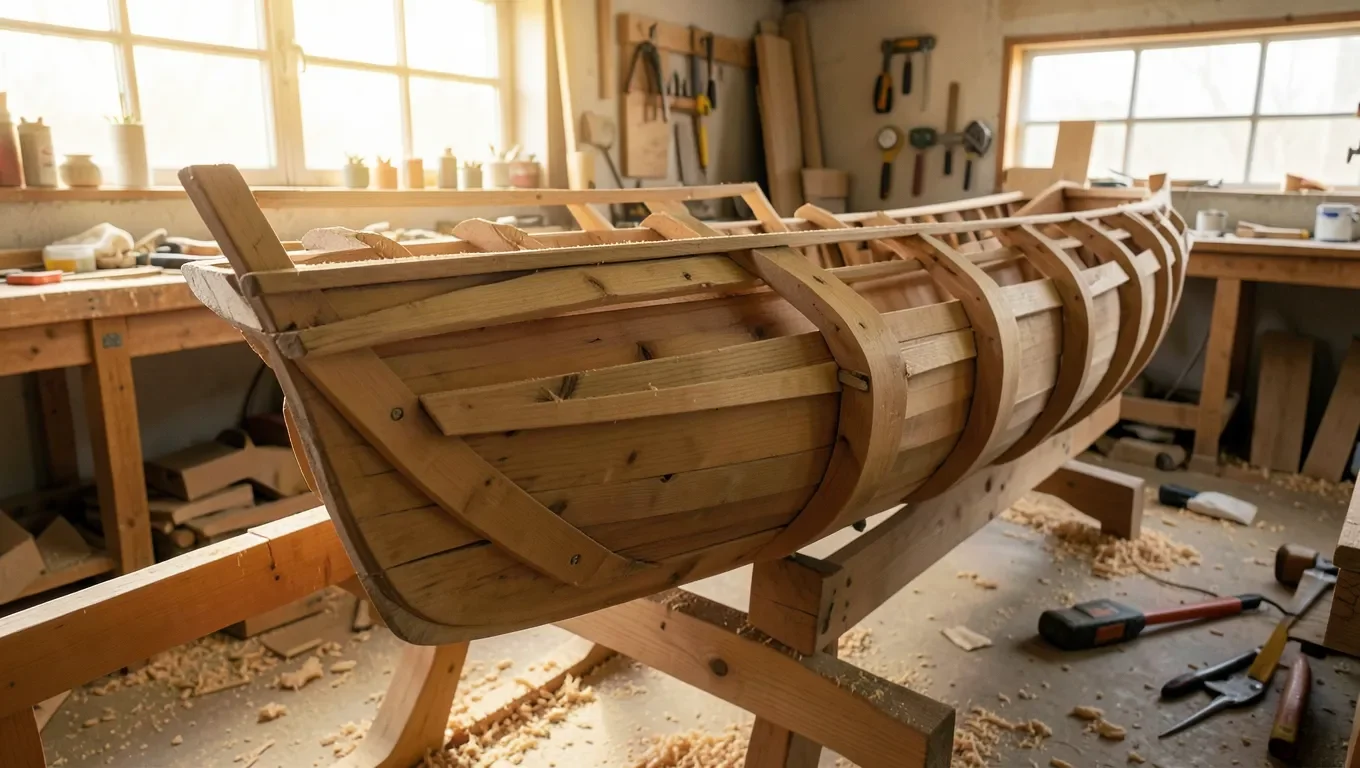
To bend wood for a boat, steam or soak solid stock until it’s pliable, then clamp it around a form cut to the hull’s curve and let it dry in place. Boatbuilders bend it slightly past the target shape first, because the wood springs back somewhat as it cools.
This guide covers bending solid lumber, planks and strips, for ribs, frames, and gunwales, the parts that carry real structural load in a wooden boat. If you’re working from plywood sheets instead, for example a hull panel, see our guide to bending marine plywood, since sheet goods bend and crack differently than solid stock. For bending wood outside a boatbuilding context, our general how to bend wood guide compares all four methods side by side.
Why Boatbuilders Steam Bend Instead Of Cutting Curves
A curved rib cut from a straight board crosses the wood’s grain lines somewhere along its length, and that crossing point is exactly where the piece is weakest. Steam bending avoids the problem entirely: heat and moisture soften the lignin holding the wood fibers together, so the grain can flex and run continuously along the whole curve instead of being interrupted. That’s why steamed white oak ribs have held up in traditional boatbuilding for centuries, while a sawn curve of the same thickness would be more likely to snap the first time the hull flexes against a wave.
Best Steam Generator For Bending Boat Ribs
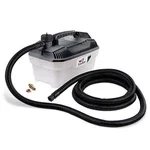 |
Earlex SS77USSG Steam Generator – $79.99 Feeds a homemade steam box with 212°F steam for up to two hours, enough to steam a full set of ribs or gunwale stock for a small boat in one session.
|
Wood Species That Actually Hold Up In A Bent Boat Part
Not every species bends the same way, and picking one for how it looks rather than how it performs under load is a common mistake on a first boat build.
| Wood Type | Where It’s Used & Why |
|---|---|
| White Oak | The standard choice for structural ribs and frames. Bends well under steam and resists rot below the waterline. |
| Ash | Favored for oars, tillers, and anything that flexes repeatedly, since it absorbs shock without splitting. |
| Mahogany | Used more for planking and trim than structural frames. Bends with a gentler curve and finishes beautifully. |
| Spruce | Lightweight and easy to bend, but softer, so it’s used where strength matters less than weight. |
Whatever species you pick, use air-dried or green stock, not kiln-dried lumber. Kiln drying pulls moisture out of the fibers in a way that makes wood noticeably more brittle under steam, and it’s a common reason a first attempt cracks.
Tools And Materials You’ll Need
Beyond the wood itself, a steam-bending setup for boat parts needs:
- A steam box — a vented plywood or PVC enclosure long enough to hold your longest piece
- A steam source — a dedicated steam generator or wallpaper steamer feeding the box through a hose
- A bending form or mold cut to the hull’s actual curve
- Clamps — enough to hold the full length of the piece against the form at once
- Heavy gloves, since the wood comes out of the box near 200°F
Never seal a steam box completely airtight. Trapped pressure with nowhere to vent can blow an end cap off the box, and that’s a genuine safety hazard, not just a build-quality issue.
Steam Bending Step By Step
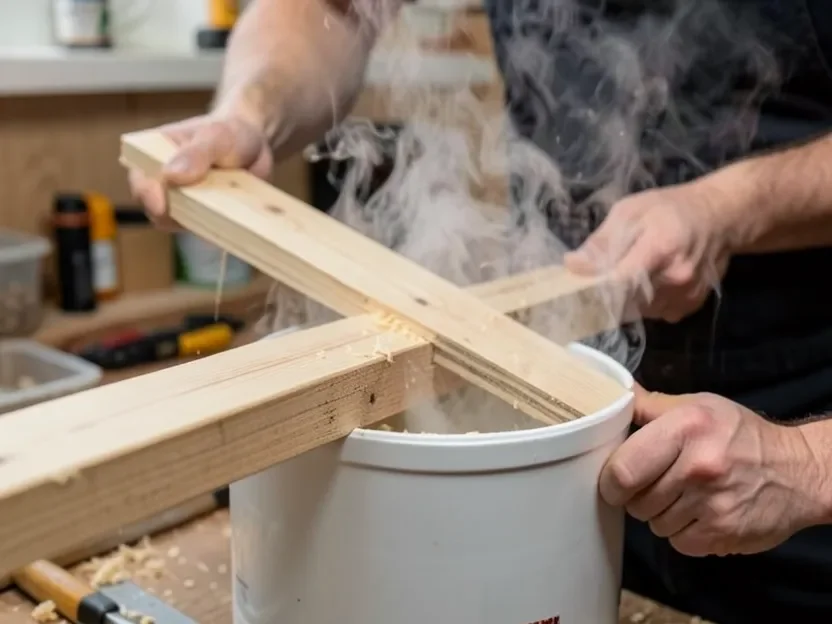
Cut your stock slightly oversized and check it for knots first; a knot at the point of the bend is the single most common cause of a snapped rib. Load the piece into the steam box and steam it for roughly one hour per inch of thickness, keeping the box near 200–212°F the whole time.
Once it’s out, you have only a minute or two before the wood starts to cool and stiffen, so have the form and clamps ready before you open the box. Bend the piece around the form, working from the center outward, and deliberately take it slightly past your target curve. Steamed wood always relaxes back a few degrees once it cools, and how much depends on the species and thickness, so test the spring-back on a scrap piece of the same stock before you commit your good lumber.
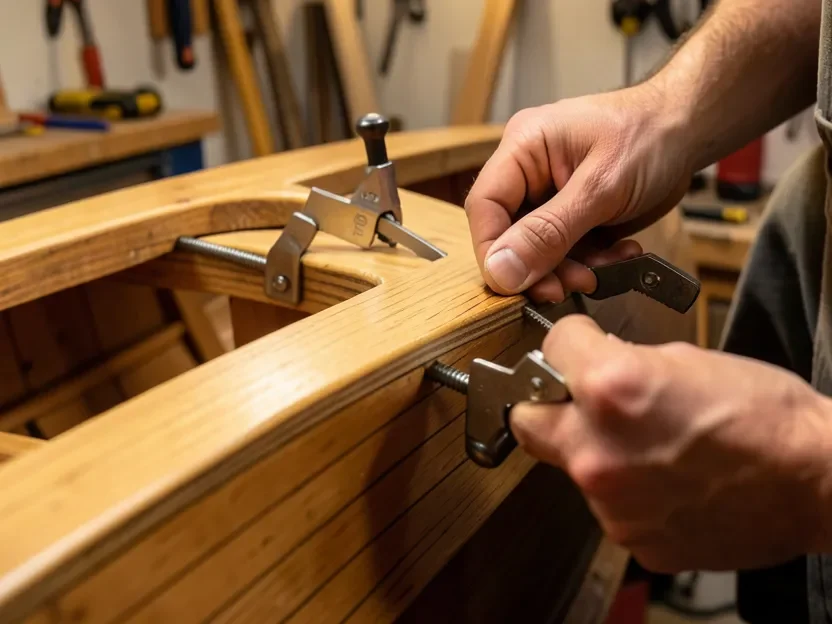
Leave the piece clamped to the form until it’s fully dry, not just cool to the touch. For a rib in the 3/4″ to 1″ range that usually means at least 24 hours, and thicker stock can take several days. Releasing the clamps too early is the second most common way a bend fails, since the wood hasn’t set yet and it will spring most of the way back to straight.
Cold Bending And Lamination As Alternatives
For gentler curves, some boatbuilders skip steam entirely and cold-bend: soak straight-grained, knot-free stock in warm water for several hours, then clamp it to the form dry and let it season into shape over a few days without ever applying heat. It’s slower and only works for shallower curves than steam bending can achieve, but it avoids the equipment and the risk of a scald.
A different option is lamination: resawing the piece into several thin strips, bending each strip around the form (thin strips bend far more easily than a solid piece), and gluing them together with epoxy while clamped. The resulting piece holds its shape permanently once the glue cures, with none of the spring-back you have to plan around in steam bending. It costs you some of the visual grain continuity a single steamed piece has, which matters if the wood will show.
Kerf cutting, making a series of closely spaced saw cuts across the inside of the curve, is worth mentioning only to flag it: it works for cabinetry and trim, but skip it for ribs, frames, or anything structural. The cuts remove fiber at the exact spot where the bend needs to carry load, and a kerf-cut boat frame is a weaker frame.
Finishing And Installing The Bent Piece
Once the piece is dry and off the form, sand it smooth with fine-grit paper and check it against the hull before you commit to fasteners. Seal it with a marine-grade sealant or epoxy, bare wood that flexes and gets wet repeatedly checks and rots faster than sealed wood, especially right at the fastener holes where water collects.
Fasten the piece to the frame with silicon bronze or stainless screws rated for marine use, not plain steel, which will rust and stain the wood within a season. Fill any gap at the fit with thickened epoxy rather than forcing the piece tighter than it wants to sit; a bent piece under extra stress at installation is more likely to crack later when the hull flexes under load.
Frequently Asked Questions
How do you bend wood for a boat?
Steam or soak solid stock until the fibers soften, then clamp it around a form built to the hull’s curve before it cools. Most boatbuilders steam roughly one hour per inch of thickness at close to 212°F, then bend the wood slightly past the final shape to allow for spring-back once it cools and dries. Leave the piece clamped on the form for at least a day before releasing it, longer for thicker stock.
What type of wood is best for bending on a boat?
White oak is the traditional choice for structural ribs and frames because it steam-bends well and resists rot below the waterline. Ash is favored for oars and tillers since it flexes under repeated stress without splitting, and mahogany is used more for planking and trim where the bend is gentler. Straight-grained, air-dried stock bends more reliably than kiln-dried lumber, which tends to snap.
Can you use kerf cutting instead of steam bending for boat parts?
Kerf cutting works for decorative curves, but it is not recommended for structural boat parts like ribs or frames. The cuts remove wood fiber at the exact point where the bend needs to carry load, which weakens the piece under the flexing and impact a hull takes on the water. Steam bending keeps the grain intact and is the stronger choice for anything load-bearing.
Does bent boat wood need to be sealed before installing it?
Yes. Once the bent piece has dried fully on the form, sand it smooth and seal it with a marine-grade sealant or epoxy before it goes into the hull. Bare wood that flexes and gets wet repeatedly will check and rot faster than sealed wood, especially at the fastener holes where water tends to collect.
Conclusion
Steam bending solid wood for a boat comes down to three things: pick a species that actually holds up under load, steam it long enough to soften the fibers without overcooking it, and don’t release the clamps until the piece is genuinely dry, not just cool. Test your spring-back on scrap first, and the rest of the process is more patience than skill.
Sponsored / affiliate links. As an Amazon Associate I earn from qualifying purchases. I may earn additional commission from eligible campaigns.