Timeless Oak Furniture Ideas for Every Room (and How to Keep It Looking Right)
Oak furniture holds up in almost any room because it solves a practical problem other woods don’t: it takes a beating and still looks intentional. Its open, visible grain hides small dents and wear marks that would stand out on a smoother wood like maple, and its Janka hardness rating (around 1,290 for red oak, 1,360 for white oak) puts it well above pine (420) and most furniture-grade softwoods for resisting dings from daily use.
Red Oak vs. White Oak: Which One You’re Actually Looking At
Best Care Product for Oak Furniture
 |
Howard Feed-N-Wax Wood Polish and Conditioner – $10.98 Oak’s open grain dries out and dulls faster than tighter-grained woods, and this beeswax and orange oil blend feeds it back in a few minutes with a rag.
|
Most “oak furniture” is one of two species, and they behave differently. Red oak has a slightly pinkish tone and a more open, porous grain, which makes it take stain unevenly unless you use a pre-stain conditioner first. White oak is more golden-brown, has a tighter, less porous grain, and is naturally more water-resistant, which is why it’s the traditional choice for wine barrels and outdoor boat building. If you’re buying a piece and the listing doesn’t say which, a slightly pinkish cast under natural light is usually red oak.
Quarter-Sawn Oak’s Distinctive Ray Fleck
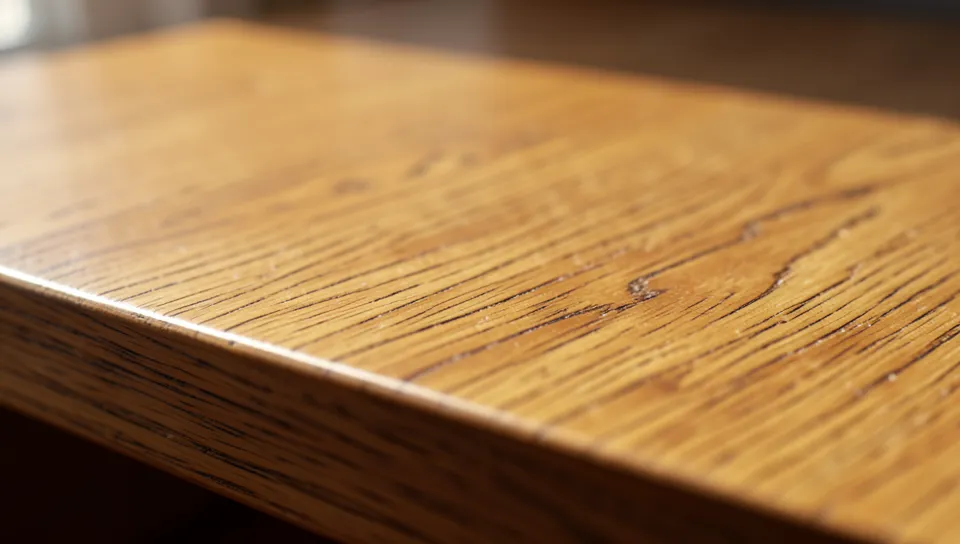
Quarter-sawn oak, cut so the growth rings run roughly perpendicular to the board face rather than parallel, shows a distinctive “ray fleck” figure, small silvery streaks across the grain. This cut is more wasteful to produce (more lumber lost to the cutting angle) and costs more, which is why it shows up mainly on higher-end Arts and Crafts and Mission-style furniture where that ray fleck pattern is part of the design language.
Where Oak Furniture Actually Works Best
Dining Rooms
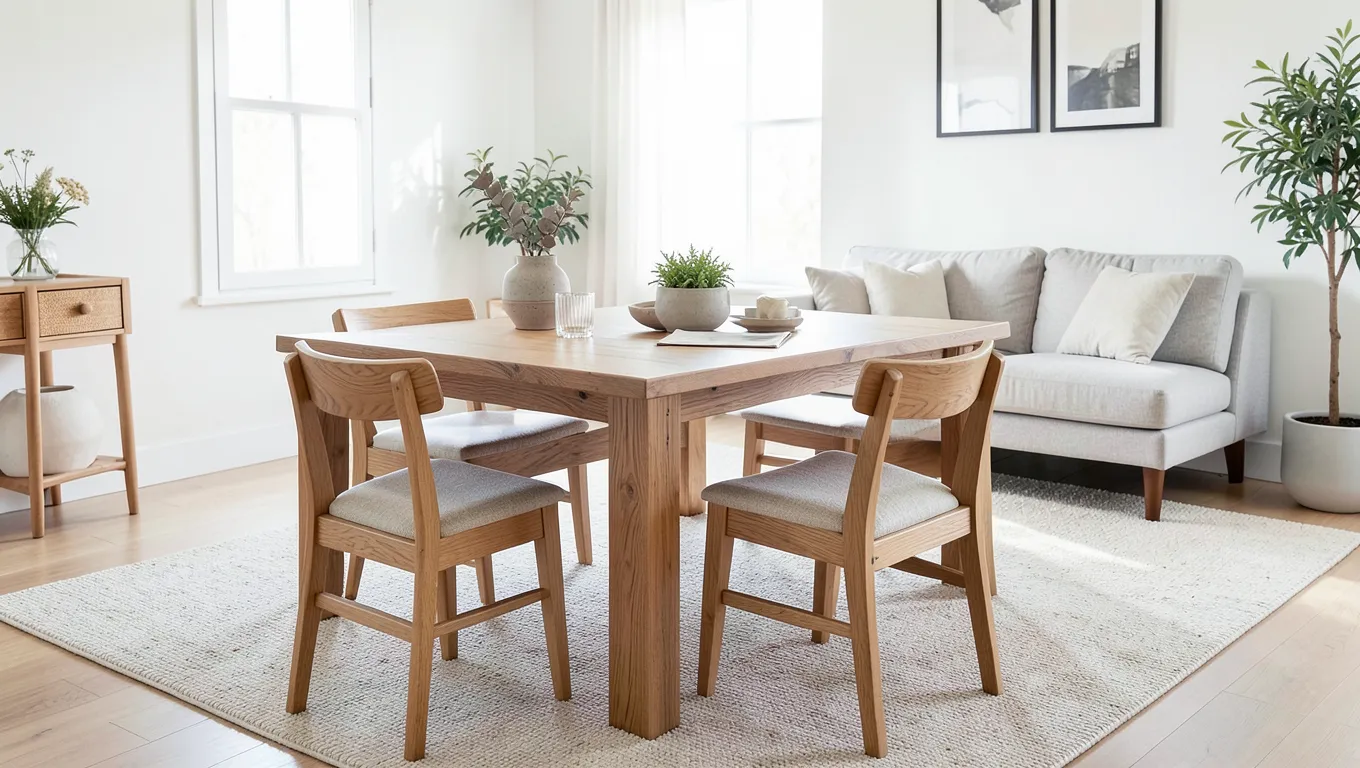
A solid oak dining table is one of the few furniture purchases that reasonably lasts multiple decades and multiple house moves, since its density resists the wobble and joint failure that veneer or particleboard tables develop under daily use. Round pedestal-base oak tables work well in smaller dining spaces since they don’t force a fixed seating orientation the way a rectangular four-leg table does.
Living Rooms
Oak media consoles, coffee tables, and bookshelves pair well with both traditional and mid-century modern decor because oak’s grain reads as warm without looking rustic the way reclaimed barnwood does. A lighter, Danish-oil-finished white oak piece leans more contemporary; a darker walnut-stained red oak piece leans more traditional.
Bedrooms
Oak bed frames and dressers are worth the investment specifically because bedroom furniture gets pushed, sat on the edge of, and has drawers opened and closed thousands of times over its life, and oak’s density resists the loosening joints that plague cheaper furniture over years of that use.
Kitchens
Beyond flooring and cabinetry, oak butcher-block countertops and open shelving bring warmth to an otherwise all-white or all-gray kitchen. Because oak is more porous than maple, a kitchen butcher-block surface needs more frequent oiling to stay food-safe and resist staining from spills.
Caring for Oak Furniture Long-Term
Dust with a soft, slightly damp cloth rather than a dry one, since dry dusting can grind grit into the finish over time. Condition finished oak every few months with a beeswax-based polish to keep the wood from drying out and the finish from looking chalky, especially in low-humidity winter months when indoor heating pulls moisture out of the air. Keep oak furniture out of direct sun for long stretches, since UV exposure fades and unevenly ages the finish faster than almost anything else in a normal home.
Frequently Asked Questions
Is oak good for furniture?
Yes. Its hardness (1,290 to 1,360 on the Janka scale depending on species) resists dents and wear far better than pine or particleboard, and its visible grain hides minor surface wear.
What’s the difference between red oak and white oak furniture?
Red oak has a pinkish tone and more open, porous grain. White oak is more golden-brown, tighter-grained, and naturally more water-resistant, which is why it’s used for barrels and outdoor applications.
How do you keep oak furniture looking new?
Dust with a slightly damp cloth, condition the finish every few months with a beeswax-based polish, and keep the piece out of prolonged direct sunlight to prevent uneven fading.
Does oak furniture work in a modern home?
Yes, especially white oak with a light, natural or Danish-oil finish, which reads as contemporary rather than traditional or rustic.
Bottom Line
Oak earns its reputation as a furniture wood because the density that makes it durable also makes it forgiving of the daily wear real furniture takes. Know whether you’re looking at red or white oak, match the finish tone to your room’s style, and a proper conditioning routine keeps a solid oak piece looking right for decades, not just years.
Sponsored / affiliate links. As an Amazon Associate I earn from qualifying purchases. I may earn additional commission from eligible campaigns.