Transparent vs Semi-Transparent Deck Stain Guide
Choosing the right deck stain can feel tricky. You see “transparent” and “semi-transparent” and wonder what’s the big difference. It’s common for people to get a bit confused about what each one does for their deck.
This guide is here to make it super simple. We’ll walk you through it step-by-step so you can pick the perfect finish and make your deck look great. Let’s get your deck looking its best.
Understanding Deck Stain Types
This section helps you learn the basics about different deck stains. We will explore the main differences between transparent and semi-transparent options. You’ll get a clear picture of what each one does for the look and protection of your deck wood.
What is Transparent Deck Stain
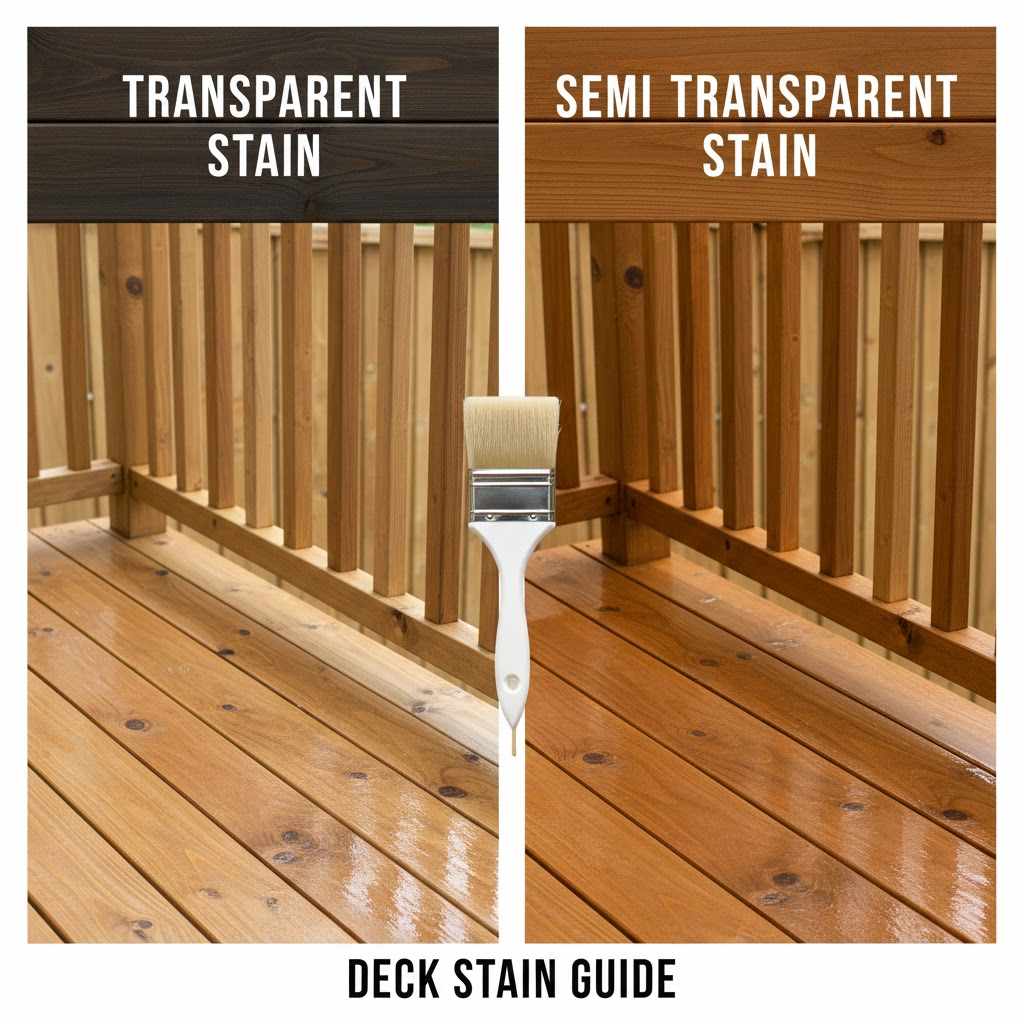
Transparent deck stain is like a clear coat for your wood. It lets the natural beauty of the wood shine through. Think of it as a protective layer that won’t hide the wood’s original color or grain.
- Allows Natural Wood AppearanceA transparent stain lets the true color and grain pattern of your deck boards be the star. You see all the knots and unique features of the wood just as they are. It’s like looking at bare wood, but with a shield against the weather.
This is great if you love the look of your wood species and want to keep it that way.
- Offers Basic UV ProtectionWhile it doesn’t add color, transparent stain still provides a layer of defense. The sun’s rays can damage wood over time, causing it to fade and dry out. A transparent stain helps block some of these harmful ultraviolet (UV) rays.
This means your deck will stay looking newer for longer, even with daily sun exposure.
- Needs More Frequent ReapplicationBecause it doesn’t have pigments to block UV rays as strongly, transparent stain wears down faster. You might need to reapply it every year or two, especially if your deck is in direct sunlight. This means a bit more upkeep, but the natural look is often worth it for many homeowners.
What is Semi-Transparent Deck Stain
Semi-transparent stain adds a hint of color while still showing off the wood’s natural features. It’s a popular choice because it offers more protection and a bit of color without completely hiding the wood.
- Adds Subtle Color and DepthThis type of stain has color pigments. These pigments give your deck a new look. You can choose from many wood tones like cedar, redwood, or even darker shades.
The color is not solid, so you can still see the wood grain underneath. This gives your deck a richer, more finished appearance.
- Provides Enhanced UV ProtectionThe added pigments in semi-transparent stains are great for blocking UV rays. This means your deck will be better protected from sun damage than with a clear stain. Less fading and drying out occurs.
This protection helps keep your deck looking vibrant and healthy for a longer period.
- Offers Moderate DurabilitySemi-transparent stains last longer than transparent ones. They hold up well against wear and tear. Most homeowners find they need to reapply this type of stain every two to three years.
This makes it a good balance between looks and maintenance.
Choosing Between Transparent and Semi-Transparent
Deciding between these two is a key step. We’ll help you figure out which stain fits your needs best. It depends on how much of the wood’s natural look you want to see and how much color you desire.
Factors to Consider
When you’re picking a deck stain, think about a few important things. These will guide you to the best choice for your specific deck.
- Wood Grain VisibilityIf you love the natural patterns, knots, and unique character of your deck wood, a transparent stain is ideal. It keeps the wood looking as natural as possible. If you want a touch of color but still want to see the wood’s personality, a semi-transparent stain is a great middle ground.
It adds color but doesn’t completely cover up the grain.
- Desired Color and AestheticsDo you want your deck to look like natural wood, just protected? Transparent stain is your pick. Do you want to enhance the wood tone or give it a slight color change?
Semi-transparent stain lets you do that. You can pick shades that complement your home’s exterior.
- Level of Protection NeededAll stains protect wood from moisture and UV rays. However, semi-transparent stains, with their pigments, offer better UV protection. If your deck gets a lot of sun, the extra protection can make a big difference in how long it lasts and looks good.
Transparent stains offer basic protection but may need more frequent touch-ups.
- Maintenance FrequencyConsider how often you are willing to reapply stain. Transparent stains typically need recoating every one to two years. Semi-transparent stains usually last two to three years.
If you prefer less frequent work, semi-transparent might be better.
Application and Maintenance Tips
Getting your deck stained the right way and keeping it that way is important. This section gives you practical tips for staining and caring for your deck.
Proper Deck Preparation
Before you even open a can of stain, your deck needs to be ready. This step is super important for a great finish.
- Clean the Deck ThoroughlyYou need to get rid of all dirt, mildew, and old stain. Use a deck cleaner and a stiff brush. Make sure to rinse it off completely.
A clean surface helps the new stain stick well. If there’s old, peeling stain, you’ll need to sand it down.
- Repair Any Damaged AreasLook for loose boards, popped nails, or rotten wood. Fix these problems before you stain. This ensures your deck is safe and looks good.
It’s much easier to fix things now than after the stain is applied.
- Allow Wood to Dry CompletelyThis is a critical step. Wood needs to be dry for stain to penetrate properly. It can take 24 to 48 hours after cleaning, or longer if it’s very humid.
You can check if it’s dry by taping a small piece of plastic to the deck. If moisture collects under it, the wood is still too wet.
Staining Process
Applying the stain correctly makes a big difference in how it looks and lasts.
- Apply Stain in SectionsDon’t try to stain the whole deck at once. Work in small sections. This way, you can maintain a wet edge.
A wet edge means you blend the new stain into the part you just finished. This avoids lap marks, which are lines where the stain looks different.
- Use the Right ToolsA good quality brush or a stain pad works well for railings and edges. For the deck boards, a roller or a sprayer can cover large areas faster. Make sure your tools are designed for deck stain.
Clean them immediately after use.
- Follow Manufacturer InstructionsEvery stain product is a little different. Always read and follow the instructions on the can. This includes drying times between coats if needed, and the best temperature for application.
Maintenance for Longevity
Keeping your deck looking its best means more than just the first stain job.
- Regular CleaningSweep your deck often to remove leaves and debris. Mildew and dirt can still build up over time. Give it a light cleaning with a deck wash once a year.
This will help remove surface grime without damaging the stain.
- Inspect AnnuallyOnce a year, walk around your deck and check for any signs of wear. Look for areas where the stain might be fading or peeling. Address these small issues before they become big problems.
A quick touch-up can save you from a full re-stain.
- Reapply Stain as NeededAs mentioned, transparent stains need more frequent reapplication than semi-transparent ones. Watch for signs of wear. If the water no longer beads up on the surface, or if the color looks faded, it’s time to reapply.
When to Choose Transparent vs. Semi-Transparent
This section directly answers the common question of which stain to pick. It gives clear scenarios for making your choice.
Scenario 1 Wood Beauty is Paramount
Imagine you have a deck made of beautiful, rich redwood. You love the natural knots and the deep red color. You want everyone to see how lovely the wood itself is.
In this case, a transparent stain is the perfect fit. It will add a layer of protection, keeping the wood safe from the elements, but it won’t change the appearance of the redwood at all. It’s like giving your beautiful wood a clear, protective jacket.
- Preserves Original Wood CharmIf your goal is to showcase the natural grain, color, and character of the wood species, a transparent stain is your best bet. It allows the wood’s inherent beauty to be the main attraction. You get the protection without altering the aesthetic.
- Best for High-End WoodsWoods like cedar, redwood, or certain hardwoods often have a stunning natural look. Using a transparent stain honors that natural appeal. It lets the quality of the material speak for itself while still offering defense against weather.
- Requires More Frequent UpkeepThe trade-off for showcasing natural wood is that transparent stains offer less UV protection. They can fade more quickly. This means you’ll likely need to reapply the stain every one to two years, especially if your deck is in full sun.
Scenario 2 A Touch of Color and Enhanced Protection
Consider a deck made from pine or fir. These woods are lovely but can look a bit plain. You want to add some warmth and depth to the color, maybe a nice cedar tone.
You also want the stain to last as long as possible with good protection. A semi-transparent stain is ideal here. It will give your pine deck a beautiful, rich color that makes it pop, and the color pigments will offer better protection from the sun than a clear coat.
- Adds a Desired HueSemi-transparent stains let you add a hint of color to your deck. You can choose from a range of earthy tones that complement your home. This can transform a deck that looks a bit dull into a vibrant outdoor living space.
- Better UV ResistanceThe pigments in semi-transparent stains are excellent at blocking harmful UV rays. This protection slows down the fading and graying of your wood. Your deck will look freshly stained for a longer period compared to a transparent finish.
- Good Balance of Looks and DurabilityThis type of stain offers a practical middle ground. You get to enhance the look of your deck with color, while also benefiting from increased protection. It provides a visually appealing finish that holds up well against the elements for two to three years.
Protecting Your Investment
Your deck is an investment in your home. Taking care of it ensures it lasts longer and looks great for years. Understanding the difference between transparent and semi-transparent stains is a big part of that.
Benefits of Using a Transparent vs. Semi-Transparent Deck Stain Guide
Having a clear guide like this helps you avoid common mistakes. You learn what to expect from each product type. This means you won’t end up with a deck that doesn’t look the way you wanted, or one that requires more work than you planned.
- Informed Decision MakingBy understanding the properties of both transparent and semi-transparent stains, you can make a choice that aligns with your preferences and needs. This guide breaks down the pros and cons simply, helping you feel confident in your selection.
- Longer Deck LifespanProperly selecting and applying the right stain protects your deck from moisture, UV damage, and wear. This protection is crucial for preventing rot, cracking, and warping, thereby extending the life of your deck. A well-maintained deck is a durable deck.
- Enhanced Curb AppealA beautifully stained deck significantly improves the look of your home. Whether you choose to highlight natural wood or add a warm color, the right stain makes your outdoor space more inviting. It’s a relatively simple way to boost your home’s overall appearance.
Statistics on Deck Maintenance
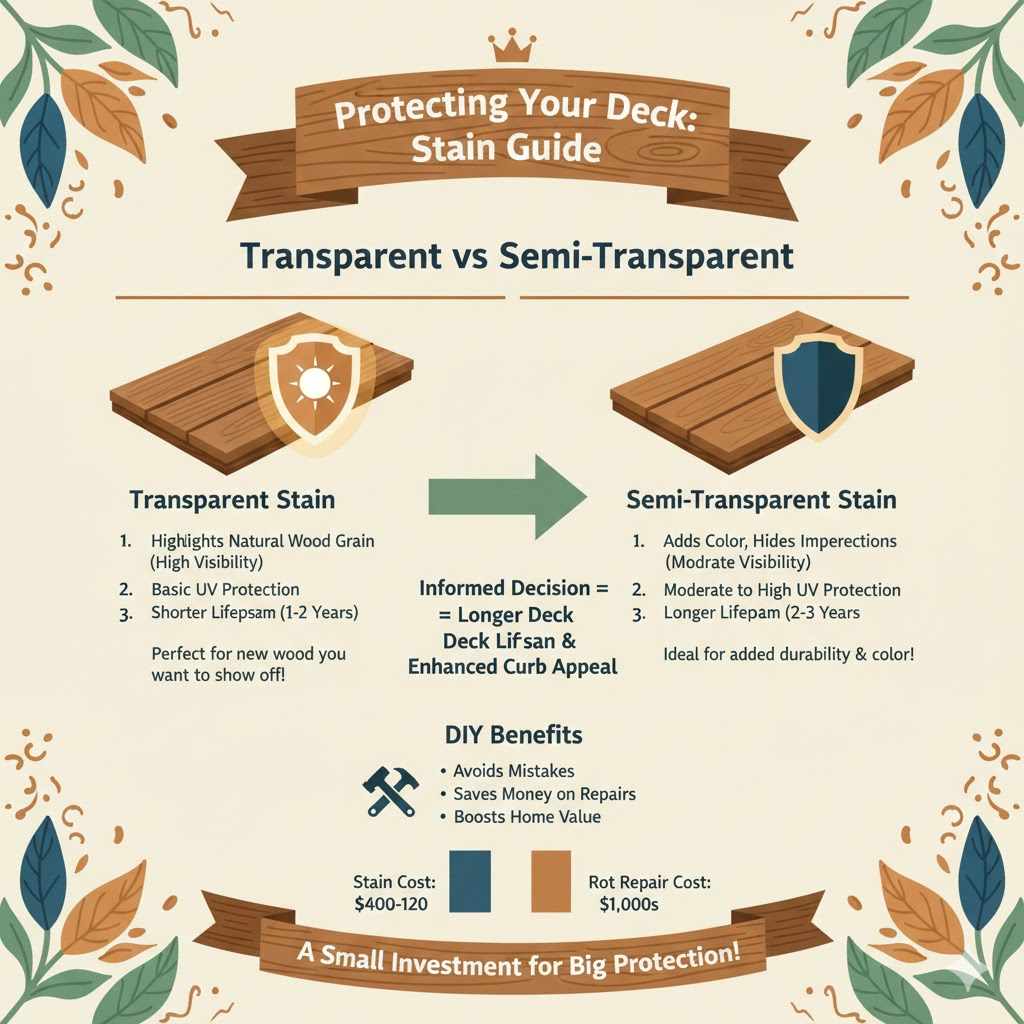
Homeowners who maintain their decks regularly see benefits. A study by HomeAdvisor found that staining a deck can cost between $400 and $1,200. However, neglecting deck maintenance can lead to costly repairs down the line.
For example, wood rot can require replacing entire deck sections, costing thousands of dollars.
| Stain Type | Typical Lifespan (Years) | UV Protection Level | Wood Grain Visibility |
|---|---|---|---|
| Transparent | 1-2 | Basic | High |
| Semi-Transparent | 2-3 | Moderate to High | Moderate |
Frequently Asked Questions
Question: Which deck stain is easier to apply
Answer: Both transparent and semi-transparent stains are generally easy to apply. The key to a good application is proper deck preparation and following the manufacturer’s instructions, regardless of the stain type.
Question: Will semi-transparent stain hide wood imperfections
Answer: Semi-transparent stain will add color and can help camouflage minor imperfections like small scratches or stains. However, it is not designed to completely hide major flaws, knots, or significant damage. The wood grain will still be visible.
Question: How do I know if my deck needs staining
Answer: You can test if your deck needs staining by sprinkling some water on it. If the water beads up and sits on the surface, the stain is still protecting it. If the water soaks into the wood, it’s time to reapply stain.
Question: Can I use a transparent stain over a semi-transparent stain
Answer: It is generally not recommended to apply a transparent stain over a previously stained surface, especially if it was semi-transparent. It’s best to strip and clean the deck thoroughly if you want to switch from a colored stain to a clear one, or vice-versa.
Question: How often should I clean my deck
Answer: You should sweep your deck regularly to remove debris. A thorough cleaning with a deck cleaner is recommended at least once a year, typically in the spring, to remove mildew and grime and prepare it for the warmer months.
Conclusion
Choosing between transparent and semi-transparent deck stain comes down to your wood and your desired look. Transparent lets natural wood show through, while semi-transparent adds subtle color with better UV defense. Both need good prep and care to last.
Pick the one that best matches your deck’s beauty and your maintenance goals for a great result.