Best Screws for Pressure-Treated Wood (Match Coating to Exposure)
Pressure-treated lumber needs hot-dip galvanized (G185-class) or stainless steel screws outdoors, because the copper in modern ACQ, CA and MCA preservatives attacks plain and zinc-plated steel. The exceptions run in both directions: borate-treated wood in a dry interior tolerates plain steel, while high-retention ground-contact lumber calls for stainless, copper or silicon bronze. This guide shows which screw fits which exposure, what the box labels really mean, and what each option costs.
Which Screws Work in Pressure-Treated Wood
Best Coated Deck Screw Pick
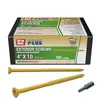 |
Grip-Rite PrimeGuard Plus Deck Screws, #10 x 4 in., 1 lb Box, $9.97 A star-drive, coarse-thread screw whose listing says it is suitable for treated lumber. It covers the exterior row of the exposure table below: decks and fences that are not in ground contact or salt air.
|
The short answer depends on two things generic advice skips: which preservative is in the board, and how wet the finished project will get. A screw that is overkill for an indoor sill plate can fail within a few seasons in a fence post. The table in the next section sorts it out before you shop.
Everything below is built from published guidance by the treated-wood industry and by a fastener manufacturer, which we link where it is used. Where a number comes from a single manufacturer, we say so.
Match the Screw to the Treatment and the Exposure
Start by reading the end tag stapled to the lumber. It names the preservative (ACQ, CA-B, MCA, SBX/DOT borate and so on) and the use category, such as above ground or ground contact. Then find your situation in this table.
| Situation | Fastener to use | Basis |
|---|---|---|
| Interior and dry, borate-treated (SBX/DOT or zinc borate) | Plain carbon steel is permitted; galvanized is cheap insurance | Preserved Wood: plain steel allowed in interior, dry conditions for these treatments |
| ACQ, CA or MCA lumber that stays dry (under 19% moisture content) | Standard G90 galvanized connectors are acceptable to Simpson; for screws, a galvanized or treated-wood-rated coating is the sensible floor | Simpson Strong-Tie treated wood FAQ |
| Exterior or wet ACQ, CA or MCA (decks, fences, railings) | Hot-dip galvanized to G185 or stainless steel as the minimum | Simpson Strong-Tie; model building code list |
| Ground contact above the standard retention level (over 0.40 pcf ACQ, 0.21 pcf CA-B, 0.15 pcf CA-C or MCA) | Stainless steel, copper or silicon bronze | Simpson Strong-Tie treated wood FAQ |
| Salt air, salt splash or de-icing salts | Stainless; Simpson treats this as its own exposure category | Simpson Strong-Tie corrosion guidance |
G185 galvanizing carries more than three times the zinc of standard G60 steel, which is why it is the exterior minimum for treated wood. Source: Simpson Strong-Tie, treated wood FAQ
Two details from that table trip people up. First, the 19% moisture threshold is the reason a basement sill plate and a deck joist are different problems even when the lumber is identical. Second, the ground-contact retention levels are higher than the standard above-ground treatment, so a post rated for burial may need stainless fasteners where a rail board does not. If your project is framing rather than decking, our guide on using pressure-treated wood for framing covers where treated lumber belongs in the structure.
What the Labels on the Box Actually Mean
Fastener packaging uses a dozen marketing terms. Here is how the common ones map onto the materials that the building code and the connector industry recognize.
| Label on the box | What it is | Treated-wood verdict |
|---|---|---|
| Hot-dip galvanized | Steel dipped in molten zinc after forming; thick coating | Accepted by code. The standard choice for exterior treated wood |
| Zinc-plated, yellow zinc, electro-galvanized | Thin electroplated zinc layer | Not hot-dip, per Simpson. Fine for indoor dry work only |
| Mechanically galvanized | Zinc peened onto the steel | Simpson says it should not be treated as hot-dip galvanized; check the specific product’s rating |
| Polymer, ceramic or epoxy coated deck screw | Carbon steel with a proprietary coating | Acceptable when the maker states it is for treated lumber, as Grip-Rite does for the screw above. We found no published side-by-side data against hot-dip or stainless |
| Stainless 304, 305 or 316 | Stainless alloys | Simpson says Types 304, 305 and 316 perform very well. Best choice for ground contact and coastal exposure |
The polymer-coated row deserves a careful read. These screws are what most big-box stores stock beside the lumber, and manufacturers do rate them for treated wood. What we could not find published is how long the coating lasts once the screw has been driven through dense wood and the thread has dragged against the fibers. That is why we treat coated screws as the right call for above-ground exterior work and step up to stainless where a failed fastener would be expensive or unsafe.
Five Myths About Screws and Treated Lumber
Myth 1: Ammonia in the treatment is what eats the screws
Older advice blamed the ammonia in ACQ. According to the Preserved Wood industry guide, Simpson Strong-Tie testing concluded there is no significant difference in corrosion of galvanized steel in contact with treatments with or without ammonia. The metal that matters is copper, which is present in the common modern preservatives, so the fix is a better fastener rather than a different formulation.
Myth 2: Any galvanized screw is fine
Galvanized is a family, not a grade. Electroplated zinc is galvanized in the loose sense of the word, yet Simpson states plainly that electroplated and mechanically galvanized coatings should not be considered hot-dip galvanized. Look for the words hot-dip, a G185 rating or a manufacturer statement about treated lumber.
Simpson advises against mixing hot-dip galvanized and stainless fasteners and connectors, because they are dissimilar metals and the zinc can corrode when it touches stainless. In practice that means a stainless screw should go into a stainless hanger, not a galvanized one. Our companion article on deck framing screws or nails goes connection by connection through which fastener each joint needs.
Myth 4: Aluminum is a lightweight alternative
The fastener materials listed by the building code for preservative-treated wood are hot-dipped zinc-coated galvanized steel, stainless steel, silicon bronze and copper, as quoted by Preserved Wood. Aluminum is not on that list, so keep aluminum fasteners and flashing away from direct contact with treated lumber unless the manufacturer says otherwise.
Myth 5: All treated lumber is the same
Borate-treated lumber (SBX/DOT) is less corrosive than the copper-based types, which is why plain steel is permitted for interior dry use. That does not make it an outdoor lumber. The tag tells you the use category, and your fastener should match the tag, not the color of the board.
Choosing Screw Type, Size and Drive
Once the metal is settled, the screw’s job decides its shape. Deck screws are designed to pull boards down onto a frame. They are not a replacement for bolts or structural screws in connections that carry load, which is why our article on whether deck screws are structural is worth a read before you build anything that holds weight, such as a stair stringer or a floor joist connection. For those joints use a fastener sold and rated for structural use in treated wood, such as Simpson’s SDWS timber screw in its exterior-grade double-barrier coating, and follow its spec sheet for spacing.
- Drive type: Star (Torx-style) drives are standard on the deck screws we compared and are less prone to slipping than Phillips in dense lumber.
- Thread: Coarse threads are the norm on deck screws for softwood framing, and both screws in our price table use them or a similar exterior thread.
- Head: A bugle head sits flush without crushing the surface. Trim heads suit light-duty trim work only.
- Length: Pick a length that puts most of the screw into the second piece, and check the screw maker’s spec sheet for minimum embedment rather than relying on a rule of thumb.
Treated boards are often still damp when you buy them, and they shrink as they dry. That is a reason to avoid over-driving: a head sunk below the surface collects water, which accelerates corrosion around it. Set the drill clutch so the head finishes flush.
What Each Option Costs
Price is the real reason people pick coated screws over stainless, so here are three listings we checked on October 7, 2026. Lengths and pack sizes differ, so read this as a scale of cost rather than a like-for-like quote, and expect prices to move.
| Listing | Material | Pack | Listed price |
|---|---|---|---|
| Grip-Rite PrimeGuard Plus, #10 x 4 in. | Coated carbon steel | 1 lb box | $9.97 |
| Simpson Strong-Tie Deck-Drive DWP, #10 x 2-1/2 in. | Type 316 stainless | 1 lb | $32.60 |
| SPAX stainless, #10 x 2-1/2 in. | Stainless | 1,500 pieces | $212.19 |
Per pound, the sampled 316 stainless screw costs roughly three times the coated one ($32.60 against $9.97). On a full deck surface that difference is real money, but on a gate frame or a handful of rail brackets it is a few dollars. A sensible split is stainless where the screw is in ground contact, near salt or hard to replace later, and a treated-wood-rated coated screw for the rest. Our guide to how wet treated wood can get explains why moisture exposure drives all of these choices.
Installing Screws in Treated Lumber
- Drill a pilot hole near board ends and edges, where treated boards are most likely to split.
- Drive screws with a clutch-controlled driver and stop when the head is flush.
- Replace a screw that has stripped or spun rather than reusing it, because the damaged coating is where corrosion starts.
- Keep the right metal with the right connector, and keep stainless away from galvanized hardware.
- For garden structures, see our notes on treated wood in raised beds before choosing lumber.
Working on furniture or cabinets instead? Those follow a different logic, covered in cabinet screws vs wood screws.
Frequently Asked Questions
What type of screws should I use on pressure-treated wood?
Use hot-dip galvanized (G185-class), stainless steel, silicon bronze or copper fasteners, which are the materials the building code lists for preservative-treated wood. Many deck screws with a polymer coating are also sold for treated lumber. Avoid plain steel and zinc-plated screws outdoors.
Can you use yellow zinc screws in pressure-treated wood?
Not outdoors. Yellow zinc screws are electroplated, and Simpson Strong-Tie says electroplated coatings should not be considered hot-dip galvanized. The thin zinc layer is a poor match for the copper in modern treatments, so use hot-dip galvanized, stainless or a coating made for treated wood.
Can you mix stainless steel screws with galvanized hangers?
Avoid it. Simpson Strong-Tie advises against mixing hot-dip galvanized and stainless steel fasteners and connectors, because the two are dissimilar metals and the zinc can corrode where they touch. Match stainless screws to stainless connectors and galvanized to galvanized.
Do borate-treated lumber and kiln-dried treated lumber need special screws?
Borate-treated wood (SBX/DOT) is less corrosive, and plain carbon steel fasteners are permitted in interior, dry locations. Anything used outdoors or exposed to moisture should still get corrosion-resistant fasteners. Check the end tag on the lumber to see which treatment you have.
Match the screw to the tag on the lumber and the wetness of the job, and keep your metals consistent. Do that and the fasteners should last as long as the surrounding wood. For any structural connection, confirm the fastener schedule with your local building department or an engineer.
Sponsored / affiliate links. As an Amazon Associate I earn from qualifying purchases. I may earn additional commission from eligible campaigns.