Dewalt, Craftsman & Hart Battery Compatibility Guide
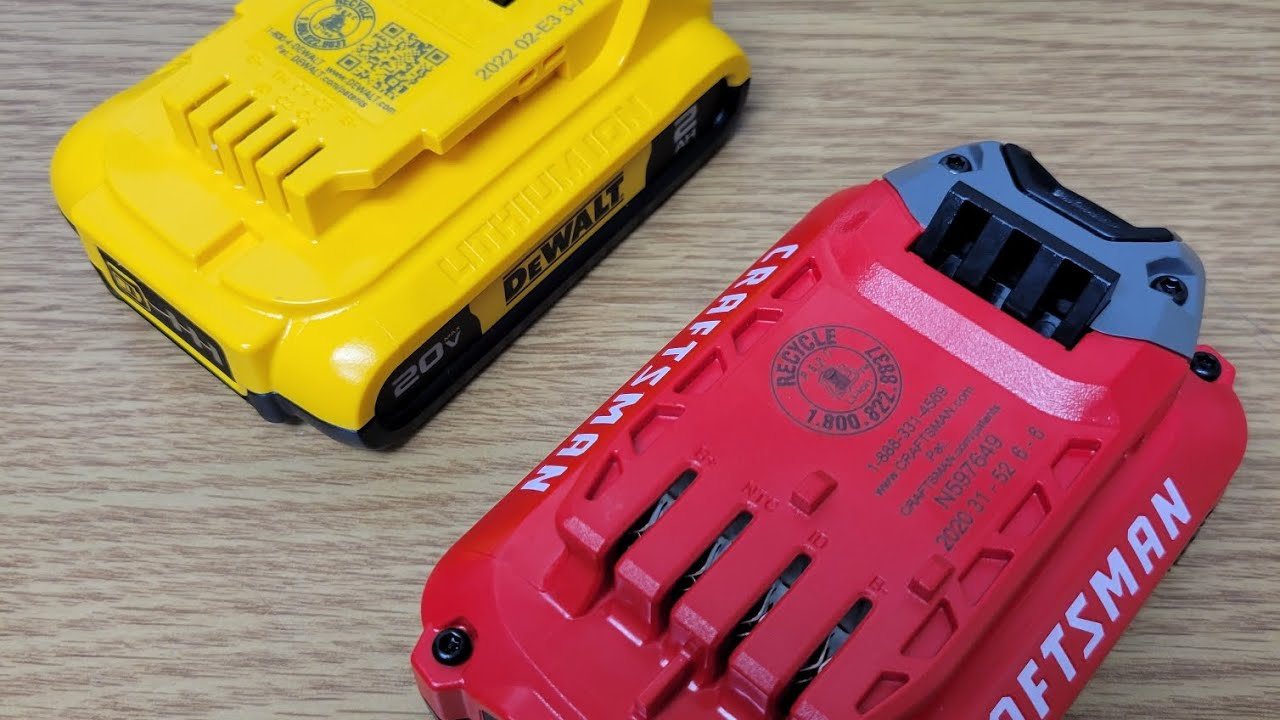
Craftsman V20 batteries are interchangeable with Dewalt 20V Max tools because Stanley Black & Decker owns both brands and built them on the same slide-pack platform. Hart batteries and older Craftsman C3 (19.2V) batteries are not compatible with either brand.
Mixing up battery platforms is an easy way to damage a tool, void a warranty, or waste money on a battery that will not even slide onto the mount. Dewalt, Craftsman, and Hart all sell 20V-class lithium-ion batteries that look similar in a store aisle, but only some of them are engineered to fit each other.
This guide covers exactly which Dewalt and Craftsman batteries swap freely, why Hart batteries stand apart even though Hart shares a parent company with other cordless brands, and the three checkpoints (voltage, physical mount, and brand licensing) you can use to judge any two brands on your own.
Are Dewalt and Craftsman Batteries Interchangeable?
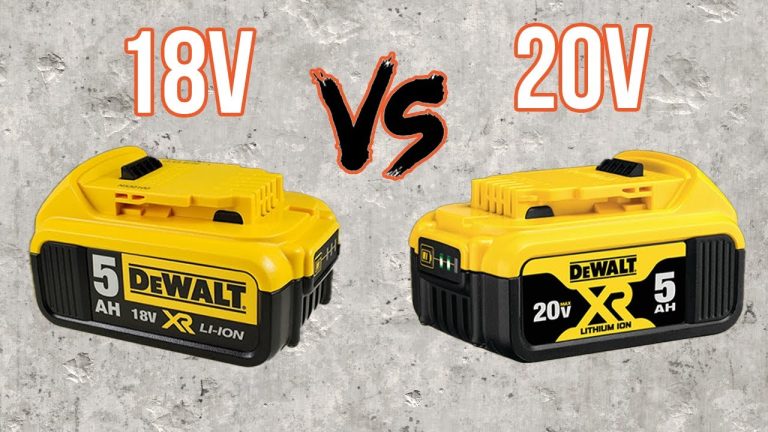
Yes, for the batteries most people own today. In 2017, Stanley Black & Decker bought the Craftsman brand from Sears and relaunched its power tool line as Craftsman V20 the following year. Since Dewalt is also a Stanley Black & Decker brand, the company put Craftsman V20 tools and batteries on the exact same 20V Max slide-rail platform Dewalt already used. The result: a Craftsman V20 battery slides onto and powers a Dewalt 20V Max tool, and a Dewalt 20V Max battery slides onto and powers a Craftsman V20 tool. Both use the same nominal 20V (18V actual) lithium-ion cells, the same rail width and tab spacing, and the same charger contacts.
This cross-compatibility is well documented by users and consistent with how Stanley Black & Decker engineers its shared platforms — it is not a workaround or a hack, and no adapter is needed. It works in both directions for standard drills, impact drivers, saws, and most other tools in each lineup.
The exception: older Craftsman C3 batteries
The compatibility above applies to the current Craftsman V20 line only. Before the 2017 sale, Craftsman’s cordless tools ran on the C3 platform at 19.2 volts, made under license by a different manufacturer with its own twist-lock battery mount. A C3 battery is a different voltage and a different physical shape from a Dewalt 20V Max battery, so it will not fit, and it should not be forced. If your Craftsman tool is red-and-black and says “V20” on the battery, you have the newer platform and Dewalt compatibility applies. If it is an older Craftsman drill with a slide-in or twist battery labeled 19.2V, you have the C3 platform, and only another C3 battery will work.
Practical notes before you swap
- Check the label on the battery itself for “20V MAX” or “V20” — do not go by color alone, since Craftsman has used red on multiple platforms.
- A battery that requires force to seat is not a match. Both platforms are a smooth, one-handed slide.
- Using an off-brand battery, even a compatible one, can affect how a tool’s manufacturer handles a warranty claim — check the tool’s warranty terms if that matters to you.
- Dewalt’s higher-voltage FlexVolt batteries still fit the 20V Max rail and will power Craftsman V20 tools at 20V, but Craftsman does not currently sell a FlexVolt-equivalent battery of its own.
Best Cross-Platform Battery Pick
 |
DEWALT 20V MAX Battery, 5.0Ah (DCB205) – $65.00 Sits on the same 20V Max slide-rail platform this guide confirms Craftsman V20 shares – one battery that slides onto and powers tools from either brand, no adapter needed.
|
Compare more 20V battery options
 Option 1 CRAFTSMAN V20 4.0Ah Battery (CMCB204) – $89.99
|
 Option 2 HART 20-Volt 1.5Ah Battery (HPB01) – $109.99
|
 Option 3 Hart 40V 2.5Ah Battery (HLBP011) – $130.00
|
As an Amazon Associate we earn from qualifying purchases.
What Battery Is Compatible With Hart Tools?
Only genuine Hart batteries are compatible with Hart tools. Hart is a Walmart-exclusive brand manufactured by Techtronic Industries (TTI) — the same parent company behind Ryobi, Milwaukee, and Ridgid. Despite the shared ownership, TTI builds Hart on its own proprietary battery mount and does not allow cross-compatibility with its other brands. A Ryobi 18V One+ battery will not fit a Hart tool, and a Hart battery will not fit a Ryobi tool, even though both are made by the same company.
Hart sells two battery voltage lines, and they are not interchangeable with each other either:
- Hart 20V — the standard line, covering most drills, drivers, saws, and outdoor tools in the Hart catalog.
- Hart 40V — a separate, larger platform for higher-demand tools like mowers and larger chainsaws. A 40V battery will not slide onto a 20V tool’s mount, and vice versa.
Match the voltage printed on the tool to the voltage printed on the battery before buying. Within the same Hart voltage line, batteries and tools purchased across different years generally remain compatible, since Hart has kept one mount design per voltage tier since the brand launched at Walmart in 2018.
How to Tell If Two Brands’ Batteries Are Interchangeable
Dewalt/Craftsman and Hart are two clear, opposite examples — one pair shares a platform on purpose, the other deliberately does not, despite looking similar. Use these three checks on any two brands you are comparing:
1. Voltage match
The nominal voltage stamped on the battery (12V, 18V, 20V Max, 40V, 60V/FlexVolt, and so on) has to match what the tool is rated for. A mismatch can undercharge and damage a tool, or in the case of a higher-voltage battery on unrated electronics, damage the tool outright.
2. Physical mount design
Voltage matching alone does not guarantee a fit. The rail width, tab shape, and contact spacing are brand- and platform-specific. Dewalt and Craftsman V20 match because Stanley Black & Decker designed them to; Ryobi and Hart do not match despite sharing 20V-class batteries and the same parent company, because TTI engineered each brand’s mount separately.
3. Brand licensing and parent company
Compatibility is a business decision, not just an engineering coincidence. Check who currently owns and manufactures each brand. Shared ownership (Dewalt/Craftsman under Stanley Black & Decker) sometimes means a shared platform; shared ownership (Ryobi/Hart under TTI) sometimes means the opposite, when the manufacturer wants to keep a retail-exclusive brand’s accessories locked to that brand. A quick search for “[brand A] battery on [brand B] tool” alongside the manufacturer’s own compatibility page is the fastest way to confirm before you buy.
If a battery passes all three checks and still will not seat smoothly, do not force it — stop and confirm the exact model numbers rather than risk the battery or the tool.
Frequently Asked Questions
Do Craftsman batteries fit Dewalt tools?
Yes, if it is a Craftsman V20 battery (2018 or newer, labeled 20V MAX). It shares Dewalt’s 20V Max slide-rail platform since both brands are owned by Stanley Black & Decker. Older Craftsman C3 batteries at 19.2V do not fit.
Can I use a Dewalt battery in a Craftsman tool?
Yes, a Dewalt 20V Max battery will slide onto and power a Craftsman V20 tool the same way a Craftsman V20 battery powers a Dewalt tool. It works in both directions.
What is the difference between Craftsman V20 and Craftsman C3?
V20 is the current line (2018-present), rated 20V Max and built on the same platform as Dewalt 20V Max. C3 is the older line sold before Stanley Black & Decker bought Craftsman, rated 19.2V on its own separate mount, and it is not compatible with Dewalt or with V20 tools.
Will a Hart battery fit a Ryobi tool?
No. Hart and Ryobi are both made by Techtronic Industries, but each brand uses its own battery mount, and TTI does not build cross-compatibility between them.
What voltage do Hart batteries come in?
Hart sells 20V batteries for most drills, drivers, and saws, and a separate 40V line for higher-demand tools like mowers and larger chainsaws. The two voltage lines are not interchangeable with each other.
How can I tell if two tool brands’ batteries are interchangeable?
Check three things: the nominal voltage matches, the physical mount and contacts match, and the two brands are either the same company or a company that has deliberately shared its platform. All three need to line up — matching voltage or a shared parent company alone is not enough, as the Hart/Ryobi example shows.
For more on choosing between these tool families, see our comparisons of Dewalt vs Craftsman drills and 12V vs 20V drills.



![How To Mount A Woodworking Vice [Quick Guide]](https://cdn.woodworkingadvisor.com/2022/11/How-To-Mount-A-Woodworking-Vice-768x384.webp)