12V vs 20V Drill: The Voltage Numbers Are Misleading
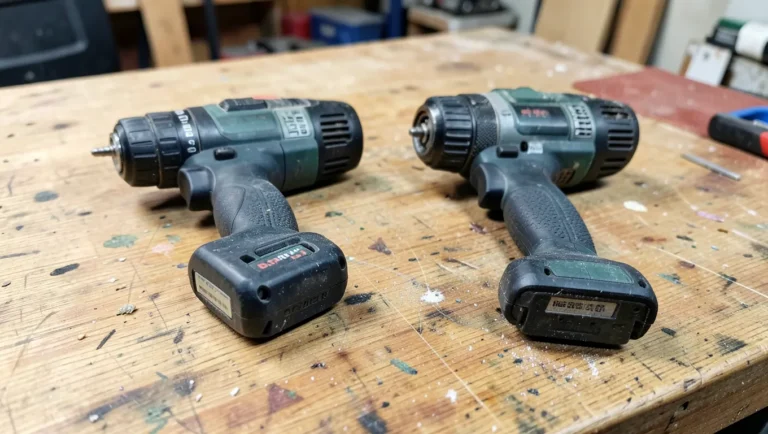
The single biggest thing to know before comparing “12V” and “20V” drills: those numbers are marketing peak-voltage figures, not the drill’s actual running voltage. A “20V MAX” tool runs at a nominal 18V under real load (20V is only the fully-charged, no-load peak), and a “12V MAX” tool runs at a nominal 10.8V. This is why a 20V MAX drill and an “18V” drill sold under a different regional naming convention are often the exact same tool — it’s a labeling choice, not a different voltage class.
What “MAX” Actually Means
Best All-Around Pick (Brushless Beats Raw Voltage)
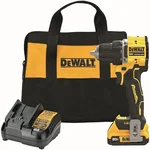 |
DEWALT DCD794D1 ATOMIC 20V MAX Brushless Drill Kit – $126.00 The brushless motor efficiency this article talks about, in the larger 20V MAX ecosystem, in one of the most compact 20V MAX drills made.
|
Lithium-ion cells have a peak voltage right off the charger and a lower nominal (average, under load) voltage. Major brands market their compact tool lines by that peak number — hence “12V MAX” and “20V MAX” — because it’s a bigger, more marketable figure than the nominal rating. The real, sustained voltage difference between the two lines is about 10.8V nominal vs. 18V nominal: a real gap, but smaller than the “12 vs 20” branding implies.
This matters practically because it means you shouldn’t read too much into the raw number alone — a well-built 12V MAX tool with a brushless motor can out-torque a cheap, older brushed 20V MAX tool. Voltage class is a starting point, not the full spec.
What Actually Determines Power: Torque, Not Voltage
Torque — the twisting force that actually drives a screw or bit — is what you should compare, and it’s usually listed in inch-pounds (in-lbs) on the spec sheet. Rough typical ranges for drill/drivers (not impact drivers, which run much higher):
- 12V MAX drill/drivers: roughly 250-350 in-lbs of torque, typically.
- 20V MAX drill/drivers: roughly 350-550+ in-lbs, with premium brushless models going higher.
These ranges overlap more than most buyers expect — a good 12V brushless drill can match or beat an entry-level brushed 20V drill. Always check the actual torque spec rather than assuming the voltage class settles it.
Brushless vs. Brushed Matters More Than the Voltage Label
A brushless motor has no physical brushes creating friction and generating heat, so it converts more of the battery’s energy into actual cutting/driving force instead of wasted heat — typically 15-20% more efficient than an equivalent brushed motor. That efficiency gain often matters more for real-world performance and runtime than jumping from a 12V MAX to a 20V MAX platform. If you’re choosing between a brushed 20V MAX tool and a brushless 12V MAX tool for a similar task, don’t assume the higher voltage number automatically wins.
Runtime Is About Watt-Hours, Not Voltage
A battery’s actual energy capacity is voltage multiplied by amp-hours (Wh = V × Ah), not voltage alone. A 12V MAX battery rated 4.0Ah stores roughly 43 Wh; a 20V MAX battery rated 2.0Ah stores roughly 36 Wh — meaning that specific 12V battery actually holds more usable energy than that specific 20V battery, despite the lower voltage number. Always compare the Wh figure (or calculate it from V × Ah) printed on the battery, not just the voltage class, when runtime is the deciding factor.
Size, Weight, and Ecosystem
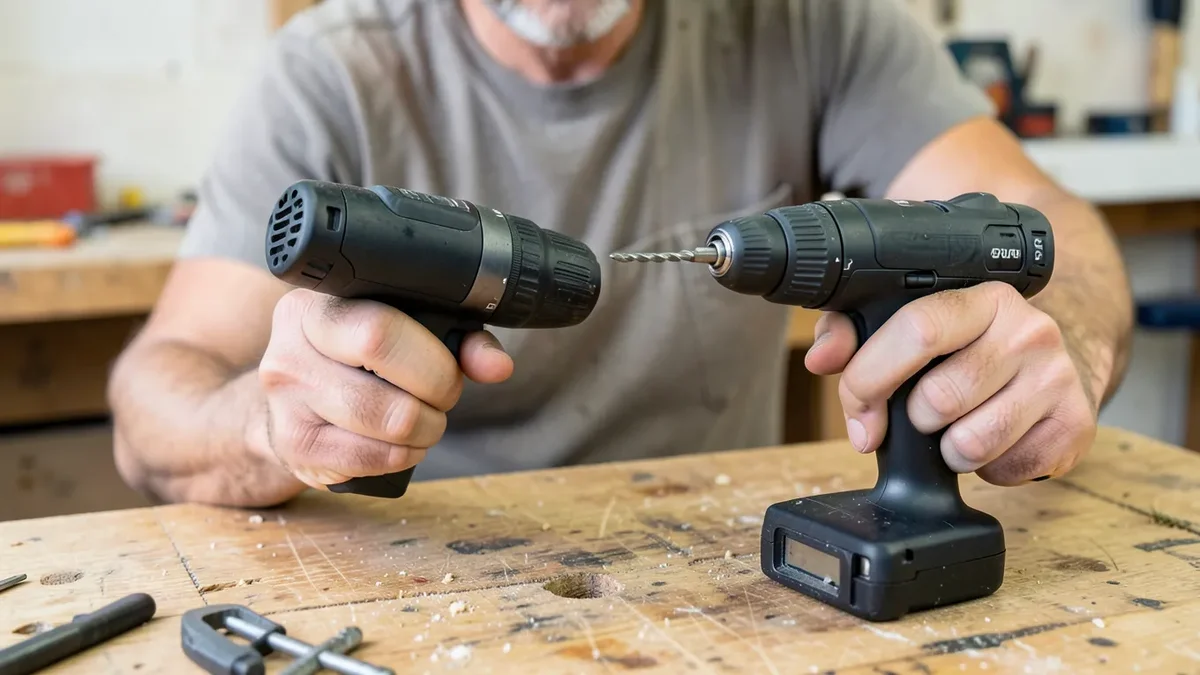
12V MAX tools are genuinely smaller and lighter — a real advantage for overhead work, tight cabinet interiors, and anyone who finds a full-size drill fatiguing over a long session. 20V MAX platforms are physically larger but almost always have a much wider range of compatible tools (impact drivers, saws, sanders, lights) within the same battery ecosystem, since 20V MAX is the dominant platform for most major brands’ broader tool lineup. If you’re building out a battery-compatible tool collection rather than buying a single drill, that ecosystem breadth is often the deciding factor, not the drill’s specs in isolation.
Which One Should You Buy?
- Choose 12V MAX for light household use, assembling furniture, hanging shelves, and any job where a compact, lightweight tool for occasional use matters more than raw torque.
- Choose 20V MAX for deck building, framing, repeated work in hardwood or masonry, and if you plan to expand into a broader battery-compatible tool ecosystem over time.
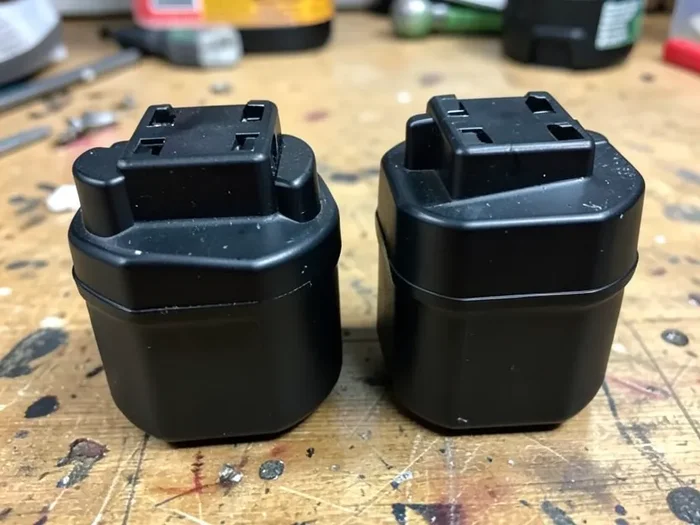
Batteries are not interchangeable between a brand’s 12V MAX and 20V MAX lines even though they may look superficially similar — check the battery’s own voltage label before assuming it fits both.
Frequently Asked Questions
Is a 20V drill always better than a 12V drill?
No. “20V” and “12V” are peak marketing voltages (nominal running voltage is closer to 18V and 10.8V respectively), and a brushless 12V drill can out-torque a cheap brushed 20V drill. Check the torque spec and motor type, not just the voltage label.
Can I use a 20V drill for small tasks?
Yes, though a larger 20V MAX drill can feel bulkier and heavier than necessary for light jobs like hanging a picture. It will handle the task fine; a 12V MAX tool is just more comfortable for that specific use.
Does the brand of the drill matter?
Yes, mainly because it determines your battery ecosystem. If you plan to add more cordless tools over time, staying within one brand’s platform (usually the 20V MAX line) lets you share batteries and chargers across tools.
Are 12V and 20V batteries interchangeable?
No. Even within the same brand, 12V MAX and 20V MAX batteries use different form factors and are not interchangeable — always check the battery’s own voltage label rather than assuming compatibility.
The Bottom Line
“12V vs 20V” is really a size-and-ecosystem question dressed up as a power question — the actual voltage gap is smaller than the marketing numbers suggest, and torque, motor type (brushless vs. brushed), and battery watt-hours matter more than the class label alone. Pick 12V MAX for light, compact convenience and 20V MAX for heavier work and a broader tool ecosystem, and check the actual spec sheet either way before assuming the bigger number wins.
Sponsored / affiliate links. As an Amazon Associate I earn from qualifying purchases. I may earn additional commission from eligible campaigns.