What Cedar Means: Proven Essential Guide
What Cedar Means: It refers to a group of aromatic evergreen trees and the durable, beautiful wood they yield. Cedarwood is prized for its natural resistance to rot, insects, and moisture, making it an excellent choice for outdoor projects, furniture, and storage solutions where longevity and a pleasant fragrance are desired.
Hello, woodworking friends! Md Meraj here, your guide to making sawdust dreams a reality. Ever walked into a closet or seen a beautiful outdoor bench and thought, “What is that lovely wood?” Chances are, you’ve encountered cedar. This gorgeous timber is loved by woodworkers and homeowners alike for its unique scent, stunning appearance, and incredible durability. But beyond that pleasant aroma and good looks, what makes cedar so special? If you’ve ever felt a little unsure about working with cedar or understanding its benefits, you’re in the right place. We’re going to peel back the layers and discover exactly what cedar means for your projects. Stick around, and by the end of this, you’ll be a cedar-savvy crafter, ready to tackle any project with confidence!
What is Cedarwood? Unpacking the Aromatic Heart of This Wood
Cedarwood isn’t just one type of tree; it’s a family. These are coniferous trees, meaning they produce cones and have needle-like or scale-like leaves that stay green year-round. The name “cedar” actually covers a range of trees from different botanical families, but they share many wonderful qualities that make their wood so desirable. Think of it as a team of trees, each with its own unique personality, but all working together to give us something truly special.
The magic of cedarwood lies in its natural oils. These oils are what give cedar its distinctive, calming aroma, often described as fresh, woody, and slightly spicy. But these oils do more than just smell good; they act as nature’s own defense system for the tree. This is why cedar is so resistant to things that can ruin other woods, like pesky insects and damp conditions that lead to rot.
The Cedar Family Tree: A Look at Common Types
While “cedar” is a broad term, there are a few common species you’re likely to encounter in the woodworking world. Each has its own subtle differences in color, grain, and scent, but they all offer that signature cedar appeal.
Eastern Red Cedar: Often found in North America, this is a true cedar and is highly aromatic. It’s known for its reddish-purple heartwood and pale sapwood, creating a beautiful two-tone effect. It’s fantastic for chests, closets, and decorative elements.
Western Red Cedar: This is a popular choice for outdoor applications in the Pacific Northwest of North America. Its wood is a rich reddish-brown and is incredibly resistant to decay and insects. You’ll see it used for decking, siding, shingles, and outdoor furniture. It’s also known for its stability, meaning it won’t warp or twist easily.
Aromatic Cedar (often Eastern Red Cedar or other species): When people refer to “aromatic cedar” for lining closets or making storage boxes, they are typically referring to species like Eastern Red Cedar or Incense Cedar, which have a very strong, pleasant scent. This scent is a natural insect repellent, making it perfect for protecting clothes and other items from moths.
Spanish Cedar: Despite its name, Spanish Cedar is not a true cedar; it’s actually more closely related to mahogany. It’s prized for its lightweight nature, fine grain, and pleasant aroma, and it’s often used in cigar boxes and as a lining for humidors because it doesn’t impart its scent to the contents. It’s also a good choice for outdoor trim and doors in certain climates.
The key takeaway is that no matter the specific species, cedar offers a fantastic combination of beauty, fragrance, and natural protection.
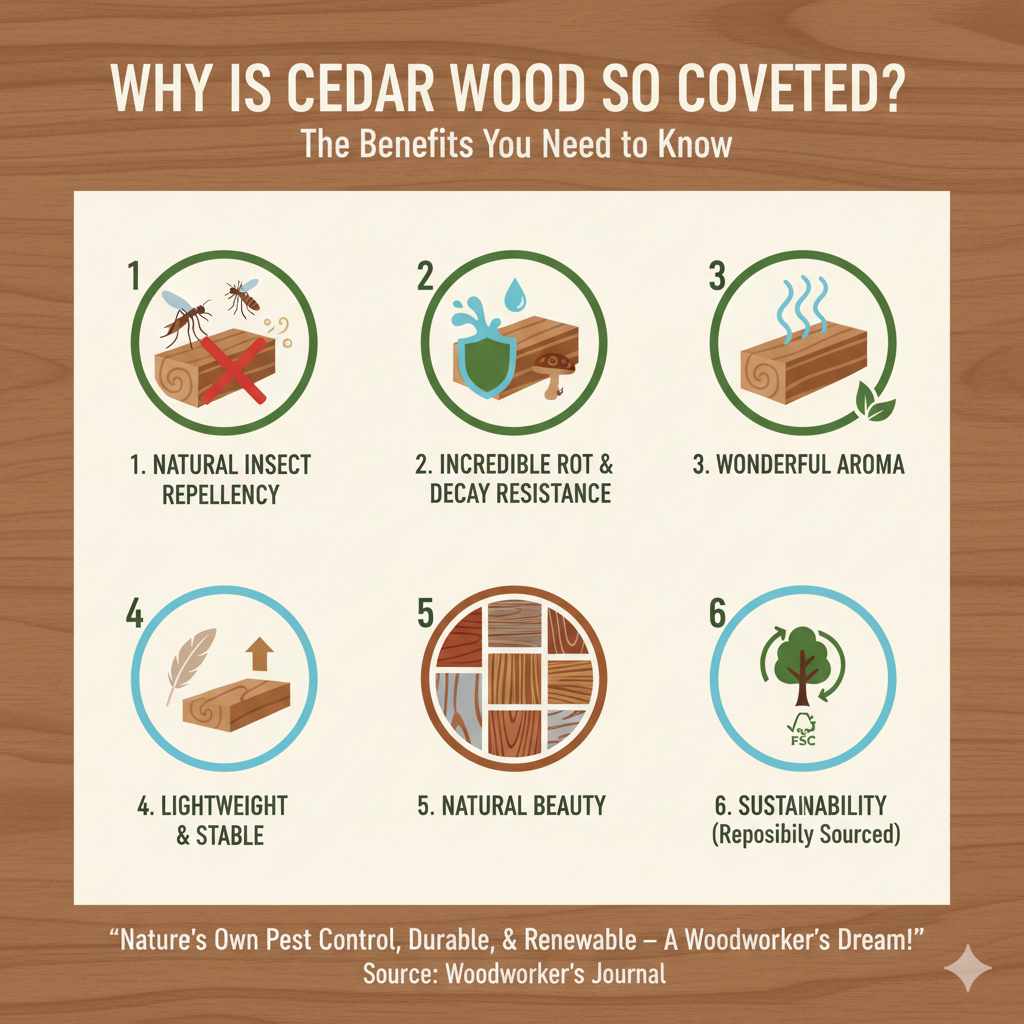
Why is Cedar Wood So Coveted? The Benefits You Need to Know
So, what makes cedar the go-to choice for so many projects? It boils down to a fantastic set of natural advantages that save you time, effort, and worry down the line. As a woodworker, I love using materials that make my job easier and the final product better, and cedar certainly delivers.
1. Natural Insect Repellency
This is arguably cedar’s most famous benefit. The natural oils within cedarwood, particularly thujaplicins and other extractives, act as a powerful deterrent to common pests like moths, termites, and other wood-boring insects. This makes it an ideal material for furniture, closet linings, and outdoor structures where insect damage is a concern. You’re essentially using nature’s own pest control!
2. Incredible Rot and Decay Resistance
Cedar’s natural oils also make it highly resistant to moisture and the fungi that cause wood to rot. This means cedar can stand up exceptionally well to the elements, even when exposed to rain, humidity, and ground contact. This is why you see cedar used so often for outdoor decks, fences, playground equipment, and exterior siding. It’s a durable choice that ages gracefully.
3. Wonderful Aroma
That distinct, fresh, and inviting scent is a signature feature of many cedar species. It’s not just pleasant; it’s often associated with cleanliness and nature. This makes cedar particularly popular for interior applications like closet lining, cedar chests, and drawer bottoms. The scent can last for many years, especially if the wood surface is occasionally lightly sanded.
4. Lightweight and Stable
Cedar is generally a lightweight wood, which makes it easier to handle, transport, and install, especially for larger projects like decks or fences. It also tends to be very stable, meaning it expands and contracts less with changes in humidity compared to many other woods. This stability is crucial for projects where maintaining shape and preventing cracks is important.
5. Natural Beauty
Cedar offers a beautiful range of colors, from pale creamy white to rich reddish-browns and deep purples. The grain patterns are often straight and knotty, providing visual interest. Whether you choose to stain and seal it for a more formal look or leave it to weather naturally to a silvery gray, cedar has an inherent appeal that enhances any project.
6. Sustainability (When Sourced Responsibly)
Many cedar species are fast-growing and are sustainably managed in well-forested regions. When you choose cedar, especially from reputable suppliers, you’re often opting for a renewable resource that is a good environmental choice compared to less sustainable materials. Organizations like the Forest Stewardship Council (FSC) play a vital role in ensuring wood products originate from responsibly managed forests.
What Cedar Means for Your Projects: Practical Applications
Knowing the benefits is one thing, but seeing where cedar shines in real-world projects is where the magic really happens. Its unique properties make it ideal for a surprising variety of uses, from your home’s interior to your backyard oasis.
Outdoor Projects: Standing the Test of Time
Cedar’s resistance to rot, decay, and insects makes it a top-tier material for anything exposed to the elements.
Decking: Cedar decks are a classic choice. They look beautiful, feel good underfoot, and can last for decades with minimal maintenance beyond occasional cleaning and sealing if you want to preserve the color.
Fencing: A cedar fence adds curb appeal and provides privacy while withstanding weather and pests.
Siding and Trim: Cedar siding offers a natural, attractive, and durable exterior finish for homes. Its natural insulation properties can also be a small bonus.
Patio Furniture: Outdoor furniture made from cedar is a popular choice because it’s comfortable, durable, and smells great.
Planters and Garden Beds: Cedar’s resistance to rot means your garden boxes and planters will last much longer, even in constant contact with soil and moisture.
Arbors and Pergolas: These structures benefit greatly from cedar’s stability and resistance to decay, ensuring they remain a beautiful focal point for years.
Indoor Applications: Bringing Nature’s Comfort Inside
While often associated with the outdoors, cedar is a fantastic choice for various indoor projects, especially where its scent and protective qualities can be leveraged.
Cedar Chests and Storage Boxes: This is a classic use. The natural aroma repels moths and other fabric pests, protecting blankets, sweaters, and heirlooms stored inside.
Closet Lining: Lining the walls and shelves of closets with cedar planks or panels is a traditional method for keeping clothes fresh and protected from moths.
Humidors: Spanish Cedar, in particular, is the preferred wood for cigar humidors because it helps maintain the humidity levels and imparts a subtle, pleasant aroma to the cigars without overpowering them.
Drawer Liners and Shelving: Small cedar planks can be used as liners for drawers or as shelving for linens and sweaters to add that protective, fragrant touch.
Decorative Accents and Crafts: Cedar’s beautiful grain and scent make it appealing for small decorative items, picture frames, or even scented sachets when cut into small decorative pieces.
Other Notable Uses:
Shakes and Shingles: Cedar is traditionally used for roofing, offering both beauty and excellent weather protection.
Outdoor Play Structures: Its natural resistance to decay and splinters makes it a safer and more durable choice for swingsets and playhouses.
Working with Cedar: Tips for Beginners
Cedar is known for being relatively easy to work with, which is great news for those new to woodworking. Its softness means it cuts and shapes smoothly, but it also has a few quirks to keep in mind.
Tools and Techniques for Success
Cutting: Cedar cuts easily with both hand saws and power saws. Ensure your saw blades are sharp to prevent tear-out on the softer wood. Carbide-tipped blades will last longer.
Fastening: Nails and screws go into cedar easily. However, the natural oils in cedar can react with some metals, particularly iron and aluminum, causing staining or corrosion over time. It’s best to use stainless steel, galvanized, or brass fasteners for outdoor projects or anywhere moisture is a concern to prevent unsightly dark spots.
Adhesives: Most common wood glues work well with cedar. Ensure you have good clamping pressure and allow sufficient drying time. For structural outdoor joints, consider using waterproof glues like Titebond III.
Sanding: Cedar is soft and sands beautifully. Start with a medium grit (like 100-120) and work your way up to finer grits (220 or higher) for a smooth finish. Be aware that cedar dust can be an irritant for some people, so wear a dust mask.
Finishing: You have options! Cedar can be left unfinished to weather to a natural silver-gray, which is a popular look for outdoor furniture and fences. If you want to preserve its natural color, a clear water-repellent finish or a UV-inhibiting sealer can be applied. For interior projects, you can use stains, oils, or sealers depending on the desired look. Always test your finish on a scrap piece first.
Safety First! Working with Cedar Dust
While cedar is wonderful, its sawdust can be an irritant for some people. The fine particles can cause respiratory irritation and skin rashes. Always wear appropriate personal protective equipment (PPE) when working with cedar, especially when cutting or sanding:
Dust Mask or Respirator: To protect your lungs from inhaling fine wood dust.
Safety Glasses: To protect your eyes from flying debris.
Gloves: To protect your skin from potential irritation.
Ventilation:** Work in a well-ventilated area or use dust collection systems to minimize airborne dust.
You can find more detailed safety information for woodworking from resources like the Occupational Safety and Health Administration (OSHA) regarding wood dust.
Cedar vs. Other Woods: A Smart Comparison
When you’re deciding on the best wood for a project, it’s helpful to see how cedar stacks up against some common alternatives. This can help you make an informed choice based on your needs and budget.
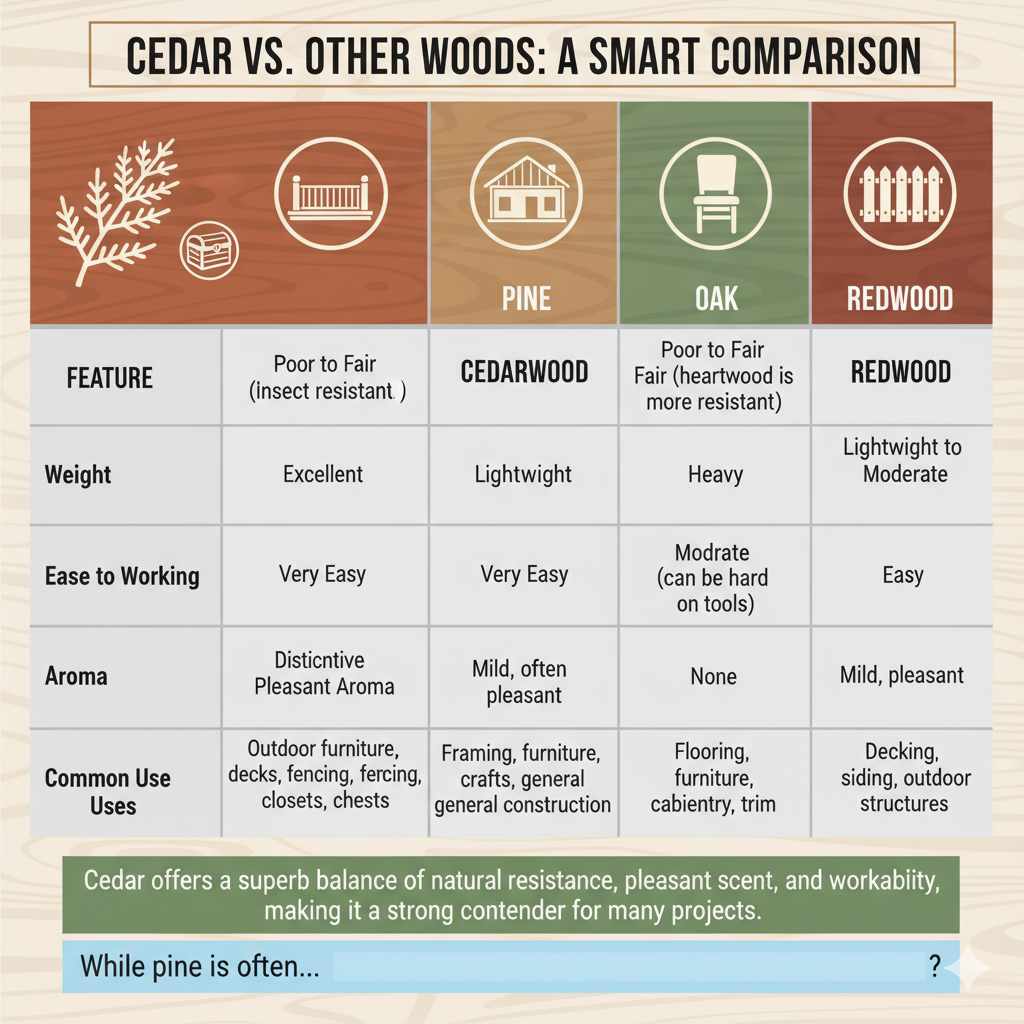
Here’s a comparison of Cedarwood with some other popular wood choices:
| Feature | Cedarwood | Pine | Oak | Redwood |
|---|---|---|---|---|
| Durability (Rot/Insect Resistance) | Excellent | Poor to Fair (less resistant) | Fair (heartwood is more resistant) | Excellent |
| Weight | Lightweight | Lightweight | Heavy | Lightweight to Moderate |
| Ease of Working | Very Easy | Very Easy | Moderate (can be hard on tools) | Easy |
| Cost | Moderate to High | Low to Moderate | Moderate to High | Moderate to High |
| Aroma | Distinctive Pleasant Aroma | Mild, often pleasant | None | Mild, pleasant |
| Common Uses | Outdoor furniture, decks, fencing, closets, chests | Framing, furniture, crafts, general construction | Flooring, furniture, cabinetry, trim | Decking, siding, fencing, outdoor structures |
As you can see, cedar offers a superb balance of natural resistance, pleasant scent, and workability, making it a strong contender for many projects, especially those where longevity and natural protection are key concerns. While pine is often more budget-friendly, it won’t offer the same durability outdoors. Oak is strong but heavy and lacks cedar’s natural resistance. Redwood shares cedar’s excellent durability but can sometimes have a less pronounced aroma and might be more costly depending on location and species.
Frequently Asked Questions About Cedarwood
We’ve covered a lot about what cedar means, but you might still have some questions. Here are a few common ones addressed to help clear things up!
Why does cedar smell so good?
Cedarwood’s distinctive aroma comes from its natural oils, such as thujaplicins and cedrol. These oils not only give it a pleasant, fresh, and woody scent but also serve as natural defenses against insects and decay.
Will the cedar smell fade?
The aroma of cedarwood is quite long-lasting, often for many years. The scent can be refreshed by lightly sanding the surface of the wood, which releases more of the fragrant oils.
Is cedarwood a good choice for outdoor furniture?
Yes, absolutely! Cedar is one of the best choices for outdoor furniture due to its natural resistance to rot, decay, and insect infestations. It can withstand various weather conditions and maintains its structural integrity well.
Can I paint or stain cedarwood?
Yes, you can paint or stain cedarwood. However, it’s recommended to use a good quality primer if painting, as cedar’s surface resins can sometimes bleed through lighter paint colors. Stains generally adhere very well, enhancing its natural beauty or changing its color. For outdoor use, consider finishes that offer UV protection.
Is cedarwood expensive?
Cedarwood is typically moderately priced, often falling between less expensive softwoods like pine and more premium hardwoods. Its price can vary based on the species, grade, and region. While it might cost more upfront than pine, its durability and longevity can make it more cost-effective over time, especially for outdoor projects.
How should I maintain cedar projects?
For outdoor projects, you can clean cedar with mild soap and water. To maintain its original color, apply a clear water-repellent finish or a stain with UV inhibitors annually or as needed. If you prefer the natural silver-gray weathered look, no finish is required, just occasional cleaning.
Is cedar woodworking dusty?
Yes, like most woodworking, cutting and sanding cedar creates dust. Some individuals are sensitive to cedar dust, which can cause respiratory or skin irritation. Always use a dust mask, safety glasses, and good ventilation when working with it.
Bringing It All Together: Your Cedar Journey
So, what does cedar mean? It means beauty, durability, a wonderful fragrance, and natural protection, all rolled into one remarkable wood. From your cozy closets to your sprawling decks, cedar offers a tangible connection to nature that enhances both function and form.
As your woodworking mentor, I hope this guide has demystified cedarwood for you. You’ve learned about the different types of cedar, its incredible natural benefits, where it excels in various projects, and even how to work with it safely and effectively. Remember, woodworking is about building with confidence, and understanding your materials is a huge part of that.
Cedar is forgiving for beginners, offering beautiful results without needing advanced techniques. Its natural resilience means your projects can stand the test of time, bringing you pride and enjoyment for years to come. Whether you’re building a simple cedar chest or a grand outdoor patio, choosing cedar is a decision that speaks to craftsmanship, natural quality, and smart design.
Now, go forth and create! Explore the wonderful world of cedar, embrace its unique properties, and build something amazing. I can’t wait to see what you make. Happy woodworking!