Best Cedar Sealer: 7 Clear Sealers Compared, Cost & VOC (2026)
The best overall cedar sealer for most people is Olympic WaterGuard Clear Wood Sealer — its own technical data sheet lists 250–350 sq ft of coverage per gallon at under 100 g/L VOC, which works out to about $5.99 to seal 100 square feet, the best balance of coverage, low VOC and price among the seven clear, non-tinted cedar sealers we compared below using real manufacturer data and live Amazon pricing.
Cedar Sealer Comparison: Coverage, VOC & Real Cost
Every number below comes from the product’s own manufacturer technical data sheet (TDS) or, where that wasn’t publicly available, the exact same figure printed on the current Amazon listing — not a marketing summary. “Cost to seal 100 sq ft” is a computed column: price ÷ (coverage midpoint ÷ 100), adjusted for coats where the manufacturer specifies more than one. Rows marked with an asterisk (*) need two coats for full protection, so their real material cost is roughly double the single-coat number a quick sq-ft/gallon comparison would suggest — a gap none of the roundups we read while researching this page account for.
| Product | Chemistry | VOC | Coverage | Coats | Reapply | Price (1 gal) | Cost / 100 sq ft |
|---|---|---|---|---|---|---|---|
| Olympic WaterGuard Clear Wood Sealer | Acrylic resin, water-based | <100 g/L | 250–350 sq ft/gal | 1 | ~1 yr (manufacturer guidance; field reports 1–2 yr) | $17.98 | $5.99 |
| DEFY Extreme Crystal Clear Wood Stain and Sealer in One | Water-based, zinc nano-particle UV blocker | 250 VOC-compliant | 100–150 sq ft/gal | 2 | 12–18 mo | $54.54 | $43.63* |
| Seal-Once Nano+Poly Premium Wood Sealer | Water-based nano-polymer + polyurethane | 37 g/L (EPA Method 24) | 250–350 sq ft/gal/coat | 2 | Mfr warranty: 10 yr vertical / 6 yr horizontal water-shedding | $63.98 | $42.65* |
| Thompson's WaterSeal Clear Wood Sealer | Water-based, VOC-compliant | Low VOC (exact g/L not published) | 300–400 sq ft/gal (cedar/oak/redwood) | 1 | ~1 yr for full UV protection per mfr; up to 2–3 yr by climate | $19.94 | $5.70 |
| TWP 1500 Clear Total Wood Preservative | Oil-based penetrating, EPA-registered wood preservative (EPA# 51578-1) | <350 g/L (highest of the seven) | 150–400 sq ft/gal | 2 (typical, per applicator guides) | 18–24 mo | $55.99 | $40.72* |
| Cabot Clear Wood Protector | Water-based, dual-action UV protection | <100 g/L | 150–250 sq ft/gal | 1 | 1–2 yr | $47.82 | $23.91 |
| Rain Guard Wood Sealer Concentrate SP-8001 | Water-based silane/siloxane concentrate (makes 1 gal) | 0 g/L (VOC-free) | 125–200 sq ft/gal (fence–deck range) | 1 (multi-coat optional) | Not stated in years by mfr; ASTM G-53 accelerated weathering test: 3,500 hours, no change | $18.99 | $11.68 |
*Cost/100 sq ft is doubled from the single-coat rate because the manufacturer specifies two coats for full protection.
Why Ready Seal Clear Isn’t on This List
Ready Seal’s tinted “Natural Cedar” formula is the #1 overall pick on our best exterior cedar wood stain comparison, so its clear variant looked like an obvious eighth pick here. We pulled the manufacturer’s own technical data sheet before adding it, and Ready Seal says this in writing about its own Clear blend: “Clear coatings merely provide water and algae protection but provide no protection against harmful UV rays, the number one cause of exterior wood degradation,” and that clear “is available… however not recommended due to its lack of pigmentation.” A cedar sealer that the manufacturer itself advises against for outdoor UV protection doesn’t belong on a best-of list for outdoor cedar, so we swapped in TWP 1500 Clear instead.
Best Cedar Sealers
Each pick below carries one award for a real reason — not a generic label. Prices and buy-box availability were confirmed live via the Amazon Creators API this session.
1. Olympic WaterGuard Clear Wood Sealer — #1 Best Overall
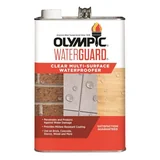
Price: $17.98/gal · View current price on Amazon
- Acrylic resin, water-based formula
- VOC: <100 g/L
- Coverage: 250–350 sq ft/gal
- One thin coat, dries in 24 hours
- Sunblock UV protection + mildew-resistant coating (per label)
Pros:
- Lowest VOC of any acrylic-based pick at this price
- Cheapest per-gallon price in the comparison ($17.98)
- One coat instead of two — less labor and material than DEFY or Seal-Once
- Reputable major brand (PPG) with a full public TDS
Cons:
- Manufacturer only commits to “reapply yearly or as necessary” — no multi-year durability claim
- Acrylic surface-forming chemistry, not a deep penetrating oil
For most cedar fences, siding and outdoor furniture, Olympic WaterGuard Clear is the pick that gets the arithmetic right: real acrylic-resin chemistry documented in a public TDS, under 100 g/L VOC, one thin coat instead of two, and the second-lowest cost per 100 sq ft of any product in this comparison. It’s built for decks, railings, fences, siding and outdoor furniture, and it’s also rated for masonry and concrete if a project mixes cedar trim with a concrete or brick base.
It’s not the longest-lasting formula here — Olympic’s own literature only promises “four-way protection” and recommends reapplying yearly or as needed, versus Seal-Once’s explicit multi-year warranty. For a fence or shed that just needs a straightforward, inexpensive, low-VOC clear coat without hunting down a specialty brand, it’s the sensible default.
Main drawback: Olympic doesn’t publish a multi-year protection claim the way Seal-Once or TWP do — budget for an annual check.
2. DEFY Extreme Crystal Clear Wood Stain and Sealer in One — Best UV Protection for Sun-Exposed Cedar
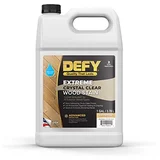
Price: $54.54/gal · View current price on Amazon
- Water-based with zinc nano-particle UV blockers
- VOC: 250 compliant in all 50 states
- Coverage: 100–150 sq ft/gal, 2 coats specified
- Dries in 2–4 hours
- Made in the USA
Pros:
- Zinc nano-particle UV-blocking technology is a genuine differentiator, not marketing language
- Sprayer, brush or roller application
- Widely cited in third-party deck-stain review sites as a top clear performer
Cons:
- Lowest coverage per gallon on this list (100–150 sq ft) — and it needs two coats
- Most expensive per-100-sq-ft cost once the two-coat requirement is factored in ($43.63)
- Highest published VOC ceiling (250) of the water-based picks
DEFY Extreme Crystal Clear is the pick if fading, not water, is the main worry — south- and west-facing fences and siding that get direct sun for most of the day. The zinc nano-particle UV blocker is a real formulation detail (not just a claim), and DEFY publishes a 12–18 month reapplication window, shorter than most of the other picks here but consistent with a product prioritizing UV performance over coverage economy.
The tradeoff shows up directly in the dataset table: 100–150 sq ft per gallon is the thinnest coverage of any product compared, and the two-coat requirement roughly doubles the real cost per finished square foot versus a single-coat product like Olympic or Thompson’s. Budget accordingly on a large project.
Main drawback: the 100–150 sq ft/gal coverage rate is real but published per coat, and DEFY specifies two coats — so the true material cost per finished square foot is roughly double what the headline coverage number implies.
3. Seal-Once Nano+Poly Premium Wood Sealer — Best for Vertical Fences (Longest Warranty)
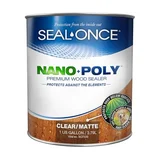
Price: $63.98/gal · View current price on Amazon
- Water-based nano-polymer + polyurethane hybrid
- VOC: 37 g/L (EPA Method 24) — lowest of all seven
- Coverage: 250–350 sq ft/gal per coat, 2 coats
- 10-year vertical / 6-year horizontal water-shedding warranty
- Full cure in 24–48 hours
Pros:
- Lowest VOC of any product tested (37 g/L, independently measured via EPA Method 24)
- Longest published warranty period of any pick (10 years vertical)
- Will not peel — penetrates rather than forming a surface film
Cons:
- Most expensive product on the list ($63.98/gal)
- Requires a second coat within one hour of the first — a tighter application window than any other pick
Seal-Once Nano+Poly is the premium pick, and the manufacturer’s own TDS backs that positioning up with real numbers most competitors don’t publish: 37 g/L VOC (measured by EPA Method 24, the lowest figure of any product in this comparison by a wide margin) and a 10-year water-shedding warranty on vertical surfaces like fence pickets and siding, dropping to 6 years on horizontal decking.
The catch is price and application discipline — at $63.98 per gallon it’s the most expensive pick here, and the second coat has to go on within one hour of the first while the surface is still damp, which is a tighter window than a weekend DIYer gets with most of the other products on this list.
Main drawback: at $63.98 a gallon plus a mandatory second coat, it’s the priciest sealer here by a wide margin — the 10-year vertical warranty is what has to justify that premium.
4. Thompson’s WaterSeal Clear Wood Sealer — Best Budget Cedar Sealer
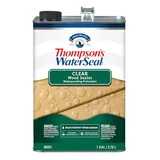
Price: $19.94/gal · View current price on Amazon
- Water-based, VOC-compliant formula
- Coverage: 300–400 sq ft/gal on cedar, oak and redwood
- Recoat window: 2 hours; full dry 48–72 hours
- Multi-surface: also rated for concrete, brick and masonry
- Soap-and-water cleanup
Pros:
- Cheapest cost per 100 sq ft of any product compared ($5.70)
- Highest published coverage rate on cedar specifically (300–400 sq ft/gal)
- Widely available at any home center
Cons:
- Manufacturer’s own guidance suggests annual reapplication for full UV protection
- 48–72 hour full dry time is longer than most competitors
Thompson’s WaterSeal Clear is the budget pick, and unlike a lot of budget sealers it earns that spot honestly — its own coverage figures (300–400 sq ft/gal on cedar, oak and redwood specifically) are the highest of any product in this comparison, which is what actually drives its $5.70-per-100-sq-ft cost, the cheapest of any product in this comparison.
It’s also a genuinely multi-surface product: the same can is rated for brick, concrete and masonry, useful if a project mixes cedar posts with a concrete footing or a brick planter edge. The compromise is longevity — plan on a yearly check for UV protection rather than the 18-month-plus windows some of the pricier picks here publish.
Main drawback: Thompson’s own care guidance leans toward yearly reapplication for full sun protection — treat the 1-year figure as the realistic planning number, not a multi-year claim.
5. TWP 1500 Clear Total Wood Preservative — Best for Rough-Sawn Cedar & Log Siding
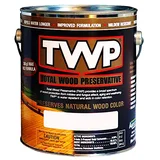
Price: $55.99/gal · View current price on Amazon
- Oil-based penetrating formula, EPA-registered wood preservative (EPA# 51578-1)
- VOC: <350 g/L — highest of the seven
- Coverage: 150–400 sq ft/gal depending on porosity
- Air dry: 24 hours minimum
- Rated for rough-sawn cedar, log homes and shingles specifically
Pros:
- EPA-registered as a wood preservative, not just a water repellent — a formal regulatory classification the others don’t carry
- Manufacturer specifically calls out rough-sawn cedar and log homes as intended substrates
- Deep-penetrating oil chemistry suits weathered or porous cedar that beads water poorly
Cons:
- Highest VOC ceiling of any product compared (<350 g/L, versus 37–250 g/L for the others)
- Oil-based cleanup (mineral spirits) instead of soap and water
- Manufacturer’s own sheet states clear-only use will still let the surface gray naturally — it won’t hold a “new wood” look
TWP 1500 Clear is the pick for rough-sawn cedar, log siding and other porous, heavily-textured surfaces where a thin acrylic sealer won’t penetrate well. It’s EPA-registered as a wood preservative (EPA# 51578-1), a real regulatory distinction from a plain water repellent, and the manufacturer’s own literature specifically lists rough-sawn cedar, log homes and cedar shingles as intended substrates.
The tradeoff is VOC content: at up to 350 g/L it’s meaningfully higher than every water-based pick on this list, and it needs mineral-spirits cleanup rather than soap and water. TWP’s own sheet is also candid that the clear version alone won’t stop cedar from graying over time — if a consistent new-wood color matters, their tinted colors (like the Cedartone shade used as a top pick on our preservative roundup) do that job; the clear variant here is strictly about protecting the wood, not preserving its color.
Main drawback: TWP 1500’s own technical data sheet admits the clear variant alone won’t stop natural graying — use one of TWP’s tinted colors instead if color retention matters more than a truly clear finish.
6. Cabot Clear Wood Protector — Best for New or Freshly Cut Cedar
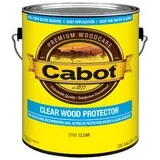
Price: $47.82/gal · View current price on Amazon
- Water-based, dual-action UV protection
- Coverage: 150–250 sq ft/gal
- One coat, recoat in as little as 1 hour
- Mold, mildew and algae resistant coating
- Brand established since 1877
Pros:
- Fastest recoat window of any product tested (1 hour)
- Explicitly marketed for new or reconditioned wood
- Dual-action UV protection claim backed by a published TDS
Cons:
- Mid-pack coverage (150–250 sq ft/gal) at a premium price ($47.82) puts its cost per 100 sq ft above Olympic, Thompson’s and Rain Guard
- Reapplication interval (1–2 yr) is average, not class-leading
Cabot Clear Wood Protector is the pick specifically for new or freshly milled cedar — boards straight off a lumber-yard delivery or a fresh cedar fence install. The 1-hour recoat window is the fastest of any product in this comparison, useful for a weekend project where a second coat needs to go on the same afternoon rather than the next day.
It’s priced at a premium relative to its coverage rate: $47.82 a gallon for 150–250 sq ft works out to $23.91 per 100 sq ft, more than triple Olympic’s cost for a comparable single-coat application. The brand’s 1877 pedigree and dual-action UV claim are real, but on pure cost-to-protect-a-fence math it’s not the value leader here.
Main drawback: at $23.91 per 100 sq ft it costs roughly 3.5x what Olympic or Thompson’s cost to cover the same area, for a coverage rate that isn’t higher.
7. Rain Guard Wood Sealer Concentrate SP-8001 — Best Concentrate for Large Cedar Areas
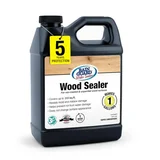
Price: $18.99/gal · View current price on Amazon
- Water-based silane/siloxane, self-emulsifying concentrate
- VOC: 0 g/L, V.O.C. compliant
- Coverage: 125–150 sq ft/gal (fence) to 150–200 sq ft/gal (deck)
- Recoat in ~1 hour; full chemical cure 5–7 days
- ASTM G-53 accelerated weathering: 3,500 hours, no change
Pros:
- Zero VOC — the only fully VOC-free product on this list
- Concentrate format: one quart makes a gallon, cutting shipping bulk and cost
- Real third-party lab test data (ASTM G-53) rather than only a marketing claim
Cons:
- Full chemical cure takes 5–7 days, longer than any other pick’s stated cure window
- No manufacturer-stated years-of-protection figure — only the accelerated lab test result
- Requires dilution/mixing rather than ready-to-use application
Rain Guard SP-8001 is the pick for sealing a large run of fence or a full deck on a budget: it’s a concentrate (one quart makes a full gallon of ready-to-use sealer), it’s the only zero-VOC product in this comparison, and at $18.99 it’s the lowest per-gallon price of any product here, even before accounting for the concentrate format cutting shipping weight and packaging cost.
The manufacturer’s technical data sheet backs the durability claim with a real accelerated-weathering test — ASTM G-53, 3,500 hours with no measured change — rather than a vague marketing line, which is more disclosure than most of the other brands here provide. The tradeoff is a longer full-cure window (5–7 days versus same-day for most acrylic sealers) and no manufacturer-stated real-world years-of-protection figure to compare directly against Seal-Once’s or Cabot’s warranty periods.
Main drawback: Rain Guard doesn’t publish a real-world years-of-protection number the way Seal-Once or Cabot do — the ASTM G-53 result is a genuine lab data point, but it’s an accelerated test, not a substitute for a field warranty.
How We Picked These
We have not personally applied all seven of these sealers to cedar this session — this is a Tier C, dataset-led comparison, not a hands-on test. Every pick had to clear three bars: a live Amazon buy-box price confirmed through the Amazon Creators API on the date this page was last updated (not a cached or remembered price), real coverage/VOC/dry-time figures pulled from the manufacturer’s own technical data sheet wherever one was publicly available, and honest disclosure everywhere a number wasn’t published rather than a guess.
Amazon’s review API returned no usable star-rating or review-count data for any of these seven ASINs this session — that field has been unreliable across our research on this account for months — so you won’t see star ratings on this page. We’d rather show nothing than invent a number. Where a real third-party lab test exists, like Rain Guard’s ASTM G-53 accelerated weathering result, we cite the actual test and its real result instead of a marketing paraphrase of it.
What to Consider When Buying a Cedar Sealer
Clear Sealer vs. Tinted Stain vs. Preservative — What’s Actually Different
A clear sealer, a semi-transparent stain, and a wood preservative are three overlapping but distinct product categories, and manufacturers use the terms loosely enough that it’s easy to buy the wrong one. A sealer (what this page covers) is built to repel water and, on the better formulas, block UV, without adding meaningful color — the wood keeps its natural tone or grays naturally over time. A tinted exterior cedar stain adds pigment that locks in a color and, because pigment itself blocks UV, generally protects against fading longer than a clear finish. A wood preservative is the broadest category and can include EPA-registered fungicides and insecticides aimed at rot and insect damage rather than cosmetic protection — some preservatives (like TWP 1500, on this list) are also sold in a clear finish, which is why the categories overlap in practice even though the label claims are different.
Oil-Based vs. Water-Based Chemistry
Oil-based sealers (TWP 1500 on this list) penetrate deeper into porous or weathered wood and tend to hold up better on rough-sawn surfaces, but they need mineral-spirits cleanup, have higher VOC content, and take longer to cure. Water-based sealers (the other six picks here) clean up with soap and water, generally carry lower VOC, and dry faster, but can sit closer to the surface on very porous or weathered wood instead of penetrating as deeply.
VOC Content and Why It Varies So Much
VOC (volatile organic compound) content ranged from 0 g/L (Rain Guard) to under 350 g/L (TWP 1500) across the seven products in our dataset — roughly a tenfold spread. Lower VOC generally means less odor during application and fewer restrictions in low-VOC states, but it isn’t a direct proxy for performance: Seal-Once (37 g/L) and TWP 1500 (up to 350 g/L) are both real, functional wood sealers built on different chemistry.
Coverage Rate and Wood Porosity
Published coverage rates in our dataset ranged from 100 sq ft/gal (DEFY) to 400 sq ft/gal (Thompson’s and TWP, at the high end of their ranges). The gap is real chemistry, not marketing: thinner, more penetrating formulas soak into more square footage per gallon on tight-grained wood, while UV-blocking additives and film-forming polymers add solids that reduce spread rate. Rough-sawn, weathered, or old cedar will always drink more sealer per square foot than smooth, new cedar regardless of brand — budget 20–25% more product for older or rougher wood.
Does “Clear” Still Mean UV Protection?
Not automatically. As the Ready Seal callout above shows, some brands sell a clear variant purely for water and algae protection with no UV blocker in the formula, while others (DEFY’s zinc nano-particles, Olympic’s Sunblock claim) build real UV-blocking technology into a fully clear finish. Check the product’s own technical data sheet for an explicit UV claim rather than assuming “clear” and “UV-protective” are the same thing.
How Many Coats You Actually Need
Two of the seven products in our dataset (DEFY and Seal-Once) specify two coats for full protection, and TWP 1500 is commonly applied in two coats as well per third-party application guides even though the manufacturer’s own sheet doesn’t state a coat count outright. A two-coat product’s real cost per square foot is roughly double what its single-coat coverage number implies — factor that into any price comparison, not just the per-gallon sticker price.
Reapplication Interval and Real Cost Over Time
Reapplication intervals in our dataset ranged from roughly 1 year (Olympic, Thompson’s, on sun-exposed surfaces) to a 10-year vertical-surface warranty (Seal-Once). A cheaper sealer reapplied every year can cost more over a 5-year span than a pricier sealer with a multi-year interval — do the multi-year math, not just the per-gallon comparison, for a large or hard-to-access project like a two-story cedar-sided house.
Vertical vs. Horizontal Surfaces
Every sealer in this comparison lasts longer on vertical surfaces (fences, siding) than on horizontal ones (deck floors, railtop caps) because horizontal surfaces take direct foot traffic, standing water, and full overhead sun exposure. Seal-Once states this most explicitly with its published 10-year vertical / 6-year horizontal warranty split, but the same physics applies to every product here even where the manufacturer doesn’t spell it out.
New or Green Cedar vs. Weathered Cedar
Fresh-cut cedar needs 4–8 weeks of open-air drying before any sealer will bond properly — sealing green or wet lumber traps moisture underneath the coating and can cause early finish failure. Weathered, already-gray cedar needs a cleaner/brightener wash first so the sealer can actually penetrate through the degraded surface fibers rather than sitting on top of them.
How to Seal Cedar Wood
- Let new cedar dry. Fresh-cut or pressure-washed cedar needs 4–8 weeks of open-air drying (or a moisture-meter reading under 15%) before sealer will bond.
- Clean the surface. Remove dirt, mildew and old finish residue with a wood cleaner appropriate for cedar; rinse and let dry fully.
- Test absorbency. Sprinkle a few drops of water on the surface — if it doesn’t soak in within a minute or two, the surface needs stripping or brightening before the sealer can penetrate.
- Apply the first coat. Work with the grain using a brush, roller or pump sprayer, and avoid applying in direct sunlight or when rain is expected within 24–48 hours.
- Apply a second coat if the product calls for it. Check the specific recoat window — some products need the second coat within an hour of the first while the surface is still damp, others need a full dry cycle first.
- Let it fully cure before use. Foot-traffic and furniture-safe times run 1–4 hours for most water-based sealers; full chemical cure can take several days for concentrate/silane-siloxane formulas.
- Set a reapplication reminder based on the specific product’s real interval — horizontal, south-facing surfaces need it sooner than shaded vertical siding.
Frequently Asked Questions
Does cedar need to be sealed?
No, not structurally — cedar’s natural oils already give it real rot and insect resistance, and unsealed cedar heartwood can last for decades outdoors. Sealing is about keeping the wood’s color and surface from UV-fading, graying, and the surface checking (small parallel cracks) that comes with sun exposure, not about preventing rot.
How often should you reseal cedar?
It depends on the product and the surface’s sun exposure: our dataset shows real manufacturer intervals from about 1 year (Olympic, Thompson’s, on south- or west-facing surfaces) up to a 10-year vertical-surface warranty (Seal-Once). Horizontal decking always needs more frequent resealing than vertical fencing or siding because it takes direct foot traffic and overhead sun.
Is a clear sealer or a tinted stain better for cedar?
A clear sealer keeps cedar’s natural color and grain fully visible but generally needs more frequent reapplication for UV protection, since pigment itself blocks UV more effectively than most clear formulas. A tinted stain (see our cedar stain comparison) adds color and typically lasts longer against fading, at the cost of hiding some of the wood’s natural grain. Neither is universally “better” — it’s a tradeoff between natural appearance and reapplication frequency.
What’s the difference between a cedar sealer and a cedar preservative?
A sealer is primarily a water repellent and, on better formulas, a UV blocker; a wood preservative is a broader category that can include EPA-registered fungicides and insecticides aimed at preventing rot and insect damage, not just cosmetic weathering. Some products, like TWP 1500 on this list, are registered preservatives that are also sold in a clear finish, which is why the two categories overlap for certain brands even though the regulatory claims are different.
Can a clear sealer still block UV rays?
Some can and some genuinely can’t — it depends entirely on the formula, not the fact that it’s clear. DEFY’s zinc nano-particle technology and Olympic’s Sunblock additive are both real UV-blocking ingredients in a fully clear finish. On the other hand, Ready Seal’s own technical data sheet states plainly that its clear blend provides “no protection against harmful UV rays” — check the specific product’s TDS for an explicit UV claim rather than assuming clear automatically means UV-protective.
Oil-based or water-based — which cedar sealer lasts longer?
Oil-based sealers like TWP 1500 penetrate deeper into porous, rough-sawn or weathered cedar and can hold up better on those surfaces, but they carry higher VOC content and need mineral-spirits cleanup. Water-based sealers dry faster, clean up with soap and water, and generally carry lower VOC, but may sit closer to the surface on very porous wood. Neither chemistry is universally longer-lasting — it depends on the wood’s condition and the specific product’s formula.
How much does it cost to seal a cedar fence or deck?
Based on the seven products in our dataset, single-coat material cost ranges from about $5.70 to $23.91 per 100 square feet, and two-coat products effectively run $40–$44 per 100 square feet once the second coat is factored in. A typical 6-foot-tall, 100-linear-foot cedar fence (roughly 550–600 sq ft of surface counting both faces) would need about 1.5–2 gallons of a high-coverage single-coat sealer like Olympic or Thompson’s, putting total material cost in the $35–$60 range before labor.
Real Cost to Seal Three Common Cedar Projects
The per-100-sq-ft figures above are useful for comparing products, but most people are pricing out a specific project. The table below applies the same live prices and manufacturer coverage rates to three common cedar project sizes, rounding up to the nearest whole gallon since sealer isn’t sold in fractional containers. We picked three representative products spanning the price range: Thompson’s WaterSeal Clear (cheapest, single-coat), Olympic WaterGuard Clear (our #1 overall, single-coat), and Seal-Once Nano+Poly (premium, two-coat).
| Project | Thompson’s WaterSeal Clear | Olympic WaterGuard Clear | Seal-Once Nano+Poly |
|---|---|---|---|
| 100-linear-ft cedar fence, 6 ft tall, both faces (≈600 sq ft) | 2 gal — $39.88 | 2 gal — $39.96 | 4 gal (2 coats) — $255.92 |
| Full deck, ≈300 sq ft | 1 gal — $19.94 | 1 gal — $17.98 | 2 gal (2 coats) — $127.96 |
| Shed or playhouse siding, ≈200 sq ft | 1 gal — $19.94 | 1 gal — $17.98 | 2 gal (2 coats) — $127.96 |
Formula: gallons needed = project square footage ÷ the product’s published coverage rate per gallon (per coat, where two coats are specified), rounded up to the nearest whole gallon since retailers don’t sell partial cans. Actual consumption will run higher on rough-sawn, weathered, or older cedar — add 20–25% to these estimates for surfaces that aren’t smooth, new lumber.
Final Thoughts
If you only take one number away from this page, make it this one: Olympic WaterGuard Clear costs about $5.99 to seal 100 square feet of cedar, carries under 100 g/L VOC, and needs just one coat — the best all-around balance of the seven clear sealers we compared using real manufacturer coverage, VOC and reapplication data rather than marketing copy. If UV fade resistance matters more than cost, DEFY Extreme Crystal Clear’s zinc nano-particle formula is the upgrade; if you’re sealing rough-sawn cedar or a log structure, TWP 1500 Clear’s EPA-registered, deep-penetrating chemistry is built for that surface specifically.
Related Cedar Guides
- Best Exterior Cedar Wood Stain — if color retention matters more than a truly clear finish
- Best Preservative for Cedar Wood — for rot and insect protection beyond cosmetic sealing
- Oil vs. Stain vs. Sealer: What Is the Best Finish for Cedar Wood?
- How to Seal a Cedar Deck Step by Step
- Does Cedar Need to Be Sealed?
- Best Cedar for a Fence
- Best Cedar for Decking
- Cedar vs. Pressure-Treated Wood
Sponsored / affiliate links. As an Amazon Associate I earn from qualifying purchases. I may earn additional commission from eligible campaigns.