What Size Plywood for Drawer Bottoms? (1/4″, 3/8″ or 1/2″)
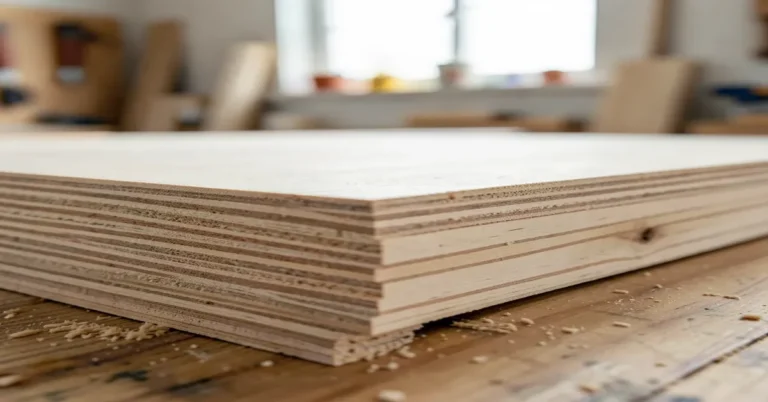
Quarter-inch plywood is the standard drawer bottom for small and medium drawers, but advice shifts to 3/8 or 1/2 inch somewhere around 22 inches wide, and the reason is arithmetic: sag grows with the fourth power of the span but falls only with the cube of thickness. This guide covers bottom thickness by drawer width, nominal versus actual thickness, groove placement, whether to glue the bottom in, and how plywood compares with hardboard and MDF.
Drawer Bottom Thickness by Drawer Width
Best Quarter-Inch Drawer Bottom Stock
 |
Woodpeckers Baltic Birch Plywood 24 x 36 x 1/4 Inch, Pack of 2: $64.03 Two 6 mm B/BB Baltic birch panels, each large enough to yield several bottoms for drawers up to the roughly 22-inch width where the table below says 1/4 inch is still a reasonable choice.
|
As an Amazon Associate we earn from qualifying purchases.
There is no building code for drawer bottoms, so every number below is working guidance drawn from published builder advice, not a standard. The anchor points are specific. A Woodsmith article on drawer construction calls 1/4 inch hardboard or plywood the most common drawer bottom, moves heavier loads to plywood, and uses 1/2 inch plywood for a large drawer 36 inches wide by 20 inches deep. In a Fine Woodworking forum thread, Andy Rae says 1/4 inch bottoms sound tinny and recommends 3/8 or 1/2 inch plywood for a 22-1/4 inch wide drawer.
| Drawer width | Starting thickness | What backs it up |
|---|---|---|
| Under about 15 inches | 1/4 inch (6 mm) plywood, Baltic birch preferred | Woodsmith: 1/4 inch is the common choice; hardboard works only for small, light drawers |
| 15 to 22 inches | 1/4 inch Baltic birch for light loads; 3/8 inch for tools or cookware | Judgment from the sag table below; Rae reports tinny, flexy 1/4 inch bottoms at 22 inches |
| 22 to 30 inches | 3/8 inch plywood | Rae suggests 3/8 or 1/2 inch at 22-1/4 inches wide |
| 30 to 36 inches | 1/2 inch plywood, or 3/8 inch plus a center stiffener | Woodsmith uses 1/2 inch at 36 inches wide |
| Over 36 inches, or very heavy loads | 1/2 inch plywood plus a center stiffener or laminated second layer | Woodsmith: extra layer glued on, or a hardwood strip glued down the center, front to back |
Treat the thresholds as starting points. A 20-inch drawer of cast-iron skillets is harder on its bottom than a 26-inch drawer of linens, so load decides as much as width does.
Why Width Matters More Than Thickness: The Sag Math
Most guides give a thickness per drawer type. The better question is how far the panel has to reach between its grooves. For a strip of plywood under an evenly spread load, standard beam bending says deflection scales with span to the fourth power and with thickness to the third power. We turned that into a relative index, with a 12 inch wide drawer in 1/4 inch plywood set to 1.0. Higher means more sag for the same load per square inch.
| Drawer width | 1/4 inch | 3/8 inch | 1/2 inch |
|---|---|---|---|
| 12 inches | 1.0 | 0.3 | 0.1 |
| 18 inches | 5.1 | 1.5 | 0.6 |
| 24 inches | 16.0 | 4.7 | 2.0 |
| 30 inches | 39.1 | 11.6 | 4.9 |
| 36 inches | 81.0 | 24.0 | 10.1 |
This is a computed ranking, not a measured deflection. It assumes the same material, the same load per square inch and a simple strip. A panel captured on four sides is stiffer than the strip model, so real sag will be lower, but the ratios between cells are what matter. Three practical readings:
- Each thickness step buys about 6 inches of width. A 1/4 inch bottom at 18 inches (5.1), a 3/8 inch bottom at 24 inches (4.7) and a 1/2 inch bottom at 30 inches (4.9) all sag about the same. If you are happy with 1/4 inch at 18 inches, expect similar behavior from 3/8 inch at 24.
- Doubling the width is brutal. A 24 inch drawer in 1/4 inch plywood sags 16 times as much as a 12 inch drawer, and swapping to 1/2 inch only brings it back to 2.0.
- Laminating beats stacking. Because stiffness follows thickness cubed, two 1/4 inch layers glued face to face act like a panel much closer to 1/2 inch, while two unglued layers only double the stiffness. That is why gluing a second layer on, as Woodsmith suggests, works.
The model also ignores material. MDF, hardboard, softwood plywood and Baltic birch all have different stiffness, so each would shift the whole table up or down. We have not published numbers for that because we did not find a source that measured them.
Nominal vs Actual Thickness: Measure Before You Cut the Groove
Plywood is sold by nominal thickness and the real panel is often a bit thinner. Our plywood types and grades guide gives the familiar example of 3/4 inch sheets running about 23/32 inch and 1/2 inch sheets about 15/32 inch. Baltic birch follows metric sizing: the listing above sells its panels as 1/4 inch or 6 mm, and true 1/2 inch Baltic birch is 12 mm, a touch under US 1/2 inch plywood.
That matters for drawer bottoms. The groove has to match what your calipers read, not what the label says, or the panel rattles in a loose groove or has to be forced into a tight one. If you are choosing the box stock as well, our guide to what wood to use for drawer boxes covers sides, joinery and species so this page can stay on the bottom panel.
Groove Placement: Where the Bottom Sits in the Box
Rae’s advice in that Fine Woodworking thread is to place the groove 1/2 inch above the bottom edge of the drawer box, and that is also the neighborhood undermount hardware wants. Blum TANDEM-type slides call for the underside of the bottom recessed 13 mm (1/2 inch) from the bottom edge of the sides, the number we walk through in our Blum undermount drawer slide measuring guide. If you plan to use those slides, set the groove height from the slide maker’s sheet before you pick any bottom thickness.
- Groove width equals measured panel thickness, with just enough clearance that the panel slides in dry.
- Thicker bottoms eat more of the side. A 1/2 inch panel in a groove 1/2 inch from the edge leaves very little side wood below the groove, so very thick bottoms are often rabbeted or the sides are made taller.
- Run the face grain along the longer span when you can. Plywood is stiffest along its face grain, as our plywood guide explains, so orient the panel so the stiff direction carries the widest unsupported distance.
Should You Glue the Bottom Into the Groove?
The usual advice, repeated on many pages including earlier versions of this one, is that a drawer bottom must float in its groove and never be glued. That rule is correct for a solid wood bottom, which swells and shrinks across its width and will split the box if it is pinned. It is much less true for plywood, whose cross-laminated plies barely move.
In the Fine Woodworking thread, Andy Rae recommends gluing the bottom in, saying it noticeably strengthens the corner joints of the drawer. His one caveat is repairs: a glued bottom that has to be replaced can mean building a new drawer. Builders on other forum threads make the same point about plywood not expanding and contracting like solid wood.
| Bottom material | Glue it in? | Reason |
|---|---|---|
| Solid wood panel | No, let it float | It moves with humidity and will crack the sides if restrained |
| Plywood, drawer you will not rebuild | Yes is a reasonable choice | Adds racking strength at the corners per Rae; plywood barely moves |
| Plywood, drawer you may need to repair | Optional: skip glue | Keeps a path to replacing a damaged bottom |
| MDF or hardboard | Judgment call | Both can swell if they get wet, so keep them dry or choose plywood |
We would not call either approach wrong for plywood. Decide whether you value the extra rigidity or the easy repair, and never glue a solid wood panel.
Plywood vs Hardboard vs MDF for Drawer Bottoms
Woodsmith lists 1/4 inch hardboard or plywood as the most common drawer bottoms and reserves plywood for heavier loads. Builders in drawer-bottom forum threads report that hardboard bows under any real weight and that old hardboard bottoms rarely stay flat, while 1/4 inch MDF gets used regularly and works for many of them. The table below ranks the options for drawer use. It is qualitative on purpose.
| Material | Sag behavior | Moisture | Best use |
|---|---|---|---|
| Baltic birch plywood | Best of the group per Woodsmith and forum builders | Good | Kitchen, bathroom, tools, any wide drawer |
| Hardwood or birch-faced plywood | Good, varies with core quality | Good | Furniture drawers, clothing, general use |
| Softwood plywood | Adequate, more core voids | Moderate | Shop and garage drawers |
| MDF | Used at 1/4 inch by many builders, heavy | Swells when wet | Dry rooms, small to medium drawers |
| Hardboard | Reported to bow with weight | Weak when wet | Small light drawers, hidden storage |
Cut MDF and plywood outdoors or with dust collection and a respirator. The dust from both is fine and unpleasant to breathe, and MDF is the worse of the two.
How to Cut and Install a Plywood Drawer Bottom
- Measure the groove opening: Measure between the grooves in the sides and between the front and back grooves with the box dry-fitted, not the outside dimensions.
- Check the panel thickness: Read the actual plywood with calipers and size the groove to match.
- Cut the panel to size: Cut it so it fits the grooves with a small gap, using a table saw fence or a straightedge guide, and keep your hands clear of the blade.
- Dry-fit the box: Slide the bottom into the side and front grooves, close in the back, and confirm the box is square with the bottom in place.
- Decide on glue: Glue a plywood bottom in for extra racking strength, or leave it loose if you want easy replacement; never glue a solid wood panel.
- Stiffen a wide bottom: For widths past about 30 inches, glue a hardwood strip down the center from front to back or laminate a second layer on.
Our guide to getting plywood cut to size helps if you would rather have the panels cut for you.
Common Mistakes With Drawer Bottoms
- Choosing by drawer type instead of width and load. A narrow kitchen drawer and a wide dresser drawer need different panels even if both hold similar weight.
- Cutting the groove for nominal thickness. Measure first; plywood is often under its label size.
- Gluing a solid wood bottom. It will move with humidity and crack the box. Plywood is the exception.
- Ignoring slide hardware. Undermount slides specify where the bottom sits, so set the groove height from the slide sheet.
- Using hardboard in a heavy drawer. It bows under weight, and a wide span makes it worse.
Frequently Asked Questions
What thickness of plywood is best for drawer bottoms?
1/4 inch is the common choice for small and medium drawers, and 3/8 inch is a good all-round step up from roughly 22 inches wide or for tools and cookware. Use 1/2 inch for wide or heavy drawers. Width and load decide it, and no code sets a rule, so treat these as builder guidance.
Is 1/4 inch plywood strong enough for a drawer bottom?
Yes for small and medium drawers with light loads, especially multi-ply Baltic birch. Andy Rae notes it will hold the contents but sounds tinny and flexes in a wide drawer, and recommends 3/8 or 1/2 inch plywood for a drawer about 22 inches wide.
Can I use MDF or hardboard for drawer bottoms?
They are used, but plywood handles weight better. Woodsmith calls 1/4 inch hardboard or plywood the most common bottoms and uses plywood for heavier loads, while builders report hardboard bows under weight. Keep MDF and hardboard dry, since both are weak when wet.
Should a drawer bottom be glued into its groove?
Never glue a solid wood bottom, because it moves with humidity. A plywood bottom barely moves, and Andy Rae recommends gluing it in to strengthen the drawer corners, with the tradeoff that a damaged bottom is harder to replace.
How high above the bottom edge should the groove be?
About 1/2 inch is the standard groove position per Andy Rae, and Blum TANDEM-type undermount slides call for the bottom recessed 13 mm (1/2 inch) from the bottom edge of the sides. Check the slide maker’s sheet before cutting.
Conclusion
Pick the bottom by width and load: 1/4 inch Baltic birch for small drawers, 3/8 inch from about 22 inches, and 1/2 inch with a center stiffener for wide or heavy ones. Measure the real thickness, put the groove where your slides need it, and glue plywood bottoms only if you will not need to replace them. For the rest of the box, see what wood to use for drawer boxes.
Sponsored / affiliate links. As an Amazon Associate I earn from qualifying purchases. I may earn additional commission from eligible campaigns.
 Baltic Birch Plywood Sheets Box of 45 - Laser Engraving Cutting, Scroll Saw Nature Veneer Color, Stronger Than Basswood, A/A Grade,12 x 12 x 1/8”, 3mm Thickness Perfect for Wood Burning
 Double Side Plywood Sheets 4mm or 5mm for Painting Stenciling Wood Burning and Decoration 150x220mm 220x300mm 300x450mm Art Project Wood