What Happens to Cedar As It Ages: Stunning Longevity
Cedar’s aging process reveals remarkable longevity, transforming gracefully with a beautiful patina while retaining its natural resistance to decay and insects. Properly maintained, aged cedar offers enduring beauty and structural integrity for decades, making it a wise choice for many projects.
Have you ever wondered what happens to beautiful cedar wood as time passes? Seeing an old cedar fence or deck can sometimes lead to questions about its durability. Many beginners worry that wood naturally degrades and loses its charm. But with cedar, aging is a wonderfully different story. It’s a wood known for its incredible resilience and good looks that tend to improve with age, not diminish. Don’t let the thought of aging wood intimidate you. Cedar is remarkably forgiving and we’ll explore exactly why it lasts so long and how it changes. By the end of this guide, you’ll gain confidence in choosing and working with cedar, understanding its unique aging process. Let’s dive in and discover the secrets behind cedar’s stunning longevity!
Cedar’s Natural Gifts: Why It Ages So Well
Cedar wood isn’t just beautiful; it’s a powerhouse of natural defense. This is the core reason why it ages so gracefully and lasts for so long. Think of cedar as having its own built-in protection system, designed by nature itself. These natural qualities are what set it apart from many other woods.
The Magic of Natural Oils
Cedar trees produce natural oils and extractives. These oils are like cedar’s personal bodyguard. They have a distinctive, pleasant aroma, which is a bonus for us! More importantly, these oils are naturally resistant to two major wood enemies: fungi (which cause rot and decay) and insects (like termites and wood-boring beetles).
As cedar wood ages, these oils can slowly release, continuing their protective work. This means that even as the wood weathers, it’s still actively fighting off the things that would cause other woods to break down. This slow, steady protection is key to cedar’s long lifespan.
Aromatic Protection
That wonderful cedar scent? It’s not just for your closet! The aromatic compounds in cedar, particularly thujaplicins and other extractives, act as natural repellents. This isn’t just a myth; scientific research backs this up. For example, studies on cedar’s insect-repelling properties highlight its natural defenses. This natural insect resistance means fewer structural damages from pests, a significant factor in its longevity.
Dimensional Stability
Cedar is known for being quite stable. This means it doesn’t swell or shrink much with changes in humidity. For a DIYer, this is fantastic news! Wood that moves a lot can warp, crack, or pull fasteners loose over time. Cedar’s stability means your cedar projects are likely to stay true to their shape for years, contributing to their lasting appearance and function.
How Cedar Changes: The Aging Process Unveiled
So, cedar is naturally tough. But what does “aging” actually look like on this wood? It’s not about looking old and worn out in a bad way; it’s about a beautiful transformation. Mostly, cedar changes color.
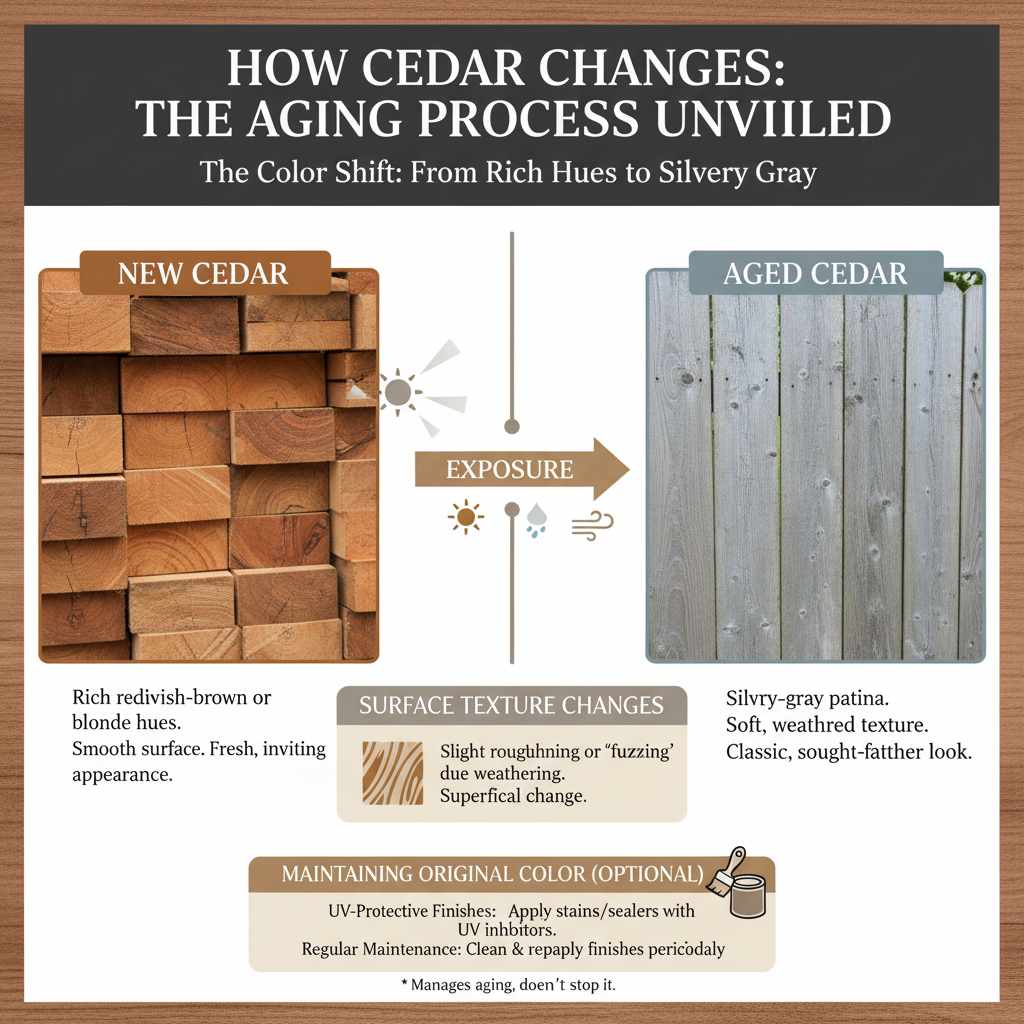
The Color Shift: From Rich Hues to Silvery Gray
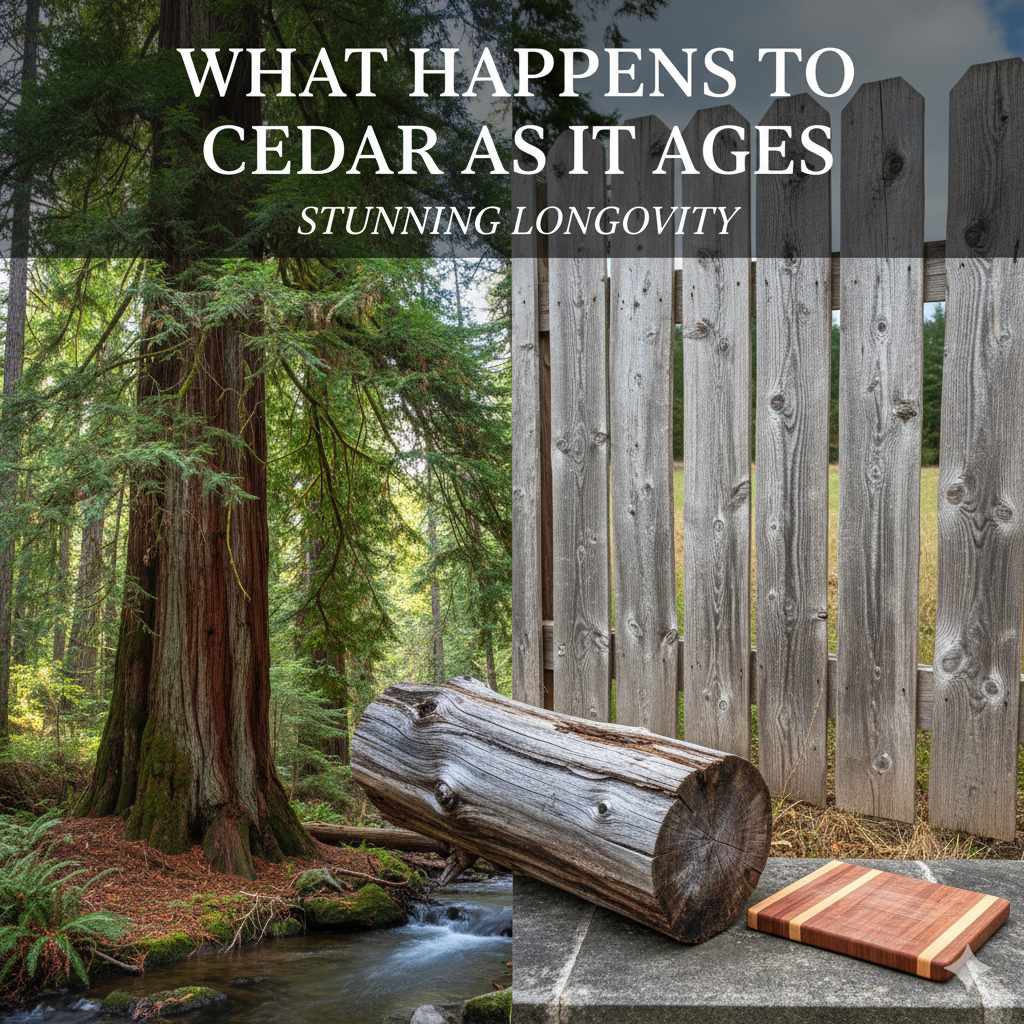
When cedar is first installed, especially woods like Western Red Cedar or Eastern White Cedar, it often has a beautiful reddish-brown or blonde hue. This color is rich and inviting. However, exposure to sunlight (UV rays) and the elements will begin to gracefully alter this hue.
Over time, typically after a few months to a couple of years depending on exposure, the surface layers of the wood will oxidize. This oxidation process, caused by UV light, bleaches out the pigments responsible for the original color. The result is a beautiful, soft, silvery-gray patina. This is the classic “aged cedar” look that many people love. It’s often seen on fences, siding, and furniture left untreated in the sun.
Surface Texture Changes
While the color changes, the surface texture also undergoes a subtle shift. The outer, exposed layers of the wood can become slightly less smooth over time. This is a natural weathering process. Occasionally, a fine fuzz or slight roughening might occur. This is usually superficial and doesn’t compromise the structural integrity of the wood underneath.
Maintaining the Original Color (If You Choose To)
While the gray patina is sought after, you can preserve the original warm tones of cedar if you prefer. This involves using protective finishes.
- UV-Protective Finishes: Applying stains or sealers that contain UV inhibitors can significantly slow down the graying process.
- Regular Maintenance: Cleaning the wood periodically and reapplying finishes as needed will help maintain its original look.
It’s important to remember that even with these measures, some subtle changes will occur. The goal is to manage the aging process, not stop it entirely.
What Happens to Cedar When Exposed to Water?
Water is a major challenge for most wood. But cedar’s internal defenses make it surprisingly good at handling moisture, though it’s not entirely immune.
Resistance to Rot and Decay
The natural oils and tannins in cedar are excellent at resisting the fungal growth that leads to rot. Even when exposed repeatedly to rain or damp conditions, the wood is less likely to decay compared to its less-resilient counterparts like pine or fir. This is why cedar is a top choice for outdoor projects like decks, fences, and outdoor furniture.
Surface Mold and Mildew
While cedar resists rot deep within the wood, the surface can still be susceptible to mold and mildew, especially in consistently damp or shaded areas. This appears as greenish or blackish spots on the surface. This is typically a cosmetic issue and doesn’t mean the wood is rotting. Regular cleaning can usually remove it.
Needs for Proper Drainage and Ventilation
Even with its natural resilience, good building practices are crucial for cedar’s longevity.
- Drainage: Ensure water can drain away from cedar structures. For example, decks should have slopes, and post bases should be elevated off the ground.
- Ventilation: Allow air to circulate around cedar components. This helps the wood dry out after getting wet, reducing the time it’s prone to surface mold.
Here’s a handy tip: Always aim to leave a gap between wood and any material that holds moisture, like soil or concrete. This simple step dramatically increases lifespan.
Cedar vs. Other Woods: A Longevity Comparison
To truly appreciate cedar’s aging process, it helps to see how it stacks up against other common building woods.
Cedar’s Advantages
When we talk about longevity and aging, cedar shines due to:
- Inherent Rot and Insect Resistance: This is its superpower, meaning it requires less chemical treatment and lasts longer outdoors.
- Dimensional Stability: Less warping and cracking means your project holds its shape better over time.
- Beautiful Aging: The natural silver-gray patina is a desirable aesthetic for many.
- Natural Aroma: A pleasant, organic scent that’s non-toxic.
Comparison Table: Cedar vs. Other Woods
Let’s look at common woods side-by-side:
| Wood Type | Natural Rot & Insect Resistance | Dimensional Stability | Aging Appearance (Untreated) | Typical Lifespan (Outdoor Use) |
|---|---|---|---|---|
| Cedar (e.g., Western Red) | Very High | High | Silvery-Gray Patina | 20-30+ years |
| Redwood | Very High | High | Silvery-Gray Patina | 20-30+ years |
| Pressure-Treated Pine | Moderate (from treatment) | Moderate | Can fade, may show treatment marks | 15-25 years |
| Douglas Fir | Low | Moderate | Turns gray, prone to rot without treatment | 5-15 years (untreated) |
| White Oak | Moderate to High | Moderate | Turns gray, durable but can check | 15-25 years |
As you can see, cedar (along with redwood) holds its own, often outperforming woods that require chemical treatments for durability. The key difference is that cedar’s resistance is natural, requiring no harsh chemicals for this benefit.
Working with Aged Cedar: What to Expect
If you’re doing a DIY project and using pre-aged cedar or letting new cedar age, here’s what you might encounter and how to handle it.
Sourcing Aged Cedar
Sometimes, you can find reclaimed cedar. This wood has already been through its initial weathering phase and has that beautiful gray look. Reclaimed wood can add character and is an eco-friendly choice. However, always inspect it carefully for nails, damage, or signs of rot that might have occurred despite its age.
Preparing Aged Cedar for Projects
If you’re using cedar that has already turned gray outdoors:
- Clean Thoroughly: Use a stiff brush and a mild detergent or a dedicated wood cleaner to remove dirt, mildew, and any loose debris. A pressure washer on a low setting can also work, but be cautious not to damage the wood fibers.
- Rinse Well: Make sure all cleaning solutions are rinsed off.
- Allow to Dry: Let the wood dry completely before proceeding with any finishing or installation.
Finishing Aged Cedar
Most people who opt for aged cedar’s look are happy to leave it unfinished. It’s low maintenance and beautiful. However, if you want to:
- Maintain Gray Tones: Use a penetrating sealer that offers UV protection without adding color. These products will help prevent further weathering and staining while maintaining the gray appearance.
- Enhance the Gray: Some specialized stains mimic the look of aged wood and can be applied to new cedar for an instant patina.
- Prevent Surface Issues: A clear water-repellent sealer can help reduce water absorption and slow down the growth of mold and mildew on the surface.
When applying any finish, always follow the manufacturer’s instructions. Test on a scrap piece first to ensure you like the effect.
DIY Projects Where Cedar’s Longevity Shines
Cedar’s natural resilience and beautiful aging make it perfect for many outdoor and even indoor projects.
Outdoor Applications
These are where cedar truly proves its worth:
- Fencing: Cedar fences maintain their good looks and structural integrity for decades, resisting rot from direct ground contact much better than most woods.
- Decking: A cedar deck ages into a beautiful gray, offering a warm, natural look that’s also durable and resistant to insects.
- Siding: Cedar shingles or clapboard siding offer both a classic aesthetic and robust protection for your home’s exterior.
- Pergolas and Trellises: These structures are constantly exposed to the elements, and cedar’s natural defenses make it an ideal, long-lasting choice.
- Outdoor Furniture: Cedar chairs, benches, and tables are popular for their ability to withstand sun, rain, and temperature changes while remaining comfortable and attractive.
Indoor Uses (Where Moisture is a Factor)
While less common, cedar can be used indoors where its properties are beneficial:
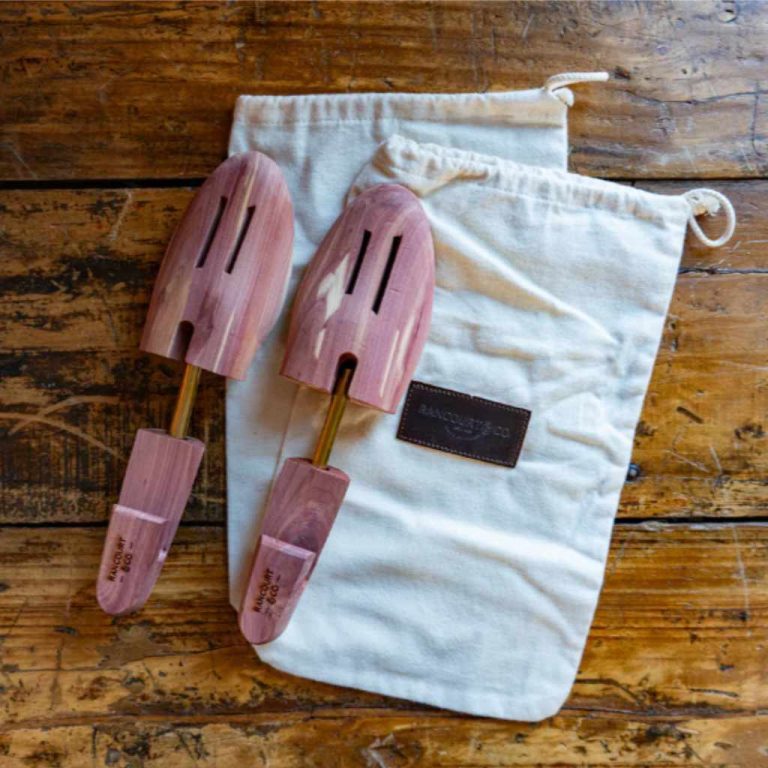
- Closet Paneling: The natural aroma of cedar is a well-known moth repellent, making it perfect for closet linings. As it ages, the scent may lessen but the panels themselves remain stable.
- Saunas: Cedar is a popular material for sauna interiors due to its moisture resistance and pleasant scent. It holds up well to the heat and humidity.
Maintaining Cedar for Maximum Lifespan
While cedar is naturally long-lasting, a little maintenance goes a long way to ensure it looks its best and lasts even longer.
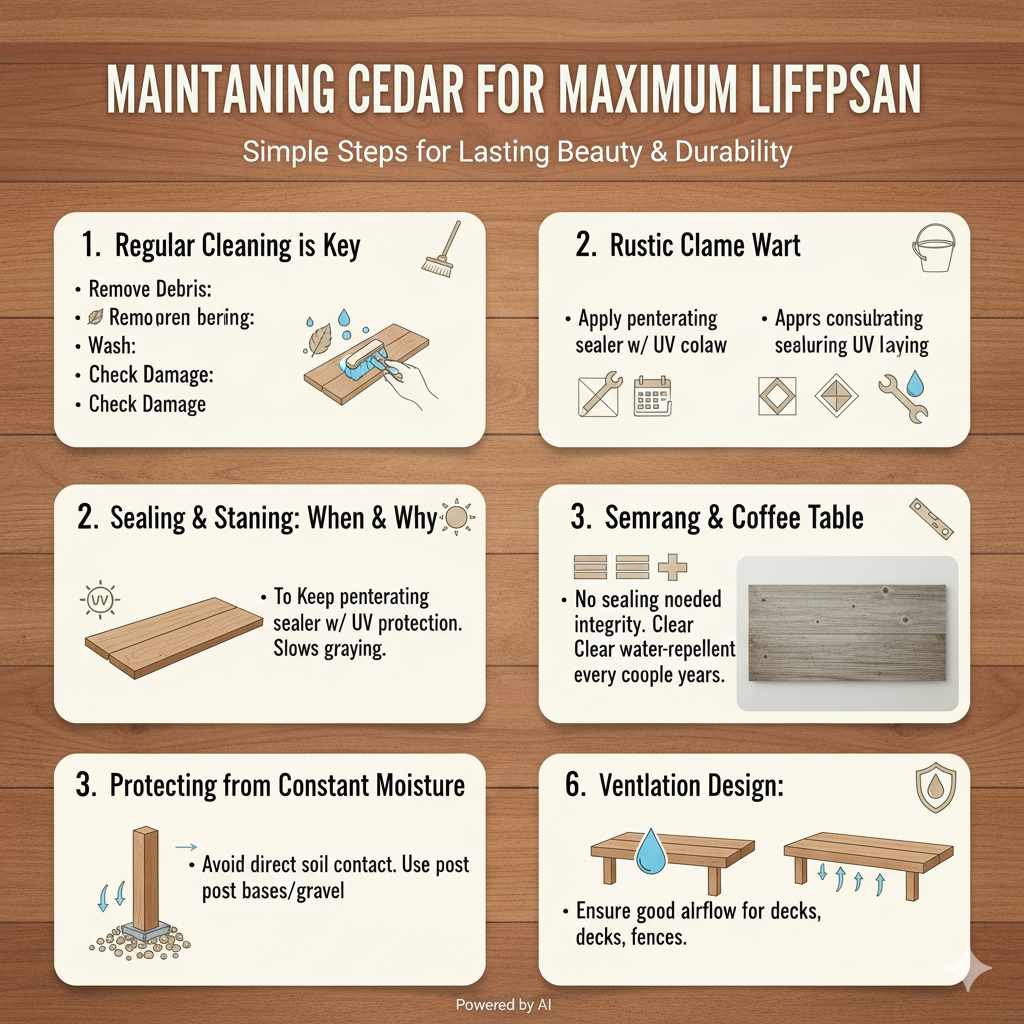
Regular Cleaning is Key
At least once a year, give your cedar projects a good cleaning.
- Remove Debris: Sweep or blow away leaves, dirt, and other organic matter. Trapped debris holds moisture and can encourage mold growth.
- Wash: Use a soft brush and a mild soap or a wood cleaner. For stubborn stains or mildew, a solution of vinegar and water can be effective, or you can find specialized wood cleaners at most hardware stores.
- Rinse: Thoroughly rinse all cleaning solutions from the wood.
- Check for Damage: While cleaning, look for any loose boards, nails, or signs of excessive wear.
This routine cleaning prevents the buildup of grime that can dull its appearance and potentially lead to surface issues.
Sealing and Staining: When and Why
Deciding whether to seal or stain depends on the look you want:
- To Keep Natural Color: Apply a penetrating stain or sealer with UV protection annually or bi-annually. This will slow down the graying process and protect the wood.
- To Embrace the Gray: No sealing or staining is necessary. You can apply a clear water-repellent sealer every couple of years if you want to reduce water absorption, but it’s not essential for the wood’s structural integrity.
Always ensure the wood is completely dry before applying any finish. For guidance on finishes that work well with cedar, you can consult resources from organizations like the U.S. Forest Products Laboratory, which provides extensive research on wood preservation and performance.
Protecting from Constant Moisture
Even cedar can struggle if it’s constantly wet.
- Ground Contact: Avoid direct contact with soil if possible. Use post bases or gravel to keep wood elevated.
- Ventilation: Ensure good airflow around decks, fences, and siding.
Proper installation and design are your first lines of defense against excessive moisture.
Frequently Asked Questions about Aging Cedar
Will my cedar deck turn gray?
Yes, if left untreated, cedar exposed to sunlight and the elements will naturally turn a beautiful silvery-gray color over time. This is a normal aging process.
Does cedar rot?
Cedar has a very high natural resistance to rot and decay due to its natural oils and extractives. While the surface can sometimes develop mold or mildew in damp conditions, the wood itself is unlikely to rot structurally for many years.
How long does cedar last outdoors?
With proper installation and minimal maintenance, cedar can last 20 to 30 years or even longer outdoors. Its durability is one of its most significant selling points.
Should I seal or stain my cedar fence?
It’s a personal choice. If you want to preserve the original reddish-brown or blonde color, you should use a UV-blocking stain or sealer. If you prefer the natural graying process, you can leave it unfinished or use just a clear water-repellent sealer annually.
Can I paint cedar?
Yes, cedar can be painted. However, it’s often considered a waste of cedar’s natural beauty. If you choose to paint, ensure the wood is clean, dry, and well-primed. For best results and longevity, use high-quality exterior paint and follow proper preparation steps.
How do I clean mold or mildew off aged cedar?
You can typically clean mold and mildew off cedar by gently scrubbing with a solution of mild soap and water, or a mixture of one part bleach to three parts water. Always rinse thoroughly afterward and ensure the wood dries completely. A cleaner specifically designed for wood can also be effective.
What is the difference between untreated cedar and pressure-treated wood?
Untreated cedar relies on its natural oils for resistance to rot and insects. Pressure-treated wood has been chemically infused to achieve similar resistance. Cedar’s natural protection is often preferred for its non-toxic nature and aesthetic aging, while pressure-treated wood is generally more budget-friendly but relies on chemicals.
Conclusion: Embracing Cedar’s Enduring Charm
As we’ve explored, what happens to cedar as it ages is a testament to nature’s remarkable design. It doesn’t just endure time; it transforms with it, developing a distinguished silvery-gray patina that many find even more beautiful than its original hue. Its inherent resistance to rot and insects, combined with its dimensional stability, means that those beautiful outdoor decks, fences, and siding continue to serve and look good for decades. This longevity isn’t magic; it’s a result of the natural oils and compounds within the wood, offering protection without artificial treatment. For any DIY enthusiast or homeowner looking for a material that offers both robust performance and timeless aesthetics, cedar is an outstanding choice. Understanding its aging process empowers you to make informed decisions, whether you choose to embrace its natural transformation or preserve its original color.
By following simple maintenance steps like regular cleaning and considering a protective finish if desired, you can ensure your cedar projects will be a source of pride and beauty for years, even generations, to come. So, the next time you see an aged cedar structure, appreciate not just its history, but its incredible, enduring quality. It’s a wood that truly ages like fine wine, gaining character and strength as it stands the test of time.