Cedar Slab Project Ideas: 7 Builds That Suit Soft Wood
A cedar slab is one of the most forgiving ways to start with live-edge work: it is light, it smells good, and it is cheap compared with walnut or maple. It is also one of the softest woods you can build furniture from, and that changes which projects work. This guide covers seven cedar slab projects that suit the wood, the numbers that decide whether a slab is worth buying, and the finishing and safety details that most project lists skip.
Cedar Slab Basics: What Soft Wood Changes
Best Legs for a Slab Coffee Table
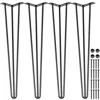 |
VEVOR 16″ Hairpin Table Legs, Set of 4 – $23.90 The quickest way to turn a dry cedar slab into a coffee table: bolt-on steel legs that keep the slab itself as the star.
|
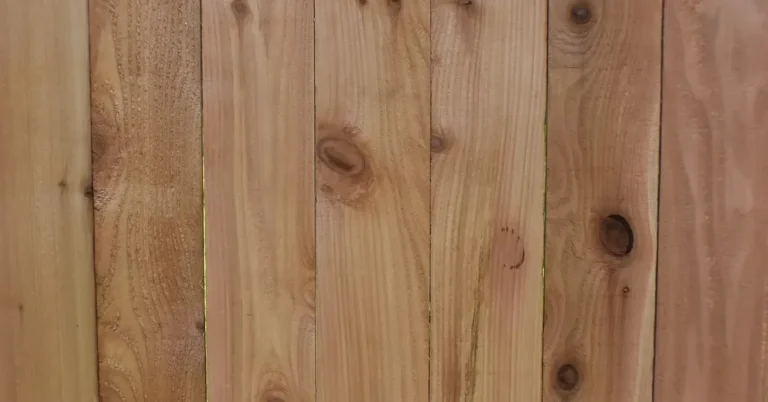
Most “cedar” slabs sold in the US are western red cedar, eastern red cedar (technically a juniper), or incense cedar. Western red is pale to reddish brown, light and straight-grained. Eastern red cedar has pink to red heartwood with white sapwood and lots of knots. Spanish cedar is a different genus altogether and is not covered here.
The table below uses published USDA Forest Products Laboratory values, and it is the quickest way to see why a cedar top behaves differently from an oak or maple one.
| Species | Janka hardness (lbf) | Air-dry weight (lb per cubic foot) | Volumetric shrinkage, green to dry |
|---|---|---|---|
| Western red cedar | 350 | about 23 | 6.8% |
| Eastern red cedar | 900 | about 33 | 12.1% |
| Red oak (for comparison) | 1,290 | about 44 | 13.7% |
| Hard maple (for comparison) | 1,450 | about 44 | 14.7% |
Three practical results follow. First, western red cedar dents easily, so it suits low-impact surfaces. Second, it shrinks about half as much as oak, which is why cedar slabs tend to stay flatter once they are dry. Third, western red is only about 60 percent as stiff as red oak, so a cedar shelf sags sooner than an oak shelf of the same size.
Weigh the slab before you plan the base
Cedar is light, but a big slab is not weightless. Volume in cubic feet is length times width times thickness in inches, divided by 1,728. Multiply by the weight per cubic foot from the table.
| Slab size (L x W x T) | Western red cedar | Eastern red cedar |
|---|---|---|
| 36 x 12 x 1.5 in (shelf or bench) | about 9 lb | about 12 lb |
| 48 x 14 x 2 in (console or bench) | about 18 lb | about 26 lb |
| 42 x 20 x 2 in (coffee table) | about 22 lb | about 32 lb |
Those are dry weights. A slab that is still wet can weigh half again as much, which matters for wall mounting and for lifting it onto a base alone.
Check the slab before you buy it
- Moisture: ask for a meter reading. Indoor projects want roughly 6 to 9 percent. Air-dried slabs need about a year per inch of thickness.
- Flatness: lay a straightedge across it. Cedar cups less than many species, but a slab thinner than about 1.5 inches after flattening is prone to flex.
- Sapwood versus heartwood: only heartwood resists decay. If the slab is for outdoors, look at how much of the width is white sapwood.
- Bark and live edge: loose bark hides insect galleries and will flake off. Peel it, check for active boring, and decide whether to keep a clean live edge or bevel it.
- Knots and checks: tight knots are part of the look, but through-checks will keep opening unless you brace them with butterfly keys.
Cedar Slab Project Ideas That Suit Soft Wood
These seven are ordered roughly from the easiest fit for cedar to the ones that need extra care. Difficulty is relative to a beginner with a circular saw, sander and drill.
1. Slab coffee table
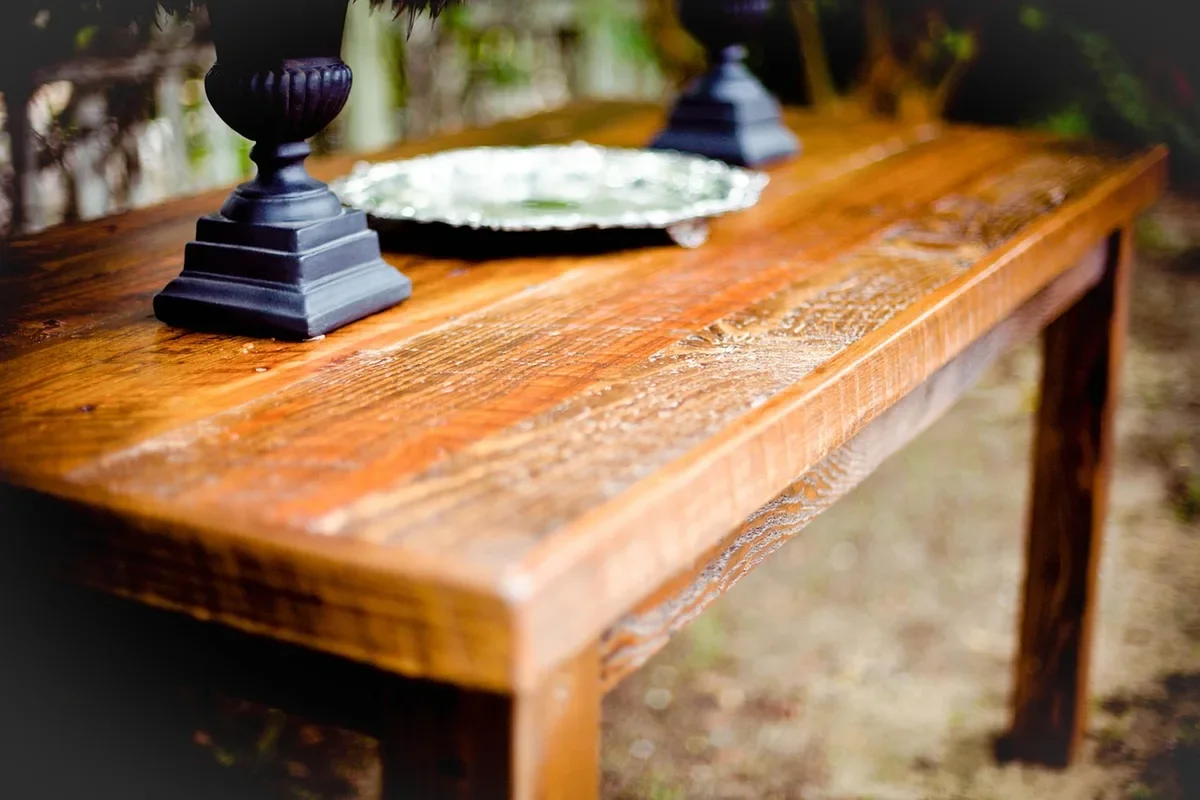
This is the classic first slab project. Flatten the top, ease the edges, sand to 180 or 220 grit, and screw on steel legs through the mounting plates. Because cedar dents, finish it with a hard film such as waterborne polyurethane or a hardwax oil rather than a plain penetrating oil, and use coasters. Keep the slab at least 1.5 inches thick and choose a leg style with a wide mounting plate so the screws have plenty of wood to bite into. Hairpin legs 16 inches tall give a standard coffee table height.
2. Entryway console or bench
A 48 inch slab on two steel or wood slab-style legs makes a console table that never carries much weight. For a shoe bench, go thicker (2 inches) and set the legs in from the ends, because a soft top will deflect under someone sitting on it. Keep the span between supports short, and add a center support if the bench is longer than about 40 inches.
3. Floating shelf or mantel
Cedar’s light weight is an advantage on a wall. A 36 x 12 x 1.5 inch shelf is only about 9 pounds. Because western red cedar is roughly 60 percent as stiff as oak, keep loaded spans short: a bracket or hidden rod every 24 inches or so if it holds books, and go thicker for a mantel. Hidden steel rods epoxied into drilled holes in the back edge give a clean look. See our guide to the wood French cleat for a mounting method that spreads load across studs.
4. Bedside or end table
A 16 x 16 inch slab section on a simple base is a low-stress project, and it gets less abuse than a coffee table. If you use eastern red cedar, expect the knots to be the feature. Fill open knot holes with clear or tinted epoxy, taping the underside first so the resin stays put, and pour in thin layers within the maximum depth given by the epoxy maker.
5. Outdoor bench or plant stand
This is where cedar actually earns its reputation. Heartwood resists decay and insects well enough for porches and patios, and the light weight makes benches easy to move. Keep the slab off the ground on stone or metal feet, seal the end grain, and avoid spots where water can pool. The full story on lifespan is in our article on whether cedar wood rots. Unfinished cedar weathers to silver gray within a year or so, which many people like; a UV-blocking finish keeps the warm color longer.
6. Wall art or headboard
A slab hung on the wall carries no load, which makes it the safest use of a thin or checked piece. A 4 foot, 2 inch thick western red cedar slab about 14 inches wide is only around 18 pounds. Mount it with a French cleat screwed into studs rather than hanging it from picture wire, and add a few butterfly keys as accents over any checks.
7. Serving or charcuterie board
Small offcuts turn into serving boards, but I would keep cedar off the chopping block. It is soft, it scars quickly under a knife, and it is resinous. Use a dry, untreated piece, sand it to 220 grit, and finish it with a food-safe mineral oil or a mineral oil and beeswax blend. If you are curious how oil changes the color, our piece on mineral oil and wood color explains it.
Working Cedar Slabs: Cutting, Flattening and Safety
Cutting and flattening
Cedar cuts easily but tears out at knots and along soft earlywood bands. Use a sharp fine-tooth blade, score the line with a knife, and cut with the good face down on a circular saw. Slabs wider than your planer are best flattened with a router sled: two rails, a bridge, and a straight bit taking shallow passes of about 1/8 inch. Cedar removes quickly, so leave the slab a little thicker than the final target and stop when both faces are flat.
Dust and health
This is the fact most project lists skip. Western red cedar dust is a recognized respiratory sensitizer and can cause occupational asthma in some woodworkers, and eastern red cedar dust irritates the eyes and airways. Wear a fitted respirator when sanding or routing, connect a vacuum or dust collector, and sand outdoors or in a ventilated shop.
Cracks and keys
Fill small checks with epoxy. For a check that runs across the slab’s width, cut a butterfly key (bowtie) from a harder wood such as walnut or oak, trace it, rout the recess, and glue it in. The grain of the key should run the same direction as the slab, or the two will pull against each other as humidity changes. Do not screw across a check.
Finishing Cedar Slabs
Cedar’s natural oils can slow the cure of oil-based finishes and interfere with adhesion, so wipe the surface with mineral spirits or denatured alcohol just before you finish, and let oil-based coats dry longer than the can suggests. Sand to 180 or 220 grit before the first coat.
| Finish | Best for | Trade-off on cedar |
|---|---|---|
| Waterborne polyurethane | Coffee tables, end tables, consoles | Hardest film of the group and easy to wipe clean, but it will not stop dents in soft wood and can look plastic if over-built |
| Hardwax oil | Interior tables, shelves | Easy to spot-repair, moderate protection, needs a periodic refresh |
| Penetrating oil (tung or Danish) | Interior pieces, serving boards | Warm look, little surface protection, slow to cure on resinous wood |
| Spar varnish or exterior oil with UV blockers | Outdoor benches and planters | Keeps color longer, must be renewed every year or two |
| Mineral oil or oil and beeswax | Serving boards | Food-safe but needs frequent reapplication |
For more on choosing sheen, see our comparison of matte and satin finishes, and for cedar-specific finishing steps read how to treat cedar wood properly. If you want the stain route, our guide on staining cedar covers it. Building something bigger from cedar? See our cedar wood chest guide.
A Myth Worth Correcting: Cedar Is Not Automatically Rot-Proof
Cedar is often described as naturally rot proof. Only the heartwood has the extractives that resist decay, and even heartwood loses that protection over years of constant wetness. A slab with a wide band of pale sapwood, left sitting on damp ground, can rot as readily as a pine board. For outdoor cedar slab projects, choose heartwood, keep it off the ground, and let the piece dry between rains.
FAQ: Cedar Slab Questions
Is cedar too soft for a table top?
Western red cedar rates about 350 lbf on the Janka hardness scale, roughly a quarter of red oak, so a cedar top will dent from keys, mugs and pet claws. It works for coffee tables, end tables and consoles that see light use if you pick a hard film finish and accept some patina. For a dining table or desk, choose a harder species.
How dry does a cedar slab need to be before I build with it?
For indoor furniture aim for roughly 6 to 9 percent moisture content, checked with a pin or pinless moisture meter. Air drying takes about a year per inch of thickness, and a slab that is still wet will keep cracking and cupping after you finish it.
Can I use a cedar slab outdoors?
Yes, heartwood is one of the better native choices because it resists decay, but sapwood does not, and any slab sitting on wet ground or trapping water will eventually rot. Keep it off the soil, seal the end grain, and expect untreated cedar to weather to silver gray.
Is cedar dust harmful?
Western red cedar dust is a known respiratory sensitizer and can trigger asthma in some people, and eastern red cedar dust irritates eyes and airways. Wear a respirator rated for fine dust when sanding or routing and use dust collection.
Is a cedar slab safe for a cutting board?
I would not use one as a chopping surface. It is soft enough to scar quickly and it is resinous. A dry, untreated piece finished with a food-safe oil is reasonable as a serving or charcuterie board.
How do I stop a cedar slab from cracking?
Start with a fully dried slab, seal the end grain right after cutting, and add butterfly keys across existing checks. Keep the finished piece away from heat vents and direct sun, which cause the fastest moisture swings.
Sponsored / affiliate links. As an Amazon Associate I earn from qualifying purchases. I may earn additional commission from eligible campaigns.