What Happens When You Burn MDF: Never Do It, Here’s Why
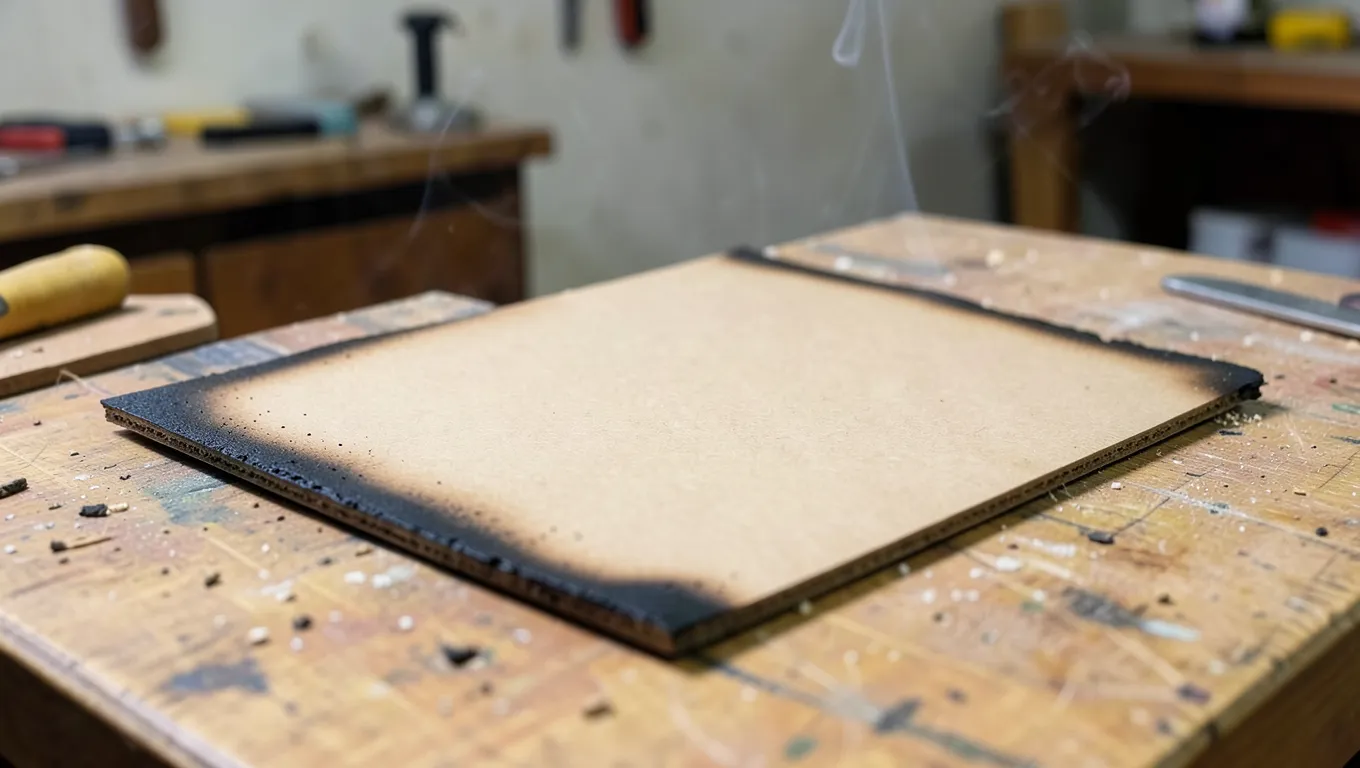
Never burn MDF, indoors or outdoors, intentionally or in a fireplace, wood stove, or fire pit. MDF is wood fiber bonded with urea-formaldehyde resin, and burning it releases free formaldehyde gas, carbon monoxide, fine particulate matter, and, because the resin contains nitrogen, potentially hydrogen cyanide and nitrogen oxides under incomplete combustion. This is not a “use ventilation and be careful” situation. There is no safe way to intentionally burn MDF, and no amount of precaution turns it into an acceptable fuel source.
Why MDF Is Dangerous to Burn
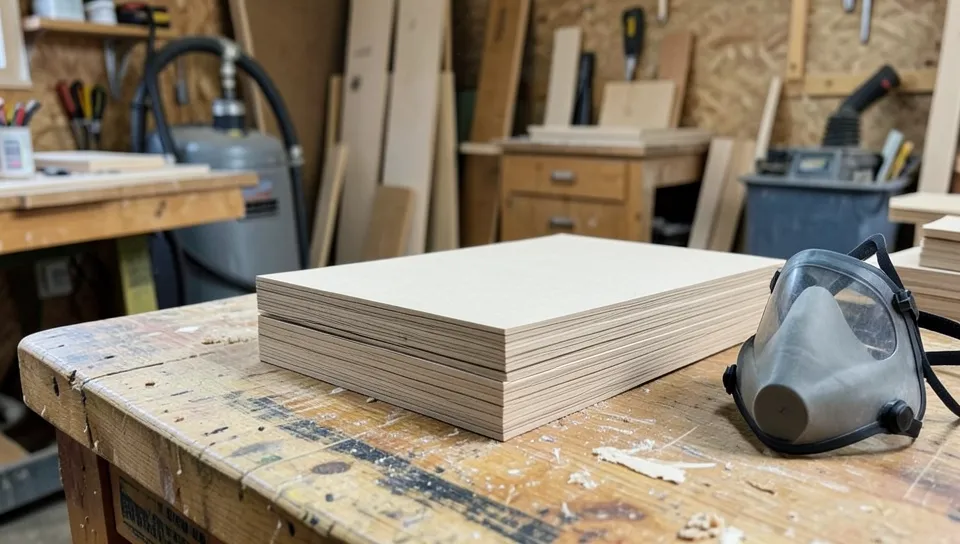
Best Respirator for Cutting and Sanding MDF
 |
3M OV/P100 Odor/Particulate Multipurpose Respirator 65021 – $32.67 This protects your lungs from MDF’s dust and resin off-gassing during normal cutting and sanding, which is a real, separate hazard from the combustion danger covered below.
|
Solid wood releases mostly water vapor, carbon dioxide, carbon monoxide, and particulate smoke when it burns. MDF releases all of that plus the byproducts of its resin binder breaking down under heat. The urea-formaldehyde adhesive that holds MDF’s wood fibers together decomposes and releases free formaldehyde gas, a substance the International Agency for Research on Cancer classifies as a known human carcinogen and which is acutely irritating to the eyes, throat, and lungs even at low airborne concentrations.
What’s Actually in the Smoke
- Formaldehyde gas – released as the resin binder breaks down, irritating to eyes and airways and classified as a human carcinogen with repeated exposure.
- Carbon monoxide – an odorless, colorless gas produced by any incomplete combustion, dangerous in enclosed or poorly ventilated spaces at concentrations too low to smell.
- Fine particulate matter – smoke particles small enough to lodge deep in lung tissue, more concentrated from engineered wood than from clean solid wood.
- Nitrogen byproducts – because urea-formaldehyde resin contains nitrogen, incomplete combustion can produce additional irritant and toxic nitrogen compounds beyond what burning plain wood produces.
If MDF Is Burning Accidentally (House Fire, Workshop Fire)
If MDF furniture, cabinetry, or scrap is involved in an accidental fire, treat it the same as any structure fire: evacuate immediately, do not attempt to stay in the space “just for a minute” to grab belongings, and call the fire department. Do not rely on a dust mask or a standard respirator cartridge in this situation, since a real fire produces far higher concentrations of toxic gases and heat than any consumer respirator is rated to handle. If you must pass through smoke to exit, stay low, where slightly cooler and less contaminated air tends to collect, and get outside into fresh air as fast as possible.
Dust and Off-Gassing: The Everyday MDF Hazard
Separately from combustion, cutting, routing, and sanding MDF is a real hazard on its own, and it’s the one you’ll actually encounter in normal shop use. MDF dust is extremely fine because of how the fibers are manufactured, fine enough to penetrate standard dust masks and settle deep in lung tissue with repeated exposure. New or freshly cut MDF can also off-gas small amounts of formaldehyde from the resin even without burning, which is why modern MDF sold in the US is regulated under EPA TSCA Title VI formaldehyde emission standards (often labeled CARB2 or TSCA-compliant), a real improvement over older, unregulated MDF.
Working Safely With MDF Day to Day
- Cut and sand MDF with dust collection running, ideally both a shop vacuum at the tool and an ambient air filtration unit for fine particles that escape capture.
- Wear a respirator rated for both fine particulates and organic vapors, not just a disposable paper dust mask, when doing extended cutting or sanding.
- Work in a ventilated space, not a sealed room, especially when machining large quantities.
- Choose CARB2 or TSCA Title VI compliant MDF for new projects, particularly in bedrooms or other spaces with limited air exchange.
Disposing of MDF Scrap the Right Way
Never burn MDF scrap in a burn barrel, campfire, or backyard fire, even to “get rid of it faster.” In many areas, burning composite wood waste like MDF is also against local open-burning ordinances, separate from the health risk. Take scrap MDF to a landfill or transfer station that accepts construction debris, and check with your local waste authority, since some municipalities have specific engineered-wood recycling or drop-off programs, though MDF recycling options remain limited compared to solid lumber.
Frequently Asked Questions
Is MDF toxic when burnt?
Yes. Burning MDF releases formaldehyde gas, carbon monoxide, fine particulates, and potentially nitrogen byproducts from its resin binder. It should never be burned intentionally.
Is it okay to burn MDF in any circumstance?
No. There is no safe way to intentionally burn MDF, indoors or outdoors, in a fireplace, wood stove, fire pit, or burn barrel. Dispose of scrap MDF at a landfill or transfer station instead.
Are MDF fumes toxic even without burning?
New MDF can off-gas small amounts of formaldehyde from its resin, which is why US-sold MDF is regulated under EPA TSCA Title VI (often labeled CARB2). Cutting and sanding MDF also produces fine dust that needs proper respiratory protection and dust collection.
Is MDF dust bad for your lungs?
Yes. MDF dust is unusually fine and can penetrate standard masks, so use a P100-rated respirator and active dust collection when cutting or sanding it, not just a disposable paper mask.
Bottom Line
Burning MDF is never safe, and no ventilation, mask, or “controlled environment” changes that. Its urea-formaldehyde resin releases a known carcinogen, carbon monoxide, and fine particulates when it combusts, on top of the risks any burning wood already carries. Dispose of MDF scrap through proper waste channels, and treat cutting-and-sanding dust exposure, which is a real but separate everyday hazard, with proper respiratory protection and dust collection instead. The same resin risk applies to particle board for the same underlying reason.
Sponsored / affiliate links. As an Amazon Associate I earn from qualifying purchases. I may earn additional commission from eligible campaigns.