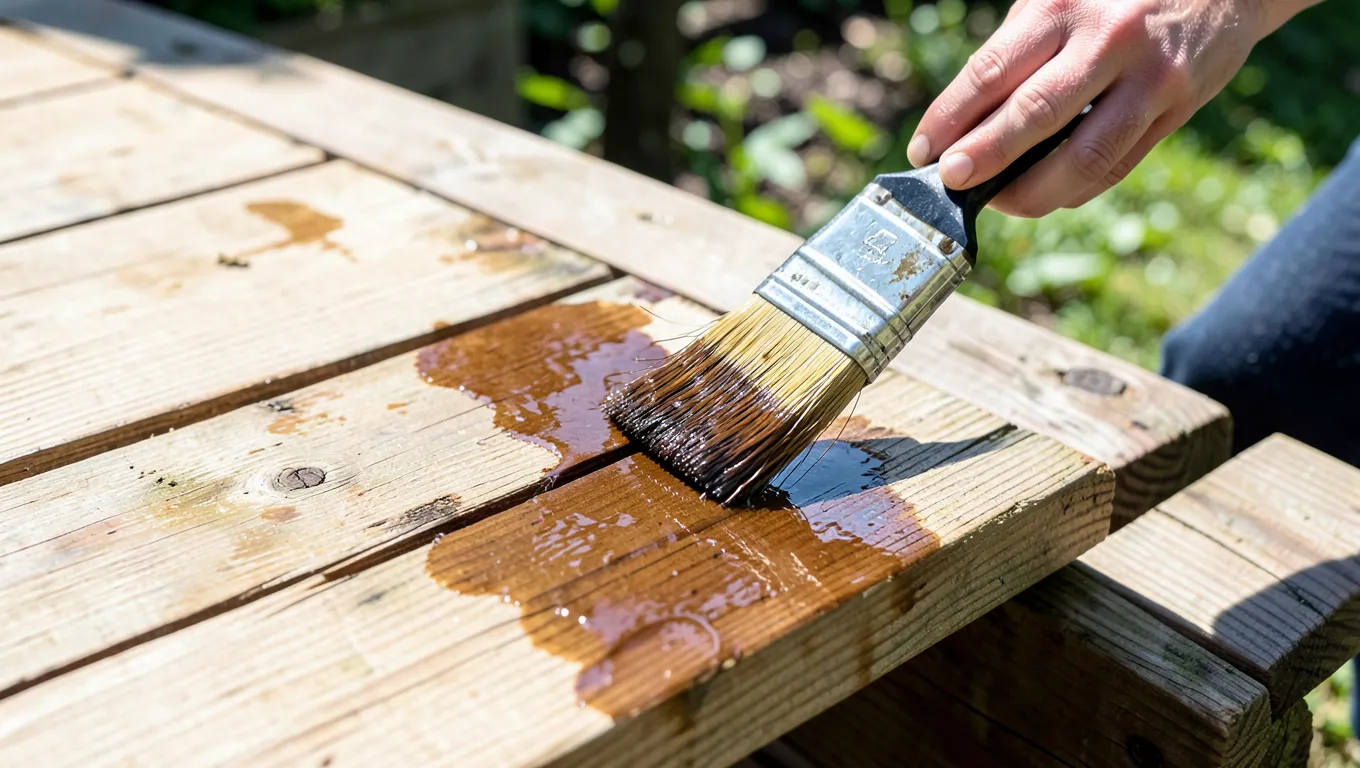
What Is the Best Stain for Pressure-Treated Wood? (Check This First)
A semi-transparent, oil-based exterior stain is the best all-around choice for pressure-treated wood — it penetrates the dense treated lumber better than water-based formulas and still lets the grain show through. But the stain you pick matters less than one thing almost every guide skips: whether the wood is actually dry enough to take it yet.
Check This Before You Buy Any Stain: Is the Wood Actually Dry?
Best Stain Type for Treated Lumber
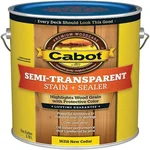 |
Cabot Semi-Transparent Wood Stain + Sealer, Gallon – $49.99 A penetrating oil-based formula that soaks into dense treated lumber instead of sitting on top, once your wood passes the water bead test.
|
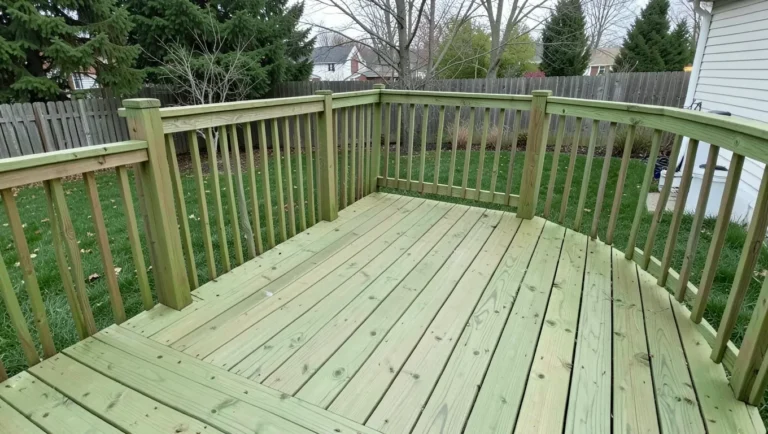
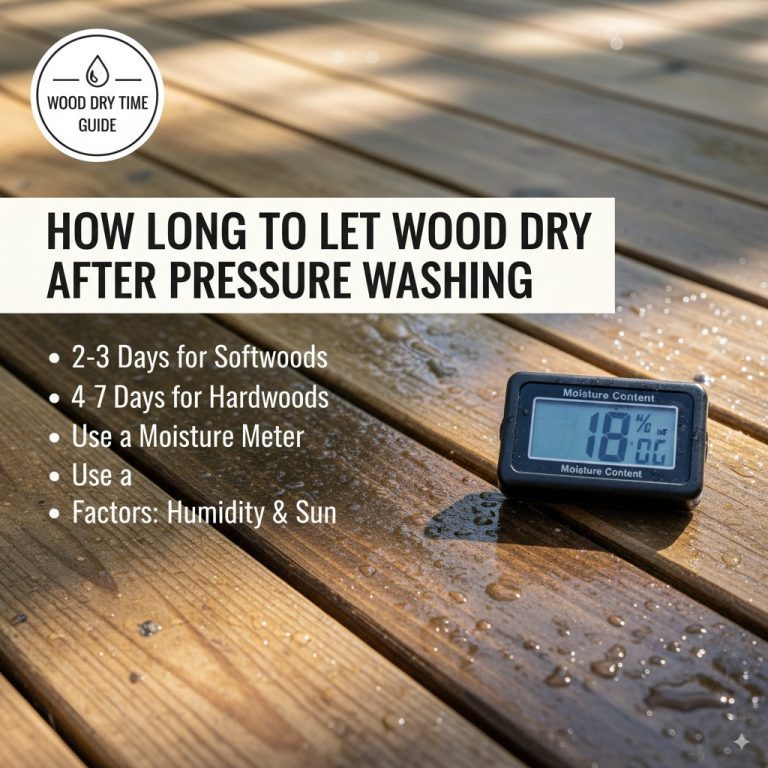
Pressure-treated lumber is infused with a liquid preservative (usually ACQ or micronized copper azole today) under pressure, which leaves it noticeably wet when it’s freshly cut at the lumberyard. Stain applied to wood that’s still holding that moisture won’t bond properly — it sits on the surface, peels within a season, and can trap moisture against the wood underneath. Run the water bead test before you do anything else: sprinkle a few drops of water on the surface. If it beads up and sits there, the wood is still too wet to stain. If it soaks in within a minute or two, it’s ready. Depending on your climate and the time of year, new PT lumber can take anywhere from a few weeks to a few months to dry enough to pass this test — lumber marked “KDAT” (kiln-dried after treatment) is the exception and can usually be stained much sooner.
Semi-Transparent vs. Solid Stain on Pressure-Treated Wood
A semi-transparent stain lets the wood grain show through while adding color and UV protection — it’s the better pick if you like the look of natural wood, but it also means the greenish or brownish cast from the treatment chemical can show through the color, so test it on a scrap or hidden corner before committing to a whole deck. A solid-color stain behaves more like thin paint, fully hiding the tint and grain, and it’s the better choice if you want an even, uniform color regardless of how the treated lumber looks underneath. Either way, stick with a product labeled for exterior use on treated wood specifically — the preservative chemicals can react differently with some stain formulas than they do with untreated lumber.
How to Stain Pressure-Treated Wood
- Run the water bead test across several spots on the wood, including areas that get more shade, since drying time varies across a structure.
- Clean the surface with a deck cleaner or a mild detergent and rinse thoroughly, then let it dry for at least a full day.
- Lightly sand any rough or fuzzy grain raised by the treatment process, then wipe away the dust.
- Test your stain color on a hidden section first, since the treated wood’s natural tint affects the final look more than it would on untreated lumber.
- Apply with a brush, roller, or sprayer in thin, even coats, working with the grain and wiping back any pooling within the timeframe the label recommends.
- Let it cure fully before heavy foot traffic or furniture goes back on it — usually 24–48 hours, though full cure can take longer.
Frequently Asked Questions
How long should I wait before staining new pressure-treated wood?
Don’t go by a calendar date — use the water bead test. Depending on climate and lumber thickness, that can take anywhere from a few weeks to a few months, except for kiln-dried-after-treatment (KDAT) lumber, which is usually ready much sooner.
What happens if I stain pressure-treated wood too soon?
The stain sits on top of the trapped moisture instead of soaking in, which leads to poor adhesion, peeling within a season, and can trap moisture against the wood.
Is oil-based or water-based stain better for treated lumber?
Oil-based penetrating stains generally perform better on pressure-treated wood because the lumber is dense, and oil-based formulas soak in more effectively once the wood has dried enough.
Can I use a clear sealer instead of a tinted stain?
Yes, but a clear sealer offers little to no UV protection, so the wood will gray faster than it would under a tinted stain, which uses pigment to block UV rays.
Sponsored / affiliate links. As an Amazon Associate I earn from qualifying purchases. I may earn additional commission from eligible campaigns.