Mahogany vs Sapele: Janka, Weight and CITES Status Compared
Sapele is the harder, heavier wood: the Wood Database lists it at 1,360 lbf on the Janka scale against 900 lbf for Honduran mahogany, about 51% harder. Mahogany still works more easily and moves less, and only mahogany carries CITES Appendix II restrictions. This guide compares the numbers, tear-out, grain, sourcing, and the best pick for guitars, doors, furniture, and boats.
Mahogany vs Sapele: The Side-by-Side Numbers
Best Tear-Out Fix for Sapele | |
 |
DFM Tool Works Cabinet Scraper Cards, Set of 3: $14.10 when checked Three 0.032 inch spring steel cards (curved, gooseneck, and flat) for smoothing the interlocked, tear-out-prone grain that sapele is known for, as covered in the working section below.
|
As an Amazon Associate we earn from qualifying purchases. | |
Here is the comparison most guides skip: measured properties from one source, using Honduran mahogany (Swietenia macrophylla), the wood most people mean by genuine mahogany, against sapele (Entandrophragma cylindricum). Data from the Wood Database pages for Honduran mahogany and sapele.
| Property | Honduran mahogany | Sapele | Difference |
|---|---|---|---|
| Janka hardness | 900 lbf | 1,360 lbf | Sapele about 51% harder |
| Dried weight | 36.8 lb/ft3 (590 kg/m3) | 41.6 lb/ft3 (665 kg/m3) | Sapele about 13% heavier |
| Bending strength (MOR) | 11,710 lbf/in2 | 16,070 lbf/in2 | Sapele about 37% stronger |
| Stiffness (MOE) | 1,458,000 lbf/in2 | 1,790,000 lbf/in2 | Sapele about 23% stiffer |
| Crushing strength | 6,760 lbf/in2 | 8,540 lbf/in2 | Sapele about 26% higher |
| Grain | Straight, interlocked, irregular or wavy | Interlocked, sometimes wavy | Sapele is the more consistently interlocked |
| Workability | Typically very easy | Tear-out in planing and routing | Mahogany easier |
| CITES status | Appendix II | Not listed | Mahogany restricted |
| IUCN Red List | Endangered | Vulnerable | Both flagged |
The percentage column is our arithmetic from the two listed values, rounded to whole numbers, not a figure from the source.
The common myth runs backward. Mahogany has the premium reputation, so many buyers assume sapele is a softer, cheaper stand-in. On every strength number above, sapele is the stronger wood. What mahogany offers is easier tooling and steadier boards, not more hardness. Source: The Wood Database, Sapele.
For the hardness figures of every mahogany species side by side, see our guide on how hard mahogany really is.
Which Wood Should You Pick for Your Project?
The numbers matter only when they map to a job. This table connects each use to the property that decides it, using the data above. Where both woods are listed for a use by the Wood Database, we say so instead of declaring a winner.
| Project | Better fit | Why |
|---|---|---|
| Hand-tool furniture | Mahogany | Typically very easy to work by hand and machine, with no routine tear-out problem |
| Machined parts, doors, panels | Sapele | Higher hardness and strength, with less chance of denting, if you plan for tear-out |
| Tabletops and work surfaces | Sapele | 1,360 lbf resists dents better than 900 lbf |
| Flooring | Sapele | Flooring appears in its common-use list; Honduran mahogany’s list does not include it |
| Boat parts | Either | Both are listed for boatbuilding; match fasteners to the wood |
| Guitars and instruments | Either | Both are listed for musical instruments; see our guitar guide for tone |
| Projects where CITES paperwork is a concern | Sapele | Not in the CITES Appendices |
| Wide glued-up panels | Mahogany | Lower shrinkage numbers mean less seasonal movement |
For guitar-specific questions, our page on mahogany for guitars covers tone and weight, and for entry doors see the best wood to make a door. If your supplier sells an African mahogany, our African mahogany vs sapele guide covers Khaya in detail.
Grain, Figure, and Color
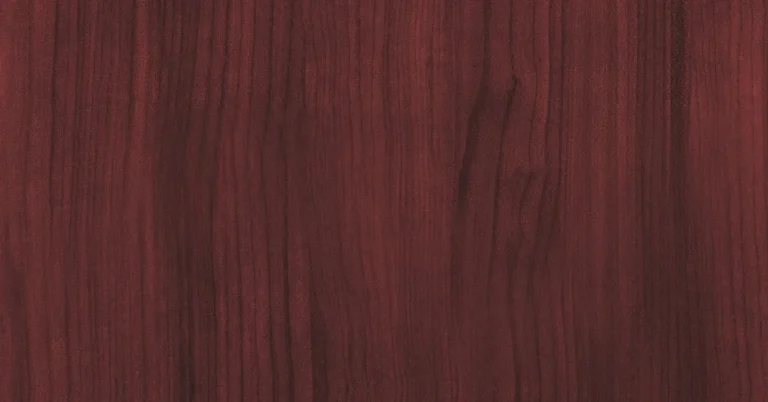
Both woods are reddish brown and both darken with age. The Wood Database describes Honduran mahogany as ranging from a pale pinkish brown to a darker reddish brown and sapele as golden to dark reddish brown. The bigger visual difference is figure. Sapele sawn on the quarter shows the ribbon stripe it is known for, and the same page lists pommele, quilted, mottled, wavy, beeswing, and fiddleback patterns as well. Our mahogany grain guide covers the ribbon figure and chatoyancy on the mahogany side.
Texture also differs. Sapele has a fine uniform texture and good natural luster, while mahogany has a medium, uniform texture with moderate luster.
Interlocked Grain and Tear-Out: Working Sapele
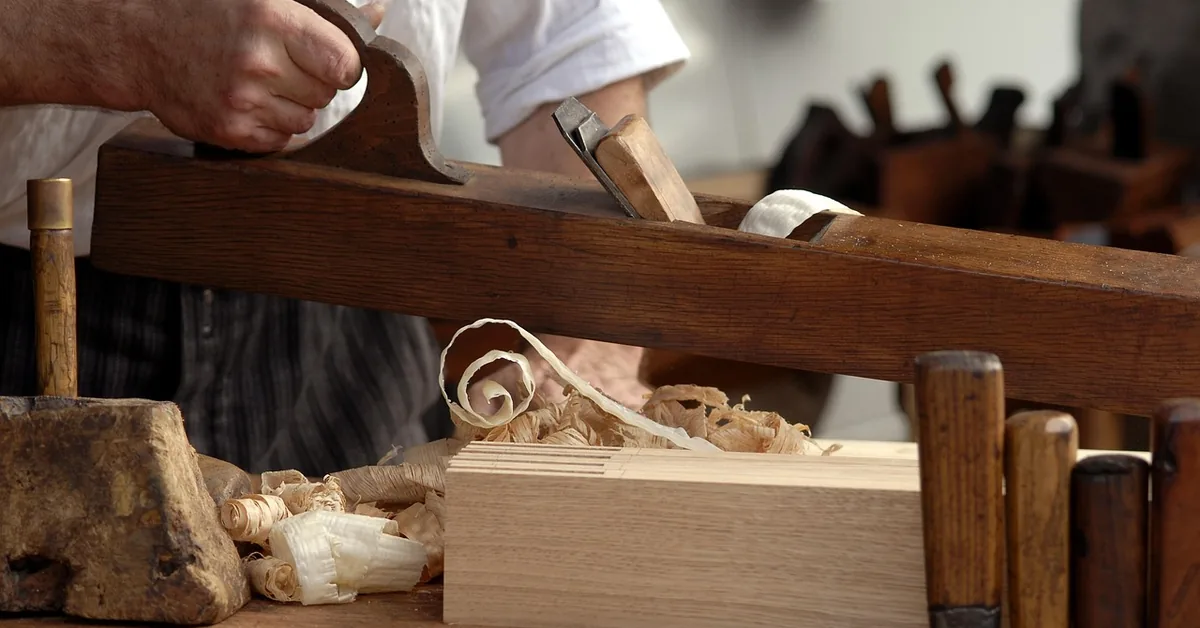
Interlocked grain means the fibers spiral in alternating directions along the board, so no single planing direction is clean for the whole face. That is the reason the Wood Database flags sapele for tear-out in planing and routing, and it makes workability a real trade-off in this comparison, not just a spec line.
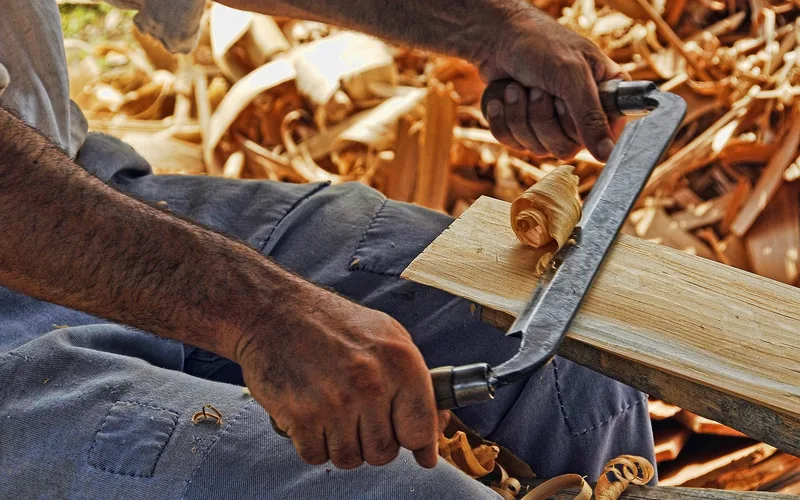
“Can be troublesome to work in some machining operations”
The Wood Database, on sapele
- Take light passes: a shallow cut lifts less fiber than a deep one, which is usual shop practice for any figured wood.
- Keep edges sharp: a dull plane iron or router bit tears fibers instead of slicing them.
- Finish with a scraper: a card scraper takes off the surface in thin shavings and does not lever fibers up the way a plane iron can, so it is a common last step on interlocked stock. Our pick for that job is in the box above.
- Sand after scraping: step through grits to remove scraper marks before finishing.
- Keep it off bare iron: the Wood Database notes sapele reacts with iron and can stain, so avoid steel wool and plain iron fasteners in damp conditions.
The shop tips above are general woodworking practice, not figures from the Wood Database. Treat them as a starting point and test on an offcut first.
Dust safety. The Wood Database reports sapele as a skin and respiratory irritant, and lists Honduran mahogany as a reported sensitizer with eye, skin, and respiratory irritation as the usual reactions. Use dust collection and a respirator when sanding either one. Severe reactions are described as uncommon, but fine dust is where most exposure happens.
Wood Movement: Sapele Shrinks More
Hardness gets the headlines, but movement decides whether a wide panel stays flat. The listed shrinkage values are green-to-oven-dry, so real in-service change is smaller, but the ratio between species is a fair guide.
| Shrinkage (green to oven-dry) | Honduran mahogany | Sapele |
|---|---|---|
| Radial | 2.9% | 5.2% |
| Tangential | 4.3% | 7.2% |
| Volumetric | 7.5% | 12.9% |
| T/R ratio | 1.5 | 1.4 |
By volume, sapele shrinks about 72% more than Honduran mahogany (12.9% against 7.5%, our arithmetic). Its overall movement is larger, so for wide tabletops and door panels that is a reason to leave more room for expansion or to choose quartersawn stock. Sources: Honduran mahogany and sapele.
CITES, Sourcing, and Availability
This is where the two diverge most. Per the Wood Database, Honduran mahogany is listed in CITES Appendix II and rated Endangered by the IUCN after a population decline above 60%. Cuban mahogany (Swietenia mahagoni) is also CITES Appendix II, Endangered, and for the most part no longer commercially available. African mahogany (Khaya) is covered by a genus-wide Appendix II listing for African species and sits at Vulnerable on the IUCN list. Source for the African data: The Wood Database, African mahogany.
Sapele, by contrast, is rated Vulnerable on the IUCN Red List but is not listed in the CITES Appendices. For a US woodworker buying from a domestic yard, the practical effect is mostly about documentation and what the supplier can legally stock. Imports and exports of Appendix II timber involve permits. Ask for the species name in Latin, since common names like Philippine mahogany or sapele mahogany do not guarantee a species.
Our guides on where to buy mahogany wood and how to identify mahogany versus look-alikes cover sourcing and identification, and our mahogany cost guide covers pricing. Our neighbouring pages on the characteristics of mahogany wood and mahogany durability go deeper on the mahogany side if you are leaning that way.
Finishing Mahogany and Sapele
Both woods are described as finishing well, so surface preparation matters more than the species. Any scraper or sandpaper marks will show under a clear coat. Our guide to finishing sapele covers that species, and the best mahogany finishes compares finishes on the mahogany side.
Test your chosen finish on an offcut from the same board before committing, since both woods darken as they age and the finished color will shift with them.
Mahogany vs Sapele vs African Mahogany
Because the names overlap in lumber yards, here is the three-way view from the same source, so you can tell what you are actually being offered:
| Wood | Janka | Dried weight | CITES |
|---|---|---|---|
| Honduran mahogany (Swietenia macrophylla) | 900 lbf | 36.8 lb/ft3 | Appendix II |
| African mahogany (Khaya) | 850 lbf | 33.9 lb/ft3 | Appendix II (genus-wide for African species) |
| Sapele (Entandrophragma cylindricum) | 1,360 lbf | 41.6 lb/ft3 | Not listed |
Notice that African mahogany and genuine mahogany sit close together, while sapele stands apart as the harder, denser wood. If a price looks too good for “mahogany,” ask which species it is.
Frequently Asked Questions
Is sapele harder than mahogany?
Yes. The Wood Database lists sapele at 1,360 lbf on the Janka scale and Honduran mahogany at 900 lbf, so sapele is about 51% harder. African mahogany (Khaya) is listed at 850 lbf and Cuban mahogany at 930 lbf, so sapele out-hardens every true mahogany in the group.
Is sapele a real mahogany?
Not in the strict botanical sense. True mahogany belongs to the genus Swietenia, and African mahogany to Khaya. Sapele is Entandrophragma cylindricum, from the same plant family (Meliaceae) but a different genus. It is sometimes sold as sapele mahogany, which is a trade name, not a species.
Is sapele cheaper than mahogany?
The Wood Database describes sapele as moderately priced for standard lumber, with figured boards extremely expensive, and Honduran mahogany as mid-range for an imported hardwood and costlier than African mahogany. Exact prices change by supplier and grade, so compare current quotes for the same grade and thickness.
Which is easier to work, mahogany or sapele?
Honduran mahogany is described as typically very easy to work with hand and machine tools, while sapele can be troublesome in planing and routing because the interlocked grain causes tear-out. Sharp tools, light passes, and a card scraper or sanding for the final surface are the usual fixes.
Is sapele endangered or restricted by CITES?
Sapele is listed as vulnerable on the IUCN Red List but is not in the CITES Appendices, according to the Wood Database. Honduran mahogany is in CITES Appendix II and rated Endangered by the IUCN, so shipping it across borders needs permits. Check your supplier’s paperwork.
Pick mahogany for hand-tool furniture and wide panels that must stay flat, and sapele for machined parts, dent-resistant surfaces, and projects where CITES paperwork is a concern. Buy a test board, plan for tear-out, and confirm the species name before you pay.
Sponsored / affiliate links. As an Amazon Associate I earn from qualifying purchases. I may earn additional commission from eligible campaigns.