Nato Wood vs Mahogany: The Real Difference Behind the Name
Nato wood and mahogany get compared constantly in woodworking and guitar-building forums, and the comparison usually starts from a false premise: that nato is a cheaper cut of the same wood. It isn’t. Nato, most often sold as “lauan” or under the trade name “Philippine mahogany,” comes from Shorea trees in the Dipterocarpaceae family. Genuine mahogany comes from Swietenia trees in the Meliaceae family. Those are two entirely different botanical families, not two grades of the same tree, and that distinction shows up directly in how each wood looks, wears, and performs on a real project. Here is what actually separates them, with the numbers to back it up, and which one belongs in your shop for which job.
The Nato vs Mahogany Myth: “Philippine Mahogany” Isn’t Real Mahogany
The confusion traces back to a marketing decision made almost a century ago. Lumber importers needed a name that would sell a cheap, fast-growing Southeast Asian hardwood to American buyers who already associated “mahogany” with quality, so they called it Philippine mahogany. Nato is one of several common names attached to that same group of Shorea-genus trees, alongside lauan, meranti, and tanguile, depending on the species and the region it was cut in. None of them are Swietenia. The Federal Trade Commission has flagged “Philippine mahogany” as a misleading trade name more than once, and most hardwood lumber dealers today will tell you flatly that it’s a different wood wearing a borrowed name.
Genuine mahogany, sometimes labeled “true mahogany” specifically to separate it from Shorea imitators, refers to three Swietenia species: Honduran mahogany (Swietenia macrophylla), Cuban mahogany (Swietenia mahagoni), and the now-restricted Pacific Coast mahogany. Honduran mahogany is the one you’ll actually find for sale today; the Cuban species has been so heavily logged that it’s essentially unavailable in commercial quantities. If a supplier can’t tell you which species you’re buying, treat “mahogany” on the label with the same skepticism you’d give “Philippine mahogany” – the name alone doesn’t guarantee the genus.
Best Lauan Plywood Pick
 |
WOODNSHOP Lauan Plywood 1/8″ x 24″ x 47″ – $12.60 This is the actual nato/lauan wood this article is about – a real Shorea-genus veneer core sheet, good one side, for door skins, drawer bottoms, and boat underlayment.
|
What Nato Wood Actually Is
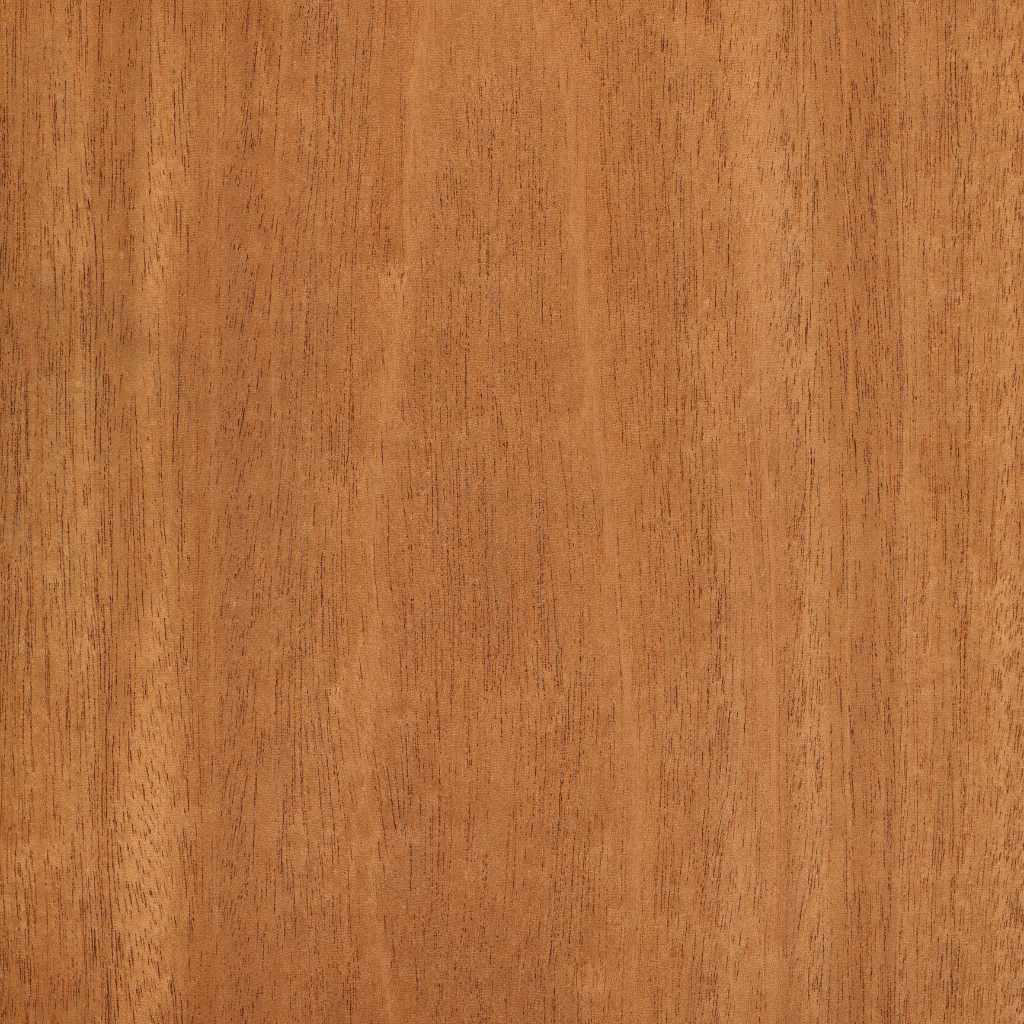
Nato belongs to the Shorea genus, a large family of tropical hardwoods native to the Philippines, Indonesia, and Malaysia. Depending on which species was harvested and which exporter sold it, the same wood might reach a US lumberyard labeled nato, lauan, meranti, or tanguile – the names overlap enough that even experienced buyers sometimes can’t tell them apart without checking the invoice. In practice, most woodworkers will meet this wood in one of three forms: as thin veneer-core plywood, as the “luan” door skins used on hollow-core interior doors, or as underlayment in boat and trailer building, where its resistance to warping under humidity swings matters more than its looks.
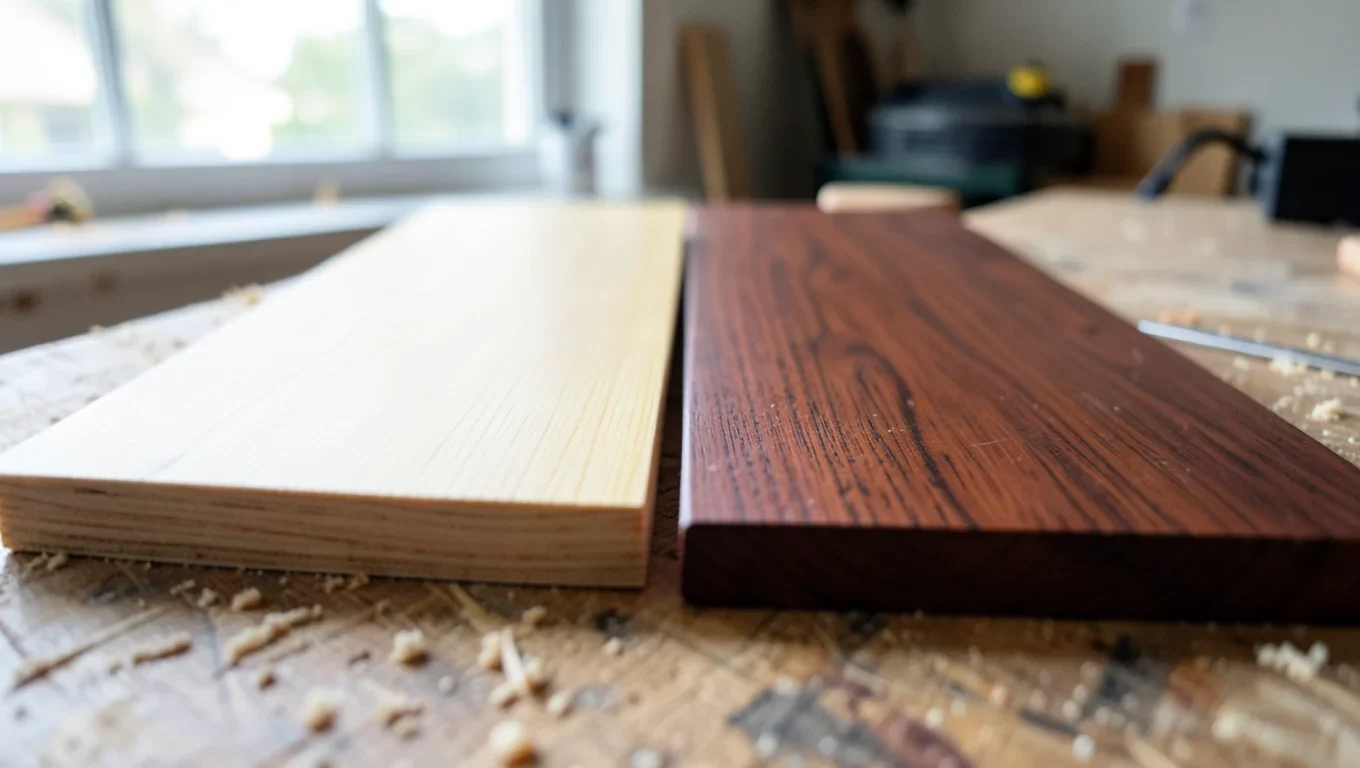
Color runs light tan to medium reddish-brown, and it tends to darken slightly with UV exposure, which is part of why it photographs as a passable mahogany substitute in a listing photo. Up close, the grain gives it away: it’s coarser and more open than true mahogany, with visible pore structure that doesn’t sand down to the same glass-smooth surface. Density is on the lower end for a hardwood, which makes it easy to cut and shape but also means it dents more readily and holds screws less securely over repeated use than a denser wood would.
What True Mahogany Actually Is
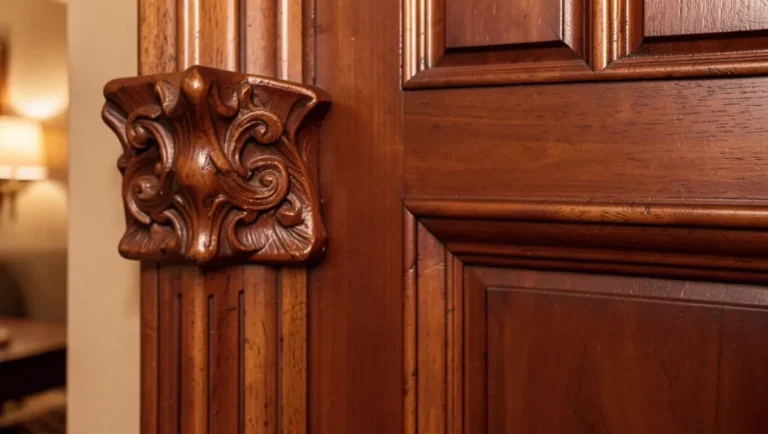
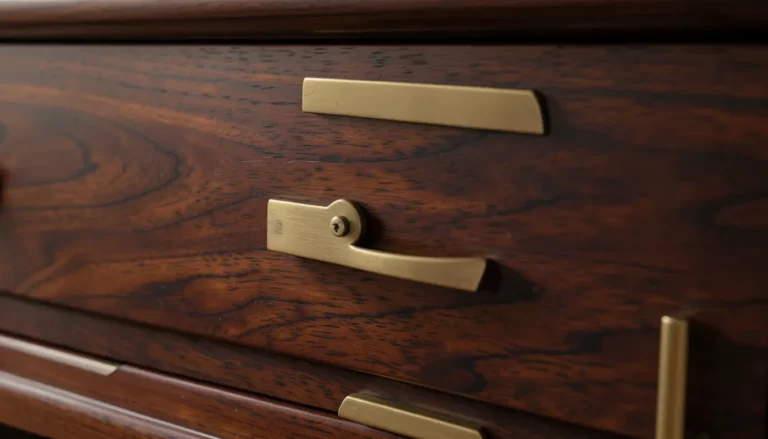
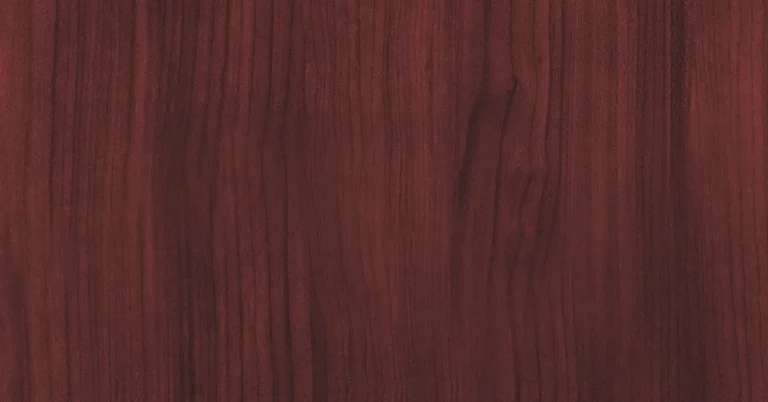
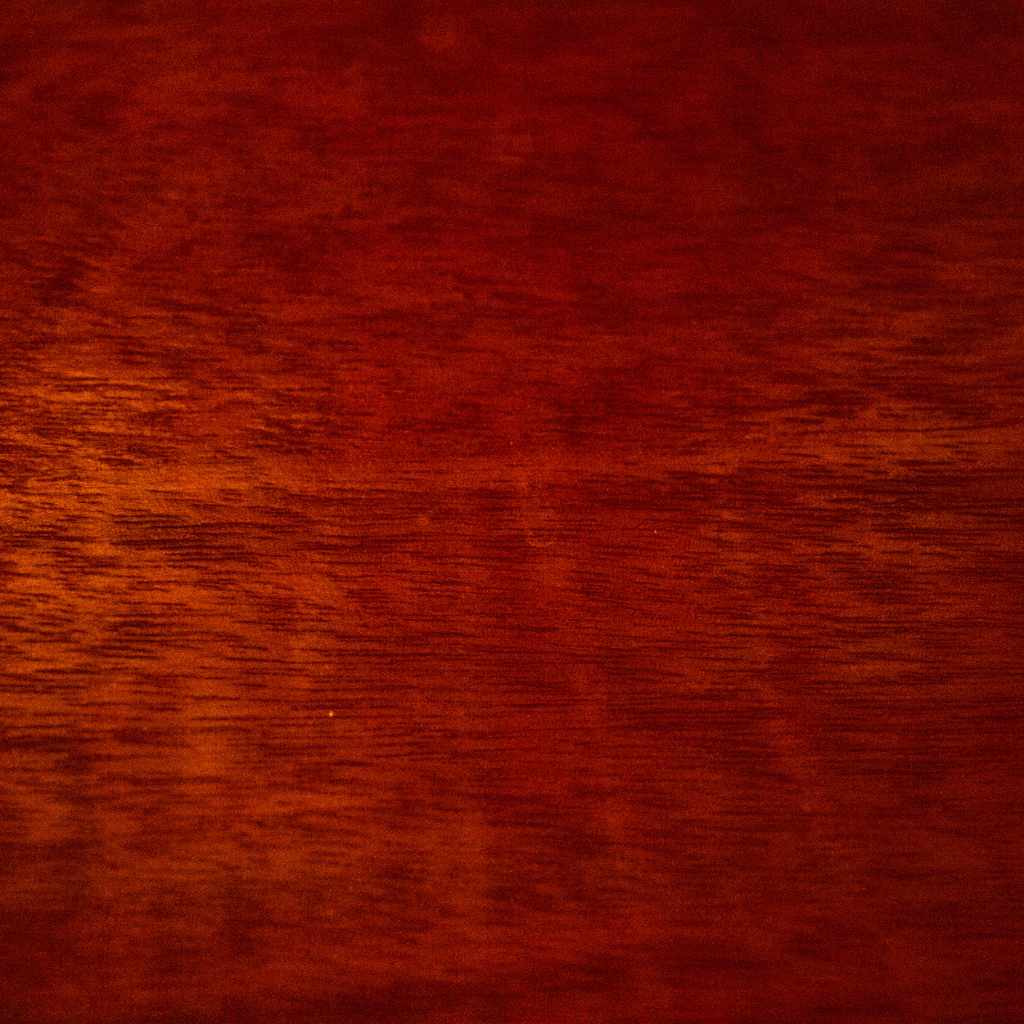
Genuine mahogany earned its reputation the hard way, over roughly three centuries of use in furniture and instrument making. Honduran mahogany is closed-grain, fine-textured, and finishes to a smooth, almost polished surface with minimal filling. Its color starts as a pale pinkish-brown when freshly cut and deepens to a rich reddish-brown over months of light exposure, which is the color most people picture when they hear the word “mahogany.” That aging process is part of the appeal on heirloom furniture – a piece darkens and develops depth rather than just fading.
The wood’s real-world track record explains why it became the standard for high-end work. Chippendale-era English furniture makers switched to mahogany in the 1700s specifically because it resisted warping and insect damage better than the walnut it replaced, and it’s held that reputation in furniture shops ever since. Luthiers favor it for guitar necks and backs because it’s stable under string tension and produces a warm, mid-focused tone that’s become its own reference point in acoustic instrument building – Martin and Gibson have both used Honduran mahogany on production necks for decades. None of that history applies to nato; it’s a good, useful wood, but it didn’t earn a three-century reputation the way genuine mahogany did.
Hardness and Durability Compared
The Janka hardness scale, which measures the force needed to embed a steel ball halfway into a wood sample, puts real numbers behind what your hands already notice. Honduran mahogany tests at roughly 800 to 900 lbf. The Shorea species sold as nato and lauan land considerably lower, typically in the 400 to 650 lbf range depending on the specific species and where it was harvested, with some higher-density meranti grades reaching into the 800s. In practical terms, that gap means mahogany shrugs off the dents and scuffs that nato picks up from ordinary use – a dropped tool, a dragged chair leg, a pet’s claws.
Rot resistance follows a similar pattern. Genuine mahogany carries natural extractives that give it moderate to good resistance to fungal decay and some insect activity, which is why it shows up in exterior boat trim and window components. Nato and lauan have little natural rot resistance and absorb moisture readily along the grain, which is exactly why boat builders use it as an internal underlayment layer that gets sealed with fiberglass or epoxy rather than left exposed. Left bare and wet, nato plywood delaminates and soaks up water faster than most other plywood cores.
Cost and Where You’ll Actually Find Each Wood
Nato’s biggest selling point has always been price. Genuine mahogany typically runs several times more per board foot than nato, and that gap widens further for figured or quartersawn mahogany stock. Nato’s low cost comes from fast growth cycles and abundant Southeast Asian plantation supply, which is also why it dominates the cheap end of the plywood aisle – as door skins, drawer-bottom stock, and underlayment sheets sold by the piece at any home center.
Genuine mahogany is a specialty-lumber purchase. You’ll find it at hardwood dealers and specialty suppliers rather than big-box stores, usually sold by species and by board foot rather than by sheet. Because Honduran mahogany is listed under CITES Appendix II due to overharvesting pressure, look for FSC-certified stock when you can – it costs more but confirms the wood was harvested from a managed source rather than illegally logged rainforest, which has been a real problem with mahogany specifically.
Which One Should You Actually Use?
For cabinet backs, drawer bottoms, shop jigs, and anything that gets painted or hidden from view, nato plywood is the practical choice – you’re paying for structure, not for a face grain nobody will see. It also works fine for budget guitar bodies and necks, where its lighter weight and lower cost make sense for a first build or a student instrument, and where the tonal difference from genuine mahogany matters less than getting a playable instrument finished. For visible furniture, fine cabinetry, and instruments where confirming you actually have real mahogany matters to the final result and the resale value, genuine Honduran mahogany is worth the higher price – it holds a finish better, resists dents through decades of use, and doesn’t require the “Philippine” qualifier to justify what you paid for it.
Frequently Asked Questions
Is nato wood the same as Philippine mahogany?
Yes, nato is one of several trade names, along with lauan and meranti, used for Shorea-genus wood sold as Philippine mahogany. It is not related to genuine mahogany, which belongs to the Swietenia genus.
Is nato wood a real mahogany?
No. Nato comes from Shorea trees in the Dipterocarpaceae family. True mahogany comes from Swietenia trees in the Meliaceae family. They are different genera in different plant families, not two grades of the same wood, despite the shared “mahogany” marketing name.
Which is harder, nato or genuine mahogany?
Genuine Honduran mahogany tests at roughly 800 to 900 lbf on the Janka hardness scale. Nato and lauan typically fall in the 400 to 650 lbf range, though some denser meranti grades run higher. Genuine mahogany is generally the harder, more dent-resistant wood.
Can I use nato wood as a substitute for mahogany?
For hidden structural uses like cabinet backs, drawer bottoms, and budget guitar bodies, yes – nato is a practical, affordable substitute. For visible furniture, fine instruments, or anywhere long-term durability and a refined grain matter, genuine mahogany performs better and nato should not be marketed or sold as the real thing.
Conclusion
Nato and mahogany aren’t two versions of the same wood – they’re two unrelated trees that share a marketing name because it made the cheaper one easier to sell. Nato (Shorea genus) is lighter, softer, less rot-resistant, and considerably less expensive. Genuine mahogany (Swietenia genus) is denser, more durable, finer-grained, and backed by three centuries of use in furniture and instrument making. Once you know to check the genus instead of the label, picking the right one for your project comes down to a simple question: does this piece need to be structural and affordable, or does it need to last generations and show it?
Sponsored / affiliate links. As an Amazon Associate I earn from qualifying purchases. I may earn additional commission from eligible campaigns.