Mahogany vs. Oak: Janka Hardness, Price and Best Uses Compared
Oak is the harder wood by the numbers – roughly 1,290 to 1,360 lbf on the Janka scale versus mahogany’s 800 to 900 lbf – but genuine mahogany costs two to three times as much per board foot because of a 2003 CITES trade restriction most buyers never hear about.
Both woods show up constantly in furniture, cabinetry, and flooring discussions, and both have loyal fans. But “which is better” depends on whether you’re optimizing for hardness, stability, cost, or looks – they don’t all point to the same wood. Below is a species-by-species breakdown with real hardness and pricing numbers, not just “both are durable” generalities.
Mahogany vs. Oak at a Glance
Mahogany is a reddish-brown tropical hardwood prized for its fine, straight grain and resistance to warping. Oak is a domestic hardwood (red or white) known for its coarse, open grain and higher raw hardness. The table below summarizes the practical differences before we get into the details.
Best For Reviving Either Wood’s Finish
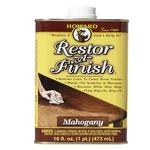 |
Howard Restor-A-Finish, Mahogany – $10.89 Sold in shades that match both woods in this comparison (Mahogany and Golden/Dark Oak), so one can handles faded finish on either species without a full refinish.
|
| Feature | Mahogany | Oak |
|---|---|---|
| Janka hardness | ~800–900 lbf | 1,290 lbf (red) / 1,360 lbf (white) |
| Color | Deep reddish-brown, deepens with age | Light tan to medium brown, visible ray flecks |
| Grain | Fine, straight, closed pores | Coarse, open pores, prominent grain |
| Price per board foot | $8–$15+ (import, CITES-restricted) | $4–$9 (domestic) |
| Best known for | Fine furniture, musical instruments, boat trim | Flooring, cabinetry, barrels |
Janka Hardness: The Real Numbers
The Janka hardness test measures the force needed to embed a steel ball halfway into a wood sample – it’s the standard way to compare how well a wood resists dents and wear. Genuine Honduran mahogany (Swietenia macrophylla) lands around 800 to 900 lbf; African mahogany species run similar. Red oak measures about 1,290 lbf, and white oak about 1,360 lbf – roughly 45–50% harder than mahogany.
That gap matters most where a surface takes direct impact: flooring, tabletops in a busy kitchen, or stair treads. It matters far less on a bookcase, a picture frame, or a decorative cabinet, where mahogany’s finer grain and finishing qualities carry more weight than raw hardness.
Origin, Sourcing, and the CITES Rule Most Buyers Miss
Genuine mahogany is native to Central and South America and the Caribbean. Because overharvesting pushed natural populations into decline, Swietenia macrophylla (bigleaf mahogany) has been listed on CITES Appendix II since 2003, meaning international shipments require export permits and quota compliance. This is a big part of why authentic mahogany costs what it does – supply is legally capped, not just naturally scarce.
Oak faces no such restriction. Red and white oak are harvested domestically across the eastern United States under well-established (and often FSC- or SFI-certified) forestry programs, with active replanting. That’s a real sustainability difference, not just a marketing line – and it’s also why oak supply, and pricing, stays comparatively stable year to year.
One practical note: a lot of furniture marketed as “mahogany” today is actually Sapele or another mahogany look-alike, which isn’t CITES-restricted and costs less. If the price seems too good for genuine mahogany, that’s usually why.
Durability and Everyday Wear
Durability isn’t just hardness. Mahogany’s dense, straight grain and natural oils make it highly resistant to warping, twisting, and moisture-driven movement – it’s part of why it was historically favored for boat trim and instrument necks, where a shifting shape ruins the piece. Oak wins on scratch and dent resistance thanks to its higher Janka number, but its open pores make it slightly more prone to absorbing moisture and staining if the finish is compromised, which is why oak flooring and barrels are almost always sealed heavily.
Expected lifespan for both, properly maintained: mahogany furniture commonly lasts 50 to 100+ years, and oak furniture and flooring regularly lasts 100+ years – both are “buy once” woods when cared for.
Workability for DIY and Pro Shops
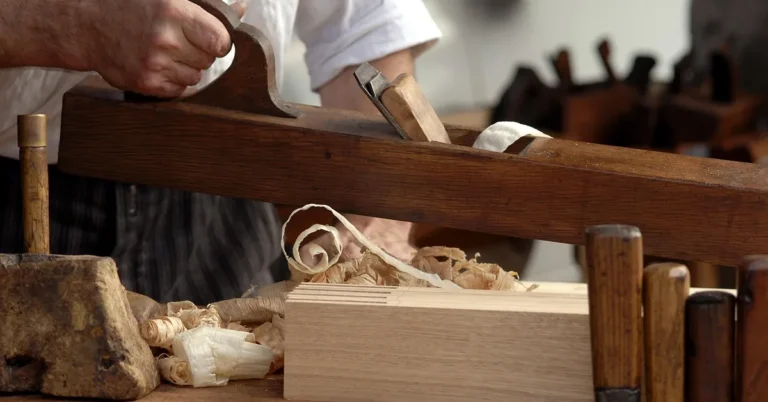
Mahogany is one of the more forgiving hardwoods to work with: it cuts cleanly with standard blades, resists tear-out, and takes glue and stain evenly, which is why it’s a favorite for detailed carving and musical-instrument work. Oak’s higher density means it dulls blades faster and needs sharper, higher-quality tooling to avoid chipping along the grain – not difficult, just less forgiving of dull equipment.
Grain, Color, and Finishing
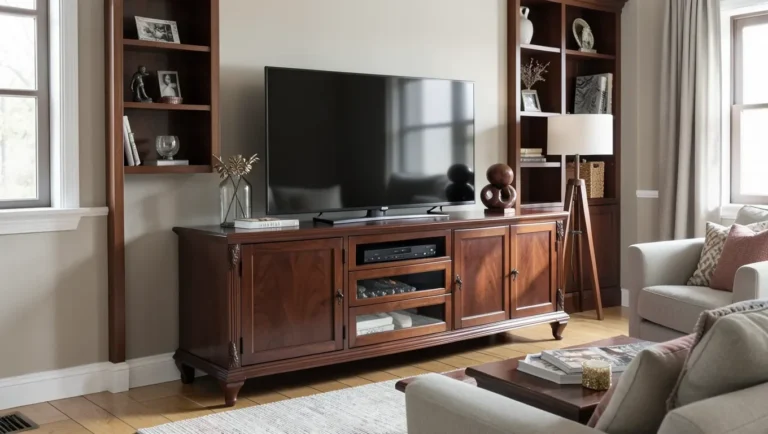
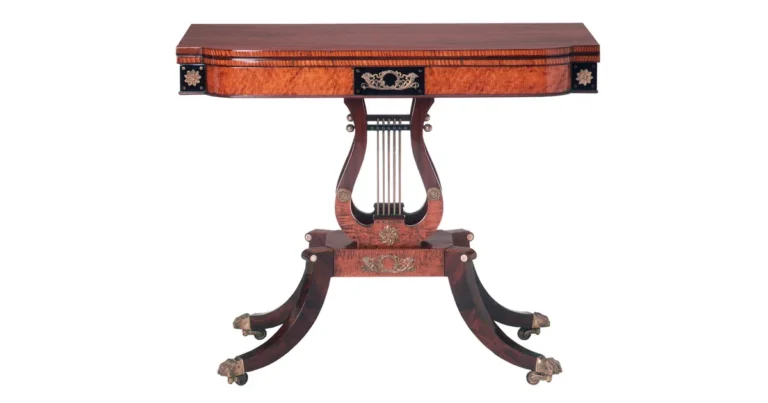
Mahogany’s grain is fine, straight, and closed – it takes stain evenly and deepens to a richer reddish-brown as it ages and gets exposed to light. Oak’s grain is coarse and open, with visible pores and ray flecks (especially in quarter-sawn white oak) that give it a more rustic, textured look even under a clear finish. Neither is objectively “better” here; it’s a style call. Mahogany leans traditional/formal, oak leans rustic-to-modern depending on how it’s finished.
Price per Board Foot
Expect to pay roughly $8 to $15+ per board foot for genuine mahogany, driven by import costs and CITES compliance, versus roughly $4 to $9 per board foot for oak, which is domestically abundant. Finished furniture prices scale accordingly – a solid mahogany piece will typically run noticeably more than an equivalent oak piece from the same maker.
Maintenance: Keeping Either Wood Looking Right
Both woods need the same basics: dust with a soft cloth, avoid direct sunlight (both fade and mahogany especially can blotch), use coasters and felt pads, and keep indoor humidity reasonably stable to avoid seasonal movement. When the finish on either wood starts looking dull, cloudy, or lightly scratched – before you jump to a full sand-and-refinish – a wipe-on restorer like the one in the box above can bring back color and shine in minutes, and it’s sold pre-matched to mahogany and oak tones specifically.
Which One Should You Choose?
Pick oak if you want lower cost, higher scratch/dent resistance, and a domestically sourced wood for flooring, cabinetry, or daily-use furniture. Pick mahogany if the piece is more decorative than utilitarian and you want superior dimensional stability, a finer grain, and a warmer, richer color that a bit of extra cost buys you. If you’re comparing mahogany against another tropical hardwood instead, see our mahogany vs. teak breakdown for how teak’s natural oils change the calculus.
Frequently Asked Questions
Is oak really harder than mahogany?
Yes. Red oak measures about 1,290 lbf on the Janka hardness scale and white oak about 1,360 lbf, while genuine (Honduran) mahogany measures roughly 800 to 900 lbf depending on the specific species. Oak resists dents and impact better; mahogany’s advantage is dimensional stability, not raw hardness.
Why is genuine mahogany so much more expensive than oak?
Genuine mahogany (Swietenia macrophylla) has been listed on CITES Appendix II since 2003, which restricts international trade and limits legal supply. Combined with slower growth and it being imported rather than domestic, real mahogany typically runs $8 to $15+ per board foot versus roughly $4 to $9 for oak.
Can Howard Restor-A-Finish be used on both mahogany and oak furniture?
Yes, it is sold in shade-matched cans, including Mahogany, Golden Oak, and Dark Oak, so you pick the can that matches the piece rather than one universal formula.
Which wood should I choose for a dining table that gets daily use?
Oak is the safer pick for daily wear because of its higher Janka hardness and lower cost per board foot. Choose mahogany when the piece is more decorative than utilitarian and dimensional stability (resisting warping with humidity swings) matters more than surface hardness.
Conclusion
Oak wins on hardness and price; mahogany wins on stability, fine grain, and traditional elegance – and its higher cost traces directly back to the 2003 CITES restriction on genuine bigleaf mahogany, not just brand prestige. Match the wood to the job: daily-use and flooring lean oak, decorative and detail-heavy pieces lean mahogany.
Sponsored / affiliate links. As an Amazon Associate I earn from qualifying purchases. I may earn additional commission from eligible campaigns.