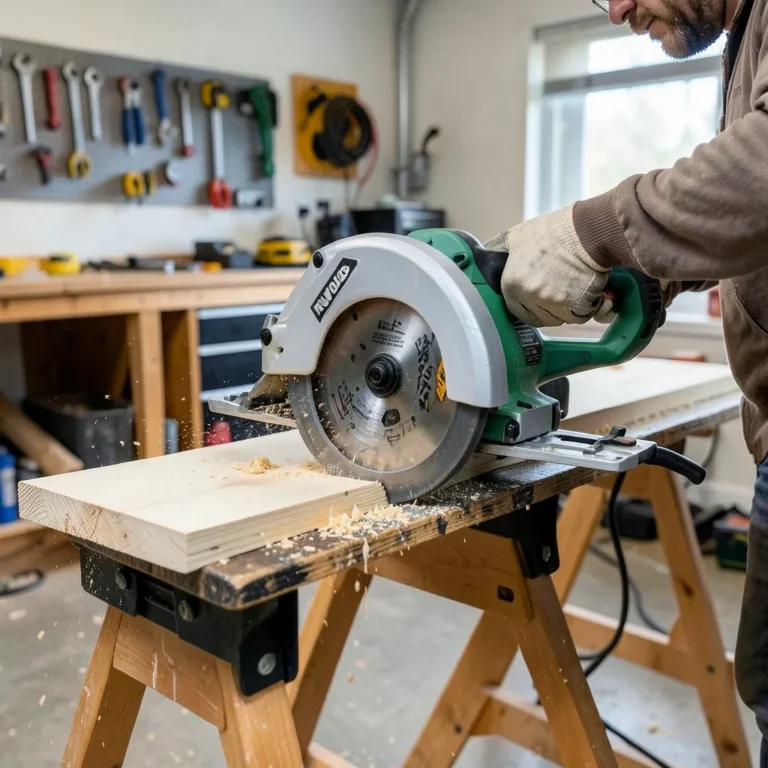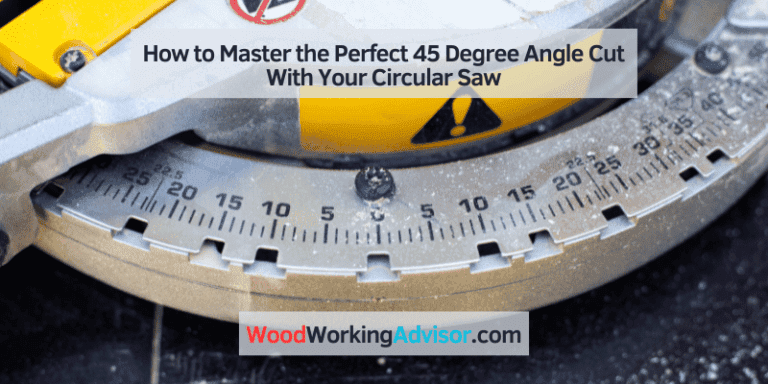
What Circular Saw Blade Cuts Laminate Countertop Best?
A 60-to-80-tooth carbide-tipped blade with a thin kerf gives the cleanest circular-saw cut on a laminate countertop — a standard 24-tooth framing blade will chip the surface instead. Tooth count alone won’t save the cut — running the saw with the finished face up is what actually causes most chipping, since the teeth exit through the material’s top. This guide covers blade specs for a circular saw, jigsaw, and oscillating tool, the face-up-vs-down rule, and our pick for a laminate-rated blade.
[Insert your Affiliate Disclosure reusable block here]
Circular Saw, Jigsaw, or Oscillating Tool: Blade Specs for Laminate
Best Laminate Countertop Blade Pick
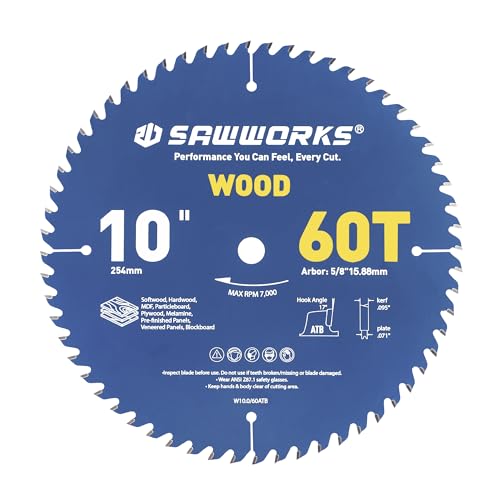
Freud Diablo D0760A 7-1/4″ 60T Ultra Finish Blade (2-Pack) – $44.72
The exact 60-tooth, thin-kerf spec this guide recommends for a 7¼” circular saw — the same tooth count and grind that keeps chip-out off the visible face when you cut finished-side-down.
- Best for: Straight rip and crosscuts on laminate or Formica countertops
- Why we picked it: Matches the exact tooth count and thin-kerf spec this guide’s blade table recommends
- Main drawback: Sold as a 2-pack, so you’re paying for a spare blade you may not need right away
Compare more laminate-cutting options
 Option 1 FOXBC 7-1/4″ 60T Blade – $16.99
|
 Option 2 DEWALT DW3712H 10 TPI Down-Cut Jigsaw Blade – $8.65
|
 Option 3 ScotchBlue Edge-Lock Painter’s Tape – $9.99
|
As an Amazon Associate we earn from qualifying purchases.
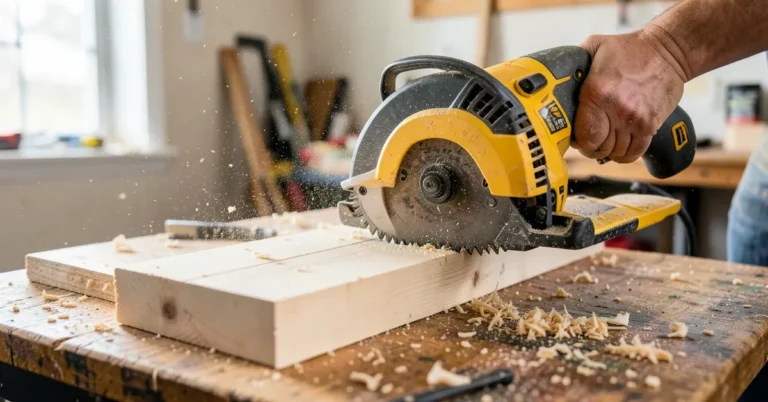
A carbide-tipped, 60-to-80-tooth blade with a thin kerf is the right choice for cutting a laminate countertop with a handheld circular saw — a standard wood-framing blade (24T–40T) has too few teeth and will tear the surface layer instead of shearing it cleanly.
The grind matters as much as the tooth count. A Hi-ATB (alternate top bevel) grind shears cleanly but can chip on the exit side; a TCG (triple-chip grind) is more forgiving on laminate and melamine because the flat-topped teeth rough out material before the beveled teeth finish the edge. For a circular saw or any other saw you’re choosing for a countertop job, matching the blade to the tool matters more than brand.
| Tool | Teeth / TPI | Grind / Type | Best For |
|---|---|---|---|
| Circular saw (7¼”) | 60–80 teeth | Hi-ATB or TCG, thin kerf | Long, straight rip and crosscuts |
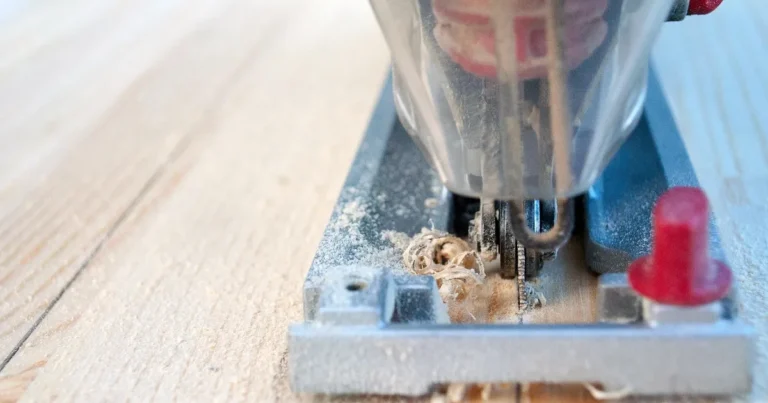
| Jigsaw | 10–20 TPI | Down-cut / reverse-tooth | Sink cutouts, curves, notches |
| Oscillating multitool | Fine, carbide-grit or bi-metal | Plunge blade | Trimming installed edges, tight corners |
📊 Freud’s own 7¼” laminate blade (the D0760A) uses a 60-tooth Hi-ATB grind specifically because its standard 24-tooth wood blades leave visible chip-out on laminate face cuts. — Source: Diablo Tools, official product spec (D0760A)
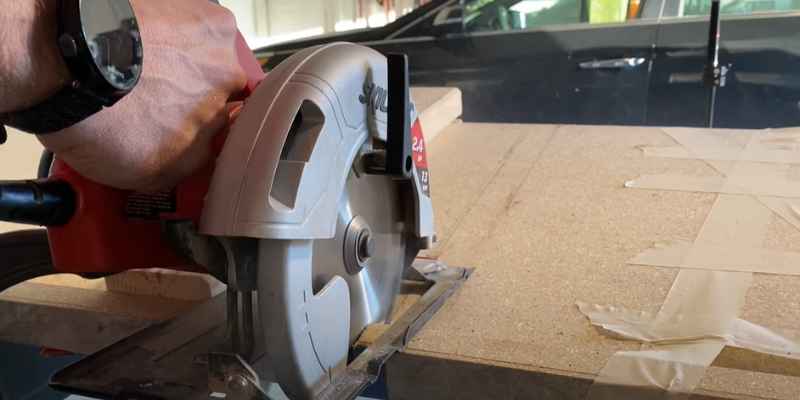
Do You Cut Laminate Face Up or Face Down? (Why It Matters More Than Tooth Count)
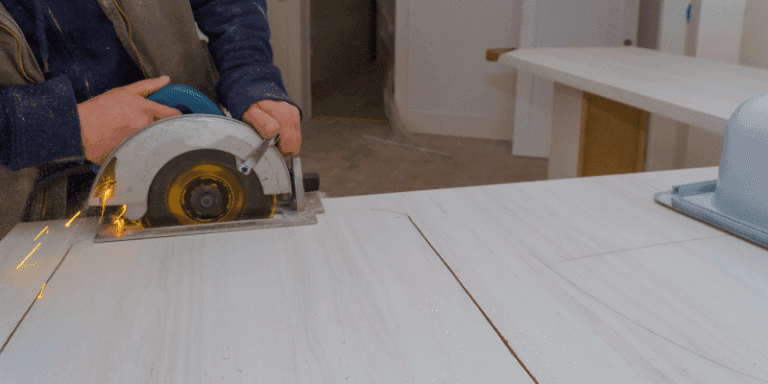
Cut with the finished, visible face of the countertop down when using a handheld circular saw. A circular saw’s blade rotates so the teeth enter the material from the bottom and exit through the top — the exit side is where splintering happens, so keeping the good face down puts any chip-out on the underside where it’s never seen.
This is also why two DIYers can use the identical blade and get different results: the one who ran the saw finished-face-up gets a chipped edge no matter how many teeth the blade has. If you’re working on a saw where the blade direction isn’t obvious, check it before you cut, not after.
“The blade matters less than people think. I’ve seen a brand-new 80-tooth blade still chip a laminate countertop because the saw was run finished-side up — orientation is the first thing I check when a cut comes out ragged, before I even look at the blade.”
A carbide-tipped blade stays sharp far longer than a steel one, but a dull blade of any tooth count will chip laminate on either face — if your cuts are getting rougher over time, check blade sharpness before blaming the orientation.
How to Cut a Laminate Countertop Without Chipping
Getting the right blade is half the job — technique accounts for the other half. Follow these five steps in order:
- Mark and score the cut line: Mark your line, then score along it with a utility knife to sever the laminate’s top layer before the blade ever touches it.
- Apply masking tape along the line: Run painter’s tape directly over the scored line — it backs up the surface fibers and reduces splintering on both faces.
- Set blade depth about ⅓-inch past the material: A blade set too deep increases splinter-out on the exit side; just past the material thickness is enough.
- Clamp the countertop and cut with the finished face down: Secure the piece so it can’t shift, then cut in one smooth, steady pass — don’t stop mid-cut.
- File or sand the cut edge: Knock down any remaining rough spots with a fine file or 220-grit sandpaper before installing edge banding or trim.
These same five steps apply whether you’re trimming a kitchen countertop to fit or cutting a Formica countertop specifically — Formica is a laminate brand name, so the blade and technique don’t change.
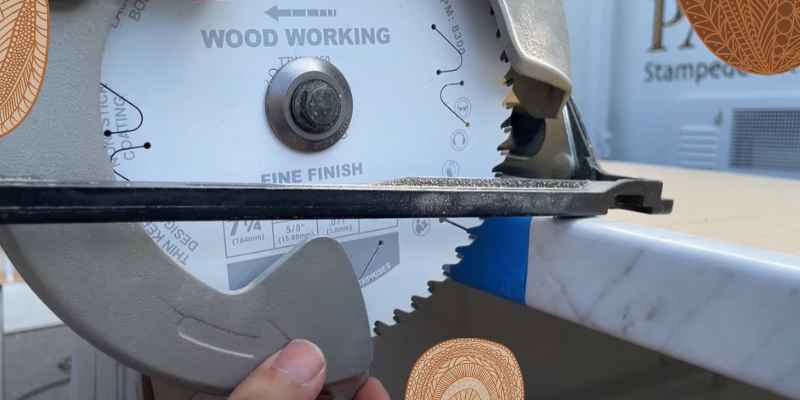
Laminate Flooring Blade vs. Laminate Countertop Blade: Not the Same Thing
A 165mm blade shows up constantly in laminate-flooring guides because it’s the standard size for the track saws and plunge saws flooring installers use — it has nothing to do with cutting a kitchen countertop with a 7¼” circular saw. If you’re installing a laminate countertop rather than laminate flooring, ignore 165mm-specific blade listings; match the blade to your saw’s arbor size (5/8″ is standard on most 7¼” circular saws) instead of the millimeter spec used for flooring saws.
Frequently Asked Questions
Can you cut a laminate countertop with a circular saw?
Yes. A 7¼” circular saw with a 60-to-80-tooth carbide-tipped blade cuts laminate countertop cleanly, as long as you cut with the finished face down and use a straightedge guide for a straight line.
Do you cut laminate face up or face down?
Face down, with a circular saw. The blade’s teeth exit through the top of the material as it spins, and that exit side is where chipping happens — keeping the finished face down puts any damage on the underside, out of sight.
How many teeth should a circular saw blade have to cut laminate?
At least 40 teeth, though 60 to 80 teeth on a 7¼” blade gives the cleanest result. Fewer teeth cut faster but leave a rougher, more chip-prone edge on laminate’s brittle top layer.
What blade do you use to cut a Formica countertop?
The same 60-to-80-tooth carbide blade used for any laminate countertop — Formica is a brand name for high-pressure laminate, not a different material. Formica Group’s own cutting guidance confirms the same fine-tooth, face-down approach.
How do you keep a laminate countertop from chipping when you cut it?
Score the line with a utility knife first, tape over it, use a sharp 60-to-80-tooth blade, and cut with the finished face down in one steady pass. Skipping the scoring step is the most common reason an otherwise-good blade still chips the edge.
Bottom Line
A 60-to-80-tooth, carbide-tipped, thin-kerf blade is the right call for cutting a laminate countertop with a circular saw — a down-cut jigsaw blade handles curves and cutouts the circular saw can’t reach. Neither one will give a clean edge if you cut with the finished face up, so check orientation before you check tooth count.
Sponsored / affiliate links. As an Amazon Associate I earn from qualifying purchases. I may earn additional commission from eligible campaigns.