Best Exterior Paint Finish for Wood: Satin, Not Flat (Here’s Why)
Satin is the best all-around exterior paint finish for wood siding — not flat, despite flat’s reputation for hiding imperfections. Flat’s porous film does not shed water well: rain soaks in, and when that trapped moisture pushes back out during freeze-thaw cycles, it lifts the weak film with it. This guide covers which finish to use on siding versus trim, why gloss level affects peeling, and where flat still makes sense.
What Type of Exterior Paint Finish Is Best for Wood?
Best Moisture Check Before Painting
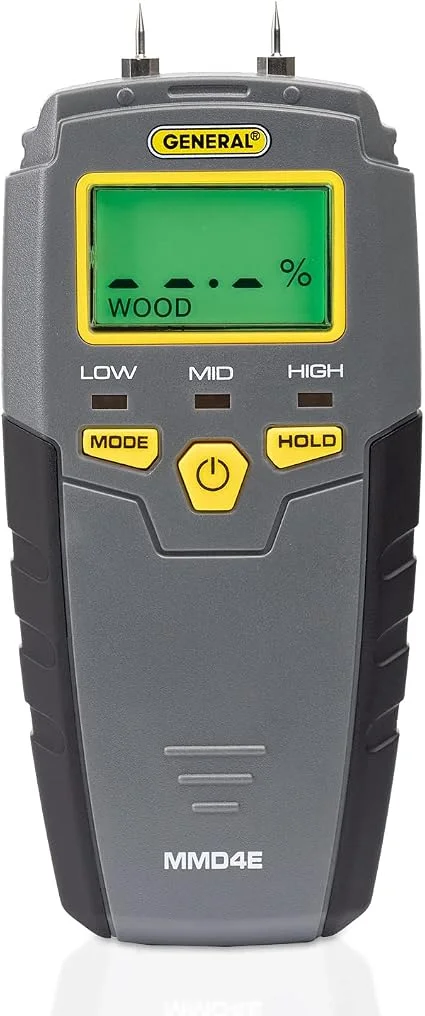 |
General Tools MMD4E Pin-Type Moisture Meter – $38.83 Painting over wood above 15% moisture is why flat paint (and even satin) blisters early — this pin-type meter reads wood moisture in seconds before you commit to a finish coat.
|
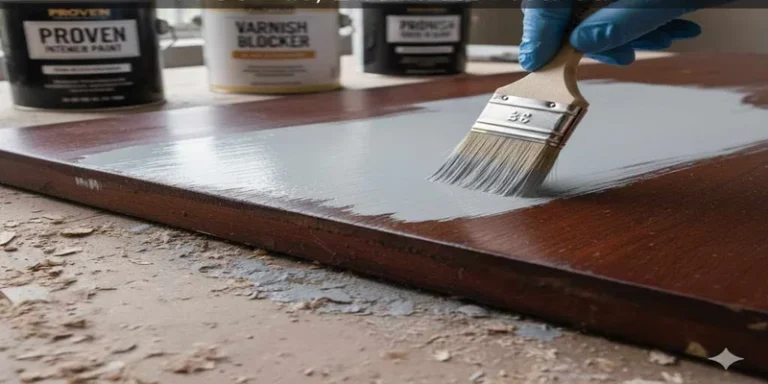
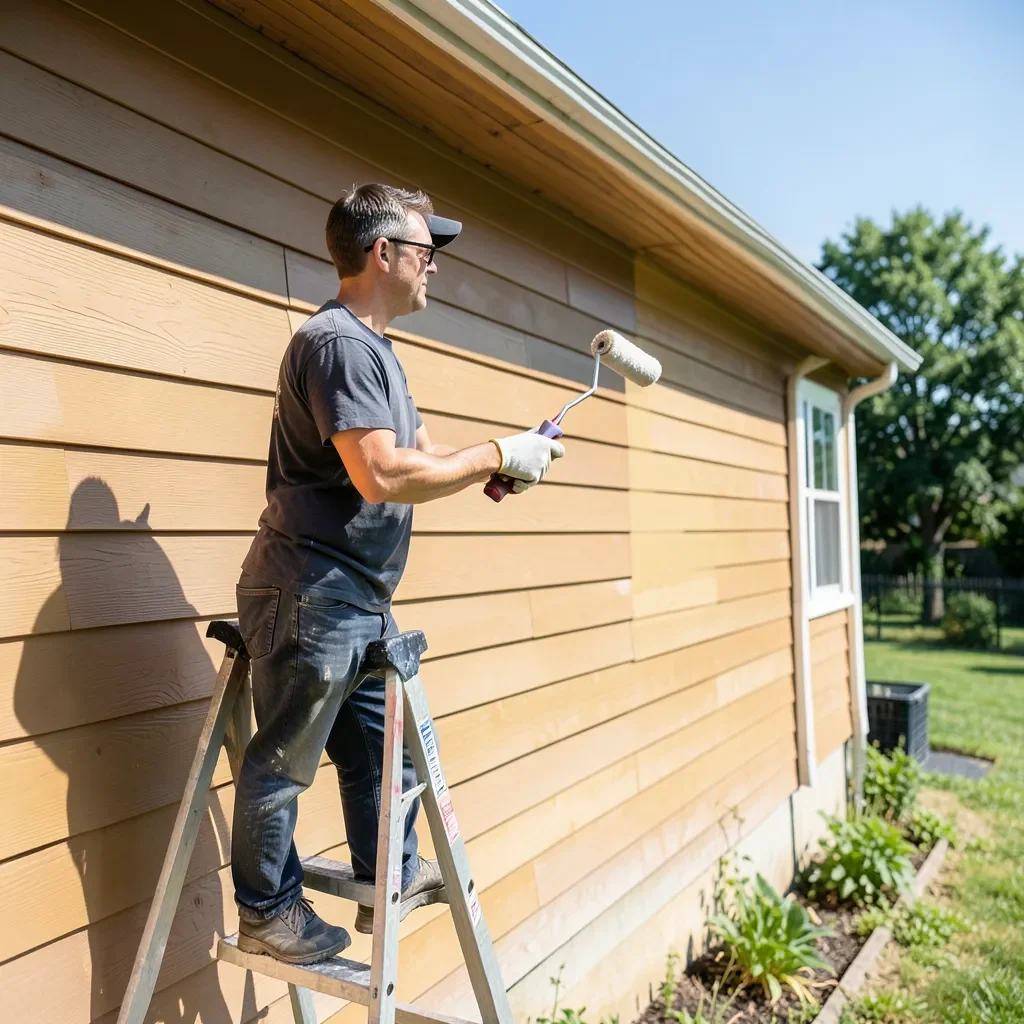
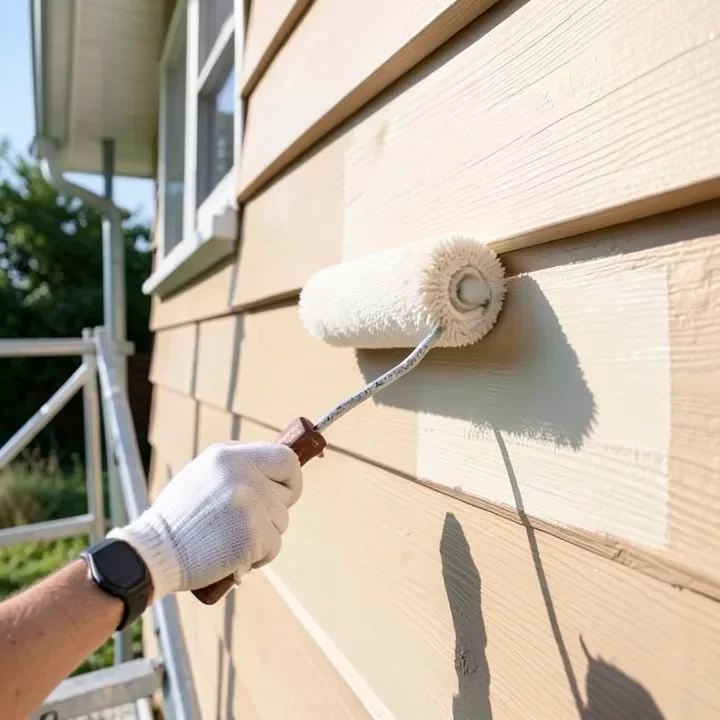
Satin (low-lustre) is the finish to use on the field of your siding. It has enough sheen to shed light rain and resist mildew, but not so much that it highlights every board seam, cupped plank, or brush mark the way semi-gloss does across a wide surface. Reserve semi-gloss for trim, doors, and shutters, and flat for masonry or stucco accents — not for wood siding itself.
Why Flat Paint Fails on Wood Siding
Wood siding moves. It expands slightly when humid, contracts when dry, and both processes push moisture through the board’s surface. Flat paint’s film is porous by design, which is what gives it that non-reflective look — but that same porosity lets rain soak in instead of beading off. When the wood dries out and pushes that absorbed moisture back toward the surface, it lifts the weak flat film from underneath, which is why flat-painted siding blisters and peels noticeably faster than satin on the same wall.
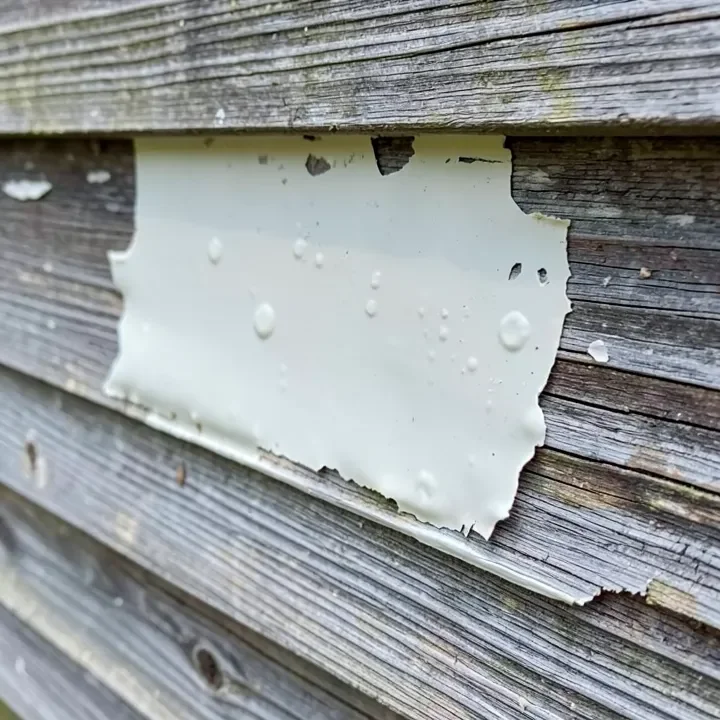
Satin’s tighter, less porous film resists that water intrusion at the surface in the first place, so it has less trapped moisture to push back out later. That is the actual mechanical reason satin outlasts flat on siding — not just a marketing claim about “durability.”
The Three-Finish Strategy: Satin Body, Semi-Gloss Trim, Flat Masonry
| Finish | Sheen Level | Best For | Avoid On |
|---|---|---|---|
| Flat | None | Stucco, brick, masonry accents | Wood siding (traps moisture) |
| Satin | Low | Wood siding body, most of the house | High-touch trim that needs frequent wiping |
| Semi-Gloss | Medium-high | Trim, doors, shutters, fascia | Wide siding boards (film doesn’t flex well through freeze-thaw) |
This satin-body, semi-gloss-trim, flat-masonry split is the combination painting contractors default to for most houses, because it matches each finish’s film properties to the surface that actually needs them — flexible low-sheen film on the wood that moves, harder easy-clean film on the narrow trim that gets touched.
VOC Limits and Low-VOC Options
📊 Federal rules cap flat architectural coatings at 250 g/L of VOCs and non-flat coatings (satin, semi-gloss) at 380 g/L; California’s stricter state rule caps them at 100 g/L and 150 g/L. — Source: EPA, Architectural Coatings VOC Rule Fact Sheet
If you are in or near California, or simply want lower off-gassing, look for paint explicitly labeled to the stricter state limit rather than only the federal one — the two numbers are not the same, and a can compliant with the federal limit is not automatically compliant with California’s.
Check Wood Moisture Before You Paint
Since the flat-vs-satin failure mode above is entirely about trapped moisture, painting over wood that is already too wet defeats the point of picking the right finish. Most exterior-paint manufacturers recommend the wood read below 15% moisture content before you apply any finish — a cheap pin-type moisture meter tells you that in seconds instead of guessing from how the board looks or feels.
Frequently Asked Questions
Why does flat paint peel faster on wood siding than satin?
Flat paint has a porous film that does not shed water well. Rain soaks into that film instead of beading off, and when the wood dries and that trapped moisture pushes back out, it lifts the weak film with it. Satin’s tighter film resists that water intrusion in the first place.
Should exterior wood trim be satin or semi-gloss?
Semi-gloss, not satin, for trim, doors, and shutters. The harder, denser film that makes semi-gloss a poor choice for wide siding boards (it doesn’t flex well through freeze-thaw) is exactly what makes it durable and easy to wipe clean on narrow trim.
What is the best type of paint to use on exterior wood?
100% acrylic latex paint is the standard choice for exterior wood in 2026. It flexes with the wood through temperature swings, resists UV fading better than oil-based paint, and cleans up with water instead of solvents.
Is flat paint ever the right choice outdoors?
Flat still makes sense on textured, non-flexing surfaces like stucco or brick masonry, where hiding surface imperfections matters more than shedding water off a flexing wood board. On actual wood siding, stick with satin.
Conclusion
Satin is the right default finish for wood siding because its tighter film keeps rain from soaking in, which is the actual mechanism behind flat paint’s faster peeling. Save semi-gloss for trim and doors, flat for masonry accents, and check the wood’s moisture content before you paint so the finish you picked has a dry surface to actually protect.
Sponsored / affiliate links. As an Amazon Associate I earn from qualifying purchases. I may earn additional commission from eligible campaigns.