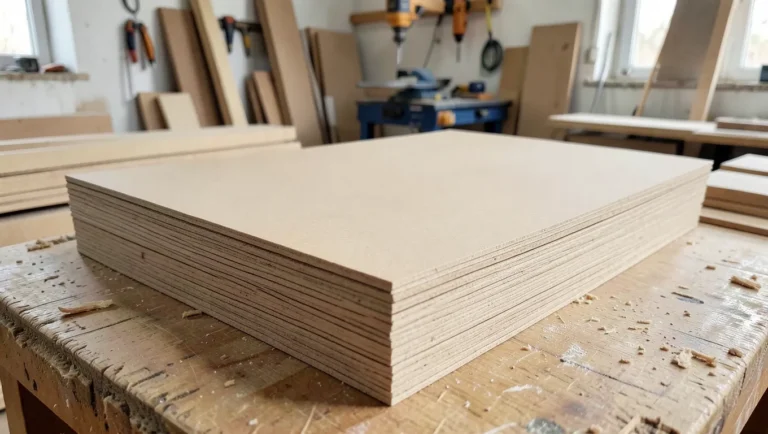
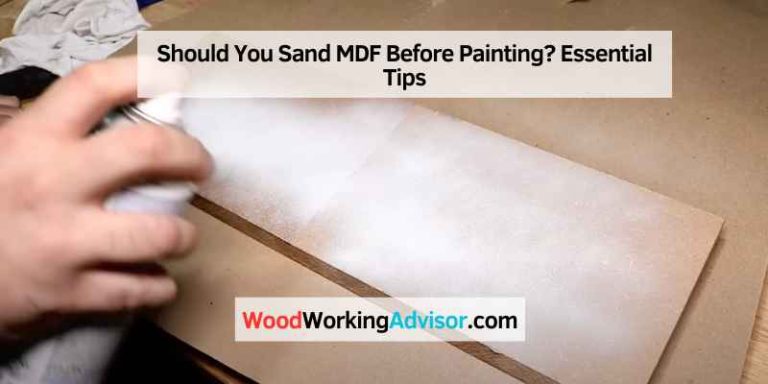
Which Paint to Use on MDF: Best Primer, Paint & Finish
Any latex or water-based paint works on MDF once it’s properly primed — the paint choice matters far less than the primer. Skip the primer and even good paint will soak unevenly into the porous fiber, especially at cut edges, leaving a blotchy, absorbent-looking finish no matter which paint you pick.
MDF doesn’t need a “special” paint — it needs the right prep. A stain-blocking, sealing primer designed for porous surfaces does the real work; the topcoat on top of it can be almost any quality interior latex, satin, or semi-gloss paint suited to the project.
Types Of Paint For MDF
Water-based latex paint is the most common and easiest choice for MDF furniture and trim — it’s low-odor, cleans up with water, and dries fast enough for multiple coats in a day. Oil-based (alkyd) paint gives a slightly harder, more durable finish and is often preferred for high-touch surfaces like cabinet doors, but it has a longer dry time and stronger odor.
For furniture and cabinetry specifically, satin or semi-gloss sheen holds up to cleaning and handling far better than flat/matte, which shows fingerprints and scuffs more readily on a frequently touched surface. Flat paint is fine for a wall-mounted MDF panel that won’t be touched, but avoid it on drawer fronts, cabinet doors, and anything handled regularly.
Best Primer Before Painting MDF
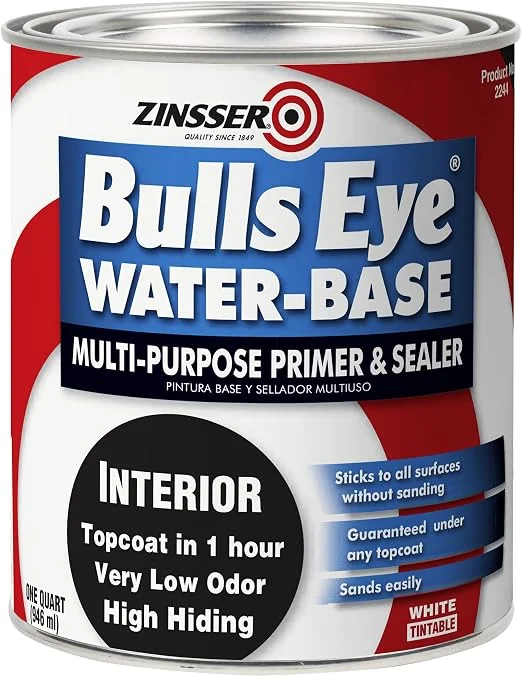 |
Zinsser Bulls Eye Water-Base Primer & Sealer, Quart – $9.44 Seals MDF’s porous fiber and blocks uneven absorption — this is the step that actually determines whether the paint goes on smooth.
|
Preparing MDF For Painting
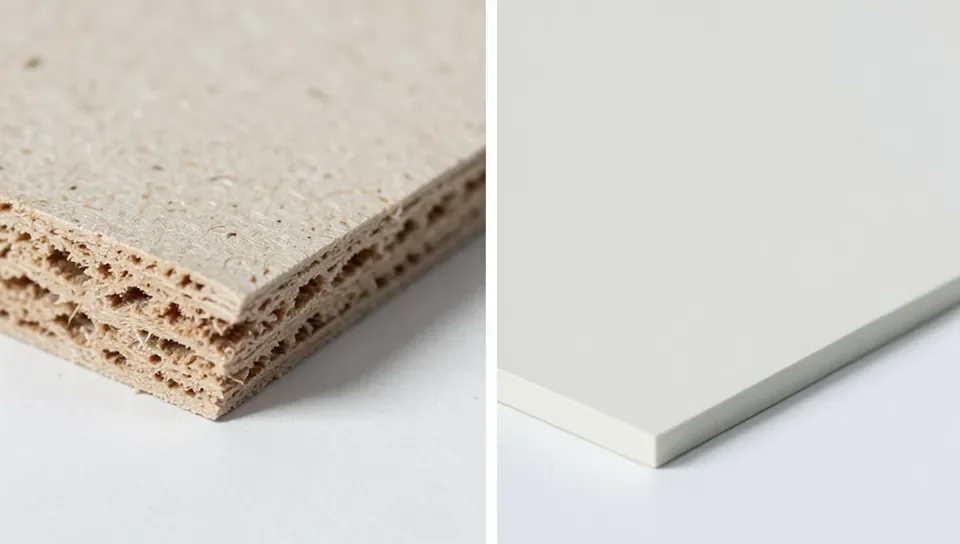
Sand the surface lightly with 220-grit sandpaper to knock down any factory sheen or surface fuzz, then wipe away all dust with a tack cloth — leftover dust is the single most common cause of a gritty, uneven paint finish on MDF. Cut edges need extra attention: they’re far more porous than the factory-laminated faces and will absorb primer unevenly if not sanded and primed carefully.
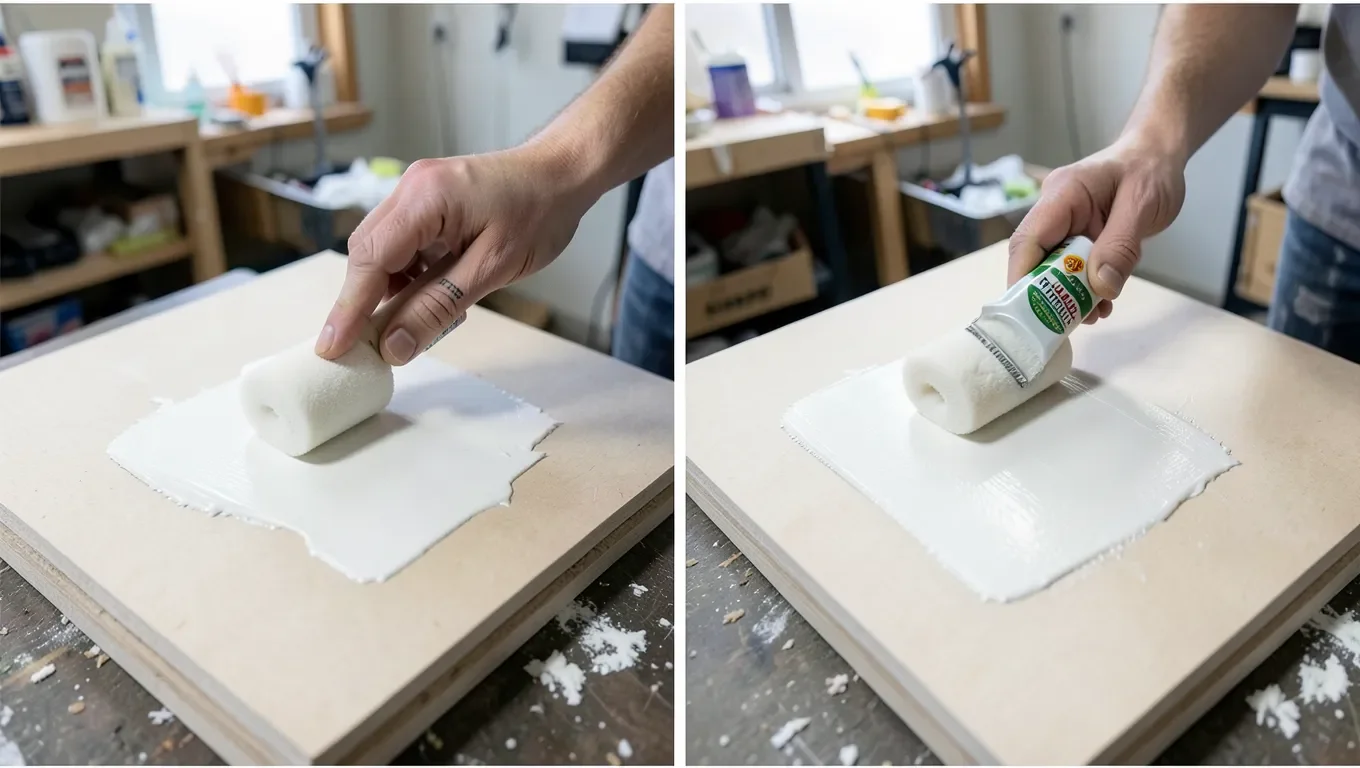
Apply a stain-blocking primer in at least one full coat on faces and two coats on raw cut edges, sanding lightly with 320-grit between coats once each coat is fully dry. This is the step that fixes the “blotchy” look people associate with painted MDF — it’s almost always a skipped or thin primer coat, not a paint problem.
Choosing The Right Color
Lighter colors and whites show off a smooth MDF finish well and are the most forgiving of minor surface imperfections, since they don’t highlight sheen variation the way a dark, glossy color does. A deep or saturated color on MDF furniture usually needs a tinted primer close to the final color to avoid the primer’s white showing through in worn or chipped spots later.
Color choice is otherwise a personal/design decision, not a material limitation — once properly primed and sealed, MDF takes any color of latex or oil-based paint the same way solid wood or plywood does.
Tips For A Smooth Finish
A foam roller (not a nap roller) or a fine-finish spray gun gives the smoothest result on MDF’s flat surfaces — a standard nap roller leaves a visible stipple texture that reads as “cheap furniture” rather than a smooth factory-style finish. Brushes are fine for edges and detail work but leave brush marks on large flat faces if used alone.
Thin coats dry more evenly than one thick coat — two or three thin coats of topcoat, lightly sanded with 320-400 grit between coats, gives a noticeably smoother final result than trying to achieve full coverage in a single heavy coat.
Common Mistakes To Avoid
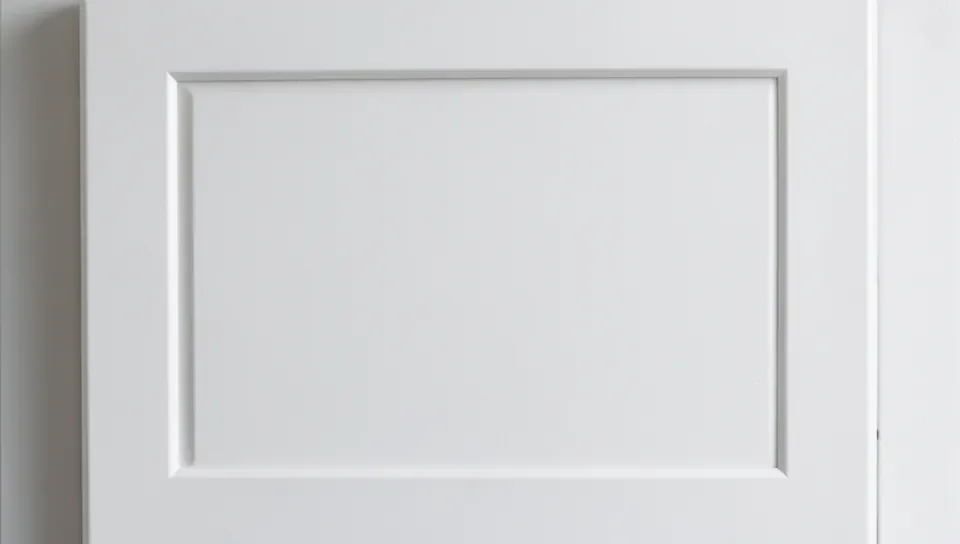
Skipping primer entirely, or using a single thin primer coat on a raw cut edge, is the most common mistake and the direct cause of most “MDF paint looks patchy” complaints. Using a standard nap roller instead of foam is the second most common mistake, and it’s often mistaken for a paint quality issue rather than the actual applicator problem it is.
Painting over unsanded factory sheen (common on pre-laminated MDF panels) can cause peeling later, since paint and primer don’t grip a slick factory finish well without a light scuff-sand first.
Frequently Asked Questions
What Kind Of Paint Do You Use On MDF?
Any latex or oil-based interior paint works on properly primed MDF — satin or semi-gloss for furniture and cabinetry that gets handled, flat is fine for wall-mounted panels. The primer matters far more than the specific paint brand or type.
Does MDF Need To Be Primed Before Painting?
Yes. MDF’s porous fiber absorbs paint unevenly without a sealing primer first, especially at cut edges, which causes the blotchy, absorbent look people associate with unprimed painted MDF.
Is It Better To Paint MDF With A Roller Or Brush?
A foam roller gives the smoothest finish on large flat MDF surfaces; a brush is better reserved for edges, corners, and detail work where a roller can’t reach. Combining both (roller for faces, brush for edges) gives the best overall result.
What Is The Best Finish For MDF?
Satin or semi-gloss is the best finish for MDF furniture and cabinetry since it resists fingerprints and cleans easily. Flat/matte is acceptable for wall-mounted panels that won’t be touched or cleaned regularly.
Conclusion
Almost any quality latex or oil-based paint works well on MDF — the real decision is the primer, sanding, and application technique, not the paint brand. Prime every raw edge (with two coats, not one), sand between coats, and use a foam roller for the smoothest result.
Get the prep right and MDF paints up every bit as smooth as solid wood or plywood — the material isn’t the limiting factor, the process is.
Sponsored / affiliate links. As an Amazon Associate I earn from qualifying purchases. I may earn additional commission from eligible campaigns.