White Kitchen With Dark Wood Floors: How to Get the Contrast Right
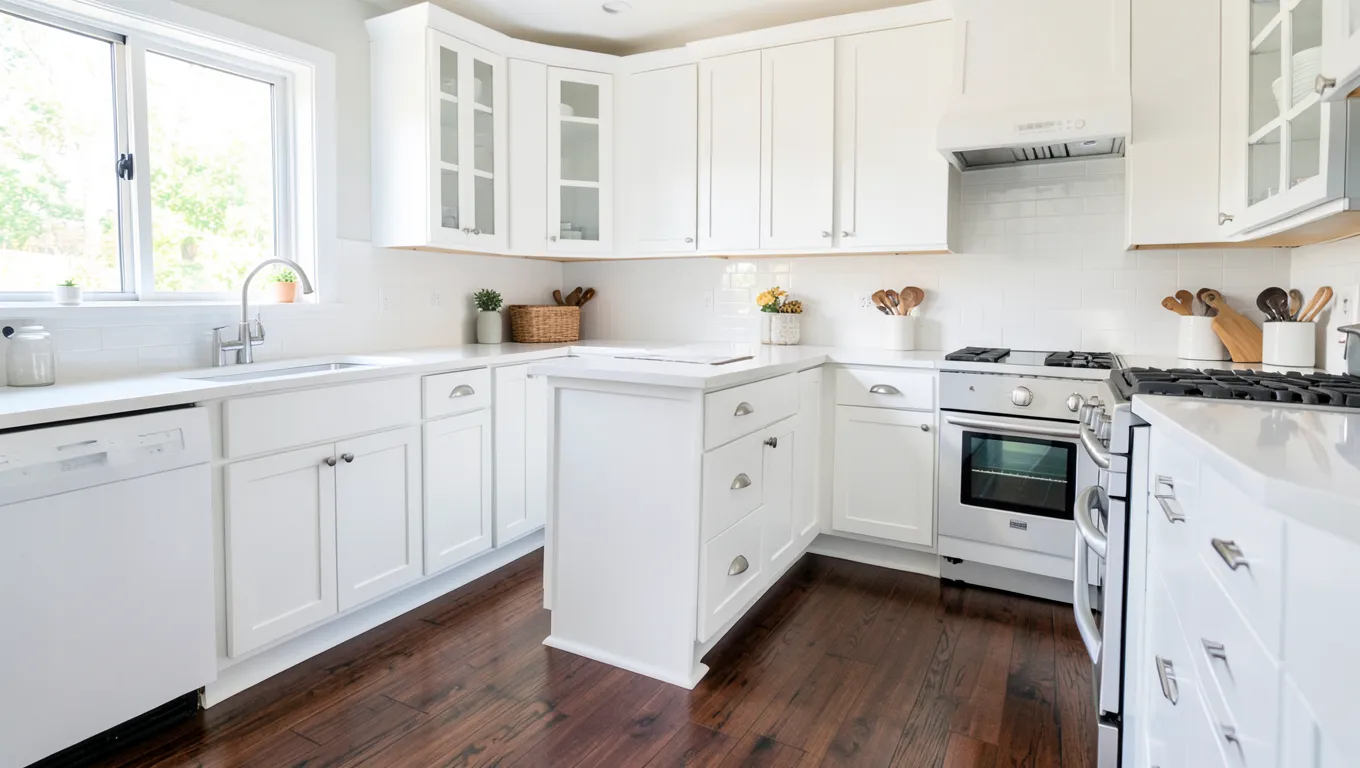
White cabinets over dark wood floors is one of the most durable kitchen combinations in design because it works on contrast, not trend. White reflects light and keeps a kitchen feeling open; dark flooring grounds the space and hides the traffic patterns a light floor shows almost immediately. The pairing fails when the undertones fight each other, so getting the white’s undertone and the wood’s tone to actually complement each other matters more than picking a specific shade off a paint chip.
Match Undertones Before You Match Colors
Best Cleaner for Dark Hardwood Floors
 |
Bona Hardwood Floor Cleaner Spray – $24.27 Dark floors show dust, footprints, and streaks far more than light floors, and this pH-neutral spray cleans without leaving the dulling residue that shows up so easily on a dark finish.
|
Every white paint and every wood stain has an undertone, a hint of another color beneath the dominant one, and mismatched undertones are the most common reason this combination looks off in a finished kitchen rather than in a showroom photo. Cool whites (with blue or gray undertones) pair naturally with cool-toned dark woods like ebony-stained oak or a gray-black walnut finish. Warm whites (with cream or yellow undertones) pair better with warm dark woods like espresso oak, mahogany, or a warm walnut stain. Mixing a cool white with a warm-toned dark floor, or vice versa, is what makes a kitchen look slightly “off” without an obvious reason why.
Testing Undertones in Real Light
Paint undertones shift dramatically under different lighting, north-facing natural light reads cooler, incandescent bulbs read warmer, and LED bulbs vary by their color temperature rating. Test actual paint samples on your cabinet material, not just a wall, and view them beside a real sample of your floor’s finish at multiple times of day before committing, since a white that looks crisp under morning light can look flat or slightly gray under evening artificial light.
Wood Species and Finish Options for the Dark Floor
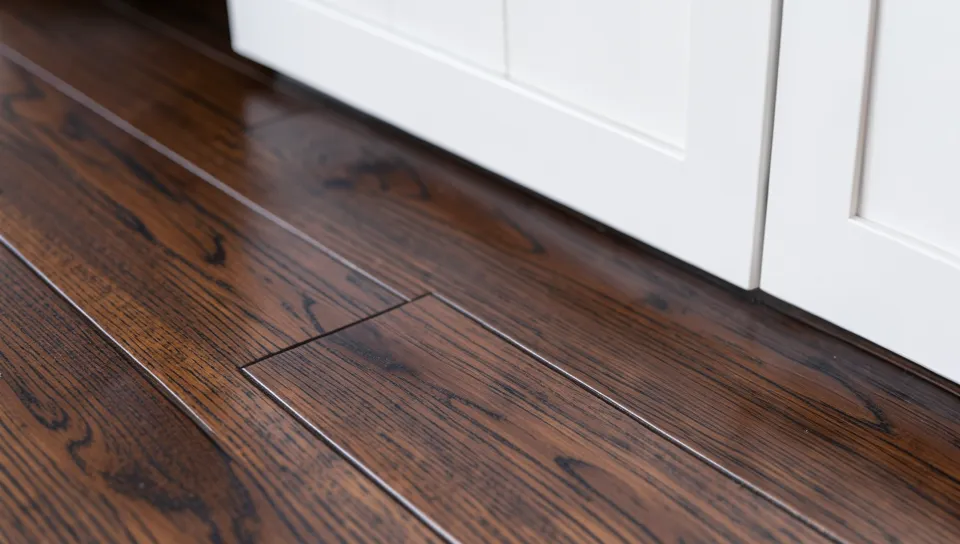
Red oak and white oak both take dark stains well and are widely available, with white oak’s tighter grain giving a slightly more uniform dark finish. Walnut is naturally dark enough that it needs minimal staining to reach an espresso tone, at a higher material cost than stained oak. Engineered hardwood with a dark factory finish is a practical option in kitchens specifically, since it handles the minor moisture and temperature swings a kitchen sees better than solid hardwood, which can gap or cup near a dishwasher or sink over time.
Living With a Dark Floor: What the Photos Don’t Show
Dark floors show dust, pet hair, water spots, and footprints far more visibly than a medium or light floor, simply because the contrast against light-colored debris is higher. A matte or satin finish hides this better than a high-gloss finish, which reflects light directly onto every smudge. Plan on sweeping or vacuuming more frequently than you would with a lighter floor, and use furniture pads under kitchen stools and cabinets, since scratches also show up more clearly against a dark stain.
Balancing the Rest of the Kitchen
With white cabinets and dark floors already providing strong contrast, countertops and backsplash work best as a bridge between the two rather than a third competing statement. A countertop with warm or cool veining that echoes the floor’s undertone (a gray-veined quartz for a cool-toned kitchen, a warmer beige-veined stone for a warm-toned one) ties the palette together. Metal hardware and fixtures in a warm tone (brass, bronze) suit warm-undertone kitchens, while cooler metals (chrome, brushed nickel) suit cool-undertone kitchens.
Frequently Asked Questions
Do dark floors work with white kitchen cabinets?
Yes, it’s one of the most common and durable high-contrast kitchen combinations, as long as the white’s undertone (cool or warm) is matched to the dark wood’s undertone.
What color countertop goes with white cabinets and dark floors?
A countertop that echoes the floor’s undertone, cooler gray-veined stone for a cool-toned kitchen or warmer beige-veined stone for a warm-toned one, ties the two contrasting elements together better than a third unrelated color.
Do dark floors show more dirt than light floors?
Yes, dust, water spots, and footprints show up more visibly on dark floors due to the higher contrast. A matte or satin finish hides this better than a high-gloss finish.
Is engineered hardwood good for a dark kitchen floor?
Yes, and often better than solid hardwood in a kitchen specifically, since it handles the minor humidity and temperature swings near sinks and dishwashers with less risk of gapping or cupping.
Bottom Line
White cabinets and dark wood floors work because of contrast and light, not because the two colors are simply “classic.” Match undertones between the white and the wood, test both under your kitchen’s actual lighting, and plan on more frequent cleaning than a lighter floor requires, and this pairing holds up as one of the more durable, non-trend-dependent kitchen looks available.
Sponsored / affiliate links. As an Amazon Associate I earn from qualifying purchases. I may earn additional commission from eligible campaigns.