Can You Use Lysol on Wood Floors? Why It Dulls the Finish
Lysol will not eat through a wood floor in one pass, but that does not make it the right choice for regular cleaning. Lysol sprays and wipes are formulated as general-purpose, hard-surface disinfectants for things like countertops, tile, and light switches – not for a floor’s protective finish. Used regularly on a polyurethane or wax topcoat, the alcohol and disinfecting agents in Lysol can dull and soften the finish, and spraying it directly onto the floor lets liquid pool at the seams between boards, where it can seep in and cause the wood to swell. Here is the actual mechanism behind both problems, and what flooring manufacturers recommend using instead.
Why Lysol Isn’t Formulated for a Wood Floor’s Finish
Most Lysol multi-surface sprays list alkyl dimethyl benzyl ammonium chloride (a quaternary ammonium compound, often shortened to a “quat”) and isopropyl alcohol as their active disinfecting ingredients. Both are effective at killing bacteria and viruses on non-porous surfaces like laminate and tile. The problem is that those same compounds act as mild solvents on the acrylic and polyurethane resins used in wood floor finishes. Repeated contact softens the topcoat’s surface, which shows up as a hazy, dulled patch rather than an obvious scratch or stain. It is easy to miss the cause because the damage builds up gradually over several cleanings, not the first one. If you want something that is actually built for a finished wood floor instead of general household surfaces, this is the cleaner most flooring pros reach for:
Best pH-Neutral Wood Floor Cleaner
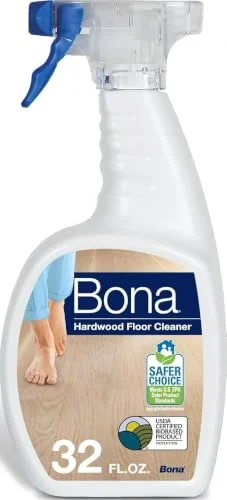 |
Bona Hardwood Floor Cleaner Spray, 32 fl oz – $8.97 A pH-neutral formula made specifically for finished wood, not a general disinfectant repurposed for the floor.
|
The Other Problem: Liquid Pooling in the Seams
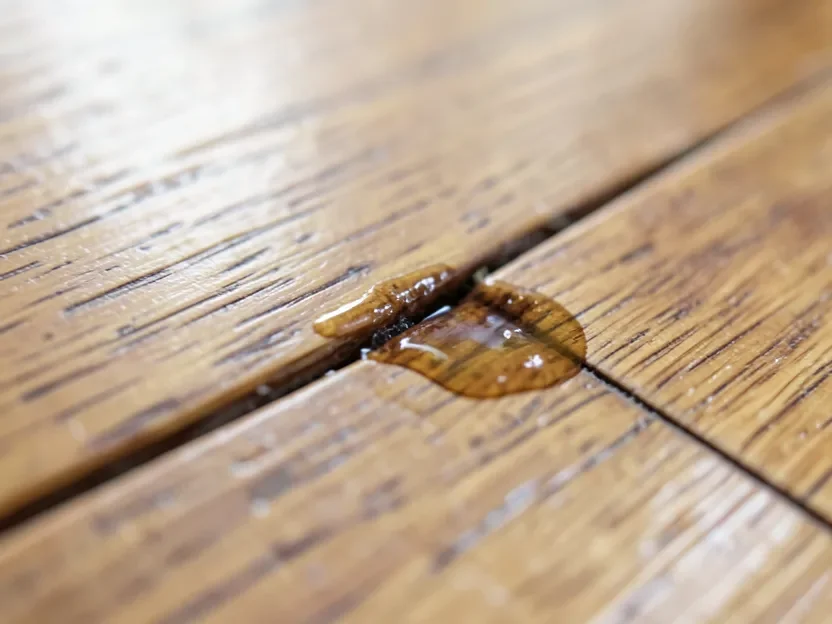
The finish itself is only half the issue. Lysol’s trigger-spray bottle is designed for spot-spraying a counter or a doorknob, not for covering a large floor evenly. When it is sprayed directly onto hardwood, liquid tends to collect in low spots and in the narrow gaps between boards instead of spreading into a thin film the way it would on a flat countertop. Wood is hygroscopic, meaning it absorbs moisture from anything sitting in contact with it for more than a few seconds. Liquid that pools at a seam has a direct path into the board’s edge, below the sealed top surface, where it can cause the wood to swell slightly. Over repeated applications, that small amount of swelling at each seam is what eventually shows up as boards that feel raised, uneven, or slightly cupped along their edges.
This is a different failure mode than the finish-dulling problem above, and it is also why manufacturers who do sell a “wood-safe” version of a disinfectant almost always pair it with a microfiber mop rather than a spray bottle. A mop head picks up excess liquid instead of letting it sit, and a well-wrung mop never puts down more moisture than the finish can handle before it evaporates.
What Lysol Damage Actually Looks Like
Because the damage builds up gradually, most people do not connect a Lysol habit to a floor that “just looks older than it should.” The tell-tale signs are a matte, hazy patch in the traffic pattern where you mop most often, a slightly gritty or sticky feel underfoot even right after cleaning (a sign of solvent residue rather than dirt), and faint white or cloudy rings near the room’s edges where liquid tends to pool longest. Seam swelling shows up differently: boards that used to sit flush start to feel raised at the edges when you run a hand across them, or you notice a board edge catching a sock. Neither symptom is dramatic on its own, which is exactly why it is easy to blame “just wear and tear” instead of the actual cause.
Does the Type of Wood Floor Finish Change the Risk?
Yes, and it is worth knowing which one you have before you reach for any disinfectant. Polyurethane is the most common finish on hardwood installed in the last few decades and forms a hard plastic-like layer over the wood; it holds up best to occasional water contact but is still vulnerable to the solvent action described above with repeated Lysol use. Wax finishes are older and softer, and alcohol-based cleaners like Lysol can strip wax noticeably faster than they dull polyurethane, sometimes leaving visible streaks after a single cleaning. Penetrating oil finishes soak into the wood fibers rather than sitting on top, so there is no sacrificial topcoat to protect the wood at all; a disinfectant that would only dull a polyurethane surface can directly discolor an oil-finished floor. If you are not sure which finish you have, run a water-drop test in an inconspicuous corner: water that beads up means a topcoat finish (polyurethane or wax), while water that soaks in within a minute or two usually means an oil finish that needs gentler care.
When Lysol Is Actually Fine to Use
None of this means Lysol is banned from ever touching a wood floor. Spot-treating a specific, small area, like wiping down the spot where a sick pet had an accident or where raw meat juice dripped during cooking, is a reasonable use as long as you apply it to a cloth first rather than spraying the floor directly, work the area quickly, and dry it immediately afterward with a clean towel. What causes the cumulative damage described above is routine, whole-floor mopping with Lysol as a substitute for a floor-specific cleaner, done week after week. An occasional, controlled spot treatment does not carry the same risk as making it your everyday floor cleaner.
How to Disinfect a Wood Floor Without Damaging the Finish
If you need something with real disinfecting power and not just a floor-safe cleaner, look specifically for a product labeled for use on sealed hardwood, rather than a general disinfectant you already have under the sink. Follow this sequence for the lowest-risk result:
- Sweep or vacuum first to remove grit, since grit ground in by a wet mop is what actually scratches the finish.
- Choose a pH-neutral, wood-floor-specific cleaner (like the pick above) or a disinfectant explicitly labeled safe for sealed hardwood.
- Apply with a well-wrung microfiber mop, not a spray bottle aimed at the floor, so you control exactly how much liquid touches the wood.
- Work in small sections and go over each one with a dry microfiber cloth immediately after, before moving to the next section.
- Skip disinfecting a floor with visible gaps, cupping, or worn-through finish until it has been resealed. Damaged finish has no protective layer left, so any liquid, disinfectant or not, goes straight into the wood.
Other Wood Floor Types Worth Knowing About
The chemistry above applies to traditional solid and engineered hardwood. Bamboo flooring is a different material with its own finish sensitivities and moisture tolerances worth checking before using any disinfectant on it – see our guide to cleaning strand-woven and traditional bamboo floors for the differences. If your floor’s finish is already worn, discolored, or showing the kind of dulling this article describes, a professional deep clean is sometimes more cost-effective than DIY guesswork – our breakdown of Stanley Steemer’s hardwood floor pricing versus doing it yourself covers what that actually costs.
Frequently Asked Questions
Can I use Lysol wipes on hardwood floors?
Occasionally, for a small spot, yes. Lysol wipes contain the same alcohol and quaternary ammonium disinfecting agents as the spray, so using them across an entire floor on a regular basis carries the same finish-dulling risk. Wiping a single small area, like a spill, and drying it right after is a much lower-risk use than mopping the whole room with wipes.
Will Lysol ruin my wood floor’s finish?
Not from one use, but repeated whole-floor cleaning with Lysol can dull and soften a polyurethane or wax topcoat over time, since it is formulated as a general disinfectant rather than a floor-finish-safe cleaner. The damage tends to show up gradually as a hazy or streaky look rather than all at once.
What should I use instead of Lysol to disinfect wood floors?
A pH-neutral cleaner made specifically for finished wood floors, applied with a well-wrung microfiber mop rather than sprayed directly onto the boards. Bona’s hardwood floor cleaner spray is a widely used example that is formulated to be safe on sealed polyurethane finishes without leaving the residue or solvent exposure that a general disinfectant does.
Is it safe to use Lysol spray on engineered hardwood?
Engineered hardwood has the same finished wood surface as solid hardwood, so it carries the same risk: the alcohol and disinfecting agents in Lysol can dull the topcoat, and liquid pooling at the seams can reach the wood veneer layer underneath. Treat it the same way you would solid hardwood, with a floor-specific cleaner and a mop instead of a direct spray.
Conclusion
Lysol is not formulated for a wood floor’s finish, and using it as a regular floor cleaner risks two separate problems: a dulled, softened topcoat from repeated contact with its alcohol and disinfecting agents, and swollen board seams from liquid pooling where a spray bottle cannot apply it evenly. An occasional, controlled spot treatment is a reasonable exception, but for routine cleaning, a pH-neutral cleaner made specifically for wood floors protects the finish that is doing the actual work of protecting your wood.
Sponsored / affiliate links. As an Amazon Associate I earn from qualifying purchases. I may earn additional commission from eligible campaigns.