Why are Stihl Chainsaws So Hard to Start: Expert Insights Revealed
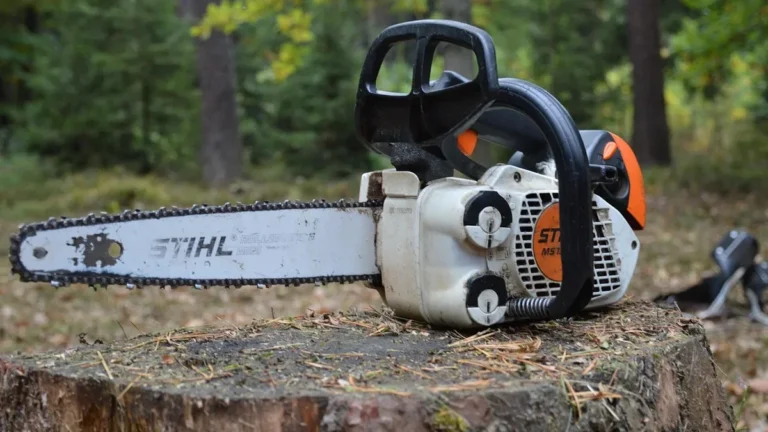
Stihl chainsaws feel harder to start than many competitors mainly because they’re built with higher compression engines for better power-to-weight ratio, and most models don’t have a decompression valve to ease that pull. The rest usually comes down to correct technique and routine maintenance — stale fuel, a fouled spark plug, or a dirty air filter cause far more no-start calls than any actual defect.
Once you know the real cause behind the resistance, starting one reliably is mostly a matter of technique and a five-minute maintenance check.
Why Stihl Chainsaws Feel Harder To Start Than Other Brands
Stihl’s professional and semi-professional saws run higher cylinder compression than many budget-brand equivalents, which is part of why they deliver more cutting power per pound — but higher compression also means more resistance on every pull of the starter rope. Some Stihl models (many in the MS 2xx and 3xx lines) include a decompression valve, a small button on the cylinder that briefly vents compression during starting; models without one will always feel stiffer to pull, and that’s expected, not a fault.
New Stihl owners coming from a lighter homeowner-grade saw often assume something’s wrong the first time they feel the pull resistance. In most cases the saw is working exactly as designed — the fix is proper technique, not a repair.
Best For Diagnosing A No-Start
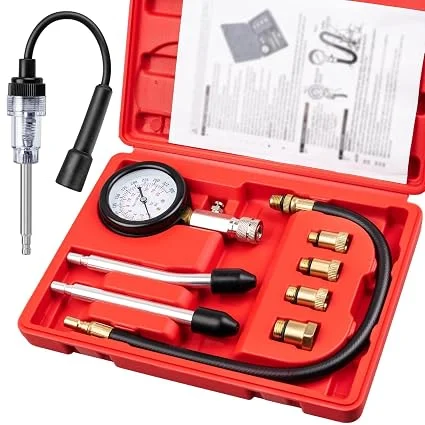 |
Marvelity 9pc Compression Tester Kit – $16.99 Rules out low compression (worn piston rings or a bad cylinder) before you spend money on a new carburetor or coil.
|
The Correct Starting Technique
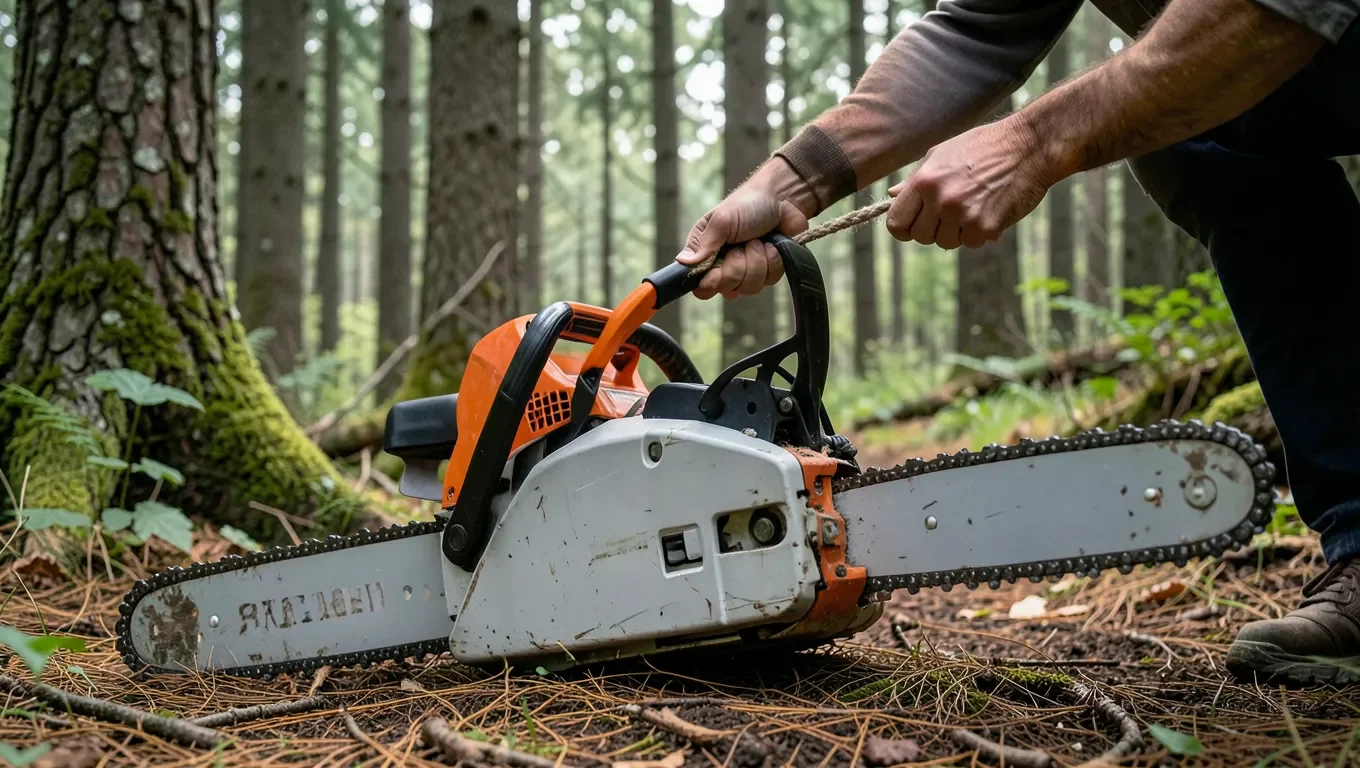
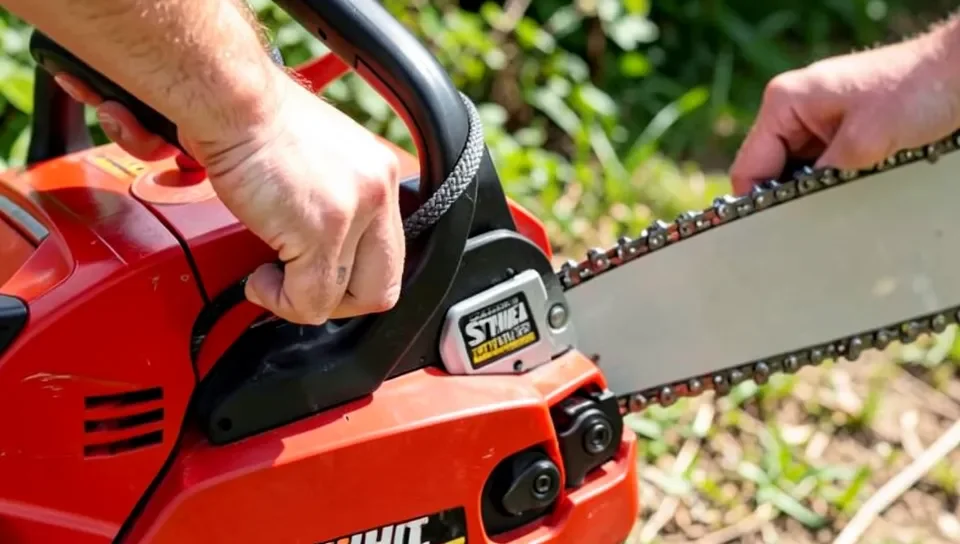
Most “hard to start” complaints trace back to technique rather than the machine. Stihl’s recommended cold-start sequence: set the master control lever (or choke, on older models) to the cold-start position, place the saw on flat ground, grip the front handle firmly with your left hand and brace your right foot through the rear handle, then pull the starter rope with firm, complete strokes — short, half-hearted pulls rarely generate enough flywheel speed to fire the engine.
Once the engine fires (even briefly) on a cold start, move the lever to the run/half-throttle position before continuing to pull. Leaving it on full choke after the first fire is a common mistake that floods the engine on the next few pulls.
Common Starting Issues
Cold-weather starting is genuinely harder: gasoline vaporizes more slowly in cold temperatures, and 2-stroke oil thickens slightly, both of which slow ignition. Use fresh fuel, verify the air filter is clean, and confirm the spark plug gap and condition before assuming a bigger problem.
A hot, hard-to-restart saw is usually flooded rather than broken — letting it sit for a few minutes with the choke off and the throttle held wide open while pulling clears excess fuel from the cylinder in most cases. If it still won’t restart after a flooding attempt, pulling and drying the spark plug directly resolves the rest.
Fuel System Problems
Old or ethanol-heavy fuel is the single most common cause of hard starting on any 2-stroke saw, including Stihl’s. Ethanol absorbs moisture and breaks down within 30-60 days, leaving gummy residue that clogs the tiny carburetor jets. Use fresh fuel mixed at the ratio your model calls for (most modern Stihl saws use 50:1), and don’t store a saw for more than a month with fuel still in the tank.
A dirty or gummed-up carburetor from old fuel restricts the air-fuel mix the engine needs to fire. Cleaning it resolves most fuel-related no-starts; if cleaning doesn’t fix it, the carburetor’s internal diaphragms may need replacing, which is a job most owners hand off to a Stihl dealer.
Ignition System Challenges
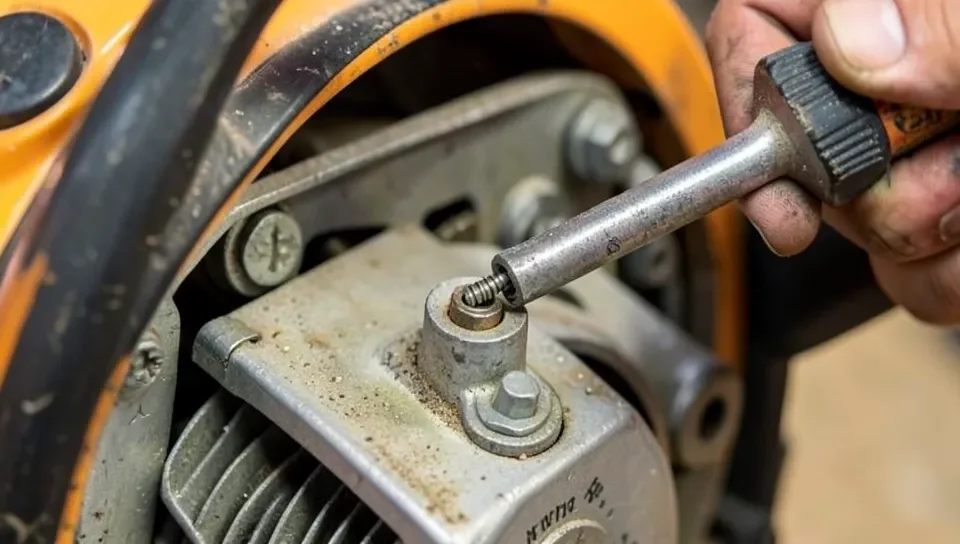
A fouled, worn, or incorrectly gapped spark plug is one of the most common and easiest-to-fix causes of a no-start. Pull the plug, check for a dry, light-tan color (black or wet indicates fuel or oil fouling), confirm the gap matches your model’s spec (typically around 0.02 inches on most Stihl saws), and replace it if it’s worn or cracked — spark plugs are cheap and should be part of routine maintenance regardless.
A failing ignition coil is less common but will produce the same symptom: no spark, no start, even with fresh fuel and a good plug. Coils don’t wear out on a predictable schedule, but if a new plug and fresh fuel don’t solve a no-start, a coil test (or dealer diagnosis) is the next step.
Air Filter And Compression
A clogged air filter starves the engine of the air it needs to mix properly with fuel, and it’s one of the fastest five-minute checks available — pull the cover, inspect the filter, tap out debris or wash it if it’s a foam type, and replace it if it’s torn or saturated with oil.
Low cylinder compression is a more serious mechanical issue, usually from worn piston rings or cylinder wall damage, and it genuinely does make a saw hard or impossible to start (the engine can’t build enough pressure to ignite the fuel-air mix reliably). Testing compression with a small engine compression tester rules this in or out before you spend money replacing a carburetor or coil that was never the real problem — a healthy 2-stroke chainsaw engine typically reads in the 110-160 PSI range, and readings well below that point to internal wear needing a dealer’s attention.
Maintenance Tips
Clean the air filter every few tanks of fuel, check the spark plug at least once a season, use fresh fuel (mixed no more than 30 days before use), and drain the tank before any storage longer than a month. Lubricate the chain per your model’s bar oil schedule — this doesn’t affect starting directly but is part of the same routine maintenance rhythm that keeps a saw reliable.
For storage, run the tank dry (or use fuel stabilizer) rather than leaving fuel to degrade in the carburetor, store the saw in a dry, temperature-stable space, and cover it to keep dust out of the air intake.
Frequently Asked Questions
Why Won’t My Stihl Chainsaw Start?
Stihl chainsaws may have starting issues due to old fuel, a dirty air filter, or a fouled spark plug. Regular maintenance helps.
How Do I Start A Cold Stihl Chainsaw?
To start a cold Stihl chainsaw, set the choke, pull the starter rope, and press the throttle. Follow the manual.
Why Does My Stihl Chainsaw Stall?
A Stihl chainsaw may stall due to a clogged fuel filter, dirty carburetor, or incorrect fuel mixture. Check these parts.
How Often Should I Service My Stihl Chainsaw?
Service your Stihl chainsaw every 25-50 hours of use. Regular maintenance ensures smooth operation and longevity.
Conclusion
A Stihl chainsaw that’s hard to start is rarely defective — it’s usually a higher-compression engine, a technique issue, or a routine maintenance item like old fuel or a dirty filter. Work through fuel, filter, and spark plug first, since those cause the vast majority of no-starts, and only suspect a real mechanical problem (like low compression) if those checks come back clean.
If your saw is flooding specifically rather than just resisting the pull, our guide to starting a flooded Stihl chainsaw walks through the master control lever method step by step.
Sponsored / affiliate links. As an Amazon Associate I earn from qualifying purchases. I may earn additional commission from eligible campaigns.