Why Is MDF Green? The Real Reason (Not Eco-Friendly)
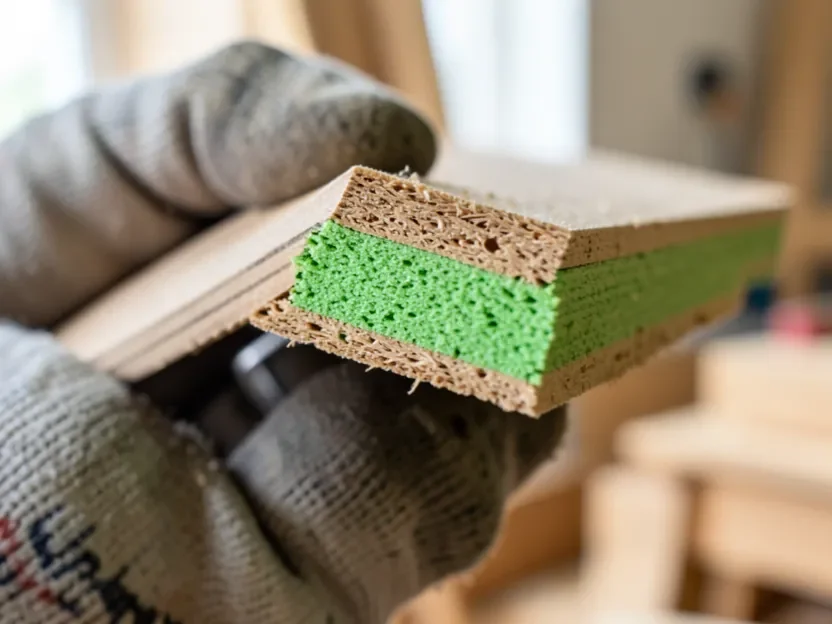
MDF isn’t green because it’s better for the environment. It’s green because a factory dyed it that color on purpose, as a fast way for installers to tell moisture-resistant MDF apart from the standard version on a lumber rack. Those two ideas – “green” as a color and “green” as in eco-friendly – get mixed up constantly, and confusing them can mean buying the wrong board for a bathroom vanity or a kitchen cabinet carcass. Here’s what the dye actually means, what really makes moisture-resistant MDF moisture-resistant, and where the color can mislead you.
The Real Reason MDF Is Dyed Green
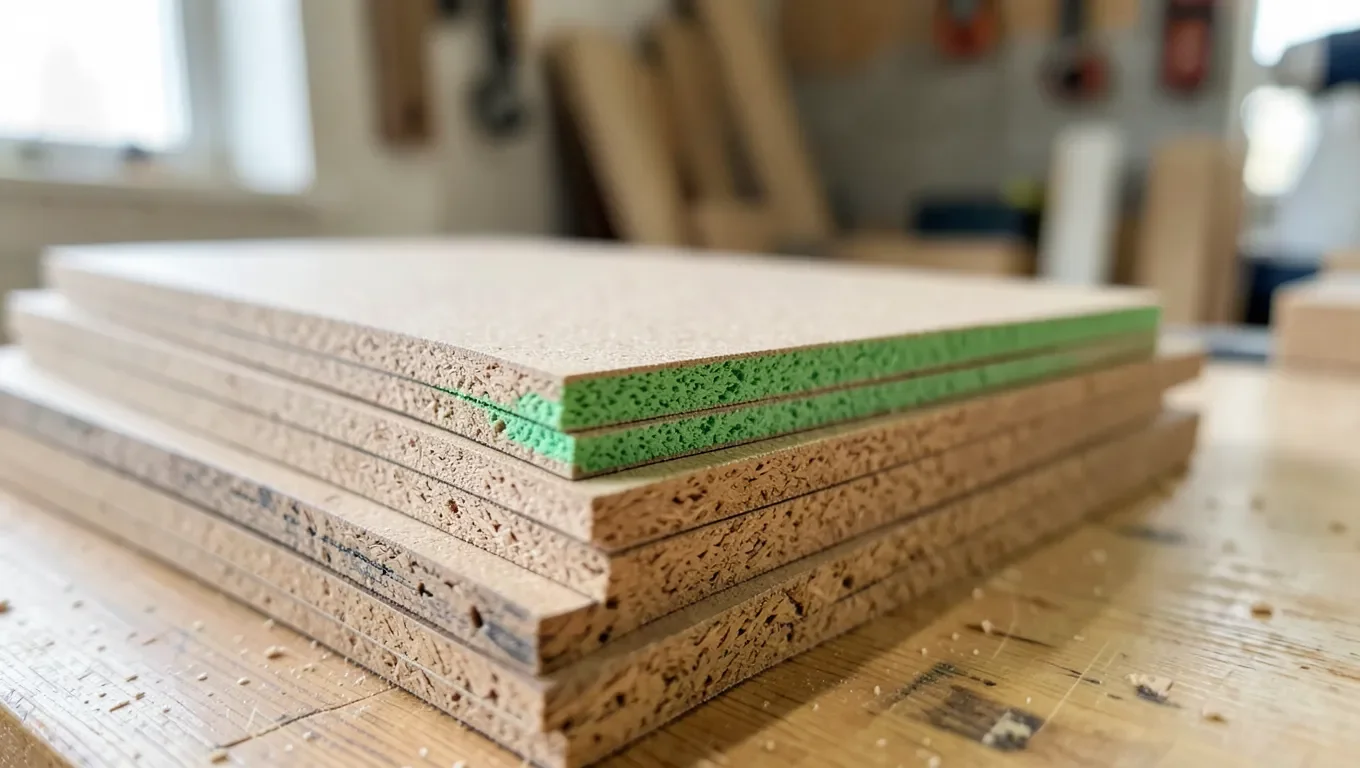
Manufacturers add a green dye to moisture-resistant MDF (MR MDF) purely so it can be spotted at a glance – on a supplier’s rack, on a job site, or in a stack of offcuts. It’s an identification mark, nothing more. The dye itself has no moisture-resisting properties; it doesn’t change the board’s water resistance one bit. That job is done entirely by the resin binding the wood fibers together, not the color sitting on top of it.
It’s also worth clearing up a related mix-up: pressure-treated lumber is often tinted green too, but for a completely different reason. That green comes from copper-based wood preservative chemicals (historically chromated copper arsenate, more commonly micronized copper azole today) that are pressure-forced into the wood to prevent rot and insect damage – the tint is a byproduct of the actual chemical treatment. MDF’s green dye does none of that. It’s a cosmetic marker added during manufacturing, not a preservative, and it doesn’t penetrate or protect anything.
Seal The Edges, Regardless Of Color
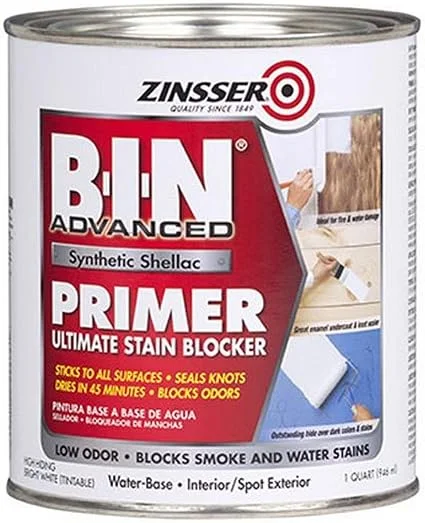 |
Zinsser B-I-N Advanced Shellac Primer – $23.03 Green dye or not, a cut edge on any MDF (including MR MDF) is exposed fiber that soaks up moisture – this shellac-based primer seals it fast and blocks stains before paint goes on.
|
What Actually Makes Green (MR) MDF Moisture-Resistant
Standard MDF and moisture-resistant MDF start the same way: wood fibers pressed under heat with a resin and wax binder. The difference that matters is the resin. Standard MDF uses urea-formaldehyde (UF) resin, which bonds the fibers well in dry conditions but breaks down once it absorbs water, causing the board to swell and lose strength. MR MDF replaces that with a melamine-fortified resin – melamine-urea-formaldehyde (MUF) – along with a higher paraffin wax content. The melamine forms a denser, more cross-linked bond structure that resists hydrolysis (water breaking the resin bonds apart), and the extra wax acts as a water repellent in the fiber mix itself.
The performance gap is real and measurable. Under the EN 622-5 standard that defines these boards (moisture-resistant MDF is classified as Type MDF.H), standard MDF often shows 15% or more residual thickness swell after a 24-hour soak test and doesn’t recover. MR MDF typically comes in around 2-5% swell under the same test. That’s the number that actually tells you whether a board belongs in a bathroom – not the color of the core.
Why The Color Confuses People: 3 Myths, Corrected
Myth 1: Green means eco-friendly. It doesn’t. The color has zero connection to how sustainably a board was made. If sustainability matters to your project, look for an FSC (Forest Stewardship Council) certification or a manufacturer’s low-emission adhesive spec sheet – not the tint of the board.
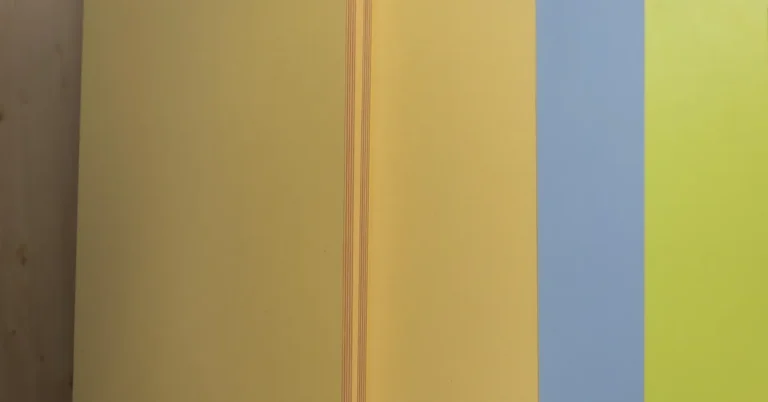
Myth 2: All moisture-resistant MDF is green. Not true. Green dye is common on standard 8’x4′ and 10’x4′ sheets, but larger sheets (roughly 14’x4′ and up) are frequently left untinted and look identical to standard MDF, because manufacturers found the dye took extra primer coats to fully cover on bigger panels. Some brands use blue or gray instead of green. Color alone is a hint, not proof.
Myth 3: Green MDF is waterproof. It’s water-resistant, not waterproof. MR MDF still swells if it sits in standing water or gets soaked repeatedly – it just takes much longer and swells far less than standard MDF under the same exposure. Under a sink with a slow leak, or against a shower pan with no gap, either board eventually fails.
Where Green MDF Actually Gets Used
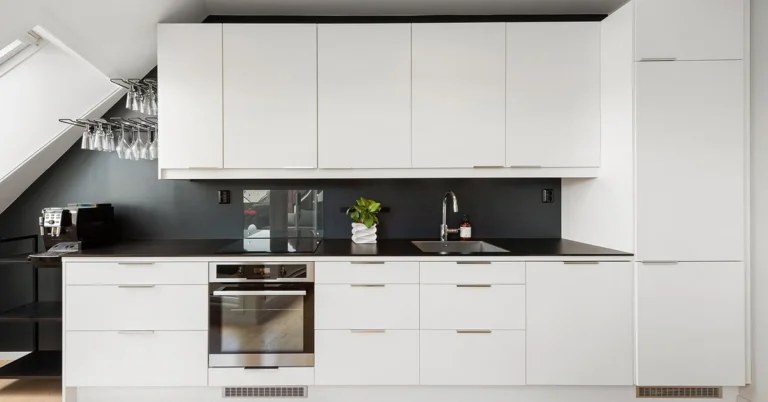
MR MDF shows up in bathroom vanities, kitchen cabinet carcasses (the box behind the doors, not necessarily the doors themselves), window sills, and laundry room cabinetry – anywhere humidity or the occasional splash is routine but the board won’t be sitting in standing water. It’s a step up from standard MDF for these spots without paying for solid wood or marine-grade plywood. For a full side-by-side on resin type, swell numbers, and how to identify a board that’s actually rated for it, see our MDF vs. moisture-resistant MDF comparison guide.
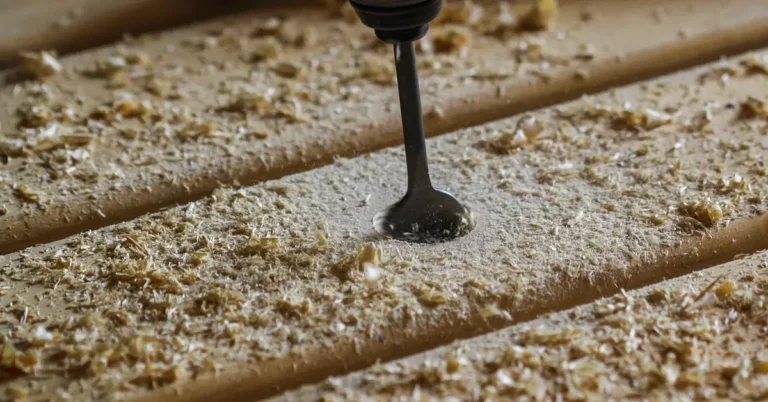
One thing color doesn’t change: cut edges are exposed fiber on any MDF, green or not, and they need to be sealed and primed before paint goes on or they’ll wick moisture faster than the face of the board. Our guide to priming MDF edges covers the sanding and sealing steps in detail.
A Quick Sanity Check Before You Trust The Color
If you’re standing in a lumber aisle or looking at a stack of offcuts, three quick checks tell you more than the tint does. First, look for a stamp or label on the edge or the back face – manufacturers that make a genuine MR MDF board reference the EN 622-5 Type MDF.H standard somewhere on the sheet or the supplier’s tag, and that’s the actual proof, not the color. Second, check the color runs all the way through a fresh cut, not just on the outer surface – a board that’s only tinted on the face (not the core) is a red flag that it’s cosmetic, not a manufacturer’s moisture-resistant line. Third, ask the supplier directly for the spec sheet if you’re buying enough material that it matters; a legitimate MR MDF product will have documented swell and absorption numbers, while a generic “green board” from an unclear source often won’t.
None of that requires lab equipment. It just means treating the green tint as a starting clue instead of the final answer – the same way you wouldn’t assume a board is pressure-treated lumber just because it looks greenish under shop lighting.
Frequently Asked Questions
Is green MDF eco-friendly?
Not because of the color. The green dye is a manufacturing identification mark with no connection to sustainability. Some MDF is made with recycled wood fiber and low-emission adhesives, but you’d confirm that through an FSC certification or the manufacturer’s spec sheet, not by looking at the tint.
Is all moisture-resistant MDF green?
No. Green is the most common identification tint on standard-size sheets, but larger sheets are often left untinted, and some manufacturers use blue or gray instead. Confirm moisture resistance through the supplier’s spec sheet or an edge stamp referencing EN 622-5 Type MDF.H, not the color alone.
Can you tell MDF is moisture-resistant just by the green color?
Not reliably. Color is a common visual cue, not a certification. A board could be tinted green for other reasons, or a genuinely moisture-resistant board could ship untinted. Always check the spec sheet or edge stamp for the actual resin type and standard rating.
Does green (MR) MDF still need sealing or priming?
Yes. MR MDF resists moisture better than standard MDF, but the cut edges are still exposed, porous wood fiber. Sealing and priming those edges before painting is still required for a finish that holds up, especially in a bathroom or kitchen.
Bottom Line
MDF is green because a factory dyed it that way to make moisture-resistant boards easy to spot – not because green MDF is somehow better for the planet. The actual moisture resistance comes from a melamine-fortified resin and extra wax in the fiber mix, and you can verify it with a spec sheet or an EN 622-5 Type MDF.H stamp rather than trusting the color alone. Whichever board you’re working with, seal the cut edges before you paint.
Sponsored / affiliate links. As an Amazon Associate I earn from qualifying purchases. I may earn additional commission from eligible campaigns.