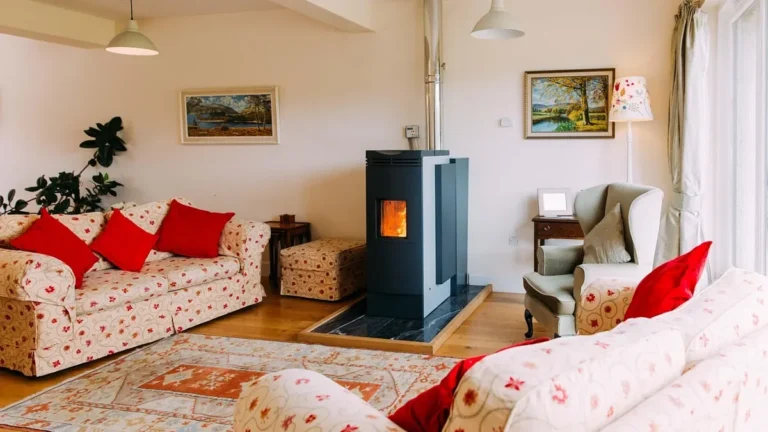
10 Cozy Wood Burning Cook Stove Ideas for Your Kitchen
A wood burning cook stove turns a kitchen into a genuine heat source and cooking surface at once – the trade-off is that it needs real clearance from combustibles, a properly sized flue, and dry seasoned wood, not the softwood or green wood that drives up creosote. The ideas below cover the styles worth considering and the safety and cost details that actually decide whether one fits your kitchen.
Rustic and Vintage Styling
Best Small Wood Cook Stove for a Kitchen
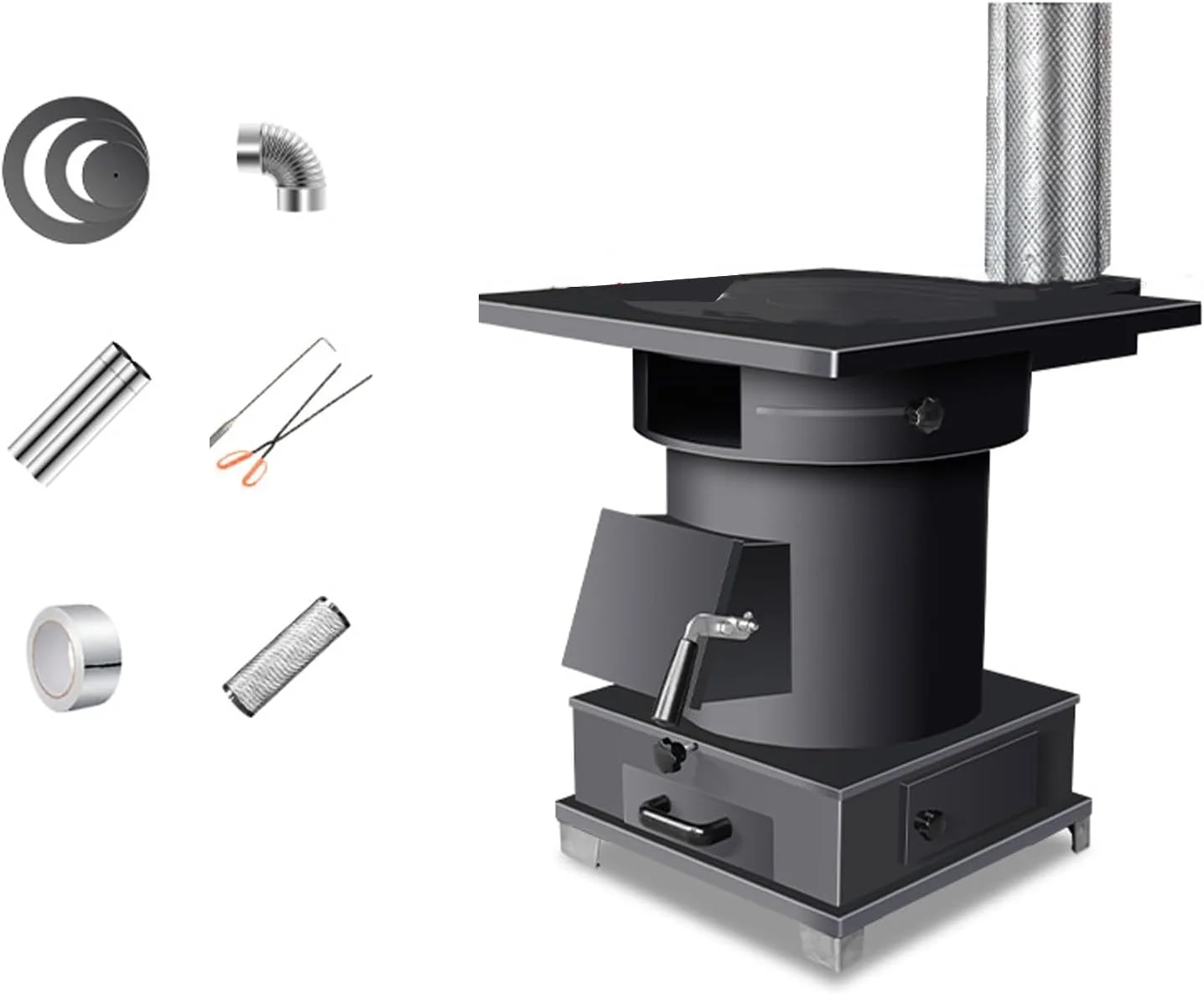 |
Small Wood Burning Cook Stove with Oven and Chimney Pipes – $636.16 A compact cast-iron cook stove sized for a real kitchen or cabin, with a built-in oven and the chimney pipe kit included rather than sold separately.
|
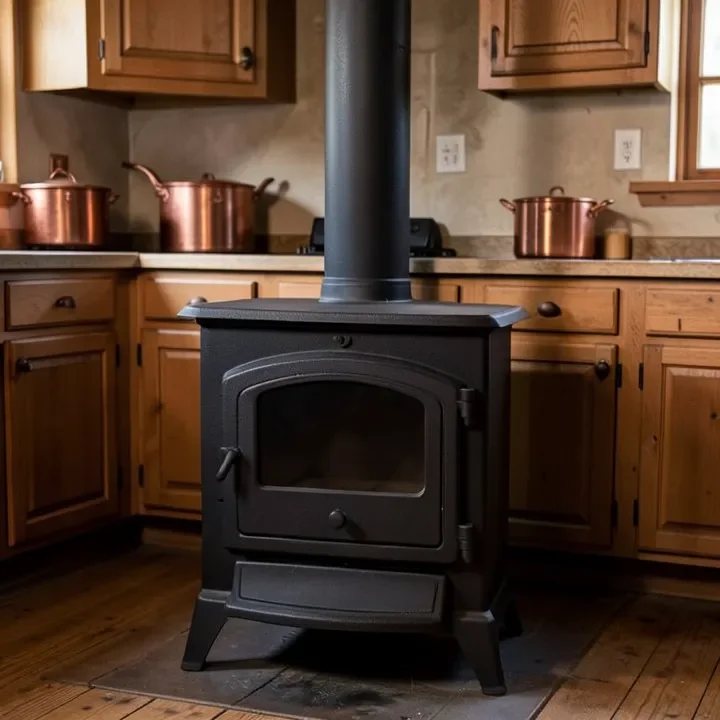
A vintage-style cook stove with ornate ironwork, polished brass hardware, and a deep black or muted-grey enamel finish reads as the classic farmhouse centerpiece. These designs pair naturally with wood cabinetry, open shelving, and cast iron cookware, and they hold their look for decades because the enamel and iron construction resists the wear a painted appliance would show.
Wood choice affects the cooking experience as much as the stove itself. Hardwoods like oak and maple burn slower and hold a steadier temperature, which suits simmering and baking. Softwoods like pine and spruce light faster and burn hotter initially but burn out sooner – useful for a quick pan-sear, less so for an hour-long braise. Always season either type to below 20% moisture content before burning; wet wood is the single biggest cause of excess smoke and creosote buildup in a cook stove.
Modern Finishes and Features
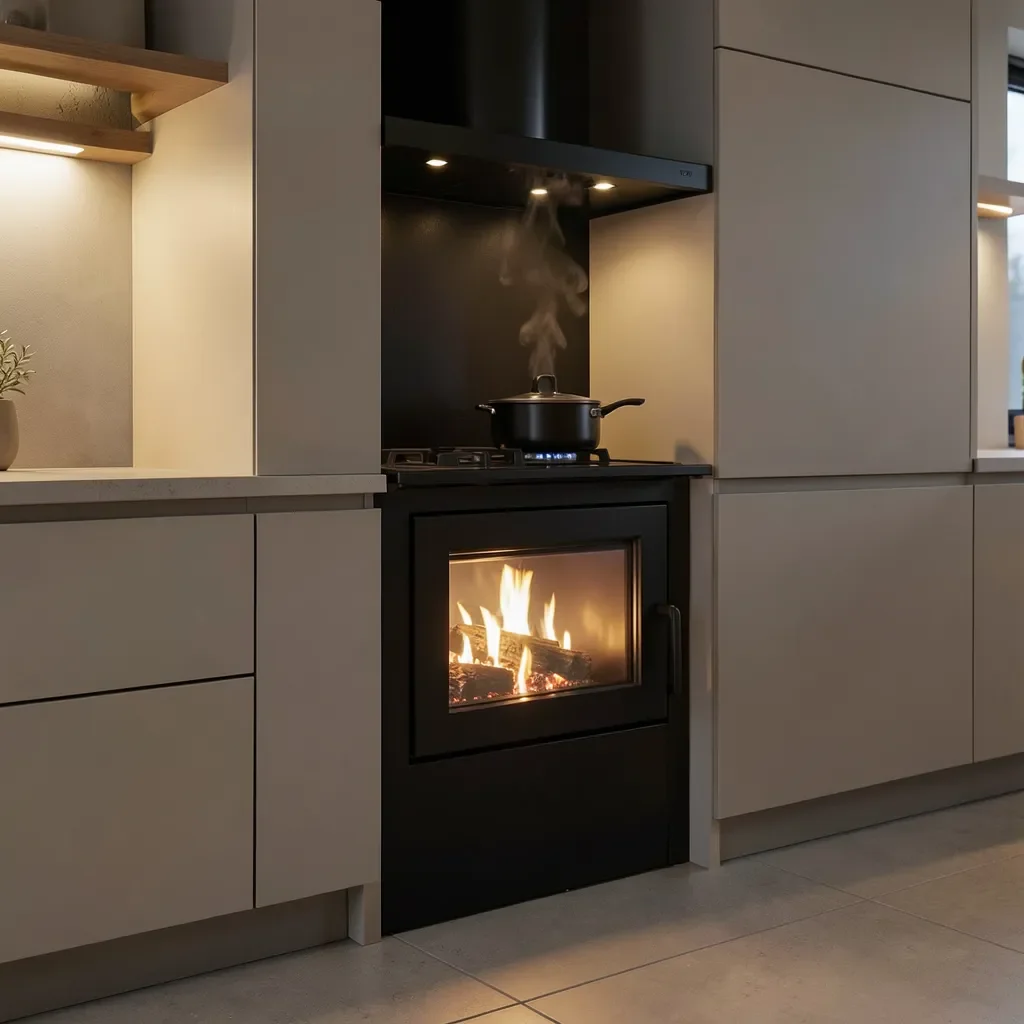
Contemporary wood cook stoves trade the ornate ironwork for glossy black enamel, brushed stainless steel, or matte custom colors that sit comfortably next to modern appliances. Beyond looks, newer models often add a glass oven door so you can check on food without losing heat, better-engineered airflow for cleaner combustion, and in some cases digital temperature readouts – features that make a wood stove behave more predictably, which is the main complaint people have about older designs.
Compact Stoves for Small Kitchens
A compact wood cook stove fits into a corner or against a single wall in a tiny home, cabin, or small kitchen without dominating the room. Smaller fireboxes generally use less wood per cooking session and heat up faster, though they also hold less coal bed – meaning you’ll feed them more often for a long cooking session than you would a full-size stove.
Eco-Friendly and Efficient Options
Stoves built from recycled steel or iron, or finished in soapstone or ceramic (both of which retain and radiate heat longer than bare metal), are the more sustainable end of the category. Look for a stove with a secondary-combustion or catalytic system – these burn off more of the gases and particulates that a basic firebox sends straight up the flue, which means more heat per log and less smoke overall. That efficiency is also what keeps a wood cook stove’s ongoing fuel cost down compared to an older, leakier design.
Multifunctional Stoves (Cooking Plus Heating)
A single stove that cooks and heats the room does double duty, which is exactly why these were the standard kitchen appliance for so long before gas and electric ranges took over. Many models add a built-in oven for baking, a warming shelf that keeps finished dishes hot until serving, or a water reservoir that heats alongside the firebox – genuinely useful in a cabin or off-grid kitchen where hot water isn’t a given.
Classic Cast Iron and Enamel Styles
A cast-iron-bodied stove with an enamel finish is built to outlast most other kitchen appliances – decades of daily use is realistic with basic maintenance. Cooking on one also forces a slower pace: there’s no instant-on burner, so meals built around a wood stove tend toward the long-simmering dishes the format is genuinely good at, rather than a quick weeknight stir-fry.
Outdoor and Garden Kitchen Setups
Moving the stove outdoors – into a garden kitchen or a covered backyard cooking area – sidesteps most of the indoor clearance and ventilation rules while keeping the same wood-fired cooking experience. A simple stone or brick surround, good ventilation, and a roof or shed structure to protect the stove from weather are the practical requirements; everything past that (seating, lighting, garden proximity) is purely aesthetic.
Budget-Friendly Approaches
A used or professionally refurbished stove – inspected for cracked castings and a sound firebox before purchase – typically costs a fraction of a new equivalent. A smaller firebox and a model without digital controls or a secondary oven also cost meaningfully less new, while still delivering the core cooking-and-heating function. On the running-cost side, a wood stove’s fuel expense depends entirely on local firewood prices, so it’s worth pricing seasoned cordwood in your area before assuming it beats gas or electric.
Safety Requirements You Cannot Skip
Install strictly to the manufacturer’s clearance-to-combustibles specifications and local building code – this is the single most common way people either damage their home or void an insurance policy with a wood stove. Use a heat-resistant hearth pad under the stove and a non-combustible wall shield where it sits close to a wall. Have the chimney inspected and cleaned at least annually to remove creosote, which is what actually causes chimney fires, and burn only dry, seasoned hardwood since wet or green wood produces far more creosote and smoke. Keep a fire extinguisher within reach and check the door seal regularly – a stove that leaks smoke into the kitchen usually has a worn gasket, not a ventilation problem.
Personalizing Your Stove
Beyond finish color, small details carry a lot of the personality: cast or forged handles, a custom-made trivet, copper pots displayed within reach of the firebox, or hand-painted tile on the backsplash behind the stove. None of these change how the stove cooks, but they’re what make it look built into the kitchen rather than dropped into it.
Frequently Asked Questions
What states restrict wood burning stoves?
California, Washington, and Oregon have some of the strictest air-quality rules affecting wood stoves, including local bans during high-pollution days in certain counties. Requirements vary by county and even by air district, so check local regulations before installing one rather than relying on a statewide answer.
What is the best wood to burn in a wood burning stove?
Dry, seasoned hardwood – oak, maple, ash, and similar species – burns efficiently and produces less creosote than softwood or green wood. Avoid treated or painted wood entirely, since burning it releases toxic fumes.
What is an efficient wood stove for cooking?
Small cast-iron stoves like the Jotul F 602 are widely regarded among wood-stove owners for strong heat retention relative to their size and fuel use, though “most efficient” depends on your firebox size and how the stove is installed. Look for a published efficiency rating and a secondary-combustion design rather than relying on model reputation alone.
What is the best cookware for a wood burning stove?
Cast iron and heavy stainless steel hold up best to a wood stove’s direct, sometimes uneven heat and distribute it more evenly than thin cookware. Avoid anything with plastic or non-metal handles that could sit too close to the firebox.
Sponsored / affiliate links. As an Amazon Associate I earn from qualifying purchases. I may earn additional commission from eligible campaigns.