12V vs 20V Drill: What’s the Power Difference?
Choosing the right drill can feel tricky, right? The 12V vs 20V Drill: Power Comparison is something many people wonder about. It can be a little confusing trying to figure out which drill will work best for your projects. Don’t worry, though! This guide will break down the differences in a simple, step-by-step way. We’ll explore the main points, making it easy to see which drill is the best choice. Let’s get started!
Power Levels Explained: 12V Drills and 20V Drills
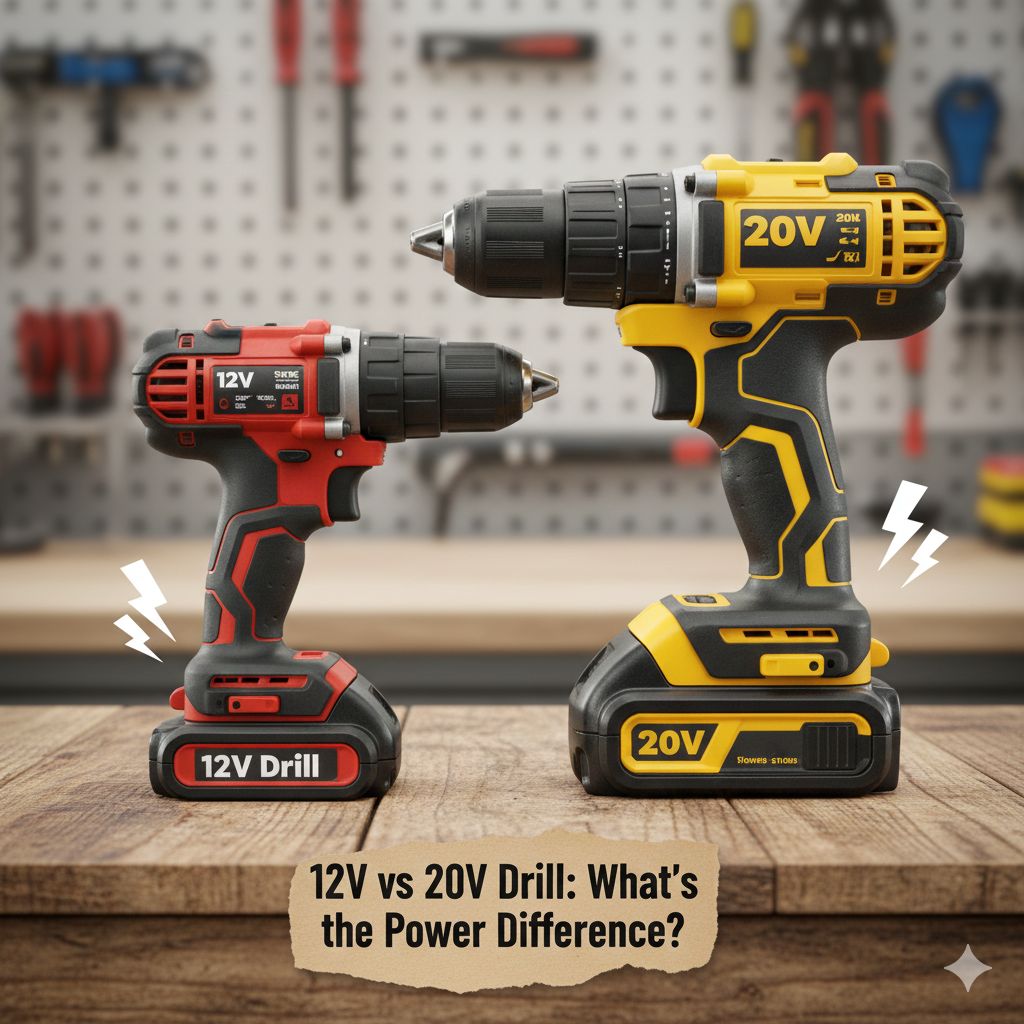
The first thing to consider is the voltage. You’ve probably seen drills labeled as either 12V or 20V. Voltage is a measure of electrical potential difference, and, in simple terms, it’s a way to measure the “push” or force of electricity. Think of it like water pressure in a hose – the higher the voltage, the more power the drill has. This impacts the drill’s ability to handle tough tasks. A 20V drill usually has more power than a 12V drill, but that’s not the whole story. Let’s explore the core differences in more detail.
What Does “Voltage” Actually Mean?
Voltage is like the pressure in a water pipe. A higher voltage means more electrical “pressure” is being delivered to the drill’s motor. This results in greater power. When you’re using a 12V drill, you’re getting a lower “pressure” compared to a 20V drill. The higher voltage allows the drill to apply more force, making it easier to drive screws into hard materials or drill larger holes. It directly affects the drill’s performance.
Think of it like this: If you are riding a bike uphill, the higher the voltage (or pressure) the easier it will be to ride.
How Does Voltage Affect Drill Performance?
The voltage significantly impacts a drill’s performance. Higher voltage drills, typically the 20V models, usually offer more power. This extra power translates to the ability to work on tougher materials, such as hardwoods or thick metal. They can also drill bigger holes and handle longer tasks without losing power. The increased power means the drill can maintain speed and torque under heavy use. On the other hand, 12V drills are better for lighter tasks like assembling furniture or small home repairs.
For example, imagine you are building a deck. A 20V drill is a better choice for driving lots of screws into the dense wood. A 12V drill might struggle and tire you out. The difference in voltage directly impacts what you can do and how easily you can get it done.
Real-World Scenarios and Practical Results
Consider two different situations. First, imagine assembling a flat-pack bookshelf. A 12V drill will probably be perfectly fine for this task. The screws aren’t typically long or require a lot of force. Second, think about building a wooden fence. Driving long screws into fence posts requires a lot more power. This is where a 20V drill shines.
Here are some actual results from a home improvement expert:
- Bookcase Assembly: A 12V drill drove screws quickly and efficiently through particleboard. The battery lasted for the entire project.
- Fence Building: A 20V drill made short work of driving screws into pressure-treated lumber. The work went faster.
The right choice depends on your tasks.
Power and Torque
It’s important to remember that voltage isn’t the only factor. Torque, which is the twisting force of the drill, is just as important. Torque is what helps the drill actually drive screws or drill holes. A drill with higher voltage may not always have more torque. Often, 20V drills do have more torque, but the actual numbers will differ from drill to drill. Always check the torque specifications (usually measured in inch-pounds or Newton-meters) when buying a drill.
For example, a low-voltage drill with high torque can be better at driving screws than a higher-voltage drill with low torque. Both voltage and torque combine to affect the drill’s overall performance. So, looking at both factors gives you a better view of a drill’s capabilities.
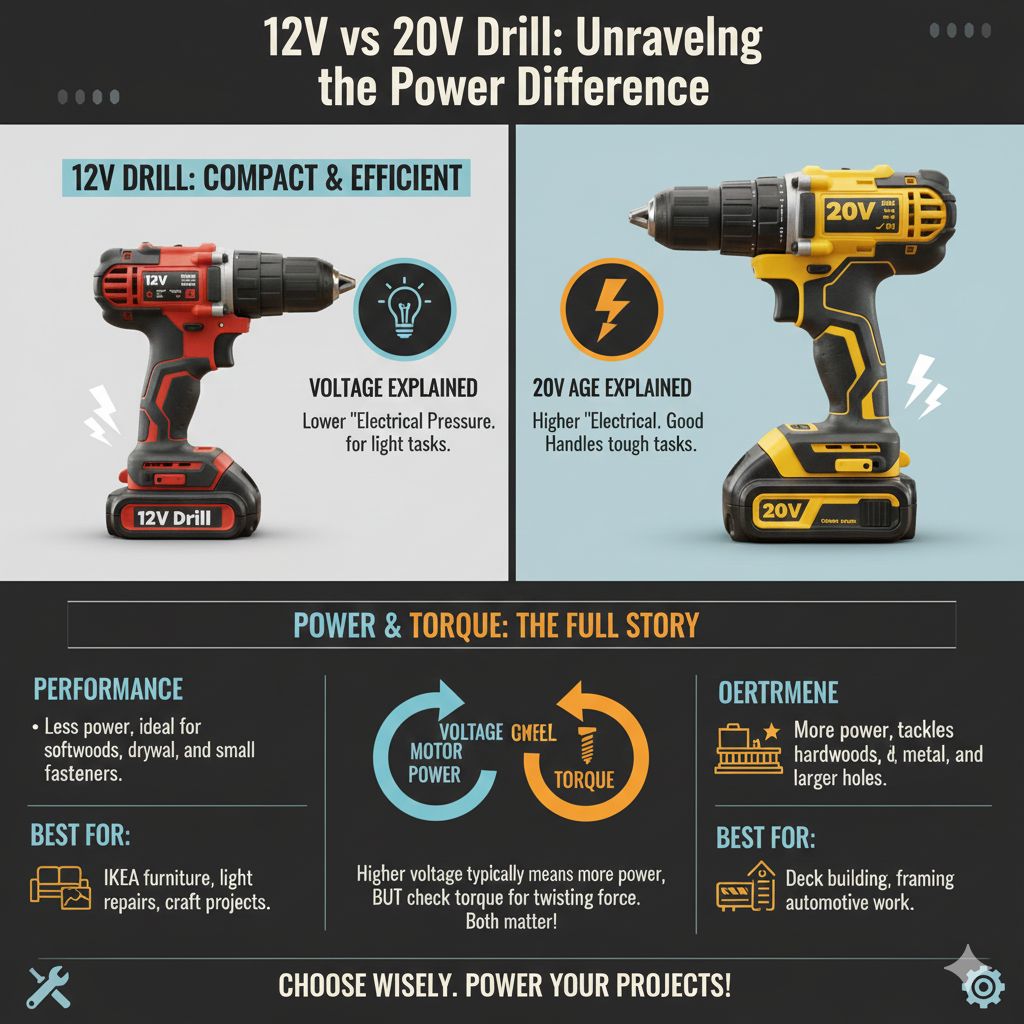
Comparing 12V and 20V Drill Performance Metrics
When selecting a drill, it helps to look at the differences based on some key metrics. Besides voltage and torque, consider factors like the drill’s speed settings and battery life. Other things to consider are the size and weight of the drill. How do these factors measure up? Let’s take a closer look.
Battery Life and Runtime
Battery life is the amount of time you can use the drill before needing a recharge. The runtime depends on both the battery’s capacity (measured in amp-hours or Ah) and the drill’s voltage. In general, 20V drills often have longer runtimes than 12V drills. This is because they’re typically used for more demanding tasks, and they’re usually equipped with larger batteries.
For example, a 20V drill with a 2.0Ah battery might last longer when drilling into hardwood than a 12V drill with a 1.5Ah battery. However, the exact runtime will vary depending on the type of work being done and the type of battery cells being used. Keep an eye on the Ah rating to see how long your drill will last during use.
Size, Weight, and Portability
In general, 12V drills are often more compact and lighter than 20V drills. This makes them easier to use in tight spaces and reduces fatigue during prolonged use. If you need a drill that is easy to move around and carry on a ladder, a 12V drill is a great choice. These tools are easier to control. The lighter weight can be a plus if you do a lot of overhead work.
20V drills, while heavier and bigger, provide more power. The difference in size is often a trade-off for power. This makes 20V drills better for heavier jobs where the added weight doesn’t matter as much. Consider the type of work you usually do when weighing these factors.
Speed Settings and Versatility
Many drills, both 12V and 20V, come with multiple speed settings. The speed settings let you adjust the drill’s rotational speed, which is helpful for different tasks. Slower speeds are better for driving screws. Higher speeds are better for drilling holes.
Some drills also have a clutch, which helps prevent stripping screws. A drill’s versatility comes from the range of its settings. More speed settings, plus a good clutch, make a drill more versatile. Choosing a drill with adjustable speed settings helps you to match the tool to the task for better results. The more settings available, the more diverse the tasks that can be performed.
Cost
The price of drills varies, and the price isn’t always about the voltage. When considering 12V vs 20V drills, the price points are different. As a general rule, 20V drills can be more expensive. This is because they usually offer more power and sometimes have more features. However, the price is also affected by the brand, the quality of the materials, and the inclusion of extras like batteries and chargers.
A bare-tool (no battery or charger) 20V drill might cost less than a 12V drill kit with batteries from another brand. It is a good idea to consider your needs and budget. Look at the value, features, and the brand when making your decision.
| Feature | 12V Drill | 20V Drill |
|---|---|---|
| Power | Lower | Higher |
| Size and Weight | Smaller and Lighter | Larger and Heavier |
| Battery Life | Shorter (typically) | Longer (typically) |
| Cost | Generally Less | Generally More |
| Best For | Light-duty tasks, tight spaces | Heavy-duty tasks, longer runtimes |
What Jobs Are Best Suited For 12V and 20V Drills?
Knowing the right drill for the job can make your tasks much easier. Understanding the differences between 12V and 20V drills helps to choose the best one. Both types of drills have their own areas where they perform at their best.
Ideal Tasks for 12V Drills
12V drills are fantastic for small jobs where maneuverability and ease of use are key. They’re perfect for assembling furniture, hanging pictures, or doing small repairs around the house. They’re also helpful for working in tight spaces. Since they are smaller and lighter, they’re less tiring to use for long periods. 12V drills are often a good fit for homeowners, renters, and anyone who needs a handy tool for basic tasks.
Here are some examples:
- Assembling flat-pack furniture: Perfect for driving screws into particleboard or MDF.
- Hanging shelves and pictures: Easy to handle when drilling into drywall.
- Light repairs: Good for fixing small household items.
When a 20V Drill Is the Right Choice
20V drills are designed for more demanding tasks that require greater power and torque. They excel at driving screws into hardwood, drilling large holes, or working on tougher materials. They are suitable for tasks like building decks, framing walls, or doing any project that requires prolonged use. Contractors, serious DIYers, or anyone who frequently tackles challenging projects will find a 20V drill to be a more valuable tool.
Here are some examples of what 20V drills are excellent at:
- Building a deck: Easily drives long screws into pressure-treated lumber.
- Framing walls: Strong enough to drill through studs and drive large screws.
- Working with metal or concrete: Can handle the demands of tough materials with ease.
Comparing Tasks and Choosing the Right Tool
Consider the types of projects you usually do. If you mostly do small repairs and light-duty tasks, a 12V drill is likely sufficient. If you often work on bigger projects, building things, or working with tougher materials, a 20V drill will make your work much easier. Also, consider the materials you’ll be working with. For wood projects, a 20V drill provides the needed power. The type of work matters.
Here are a few quick scenarios:
- Scenario 1: Assembling a coffee table – A 12V drill is often all you need.
- Scenario 2: Building a shed – A 20V drill will make the job much faster and easier.
Frequently Asked Questions
Question: Is a 20V drill always better than a 12V drill?
Answer: Not always! A 20V drill generally offers more power, making it better for demanding tasks. A 12V drill is a good choice for smaller jobs or where size and weight are important.
Question: Can I use a 20V drill for small tasks?
Answer: Yes, you can. You might find a 20V drill slightly less convenient due to its size and weight, but it will certainly handle the job.
Question: Does the brand of the drill matter?
Answer: Yes, the brand matters. Different brands have different reputations for quality, battery life, and durability. Do some research and read reviews.
Question: Are 12V and 20V batteries interchangeable?
Answer: No, the batteries are not interchangeable. You need to use the correct battery type for your drill.
Question: What’s the best way to choose between 12V and 20V?
Answer: Think about the kind of work you plan to do. If it’s mostly small projects, a 12V drill will serve you well. For heavier tasks, the 20V drill is the better pick.
Final Thoughts
So, which is the right drill for you? The answer depends on your needs! Both 12V vs 20V Drill: Power Comparison models have advantages. 12V drills are great for light-duty tasks, offering a compact and easy-to-handle experience. They are ideal for projects around the house or work in tight areas. 20V drills are the go-to choice if you need more power for demanding projects. Think building decks or working with hardwood, which demands more torque. Consider what projects you will be doing before making your purchase.
Don’t be afraid to select the best choice! Look at your project list. Weigh the power and size. Consider both the 12V and 20V drills. Now you have a good way of choosing the right tool. Make the most of your projects with the drill that fits your needs.