Mahogany Grades Chart: NHLA Lumber Grades vs. Tonewood Grades Explained
“Mahogany grade” means two completely different things depending on what you’re buying. Furniture and construction lumber uses the National Hardwood Lumber Association (NHLA) system — FAS, Select, No. 1 Common — based on the percentage of clear, defect-free wood a board yields. Guitar and instrument tonewood uses a separate, informal A/AA/AAA/AAAA scale based purely on visual figure and grain beauty, and it isn’t an official standard at all — it varies by supplier. Mixing these two up is the single most common confusion in mahogany grading questions.
NHLA Lumber Grades: What The Percentages Actually Mean
Real, Gradeable Mahogany Lumber
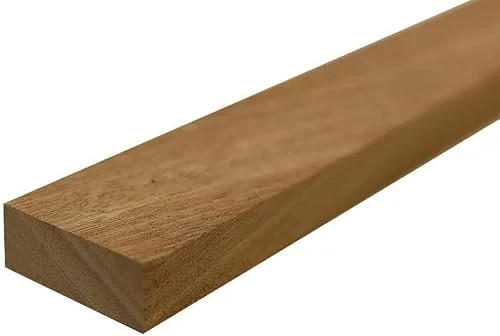 |
African Mahogany Lumber Board, 3/4″ x 4″ x 48″ (Pack of 2) – $78.95 A real board you can inspect against the grading criteria below before buying larger quantities from a lumber supplier.
|
The NHLA system grades a board by what percentage of its face can be cut into clear, defect-free pieces — not by color or figure. These are the real grades and their real clear-yield requirements:
| Grade | Clear-Face Yield Required | Typical Use |
|---|---|---|
| FAS (First and Seconds) | 83.3% or more, both faces | Fine furniture, visible cabinetry |
| F1F (FAS One Face) | 83.3% on the better face; the reverse only needs No. 1 Common | Cabinetry where one side shows |
| Select | Same clear yield as FAS, on narrower/shorter boards | Smaller furniture parts, trim |
| No. 1 Common | 66.7% to just under 83.3% | Utility furniture parts, painted work |
| No. 2A Common | 50% to just under 66.7% | Construction, hidden framing, shop projects |
A lumber yard or supplier quoting “FAS mahogany” is telling you about defect yield, not color consistency — two FAS boards can still look noticeably different from each other in tone. If a listing or seller uses vague terms like “Grade A” or “premium grade” without referencing FAS, Select, or Common, ask directly which NHLA grade it corresponds to; those informal labels aren’t part of any standardized system for construction-grade lumber.
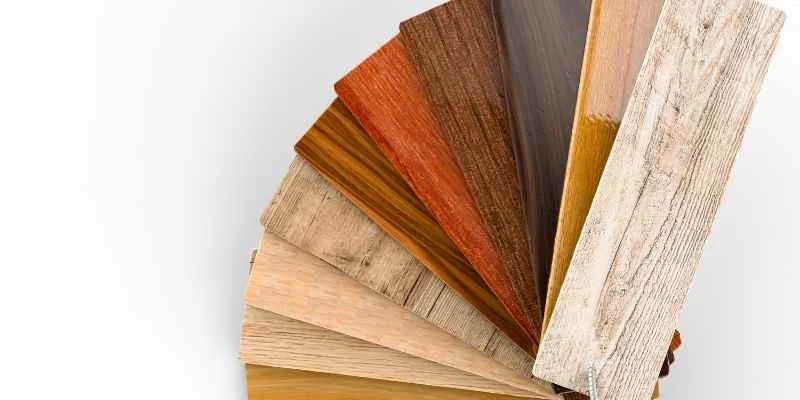
Tonewood Grades: The A/AA/AAA Scale For Guitar Tops
If you’re shopping for a guitar or ukulele top, back, or sides, the grading you’ll see is a completely different, informal scale: A, AA, AAA, and AAAA (sometimes called “master grade”). This scale rates visual figure and grain beauty — how straight, tight, and evenly colored the grain is, and how much flame, quilt, or other figure appears — not structural defect yield. Crucially, this scale has no official governing standard: one supplier’s AAA can look like another supplier’s AAAA. Interestingly, plain mahogany (without flame or quilt figure) is often not graded on this scale at all, since sets are naturally consistent enough that there’s little visual variance to grade — the scale matters most for figured backs and sides, where flame and quilt patterning drives the premium.
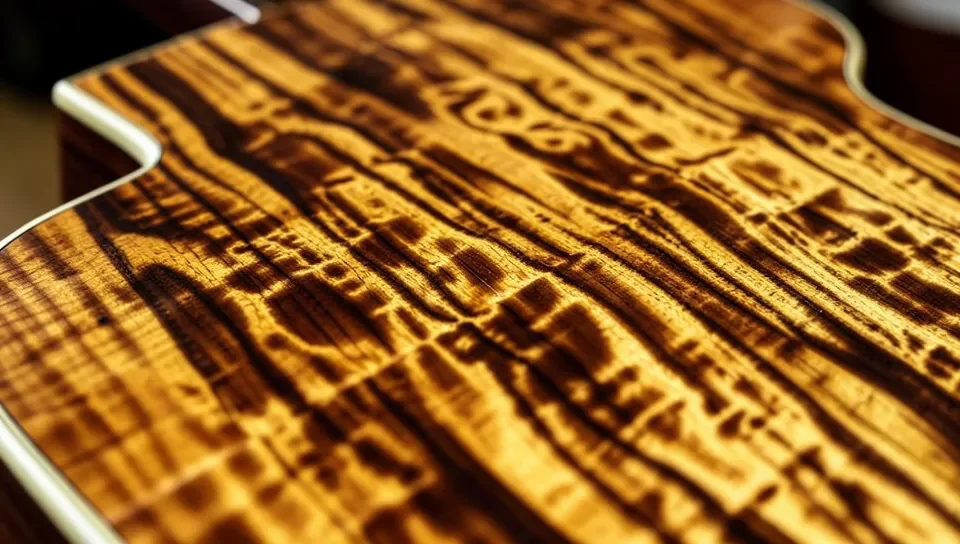
Whether flamed mahogany actually sounds or performs differently from plain-grain mahogany is a separate question from grading, and the honest answer is that figure is primarily a visual trait — tone comes mainly from density, stiffness, and how the wood is braced and built into the instrument, not from how dramatic the grain pattern looks. A heavily flamed top isn’t inherently stiffer or more resonant than a plain one from the same tree.
Genuine, African, And “Philippine” Mahogany: The Species Behind The Grades
Grading only tells you the quality within a species — it’s worth confirming which mahogany you’re actually grading in the first place:
- Genuine/Honduran mahogany (Swietenia macrophylla): the historically prized species, deep reddish-brown, fine straight grain, CITES Appendix II restricted since 2003.
- African mahogany (Khaya species): a true mahogany relative, slightly coarser grain, generally more available and affordable, common in the lumber boards sold today.
- “Philippine mahogany” (Shorea species, also called lauan or meranti): not true mahogany at all — a different genus entirely, traded under the mahogany name because of a similar color and price point. It’s a legitimate, useful wood, just not the same tree.
A Third System: Veneer Cut Types
If you’re buying mahogany veneer rather than solid lumber, there’s a third, again separate, classification to know: cut type, not grade. Crown-cut veneer (sliced through the log’s center) shows a flame-like cathedral pattern; quarter-cut veneer (sliced perpendicular to the growth rings) shows a straighter, more uniform ribbon-stripe pattern typical of quality furniture veneer; rift-cut falls between the two. None of these is inherently “higher grade” than another — they’re different aesthetic choices for the same wood, and a veneer supplier still applies its own quality grading (often similar to the tonewood A-AAAA scale) on top of the cut type for consistency of color and absence of splits.
How Grade Affects Price
On the NHLA lumber side, FAS commands the highest price per board foot because it wastes the least material to get a clear cutting, while No. 2A Common sells for meaningfully less since a buyer has to work around more defects. On the tonewood side, price follows figure intensity almost directly — a heavily flamed AAAA set can cost several times what a plain-grain A-grade set of the same species costs, even though both come from the same tree species and neither is structurally “better” for tone.
Common Grading Mistakes
- Applying tonewood grades to furniture lumber: a supplier calling furniture-grade mahogany “AAA” isn’t using a real, checkable standard — ask for the NHLA grade instead.
- Assuming higher tonewood grade means better sound: figure grade is visual, not acoustic. A plain A-grade back can sound just as good as a AAAA set of the same species.
- Confusing Philippine mahogany with true mahogany: check the species name (Swietenia, Khaya, or Shorea) rather than trusting “mahogany” alone in a product title.
- Not asking what “premium” or “Grade A” means: these terms aren’t standardized outside the real NHLA and tonewood scales — ask the seller to translate into one of the actual systems above.
Frequently Asked Questions
What are the real grades of mahogany lumber?
For furniture and construction lumber, the real, standardized grades come from the NHLA: FAS, F1F, Select, No. 1 Common, and No. 2A Common, based on the percentage of clear, defect-free wood each board yields. Guitar tonewood uses a separate, unofficial A-AAAA figure scale that isn’t the same system.
Is flamed mahogany stiffer or better than plain mahogany?
No. Flame figure is a visual trait, not a structural or acoustic one. Stiffness and tone come from the wood’s density and how the instrument is built, not from how dramatic its grain pattern looks.
What’s the difference between African and genuine (Honduran) mahogany?
Both are true mahogany species. Genuine/Honduran mahogany (Swietenia macrophylla) has a deeper, more uniform color and tighter grain and is CITES-restricted. African mahogany (Khaya species) runs slightly coarser and lighter and is generally more available and affordable.
Is Philippine mahogany real mahogany?
No. Philippine mahogany comes from Shorea species (also called lauan or meranti), a different genus entirely, traded under the mahogany name because of similar color and price. It’s a legitimate wood on its own, just not true mahogany.
Is crown-cut or quarter-cut mahogany veneer higher grade?
Neither — cut type is a separate aesthetic classification, not a grade. Crown-cut shows a flame-like cathedral pattern; quarter-cut shows a straighter ribbon-stripe pattern. Quality (color consistency, absence of splits) is graded independently of which cut you choose.
Conclusion
The mahogany grade you need depends entirely on what you’re building: ask for NHLA grades (FAS, Select, Common) for furniture and construction lumber, and understand that a guitar top’s A-AAAA rating is a subjective visual scale with no official standard behind it. Knowing which system applies — and which species you’re actually buying — is what actually determines whether you’re getting what you paid for. For more on genuine mahogany’s real-world properties, see our mahogany wood properties guide.
Sponsored / affiliate links. As an Amazon Associate I earn from qualifying purchases. I may earn additional commission from eligible campaigns.