Mahogany Meaning: Word Origin, Color and What It Symbolizes
Mahogany means three different things: a tropical timber from the genus Swietenia, a reddish-brown color, and shorthand for wealth. The word first appeared in print in 1671, its origin is still disputed, and the color name was recorded in English by 1737. This guide separates the word, the color, and the symbolism, and corrects the popular claim that ancient Egyptians used mahogany.
Mahogany Color Meaning: What the Name Describes
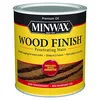 |
Best Mahogany Color Stain Pick Minwax Wood Finish Red Mahogany 225, 1 Quart – $13.59 If the mahogany color is what you are after, not the rare timber, this is a color you can buy: a penetrating oil-based stain labeled Red Mahogany that gives other woods the warm red-brown tone described below.
|
As an Amazon Associate we earn from qualifying purchases.
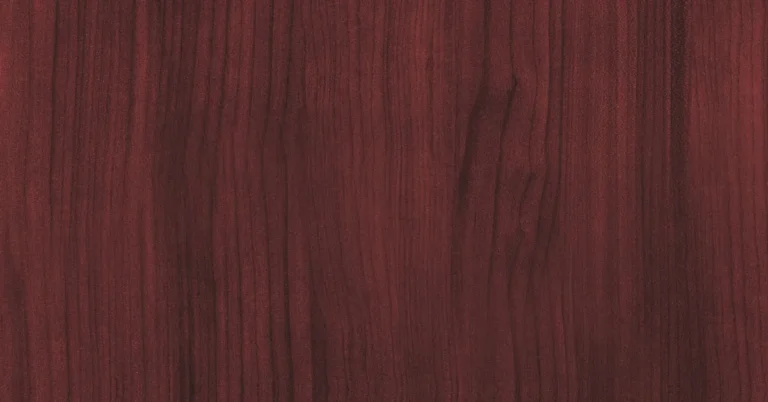
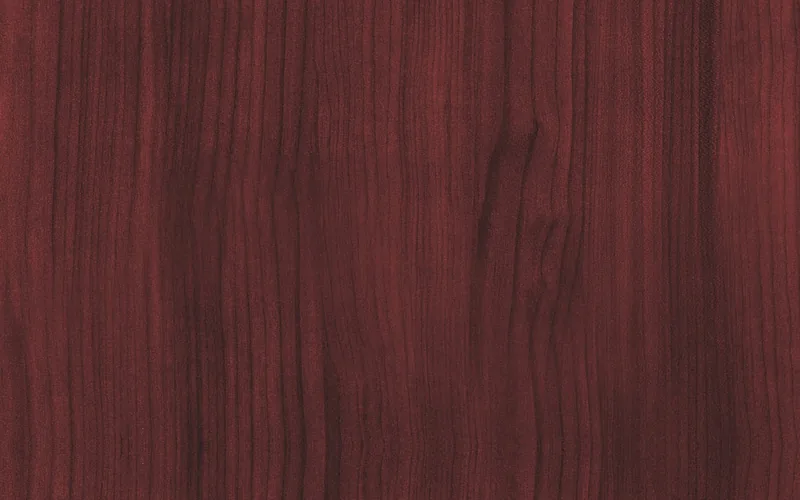
As a color, mahogany is a reddish brown. Wikipedia’s entry on the color gives the standard swatch as hex #C04000 (RGB 192, 64, 0) and dates its first recorded use in English to 1737. That swatch is more orange-red than most people expect, and it is only one of several “mahogany” shades in circulation.
| Named color | Hex | What it looks like |
|---|---|---|
| Mahogany | #C04000 | Saturated reddish brown with an orange cast |
| Mahogany Red | #CA3435 | A true red with a brown edge; first recorded in 1843 |
| Mahogany Brown (RAL 8016) | #4C2B20 | Very dark brown, close to chocolate |
Source for the swatches: Wikipedia, Mahogany (color). The spread matters because the name is a loose label, not a fixed standard. A paint chip, a stain can, and a laminate sample can all say “mahogany” and look noticeably different.
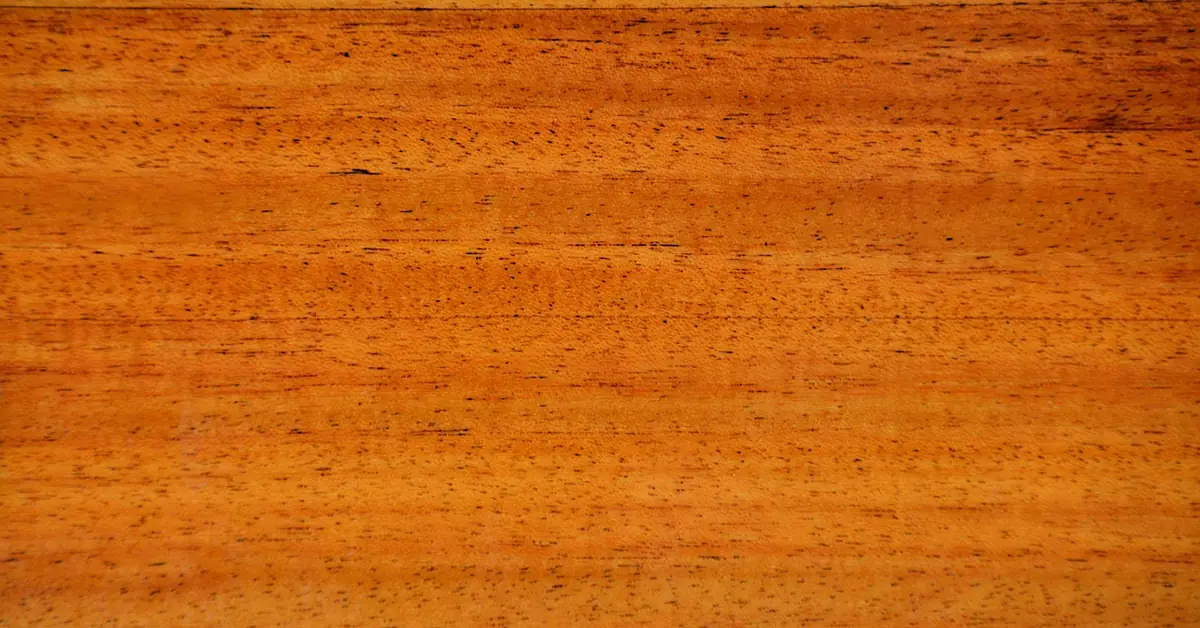
The wood itself does not match the swatch as neatly as the name suggests. The Wood Database describes big-leaf mahogany heartwood as ranging from a pale pinkish brown to a darker reddish brown, and says the color darkens with age. Freshly cut mahogany can be lighter than the color named after it, and a stained “mahogany” finish on pine or birch is a color match, not a species match.
Where the Word Mahogany Comes From
Nobody has settled the origin, and the honest answer is that several theories compete. According to Wikipedia’s mahogany article, the word first appeared in print in 1671 in John Ogilby’s America, which described a “curious and rich wood” from Jamaica. A Portuguese form, mogano, is recorded as early as 1661.
| Theory | Proposed by | Where it stands |
|---|---|---|
| A Bahamian word meaning “wood” | Kemp Malone | Offered as an alternative to the West African theory |
| Yoruba oganwo (m’oganwo), a name for Khaya trees, applied by enslaved Yoruba and Igbo people in Jamaica to similar-looking Swietenia | F. Bruce Lamb | Malone called it linguistically implausible; Lamb kept defending it |
| Portuguese mogano or mogno, itself of unknown origin, possibly from a Mayan language in Honduras or a South American source | Wiktionary’s etymology note | The Yoruba link is described there as contested |
Popular articles often state one theory as fact. A museum-history blog says the word derives from the Nigerian oganwo, but the linguistic debate above shows that is only one side of an unresolved argument. It is safest to say the word entered English in the 1600s through the Caribbean timber trade and leave the deeper root open.
One more correction: the Spanish name for the tree is caoba, which that same history blog says likely comes from Arawak indigenous languages. That is a separate word with its own history, not a translation of “mahogany.”
Other Things Called Mahogany
Wiktionary lists more senses than most “meaning” pages mention, and they show how far the word traveled from the tree:
- The wood: valuable timber from tropical American trees of the genus Swietenia, used for furniture since the 17th century.
- Look-alike woods: other species whose timber resembles real mahogany.
- The color: the reddish brown described above, attested from the 19th century in that dictionary.
- A table: an obsolete 19th-century colloquial word for a dining table, the same association behind idioms such as “under the mahogany.”
- A drink: a regional Cornish word for a mix of gin and treacle, documented from the 18th century.
- An office suite: “mahogany row” is informal business slang for a suite of luxurious offices for high-ranking executives.
The look-alike sense is the one that causes real purchasing confusion. Wikipedia notes that the U.S. Federal Trade Commission allows qualified names such as “African mahogany” (Khaya) and “Philippine mahogany” (Shorea and Parashorea), while other unrelated species cannot be sold as mahogany at all in the United States. For the species-by-species breakdown, see our guide to mahogany wood types and the range details in where mahogany wood is found.
How Mahogany Became a Symbol of Wealth
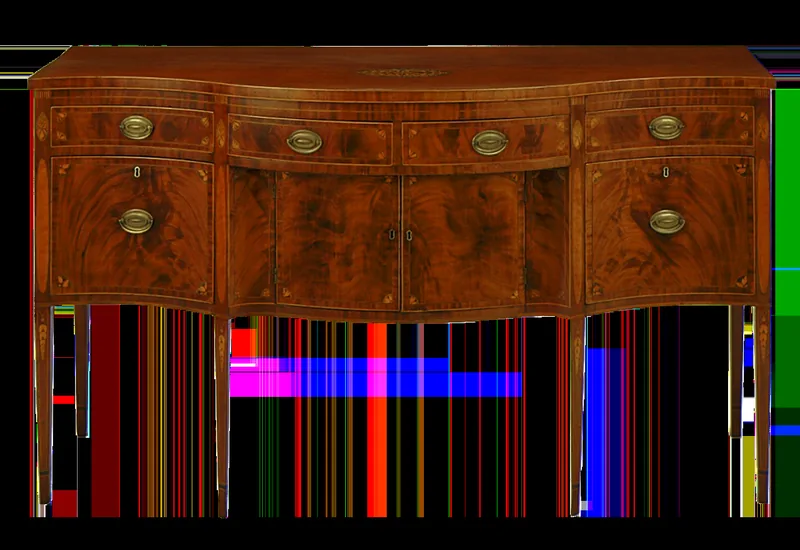
The luxury meaning is not ancient. Before about 1720, fine English furniture was usually made from oak, walnut, and similar local woods. Furniture-history summaries credit the Naval Stores Act of 1721, which removed duties on timber imported from the American colonies, with making mahogany affordable enough for the gentry, not just royalty. The same summaries report imports growing from 525 tons in 1740 to more than 30,000 tons in 1788, a figure we could not trace to a primary customs record, so treat it as indicative.
Thomas Chippendale gave the wood its showcase. Wikipedia records that his favourite wood was mahogany and that he used solid wood rather than veneer for seat furniture, in a pattern book titled The Gentleman and Cabinet Maker’s Director, first published in 1754. He also worked in satinwood, rosewood, and padouk, so mahogany was one luxury option among several, not the only one.
The human cost behind the status
Status symbols have a supply chain. A history from Philips Manor Hall, quoting the New York Times, states that mahogany for 18th-century furniture was harvested under appalling conditions across the Caribbean, with enslaved workers locating the trees. The same source says Jamaica’s coastal stands were depleted by the 1730s, which pushed harvesting inland and eventually to Honduras and Belize. Any account of mahogany’s prestige that skips this leaves out how the wood actually reached London.
That source adds a counterpoint worth knowing: in 19th-century Philadelphia, mahogany furniture also signaled wealth and standing among Black residents. The symbol meant respectability and success there, not only aristocratic display.
What Mahogany Grain and Color Signal in Practice
Searchers asking what mahogany grain “means” are usually asking how to read the wood. These are the documented traits, with the Wood Database as the source, and the last column is our practical reading of them:
| What you see | What the data says | What it means for you |
|---|---|---|
| Reddish-brown color | Heartwood runs from pale pinkish brown to darker reddish brown and darkens with age | A light board is not automatically fake; judge the color after finishing and time |
| Wavy or interlocked grain | Grain can be straight, interlocked, irregular, or wavy | Expect some tear-out when planing against the grain |
| Ribbon stripes on quartersawn faces | Quartersawn pieces often show ribbon striping; flatsawn faces show ripple marks | The pattern tells you how the board was cut |
| Shimmer that shifts with the light | The wood shows chatoyancy | A real optical trait of the grain, not a coating |
One more reality check on symbolism. Big-leaf mahogany rates 900 lbf on the Janka scale, which the Wood Database classes as low hardness. If you read mahogany as a symbol of toughness, the numbers disagree; its reputation rests on appearance and its long record in fine furniture, not on resisting dents. For identification tests on pores, color, and grain, use our guide to identifying real mahogany.
What Mahogany Symbolizes Today
Strip away the folklore and the modern associations each trace to something documented:
| Association | Documented basis |
|---|---|
| Luxury and wealth | The Georgian furniture trade above, plus idioms like “mahogany row” |
| Rarity | All three Swietenia species sit on CITES lists: S. humilis in Appendix II (1975), S. mahagoni in Appendix II (1992), and S. macrophylla in Appendix III (1995) before moving to Appendix II in 2003 |
| Endangered status | The Wood Database reports big-leaf mahogany as Endangered on the IUCN Red List after a population reduction of over 60 percent in three generations |
| Permanence and heirloom value | Antique pieces from the 1700s are still traded and used, which is why dealers market the wood as a lasting one |
For the permit rules and legal buying details, see what mahogany wood is used for, which covers the CITES facts for buyers.
Pop culture borrowed the word the same way. The 1975 film Mahogany (directed by Berry Gordy, starring Diana Ross and Billy Dee Williams) gives its lead character that name as a stage name when she becomes a fashion model. Wikipedia’s plot summary does not say why the name was chosen, so we will not invent a meaning for it; the word was simply understood as glamorous.
The Ancient Egypt Myth, Corrected
Many “spiritual meaning of mahogany” pages claim ancient Egyptians built sacred coffins from it. The timeline rules that out: mahogany trees are native to the Americas, and the wood was unknown outside that region until European contact. Wood identification work on Egyptian coffins, including studies of coffins held in the Egyptian Museum in Florence, finds sycamore fig (Ficus sycomorus), a local tree, as the most commonly used timber, with imported Lebanon cedar associated with elite burials and used less as supplies dwindled in later periods.
We also searched for reliable sourcing on claims that mahogany carries protective or psychic powers in Maya, Aztec, or other traditions and found none we could verify. Those statements circulate on spiritual blogs without citations, so this guide does not repeat them. The meanings you can document are the ones above: a word with a disputed origin, a named color, and a status symbol made by trade and scarcity.
Frequently Asked Questions About Mahogany Meaning
What does mahogany mean?
Mahogany means a reddish-brown tropical hardwood from trees of the genus Swietenia, the reddish-brown color named after it, and, figuratively, luxury. The word first appeared in print in 1671, and its deeper origin is disputed between West African and Caribbean theories.
What color is mahogany?
Mahogany is a reddish brown. The standard swatch is hex #C04000, first recorded as a color name in English in 1737, while variants such as Mahogany Red (#CA3435) and RAL 8016 Mahogany Brown (#4C2B20) show how widely the label is used.
Where does the word mahogany come from?
Its origin is unsettled. One theory links it to the Yoruba word oganwo, another to a Bahamian word meaning wood, and a third to Portuguese mogano. It reached English through the Caribbean timber trade and first appeared in print in 1671.
What does mahogany symbolize?
Mahogany symbolizes wealth, status, and permanence. The link comes from Georgian England, where duty-free colonial timber and cabinetmakers such as Chippendale made it the luxury furniture wood, and from its modern scarcity under CITES listings.
Did ancient Egyptians use mahogany?
No. Mahogany is native to the Americas and was unknown outside that region until European contact. Wood identification of Egyptian coffins points to local sycamore fig and imported Lebanon cedar instead.
Conclusion
Mahogany’s meaning depends on which question you are asking. As a word, it has a documented first print use in 1671 and an origin nobody has proven. As a color, it is a loose reddish-brown label with swatches from #C04000 to near-black. As a symbol, it is a product of 18th-century trade, skilled cabinetmaking, and modern scarcity, with a real human cost behind it. To go further, browse our mahogany wood hub, or see teak vs mahogany if you are choosing between the two for a project.
Sponsored / affiliate links. As an Amazon Associate I earn from qualifying purchases. I may earn additional commission from eligible campaigns.