Why Is Mahogany So Expensive? What Really Drives the Price
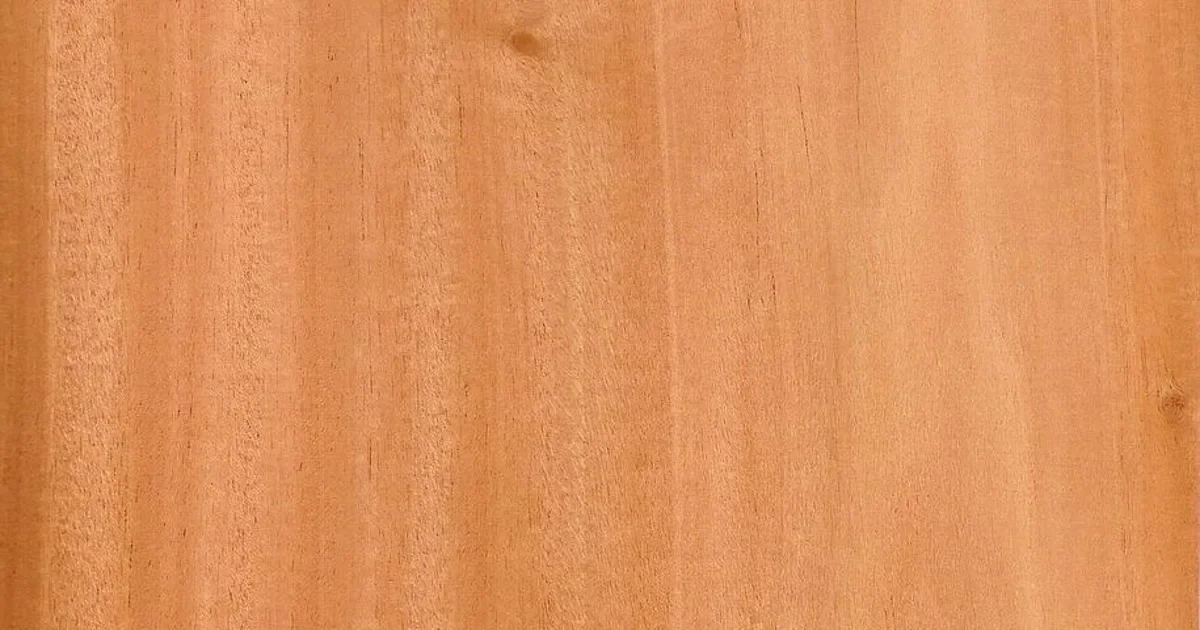
Genuine mahogany is expensive because the wood people picture when they say “mahogany” comes from a few slow-maturing tropical trees that are protected. Swietenia macrophylla is listed in CITES Appendix II and rated Endangered by the IUCN, Cuban mahogany has essentially vanished from the market, and quartersawn or figured boards carry an extra premium. African mahogany is a different genus and is priced in the moderate tier for an imported hardwood.
So the honest answer depends on which mahogany you are pricing. Below: what the label actually covers, what the conservation listings mean for supply, a same-day retail price comparison worked out per board foot, and how to buy mahogany without paying a premium you do not need. If you just want price ranges by species and grade, see how much mahogany costs per board foot; this page is about the reasons behind those numbers.
What Actually Makes Mahogany Cost More
Best Mahogany Sample Pack
 |
Exotic Wood Zone African Mahogany 3/4 x 2 x 36 in, Pack of 5, $48.90 A low-risk way to handle real mahogany-family wood and judge color and grain before paying for a full project’s worth.
|
Four things stack on top of each other: a protected supply, huge slow-growing trees, a premium for the best cuts, and a retail format that inflates small purchases. Each is covered below, with the source for every conservation and property claim.
The Word “Mahogany” Covers Very Different Woods
Sellers use the name for at least three unrelated groups, and price follows the group. The details below come from The Wood Database species pages.
| Type | Conservation status | Janka hardness | Price position |
|---|---|---|---|
| Honduran (Swietenia macrophylla) | CITES Appendix II; IUCN Endangered | 900 lbf | Mid range for an imported hardwood, but above African mahogany; quartersawn or figured stock costs more |
| Cuban (Swietenia mahogani) | CITES Appendix II; IUCN Endangered | 930 lbf | No longer commercially available; rare pieces surface at premium prices |
| African (Khaya spp.) | CITES Appendix II (all African Khaya); IUCN Vulnerable | 850 lbf | Moderate for an imported hardwood |
| Philippine (Shorea spp., meranti group) | Not covered by the page I read | Varies by group | Not related to true mahogany in Swietenia or Khaya |
The practical takeaway: the “mahogany is a luxury wood” reputation was built on Cuban and Honduran Swietenia. The African and Philippine woods sold as mahogany substitutes do not carry the same scarcity premium, and they do not always match the look. The Wood Database notes African species can lack the deeper reddish-brown color and durability of genuine mahogany.
Conservation Listings Limit Legal Supply
Honduran mahogany is in CITES Appendix II and rated Endangered on the IUCN Red List, based on a population reduction of over 60 percent across three generations from habitat decline and exploitation. The Wood Database also notes heavy harvest pressure on wild populations in Brazil and Bolivia. Cuban mahogany is likewise Appendix II and Endangered, with a reduction of more than 50 percent over three generations.
Appendix II is a trade-regulation category, not a ban. It means legal supply has to come through documented channels, which is a real cost and a real limit on how fast a supplier can scale up. African mahogany is not exempt: The Wood Database says all African Khaya species are covered by a genus-wide Appendix II listing and are on the IUCN Red List as Vulnerable, with population decline above 20 percent over three generations. The difference is severity, not category.
Big, Slow Trees and the Plantation Trade-Off
Honduran mahogany grows 150 to 200 feet tall with trunks 3 to 6 feet across, which is why the species produced wide, clear boards for centuries. Trees of that size cannot be replaced quickly, and a shortage of large old trees is felt directly at the lumberyard.
Plantation stock is the growing alternative, but it is not a like-for-like swap. According to The Wood Database, older wild-grown trees yield darker, more durable lumber, while plantation stock tends to be lighter in color and less durable. Rot resistance for the species is listed as anywhere from moderately durable to very durable depending on tree age and growing conditions. If you are paying extra for old-growth character, ask which one you are getting.
Grade and Cut Drive the Rest
The Wood Database says quartersawn or figured Honduran mahogany commands premium prices. That matches how any hardwood is sold: a plain flatsawn board is the baseline, while ribbon-stripe quartersawn, fiddleback or crotch figure is priced as a specialty item. Two boards labeled “genuine mahogany” can differ by a large margin for this reason alone, before species even enters into it.
Workability keeps demand up even at higher prices. The same source describes Honduran mahogany as very easy to work with hand and machine tools, sanding easily and finishing well, with only minor tearout on figured grain. Density is a low 36.8 lb per cubic foot, so it is also light for its size. Buyers are paying for a wood that behaves.
The Retail Format Gap Nobody Mentions
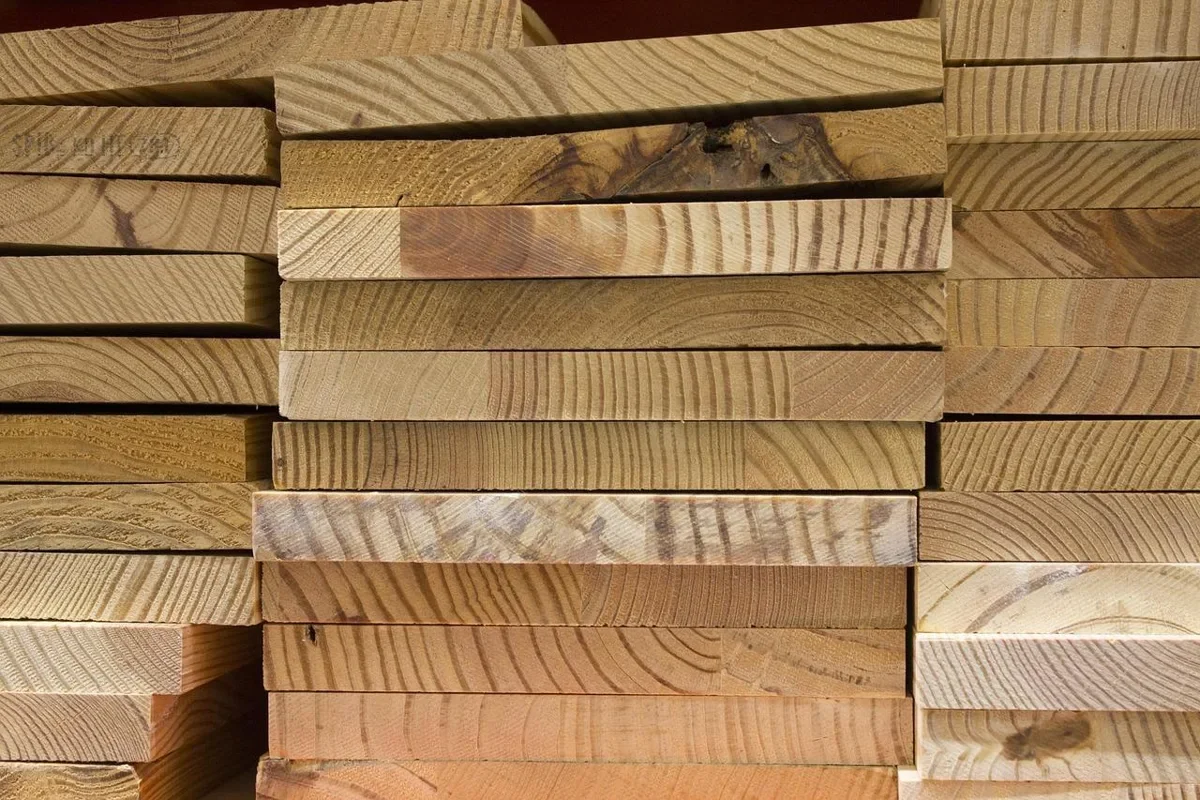
Here is the angle most price guides skip. When people say mahogany is expensive, they are often looking at small kiln-dried packs online, and those prices depend heavily on the seller and pack size. Board feet are thickness in inches times width in inches times length in inches, divided by 144, so a 3/4 by 4 by 36 inch board is 0.75 board feet and a two-piece pack is 1.5. Dividing each pack price by its board feet gives a fair comparison. These are listings I read via the Amazon product API on September 30, 2026; prices change daily and the rows come from different sellers, so treat them as a snapshot.
| Wood | Pack | Listed price (Sept 30, 2026) | Price per board foot |
|---|---|---|---|
| Red oak | 3/4 x 4 x 36 in, 2 pieces | $35.00 | $23.33 |
| Walnut | 3/4 x 4 x 36 in, 2 pieces | $38.25 | $25.50 |
| “Mahogany” (species not stated in the listing) | 3/4 x 4 x 36 in, 2 pieces | $42.95 | $28.63 |
| African mahogany | 3/4 x 4 x 36 in, 2 pieces | $69.95 | $46.63 |
| African mahogany, different seller | 3/4 x 2 x 36 in, 5 pieces | $48.90 | $26.08 |
The last two rows are the same species, and the per-board-foot price differs by roughly 79 percent depending on seller and pack. That seller gap on African mahogany is larger than the gap between the cheapest mahogany-labeled pack and walnut. In other words, shopping the format matters as much as choosing the species. Note also the unlabeled “mahogany” listing: without a Latin name you cannot tell whether it is Swietenia, Khaya or something else.
How to Pay Less for Mahogany
Decide whether you need Swietenia. For most furniture, cabinet and interior projects, African mahogany is a reasonable substitute, as long as you accept that the color can be paler and the durability lower than genuine stock. If outdoor use is the goal, compare it in teak vs mahogany, and see whether mahogany is expensive at the lumberyard for the African versus Honduran comparison.
Buy by the board foot, not by the pack. If you need more than a couple of boards, a lumberyard quoting per board foot will usually beat pack pricing. Use the formula above to convert any quote so you can compare.
Ask for the Latin name. “Mahogany,” “Philippine mahogany” and “genuine mahogany” are trade phrases. A reputable seller will say Swietenia macrophylla, Khaya ivorensis or Shorea, and you can then check the price against the right group.
Skip figure you will not see. If the piece will be stained dark, painted or used for a hidden frame, plain flatsawn stock works and avoids the quartersawn or figured premium.
Frequently Asked Questions
Why is mahogany so expensive compared to oak?
Genuine Swietenia mahogany is a large tropical tree that is listed in CITES Appendix II and rated Endangered by the IUCN, so legal supply is limited and trade is regulated. Oak is a widely harvested temperate hardwood with no such restrictions. That said, African mahogany (Khaya) is described by The Wood Database as moderately priced for an imported hardwood, so the gap is much smaller if you buy African.
Is Philippine mahogany real mahogany?
No. Philippine mahogany is a trade name for lumber from the Shorea genus (the meranti group), and The Wood Database says it bears no relation to true mahogany in the Swietenia and Khaya genera. It is usually cheaper because it is a different wood, not because it is a bargain version of mahogany.
Is mahogany illegal to buy?
No. Genuine mahogany is not banned. Swietenia macrophylla is in CITES Appendix II, which regulates international trade rather than prohibiting it, and plantation-grown stock is increasingly available. Cuban mahogany is the exception in practice: The Wood Database says it is no longer commercially available.
Is mahogany worth the price?
For projects where easy machining, sanding and finishing matter, often yes. The Wood Database describes Honduran mahogany as very easy to work with hand and machine tools. If budget is the limit, African mahogany gives a similar look and workability at a lower price, though it can lack the deeper reddish-brown color and durability of the Swietenia species.
Conclusion
Mahogany costs more because of protected supply, slow-growing giant trees, premium grades and, online, small-pack retail pricing. It is not one price: African mahogany sits in the moderate tier, genuine Honduran stock costs more, and Cuban mahogany is effectively unavailable. Pick the species for your project first, then compare on a per-board-foot basis.
Sponsored / affiliate links. As an Amazon Associate I earn from qualifying purchases. I may earn additional commission from eligible campaigns.
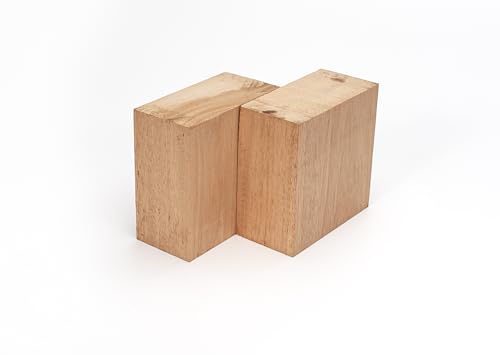
 Exotic Wood Zone Mahogany Bowl Blanks (5-Pack), Kiln-Dried Hardwood Wood Turning Blocks for DIY Woodworking & Crafts, 4" x 4" x 2"
 Exotic Wood Zone Wood Blanks for Bowls | Hardwood Bowl Blanks | Unfinished, Kiln-Dried, Sustainable Hardwood for Handcrafted Decorative Bowls & Functional Pieces (Fijian Mahogany, 7" x 7" x 2")