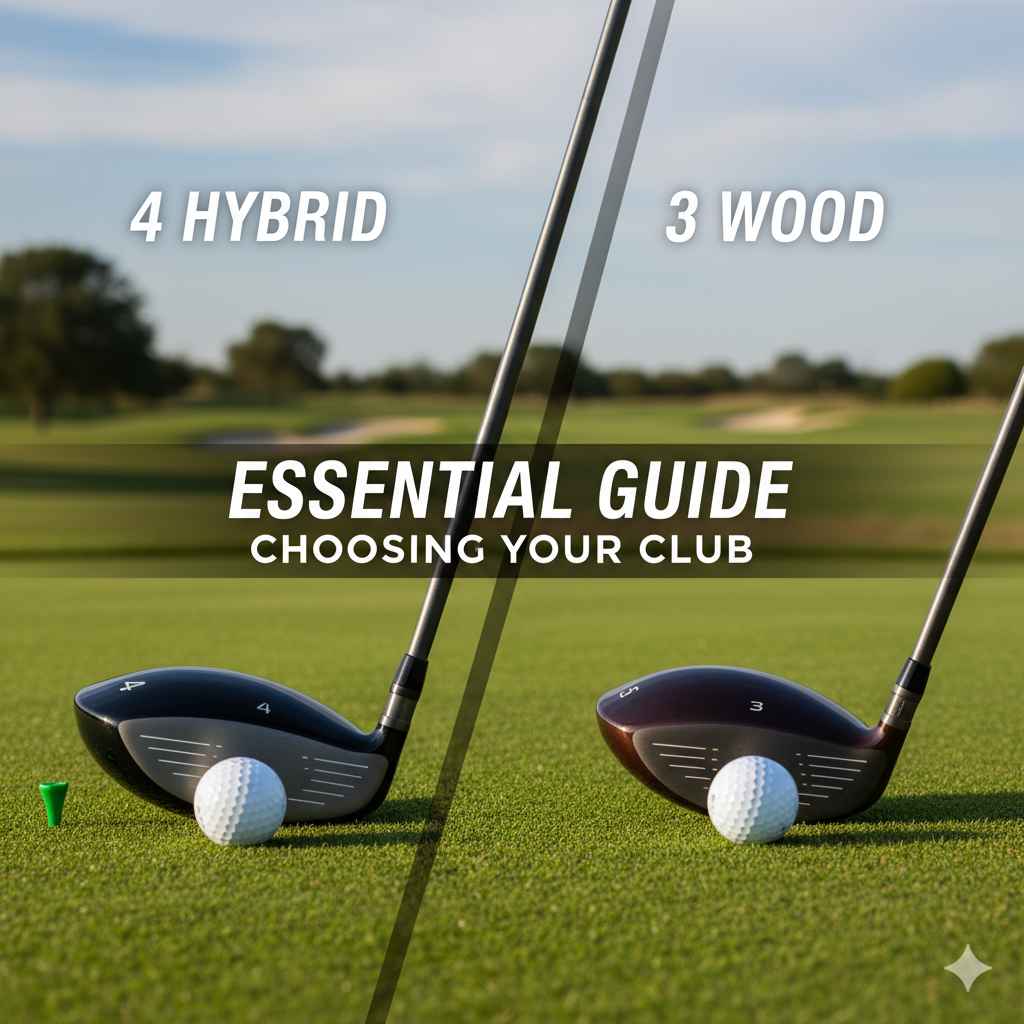
4 Hybrid vs 3 Wood: Essential Guide
Choosing between a 4 hybrid and a 3 wood depends on your swing speed, desired trajectory, and typical course conditions. Hybrids offer more versatility and forgiveness, while 3 woods provide more distance for faster swingers. This guide breaks down the differences to help you pick the right club for your game.
Navigating the golf course can sometimes feel like a puzzle, especially when it comes to choosing the right clubs. Two of the most common clubs that often cause a bit of head-scratching for beginners and even intermediate players are the 4 hybrid and the 3 wood. You’ve probably seen them, maybe even tried them, but what’s the real difference? And which one is going to help you hit those longer shots with more confidence? It’s a common question, and the good news is, it’s not as complicated as it might seem. We’re here to clear up any confusion and help you understand exactly when and why you’d choose one over the other. Let’s dive in and make those long approach shots a whole lot easier!
Understanding Your Golf Club Needs
As a beginner golfer, or even if you’ve been playing for a little while, you’ll quickly realize that your golf bag is a carefully curated collection of tools, each designed for a specific job. The clubs you carry can significantly impact your game, from the tee box to the green. When we talk about clubs used for longer shots off the tee or from the fairway, two popular choices emerge: the 4 hybrid and the 3 wood.
These clubs often fill a similar distance gap in your bag, typically slotting in between your longest irons and your driver. However, their designs and how they perform on the course are quite different. Understanding these differences is crucial for building a set of clubs that work for your swing, not just what the pros carry. It’s about finding that sweet spot where a club feels comfortable, inspires confidence, and delivers predictable results on the course.
Often, golfers get stuck wondering if a hybrid is just a fancy iron or if a 3 wood is simply a shorter driver. The reality is, they both bring unique advantages to the table. Your choice will depend on several factors, including your swing speed, how you tend to strike the ball, and the types of shots you need to execute most often.
What is a 3 Wood?
The 3 wood is a classic in the golfing world. You’ll recognize it by its relatively large clubhead, which is typically made of metal (hence the term “fairway wood”). It’s designed to be hit off the tee, similar to a driver, but it offers a bit more control due to its shorter shaft and smaller clubface. It’s also a valuable tool for long shots from the fairway or the rough.
Historically, fairway woods were made with wooden heads, but modern versions are almost exclusively constructed from metal alloys like titanium or stainless steel. This allows for larger, more forgiving clubheads and greater energy transfer at impact, which means more distance.
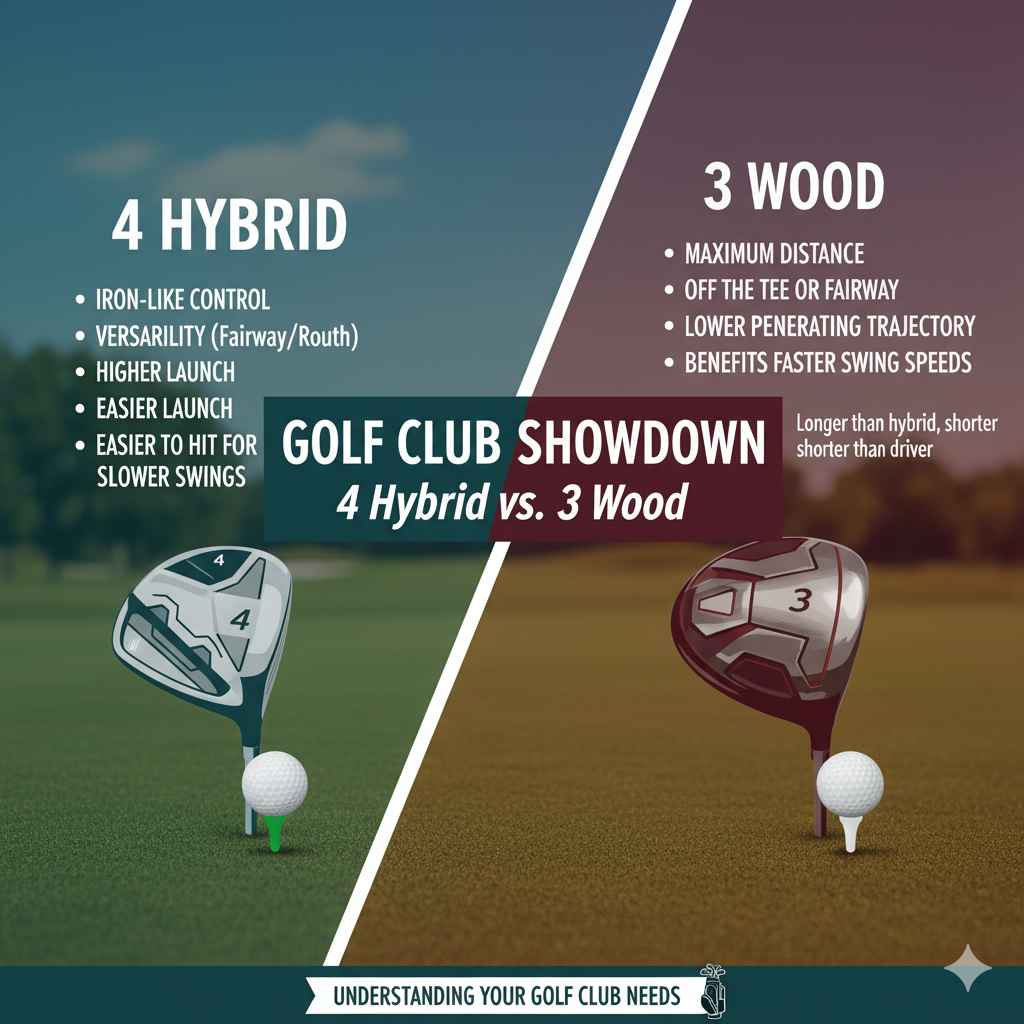
The loft of a 3 wood is generally between 14 and 18 degrees. This loft is enough to get the ball airborne, but less than most drivers, leading to a lower, more penetrating ball flight. This can be advantageous in windy conditions or when you need the ball to roll out after landing.
Key Characteristics of a 3 Wood:
- Clubhead Size: Generally larger than a hybrid, offering a wider sole and a bigger hitting area.
- Shaft Length: Shorter than a driver but typically longer than a 4 hybrid, which contributes to faster swing speeds but can make it harder to control for some golfers.
- Loft: Typically ranges from 14 to 18 degrees.
- Ball Flight: Tends to produce a lower, more penetrating ball flight compared to a hybrid with similar loft.
- Usability: Excellent for tee shots where accuracy is key, and for long shots from the fairway. Can be more challenging to hit cleanly from the rough due to its larger head.
What is a 4 Hybrid?
The 4 hybrid, often called a “rescue club,” is a more modern invention designed to blend the best features of a fairway wood and an iron. It’s built to be easier to hit than a long iron (like a 3 or 4 iron) and more versatile than a 3 wood, especially from difficult lies like the fairway or the rough.
Hybrids have a smaller clubhead than fairway woods, often with a rounded shape that is more forgiving when you don’t hit the ball perfectly in the center. The sole of a hybrid is usually more rounded and narrower than a fairway wood, allowing it to glide through the turf or rough more easily, reducing the chance of the club digging in.
The loft of a 4 hybrid typically falls between 20 and 24 degrees. This loft is higher than a 3 wood, which generally results in a higher, softer-landing ball flight. This makes it easier to get the ball up in the air and stop it quickly on the green, a significant advantage on approach shots.
Key Characteristics of a 4 Hybrid:
- Clubhead Size: Smaller and more compact than a 3 wood, resembling a larger blade iron.
- Shaft Length: Shorter than a 3 wood, offering more control and making it easier to swing consistently.
- Loft: Typically ranges from 20 to 24 degrees.
- Ball Flight: Produces a higher ball flight compared to a 3 wood with similar distance, which helps with stopping power on the green.
- Usability: Extremely versatile, performing well off the tee, from the fairway, and especially from the rough or uneven lies. Its design makes it more forgiving for inconsistent strikes.
4 Hybrid vs 3 Wood: Key Differences and Performance
The core differences between a 4 hybrid and a 3 wood boil down to their design, which influences how they perform on the course. While they might cover a similar distance range, the way they achieve that distance and the situations in which they excel are quite distinct.
Think of the 3 wood as a power hitter. Its longer shaft and larger head are built for maximum speed and distance when you swing well. However, this power can come at the cost of control, especially for golfers who don’t have a very fast swing speed or a consistent strike. Hitting a 3 wood cleanly from the fairway requires a good amount of clubhead speed and a precise strike; from the rough, it can be a real challenge.
The 4 hybrid, on the other hand, is the versatile all-rounder. Its shorter shaft and more compact head make it easier to control. The higher loft helps get the ball up quickly, making it more forgiving and easier to stop on the green. Its design allows it to glide through different turf conditions more effectively, making it a reliable choice from various lies.
Here’s a breakdown of how they compare in key areas:
| Feature | 3 Wood | 4 Hybrid |
|---|---|---|
| Distance | Potentially longer for faster swing speeds due to shaft length and design. | Generally slightly shorter than a 3 wood for faster swingers, but more consistent for average swing speeds. |
| Launch Angle | Lower, more penetrating ball flight. | Higher, more soaring ball flight. |
| Forgiveness | Less forgiving on off-center hits, especially from the rough. Requires a solid strike. | More forgiving due to smaller head size and design that helps glide through turf. Easier to get airborne. |
| Versatility | Best off the tee and from a clean fairway lie. Can be difficult from the rough. | Highly versatile: good off the tee, fairway, rough, and even fairway bunkers. |
| Control/Ease of Use | Requires more swing speed and precision for consistent results. | Easier to control, requires less swing speed for a decent launch. More confidence-inspiring for many golfers. |
| Typical Loft | 14-18 degrees of loft. | 20-24 degrees of loft. |
Who Should Use a 3 Wood?
The 3 wood is a fantastic club for golfers who possess a good amount of swing speed and a consistent, powerful strike. If you can reliably hit your driver with authority, you’ll likely be able to get the most out of a 3 wood, benefiting from its potential for extra distance.
Consider a 3 wood if:
- You have a fast swing speed: If you generate significant clubhead speed, the longer shaft and design of the 3 wood will likely translate into more yards than a hybrid. For reference, a typical driver swing speed for male professionals is over 110 mph. Most amateur golfers are in the 80-100 mph range.
- You prioritize maximum distance on tee shots: On courses where you can afford to let the ball run, or when you need every single yard off the tee, the 3 wood is a solid choice.
- You have a solid, sweeping strike: If you tend to sweep the ball off the tee or from the fairway without digging into the turf, the 3 wood’s wider sole will work well.
- You rarely play from the rough: While it can be used from the fairway, the 3 wood is not ideal for escaping difficult lies in the rough.
- You are comfortable with a slightly lower launch: The lower trajectory of a 3 wood can be beneficial in windy conditions, but it might be harder to stop quickly on the green for some players without significant backspin.
Many golfers view the 3 wood as a more aggressive option, a club for when you’re feeling confident and want to attack a longer hole.
Who Should Use a 4 Hybrid?
The 4 hybrid has become a staple in many golfers’ bags because of its remarkable versatility and ease of use. It’s often recommended for golfers of all skill levels, but it’s particularly beneficial for beginners and those with moderate swing speeds who struggle with traditional long irons or fairway woods.
Opt for a 4 hybrid if:
- You have a moderate or slower swing speed: The design of the hybrid makes it easier to generate lift and ball speed, even if your swing isn’t as fast or powerful. This means you’ll likely get more consistent and playable results than with a 3 wood.
- You struggle with long irons: If you find yourself shanking or chunking 3 or 4 irons, a hybrid is designed to be a much more forgiving and easier-to-hit alternative.
- You want a club that performs well from various lies: The hybrid’s shape allows it to glide through the fairway, light rough, and even thicker rough with less resistance. This makes it a go-to club when you’re not in a perfect lie. You can learn more about how to improve playing from the rough from resources like the USGA[^1] (United States Golf Association).
- You prefer a higher ball flight for stopping power: The higher trajectory of the 4 hybrid means the ball will stop more quickly on the green, which is ideal for approach shots where you don’t want the ball rolling too far past the pin.
- You value consistency and control: The shorter shaft and more compact head design of the hybrid generally lead to more consistent contact and easier control over the clubface.
- You are looking for a reliable club from the fairway and tee: While it’s excellent from the rough, the 4 hybrid is also a dependable choice for fairway shots and can be used off the tee for a more controlled, higher-launching option than a 3 wood.
The 4 hybrid is often called a “rescue club” for a reason – it’s designed to get you out of trouble and help you rescue par on those longer holes.
When to Use Each Club in Your Golf Bag
Understanding the strengths of each club is one thing, but knowing when to pull them out of your bag is where the real game improvement happens. Let’s look at common scenarios:
Off the Tee
- 3 Wood: Use when you need maximum distance and are confident in your ability to hit a controlled tee shot. It’s a great option for shorter par-4s where you want to reach the green or get close, or on holes where accuracy isn’t as critical as pure distance. You might also choose it if the fairway is particularly wide or conditions are calm.
- 4 Hybrid: Use when you need more control than a driver offers, or when you prefer a higher, softer-landing ball off the tee. It’s excellent for tight fairways, windy conditions, or when you’re not feeling your driver swing. It’s also a reliable choice if you’re struggling with your driver and need a more consistent option.
From the Fairway
- 3 Wood: Best for long approach shots from a perfect lie where you want to carry the ball a significant distance. It can also be used to advance the ball a long way if you’re in the fairway but need to play around trees or obstacles.
- 4 Hybrid: Ideal for mid-to-long approach shots. Its higher trajectory makes it easier to get the ball up and stop it on the green. It’s also superior for fairway shots that are slightly off the perfect lie, or if you find yourself in a slight fairway divot – the hybrid is much more forgiving.
From the Rough
- 3 Wood: Generally not recommended. The larger head and shallower face can easily get snagged in longer grass, leading to a loss of distance or a wild shot.
- 4 Hybrid: This is where the hybrid truly shines. Its design allows it to cut through the rough more cleanly, making it much easier to advance the ball towards the green. It’s a must-have for golfers who frequently find themselves in the rough.
From Hazards (Fairway Bunkers)
- 3 Wood: Can be risky. The wide sole can sometimes dig into the sand, although some players manage it.
- 4 Hybrid: Often a safer and more reliable option from a fairway bunker. The club’s shaping allows it to glide through the sand more effectively than a 3 wood, giving you a better chance of advancing the ball.
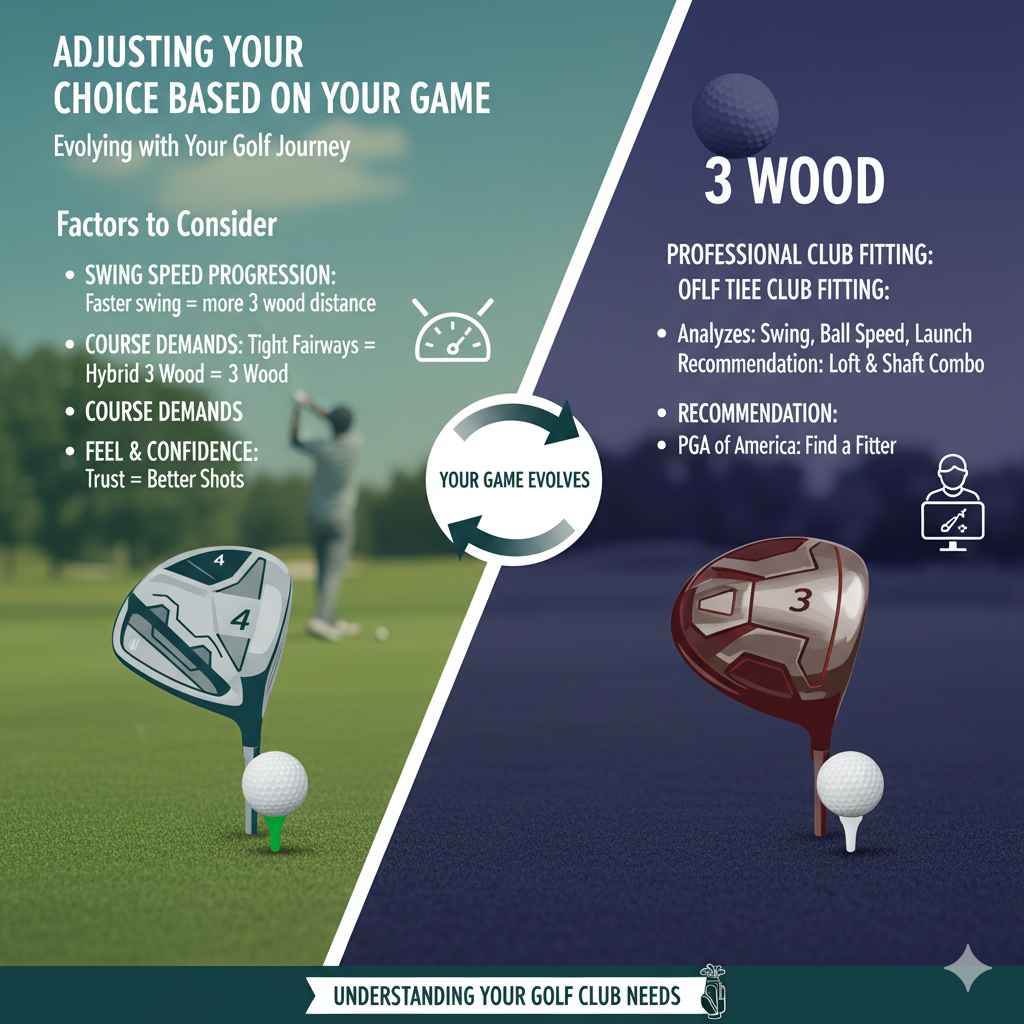
Adjusting Your Choice Based on Your Game
The decision between a 4 hybrid and a 3 wood isn’t static. It can and should evolve as your game improves or as course conditions change. Here are a few points to consider:
- Your Swing Speed Progression: As you practice and perhaps work with a coach, your swing speed might increase. If this happens, you might find that the 3 wood becomes more effective for you, offering greater distance while the hybrid starts to feel a bit redundant if you’re already carrying clubs that cover its distance.
- Course Demands: If you play on courses with very tight fairways and penalties for accuracy, the control of a hybrid might always be preferred. Conversely, courses with wide-open fairways and firm ground where you need to carry the ball long distances might make the 3 wood a better fit.
- Equipment Fitting: The best way to make this decision is through a professional club fitting. A fitter can analyze your swing, ball speed, launch angle, and spin rate to recommend the specific club that will perform best for your unique game. They can also help you understand the optimal loft and shaft combination for both types of clubs. Organizations like the PGA of America[^2] offer resources on club fitting and how it can benefit golfers.
- Feel and Confidence: Ultimately, the club that instills the most confidence in your hands is often the best choice. If you step up to a shot with a club you trust, you’re more likely to execute it successfully.
Frequently Asked Questions (FAQ)
Q1: Is a 4 hybrid longer than a 3 wood?
Generally, for golfers with sufficient swing speed, a 3 wood will be longer than a 4 hybrid due to its longer shaft and lower loft. However, for golfers with moderate or slower swing speeds, a 4 hybrid might produce similar or even greater distances because it’s easier to hit consistently and achieve a good launch angle. Distance is also highly dependent on the golfer’s individual swing.
Q2: Should I replace my 3 iron with a 4 hybrid or a 3 wood?
A 4 hybrid is almost always a better replacement for a 3 iron than a 3 wood. The 4 hybrid offers a similar distance to a 3 iron but is much easier to hit, more forgiving, and more versatile. A 3 wood is typically a longer club than a 3 iron and serves a different purpose in the bag.